Energy And Feeding Relationships
खेलकर सीखें
इन सवालों के जवाब देकर एनर्जी कमाएं, फिर मछली पकड़ें और घूमें। कोई अकाउंट नहीं चाहिए।
लेसन नोट्स
Transfer of Energy
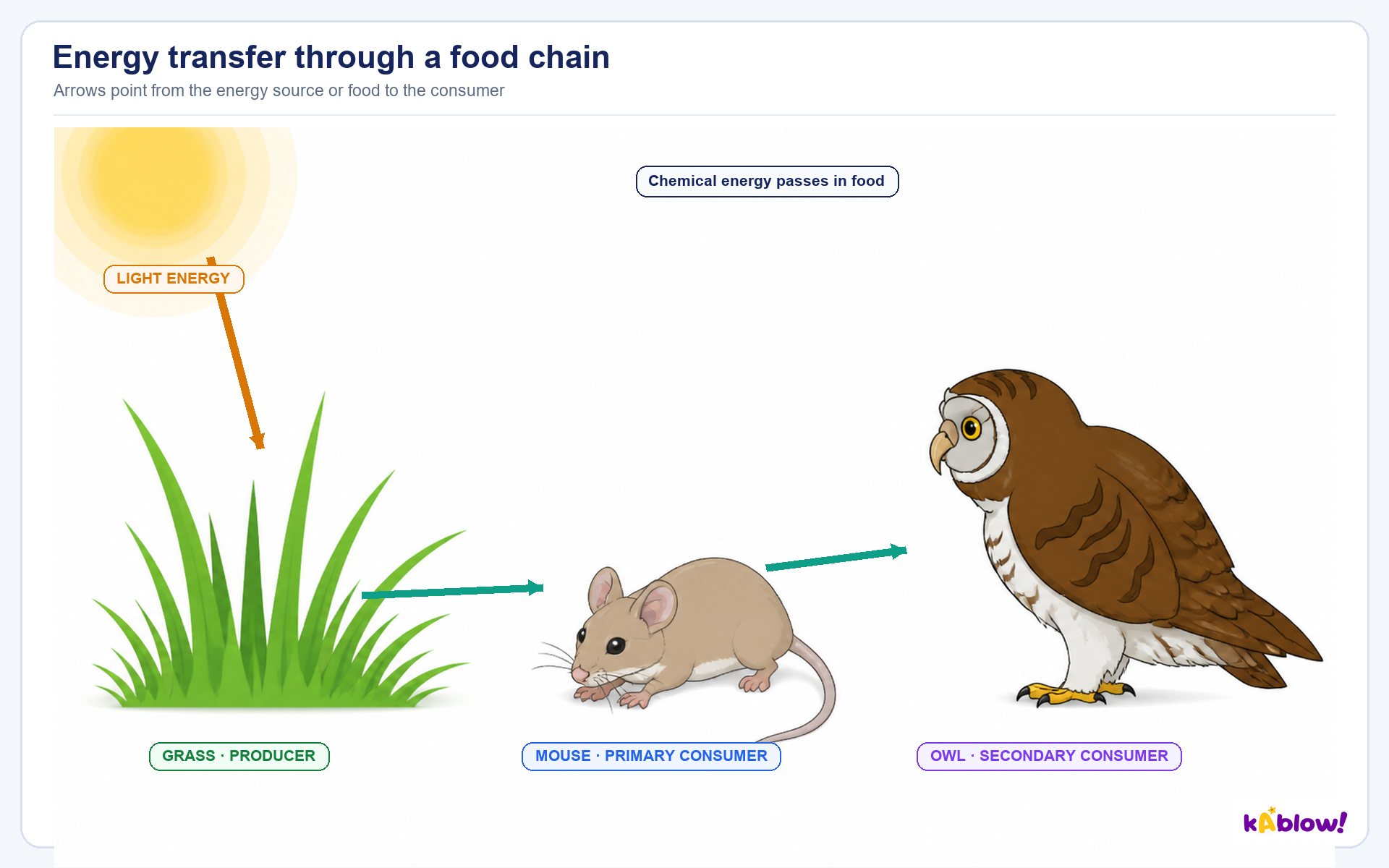
- The Sun is the principal source of energy input to biological systems.
- Energy flows through living organisms as light energy and chemical energy.
- Energy is transferred from the Sun through food chains and eventually lost to the environment as heat.
Energy is transferred from the sun and through the food chain
Food Chains & Food Webs
- A food chain shows the transfer of energy from one organism to the next, starting with a producer.
- Arrows in a food chain represent the transfer of energy from one trophic level to the next.
- Energy is transferred between organisms by ingestion (eating).
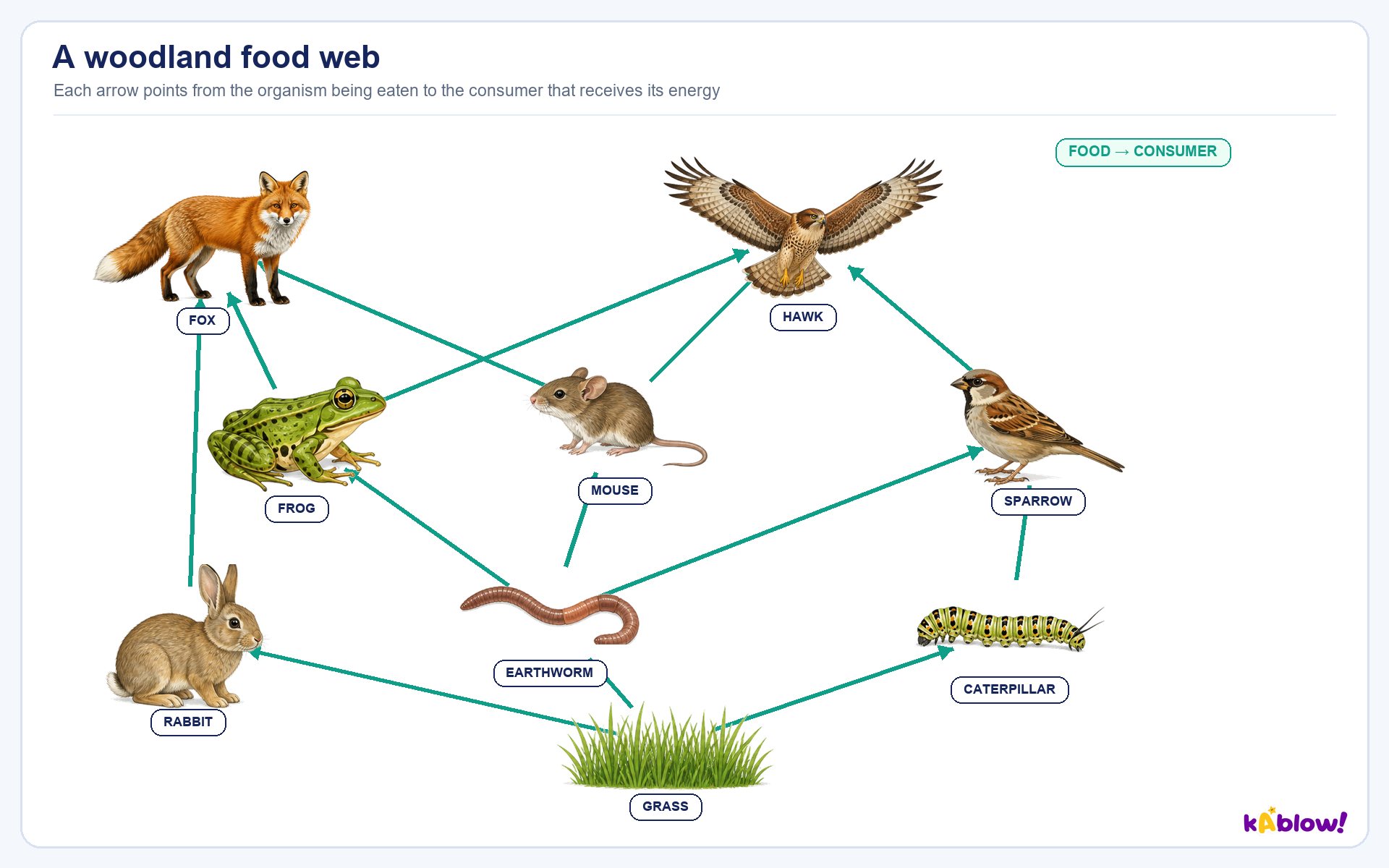
- A food web is a network of interconnected food chains, showing more realistic feeding relationships.
- Food webs illustrate interdependence – a change in one population affects others.
- Most population changes result from human impact (e.g., overharvesting, introducing foreign species).
A food web shows the interdependence of organisms
Trophic Levels (Extended)
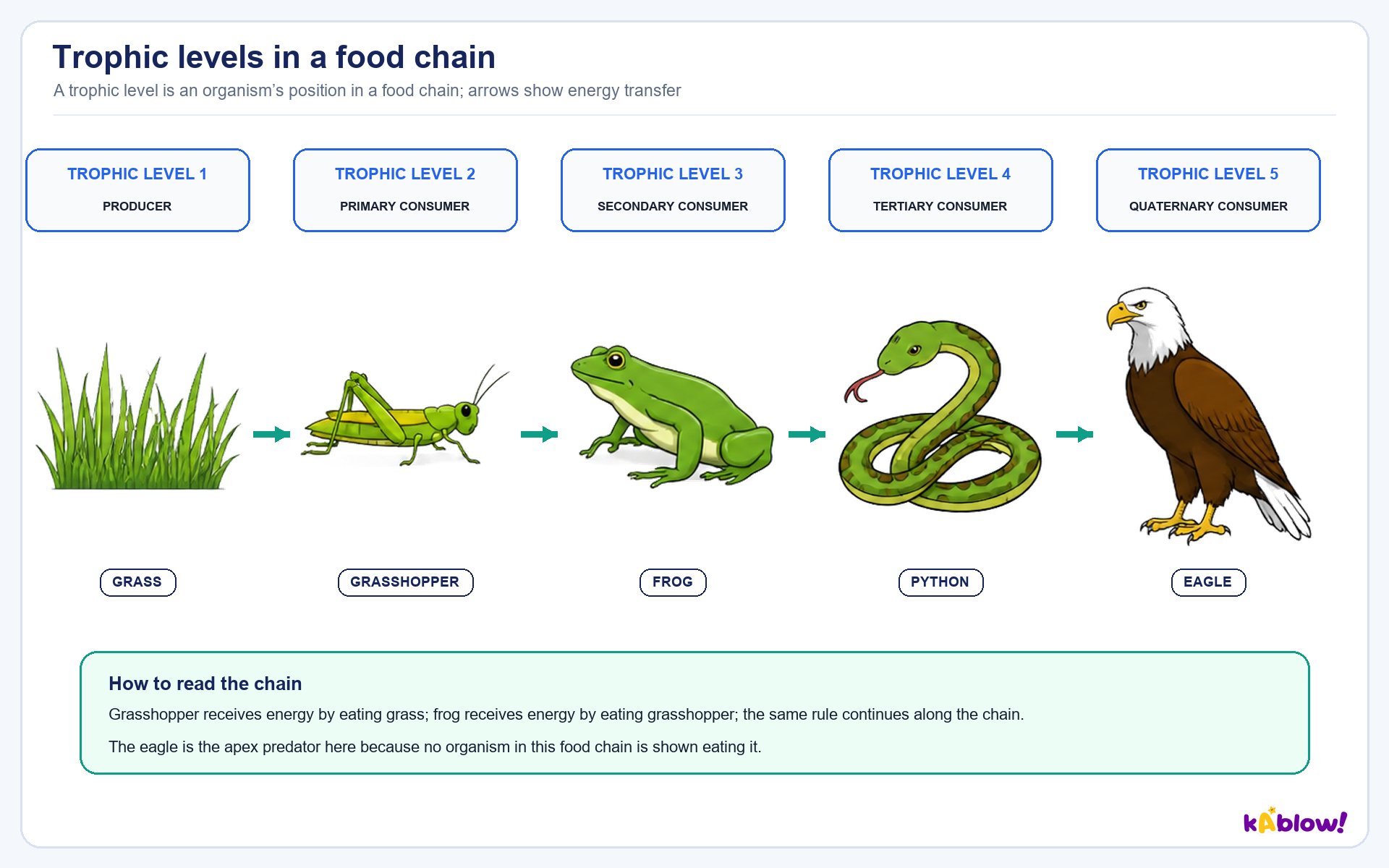
- A trophic level is the position of an organism in a food chain or web.
- Producers form the first trophic level.
- Primary consumers (herbivores) are the second trophic level.
- Secondary consumers are the third, tertiary consumers the fourth, and quaternary consumers the fifth.
- Food chains rarely exceed 5 trophic levels due to energy loss.
Trophic levels describe the position of organisms in a food chain
Efficiency of Energy Transfer (Extended)
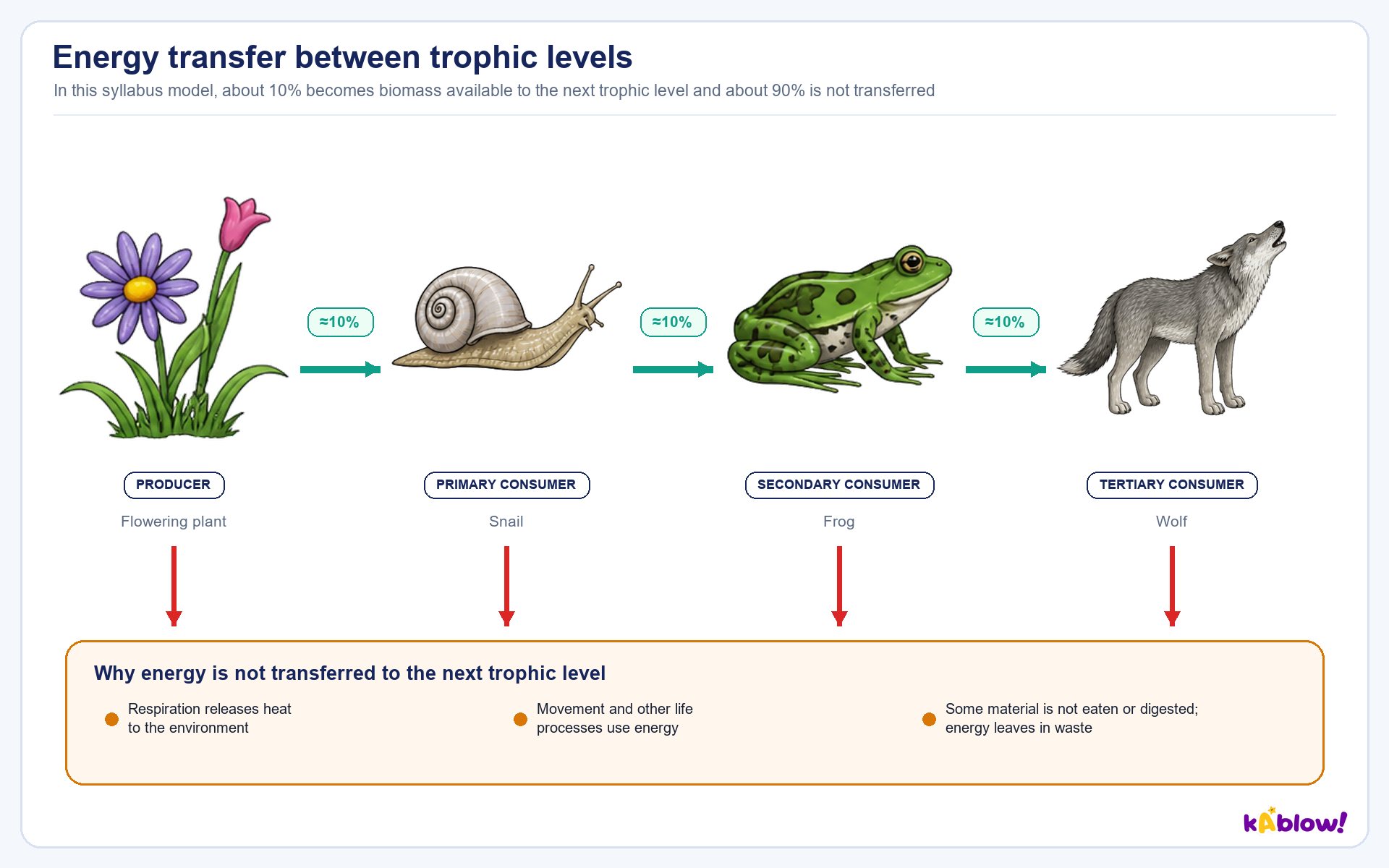
- Energy transfer between trophic levels is not efficient; much energy is lost to the environment.
- Energy is lost through movement, respiration (heat), and excretion (e.g., urea).
- Energy in inedible parts (bones, fur, roots) or undigested waste (faeces) does not pass to the next level.
- Energy loss explains why food chains are rarely more than 5 organisms long.
- It is more energy efficient for humans to eat plants directly than to eat herbivores.
Energy loss at each trophic level
The Carbon Cycle
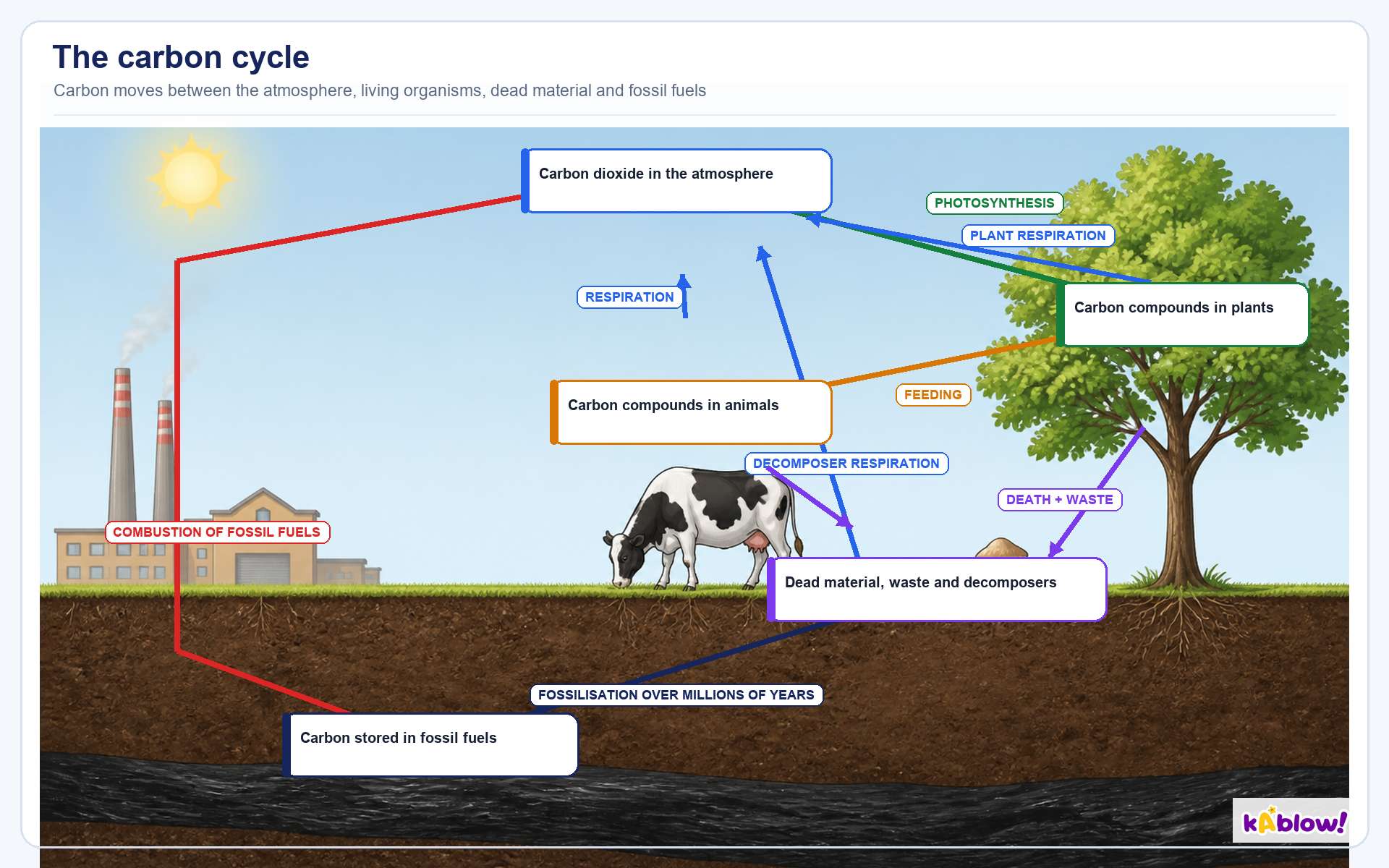
- Carbon is taken from the atmosphere as CO₂ by plants during photosynthesis.
- Carbon is passed to animals and decomposers through feeding.
- Carbon is returned to the atmosphere as CO₂ by respiration of plants, animals, and microorganisms.
- Dead organisms can form fossil fuels over millions of years if decomposers are absent.
- Combustion of fossil fuels releases CO₂ back into the atmosphere.
- Human activities (burning fossil fuels, deforestation) increase atmospheric CO₂ levels.
The Carbon Cycle
स्लाइड्स
Sign up free to view the lesson slides
Step through every slide for this topic — plus flashcards and revision notes — with a free account.
प्रैक्टिस सवाल
फ्री प्रीव्यू — 52 में से 8 सवाल। सभी देखने के लिए साइन अप करें।
1.Define the term herbivore.
Easy2.State the principal source of energy for food chains.
Easy3.Complete the sentence about energy flow.
EasyThe arrows in a food chain show the transfer of ____ from one trophic level to the next.
4.Which of the following is a producer in the food chain: grass → rabbit → fox?
Easy- Agrass
- Brabbit
- Cfox
- Dsun
5.A food web is a network of interconnected food chains.
EasyTrue or false?
6.Name the trophic level of topi in the African grassland food web, given that topi eat star grass and are eaten by cheetahs.
Easy7.State what the arrows in a food chain represent.
Easy8.Match each process in the carbon cycle with its description.
Medium- Photosynthesis
- Respiration
- Combustion
- Takes in carbon dioxide
- Releases carbon dioxide
- Burning of fossil fuels releases carbon dioxide
Unlock all 52 questions & more
इस टॉपिक के हर सवाल, स्लाइड्स, फ्लैशकार्ड और रिवीज़न नोट्स देखने के लिए फ्री अकाउंट बनाएं।