The Internet & The World Wide Web
खेलकर सीखें
इन सवालों के जवाब देकर एनर्जी कमाएं, फिर मछली पकड़ें और घूमें। कोई अकाउंट नहीं चाहिए।
शिक्षकों के लिए: The Internet & The World Wide Web (Computer Science, CIE) के लिए इस्तेमाल के लिए तैयार लेसन स्लाइड्स, रिवीज़न नोट्स — इन्हें अपने लेसन में इस्तेमाल करें, या टॉपिक को एक इंटरैक्टिव क्लास एक्टिविटी की तरह चलाएं जिसे आपके शिक्षार्थी लाइव गेम की तरह खेलें।
लेसन नोट्स
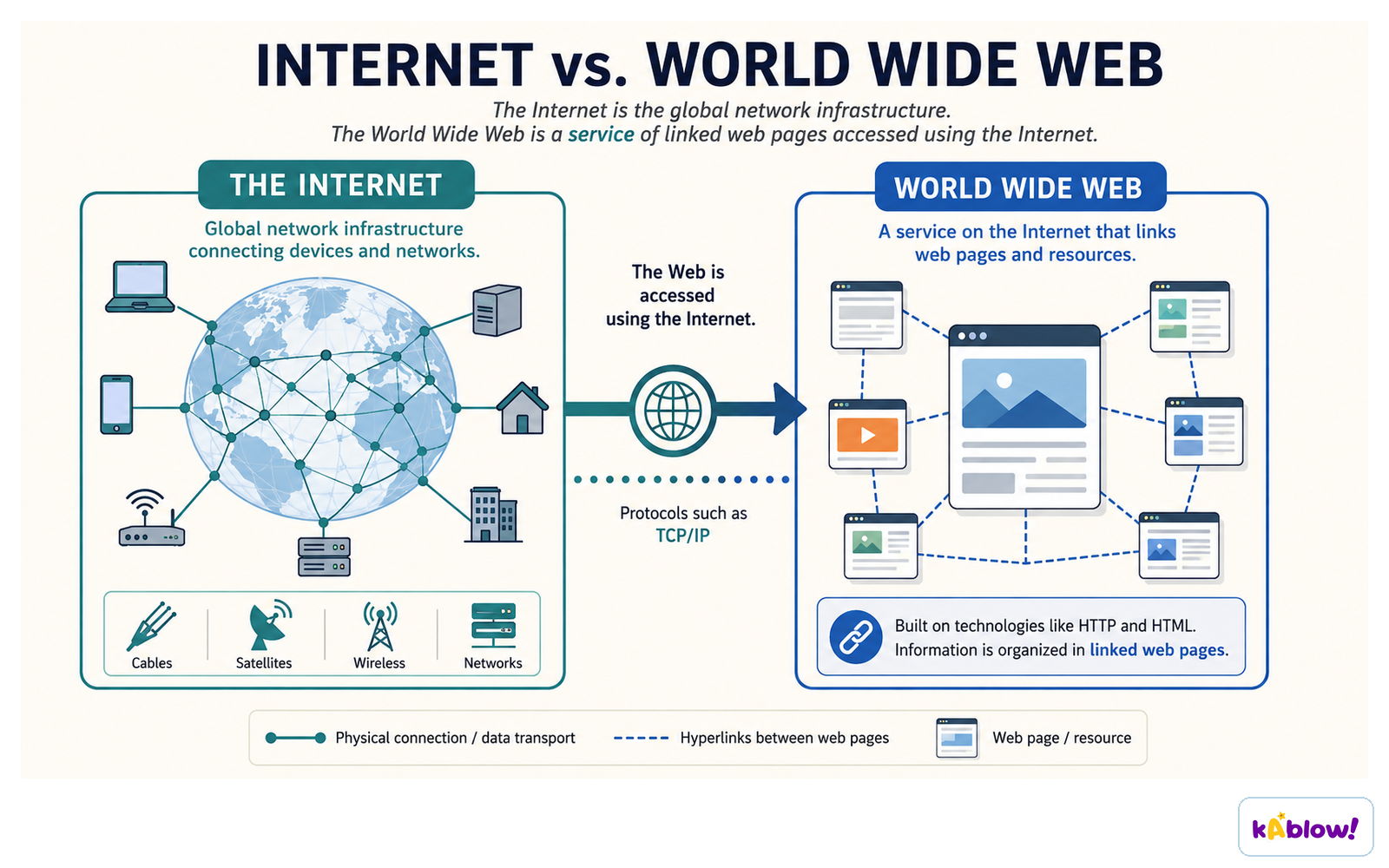
Internet vs World Wide Web
- The Internet is a global network of networks (a WAN) that provides connectivity.
- The World Wide Web is a collection of websites and web pages accessed via the Internet.
- The Internet includes other services like email, FTP, and VoIP, not just the web.
- The web was created in 1989 by Tim Berners-Lee.
The internet is the global network infrastructure; the World Wide Web is a service of linked pages that runs on it.
Network Protocols: HTTP & HTTPS
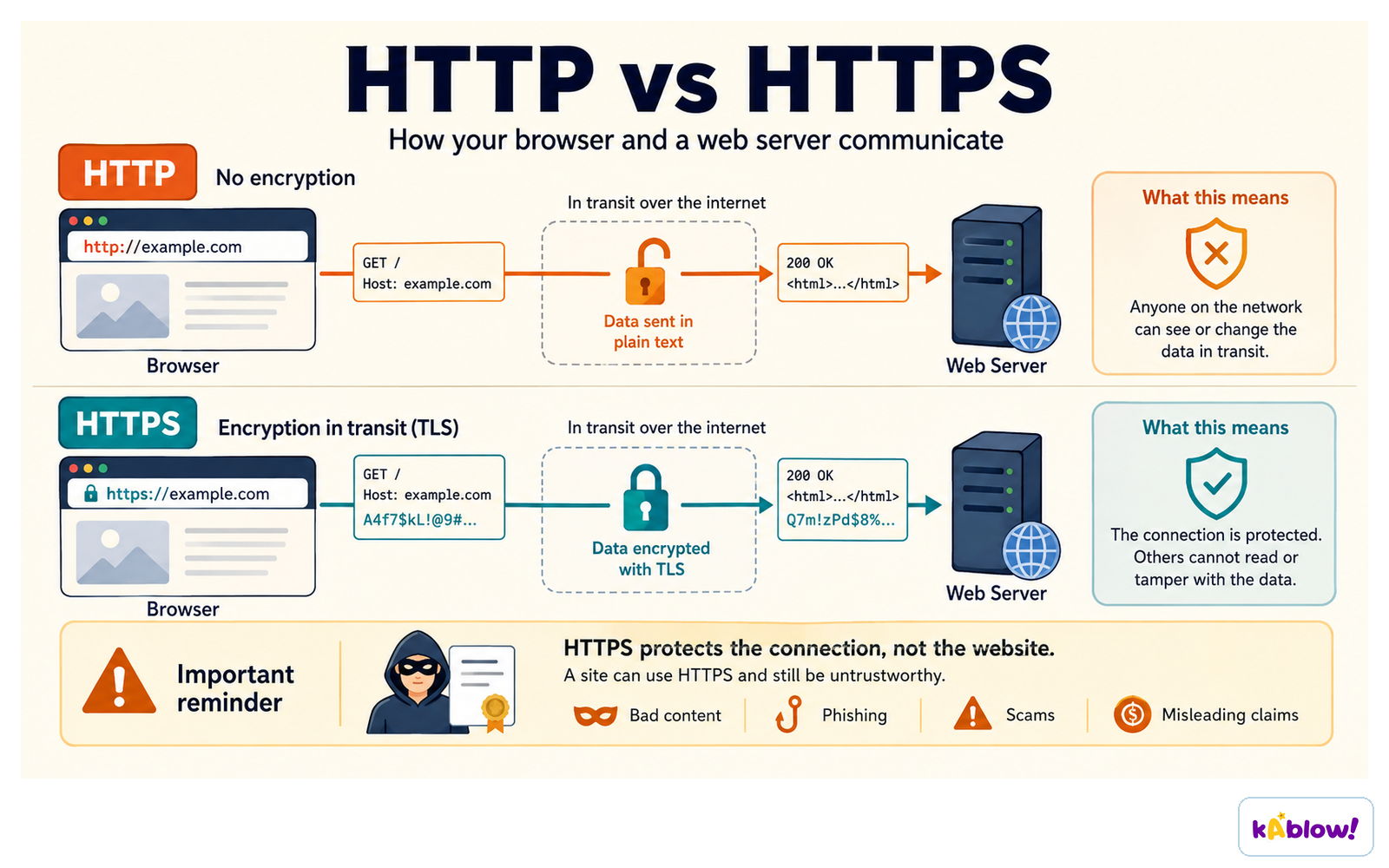
- HTTP (Hypertext Transfer Protocol) governs communication between a client and server for web pages.
- HTTPS is HTTP with an added layer of encryption for security.
- HTTPS protects sensitive data like passwords and financial information.
- A common exam answer: 'HTTPS encrypts data being transmitted, unlike HTTP.'
HTTP sends data in plain text; HTTPS encrypts it in transit so it cannot be read or altered on the way.
Web Browser
- A web browser is software to access and display web pages by rendering HTML.
- Key functions: navigation tools (back/forward), bookmarks, cookies, history, address bar, multiple tabs.
- Browsers interpret HTML code and translate it into a visual display.
Web Servers
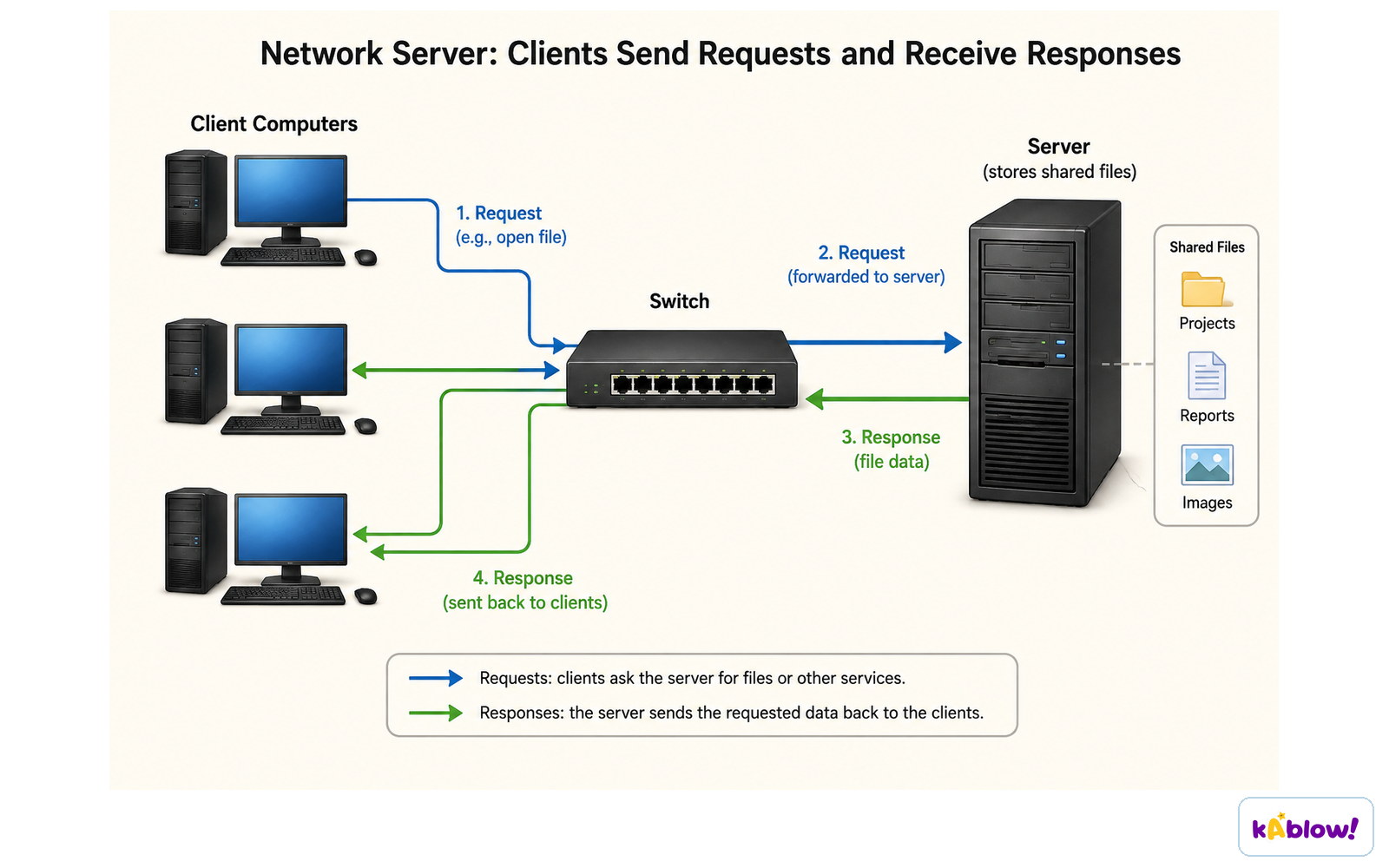
- A web server is a remote computer that stores website files (hosting).
- Servers are typically available 24/7 and can handle multiple users simultaneously.
Clients send requests to a server, which returns the files they asked for.
URL (Uniform Resource Locator)
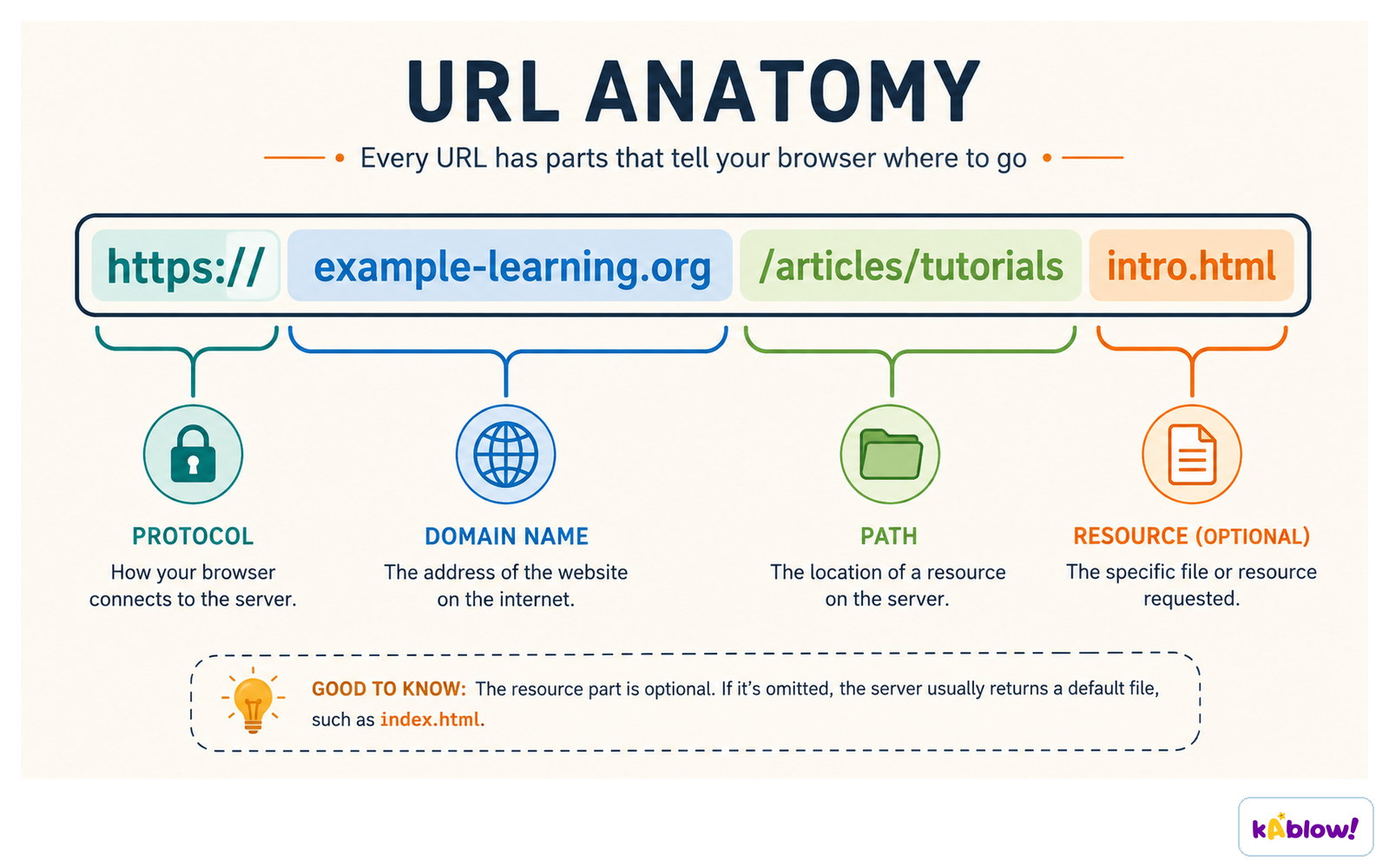
- A URL is a unique text-based address for a web page.
- It consists of three parts: protocol (e.g., https), domain name (e.g., www.example.com), and file path (e.g., /page).
A URL has a protocol, a domain name, a path, and an optional resource.
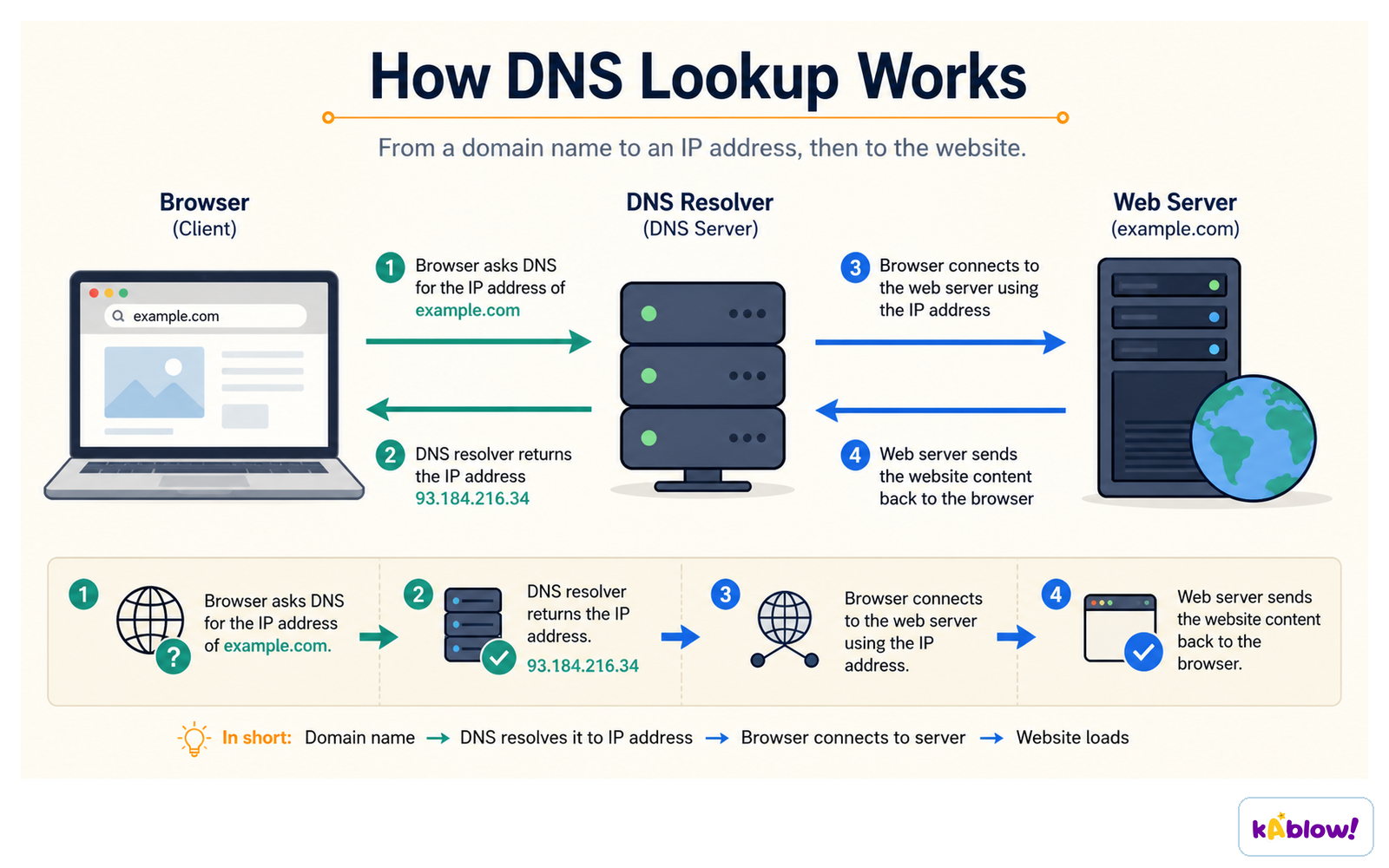
DNS (Domain Name System)
- The DNS translates human-readable domain names into numeric IP addresses.
- It acts like a phone book for the Internet.
- Without DNS, users would have to remember IP addresses of every website.
DNS resolves a domain name to an IP address so the browser can connect to the web server.
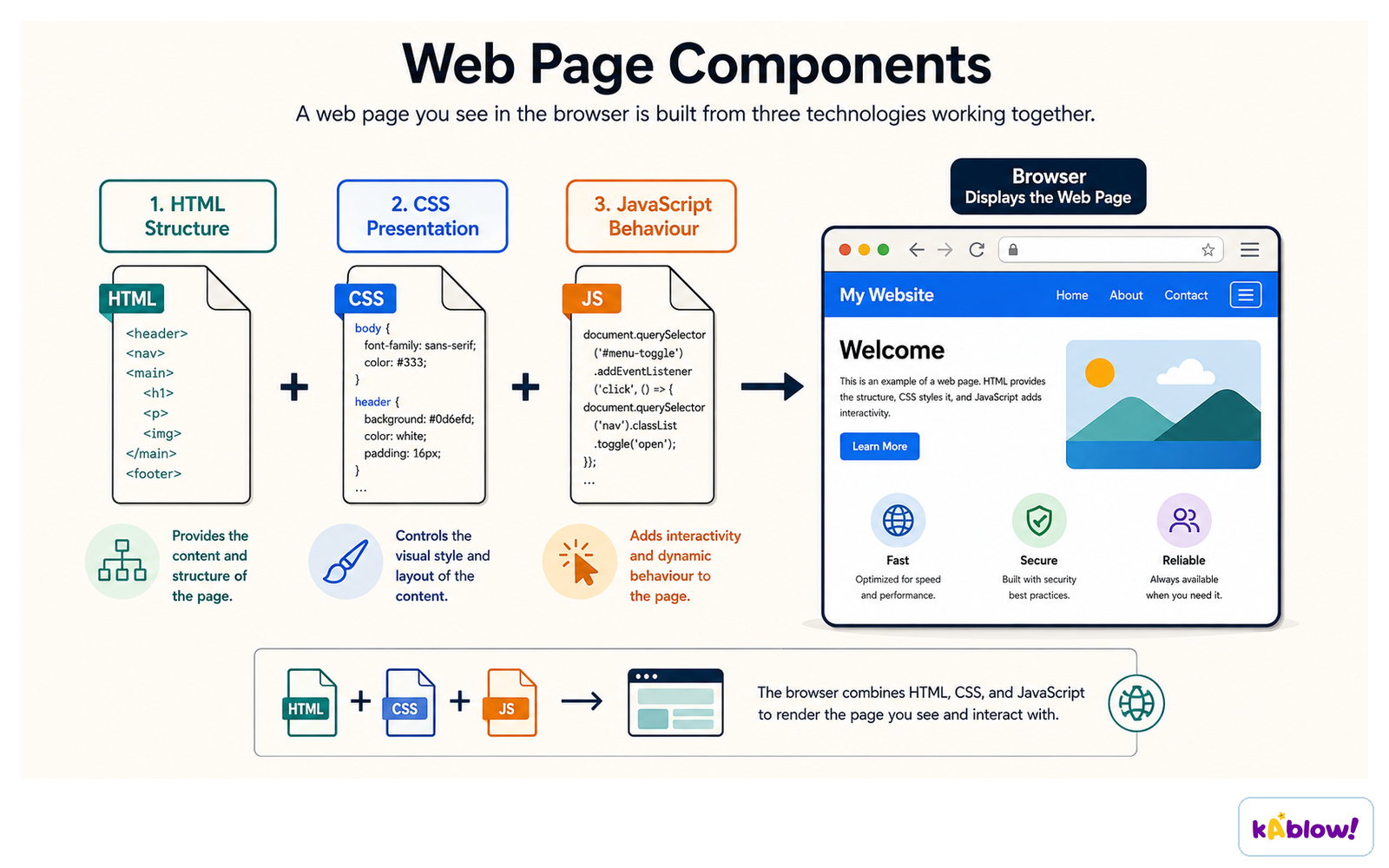
HTML (Hypertext Markup Language)
- HTML is the language used to structure and present content on web pages.
- It uses tags (e.g., <html>, <h1>, <p>) to define structure and formatting.
- HTML organises content into sections (headers, paragraphs, footers) and presents it with headings, text, images, etc.
- The browser renders HTML to display the page visually.
HTML gives a page its structure, CSS its presentation, and JavaScript its behaviour.
Cookies
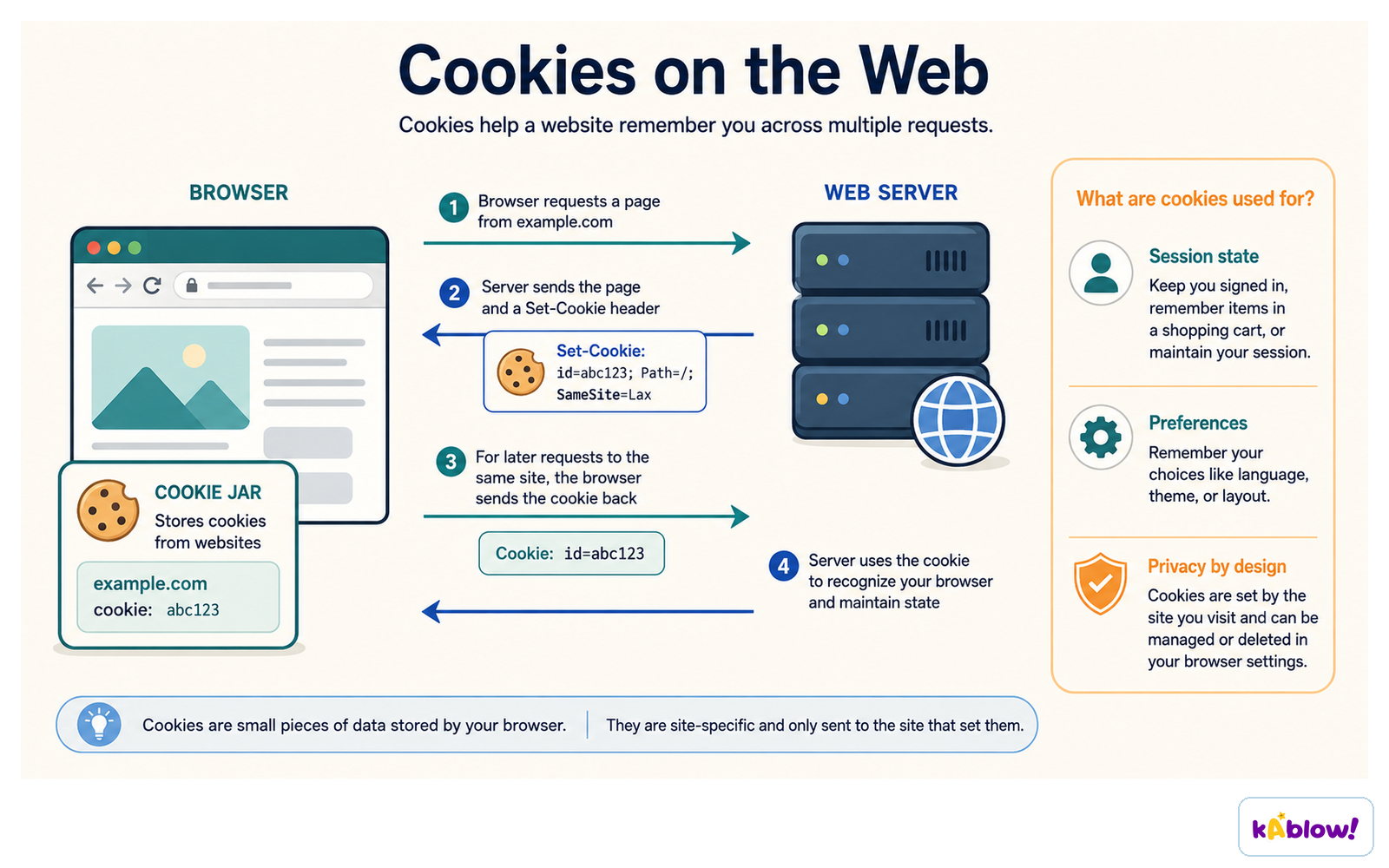
- A cookie is a small data file stored by the browser containing browsing activity info.
- Session cookies are stored in RAM, deleted when the browser closes; used to track current session (e.g., shopping cart).
- Persistent cookies are stored on the hard drive, remain until expiry or manual deletion; remember login details and preferences across visits.
The server sets a cookie, the browser stores it and sends it back, so the site recognises the visit.
Loading a Web Page (Process)
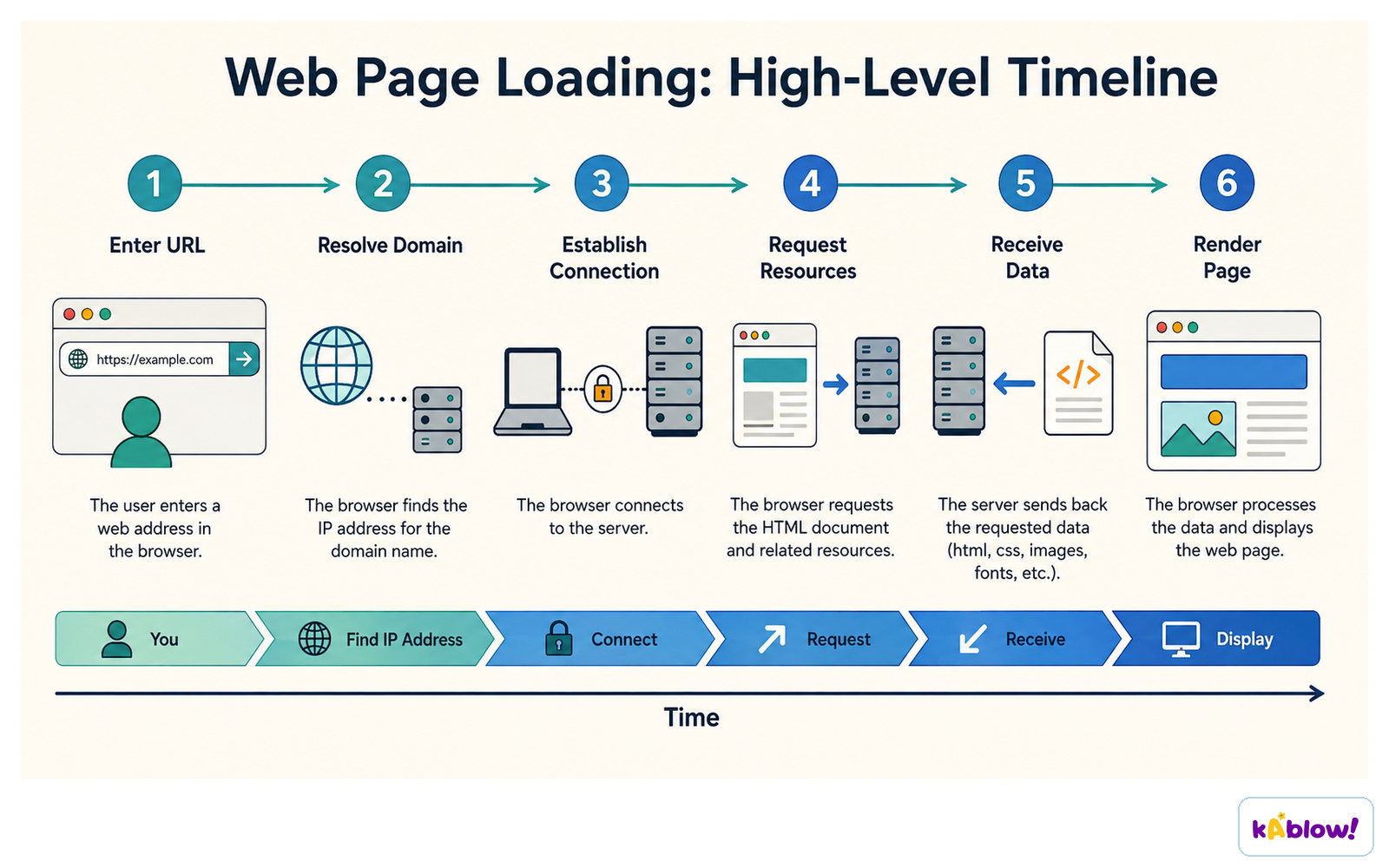
- User enters a URL in the browser's address bar.
- Browser sends the domain name to a DNS to get the IP address.
- Browser connects to the web server and requests the page.
- Server sends HTML data back; browser renders it to display the page.
Loading a page: enter the URL, resolve the domain, connect, request resources, receive data, render.
स्लाइड्स
Sign up free to view the lesson slides
Step through every slide for this topic — plus flashcards and revision notes — with a free account.
प्रैक्टिस सवाल
फ्री प्रीव्यू — 47 में से 8 सवाल। सभी देखने के लिए साइन अप करें।
1.What is the Internet?
Easy- AA collection of websites and web pages accessed using a web browser
- BA global network of networks that provides connectivity to the World Wide Web
- CA type of Wide Area Network (WAN) used only for email
- DA software application used to display web pages
2.Who created the World Wide Web in 1989?
Easy- AVint Cerf
- BTim Berners-Lee
- CBill Gates
- DRobert Cailliau
3.Which of the following is a key difference between the Internet and the World Wide Web?
Medium- AThe Internet is a service that runs on the World Wide Web
- BThe World Wide Web is a collection of websites, while the Internet is the network that connects them
- CThe Internet is used only for email, while the World Wide Web is used for websites
- DThe World Wide Web was created before the Internet
4.What does HTTP stand for?
Easy- AHyperText Transfer Protocol
- BHyperText Transmission Protocol
- CHigh Transfer Text Protocol
- DHyperText Transfer Process
5.What is the main advantage of HTTPS over HTTP?
Easy- AHTTPS is faster than HTTP
- BHTTPS encrypts data to keep it secure
- CHTTPS uses a different protocol for data transfer
- DHTTPS does not require a web server
6.What is the function of a Domain Name System (DNS)?
Easy- ATo store web pages on a server
- BTo translate domain names into IP addresses
- CTo encrypt data transmitted over the Internet
- DTo provide a user interface for browsing the web
7.A user types a URL into a web browser. Which of the following is the correct sequence of events to load the web page?
Hard- ABrowser sends request to DNS → DNS returns IP address → Browser requests HTML from web server → Browser renders HTML
- BBrowser requests HTML from web server → DNS translates domain name → Browser renders HTML → IP address is assigned
- CDNS sends HTML to browser → Browser connects to web server → Browser renders page → URL is resolved
- DBrowser sends request to web server → Web server sends DNS to browser → Browser translates IP address → HTML is rendered
8.What is a web browser?
Easy- AA remote computer that stores web pages
- BA piece of software used to access and display information on the Internet
- CA protocol for transferring data over the Internet
- DA file format for web pages
Unlock all 47 questions & more
इस टॉपिक के हर सवाल, स्लाइड्स, फ्लैशकार्ड और रिवीज़न नोट्स देखने के लिए फ्री अकाउंट बनाएं।
पास्ट पेपर
इस टॉपिक के लिए पास्ट-पेपर प्रैक्टिस जल्द आ रही है।
जल्द आ रहा है