The World Wide Web: websites, browsers and search engines
खेलकर सीखें
इन सवालों के जवाब देकर एनर्जी कमाएं, फिर मछली पकड़ें और घूमें। कोई अकाउंट नहीं चाहिए।
लेसन नोट्स
The Web and the Internet
- The World Wide Web (WWW) is a global system of interconnected information, accessed via the Internet.
- The Internet is the physical network of computers; the Web is a service that runs on it.
- The Web uses HTTP (Hypertext Transfer Protocol) to transfer data between servers and browsers.
- The Web was invented by Tim Berners-Lee at CERN in 1989 and opened to the public in 1993.
- It was designed as a "universal linked information system" to share documents and resources.
Web Pages and Websites
- A web page is a document formatted in HTML (Hypertext Markup Language).
- HTML supports text, images, video, audio, and scripts for interactivity.
- A website is a collection of related web pages, usually sharing a common domain name.
- A single web server can host multiple websites; popular sites may use many servers.
- Web content comes from companies, organisations, governments, and individuals.
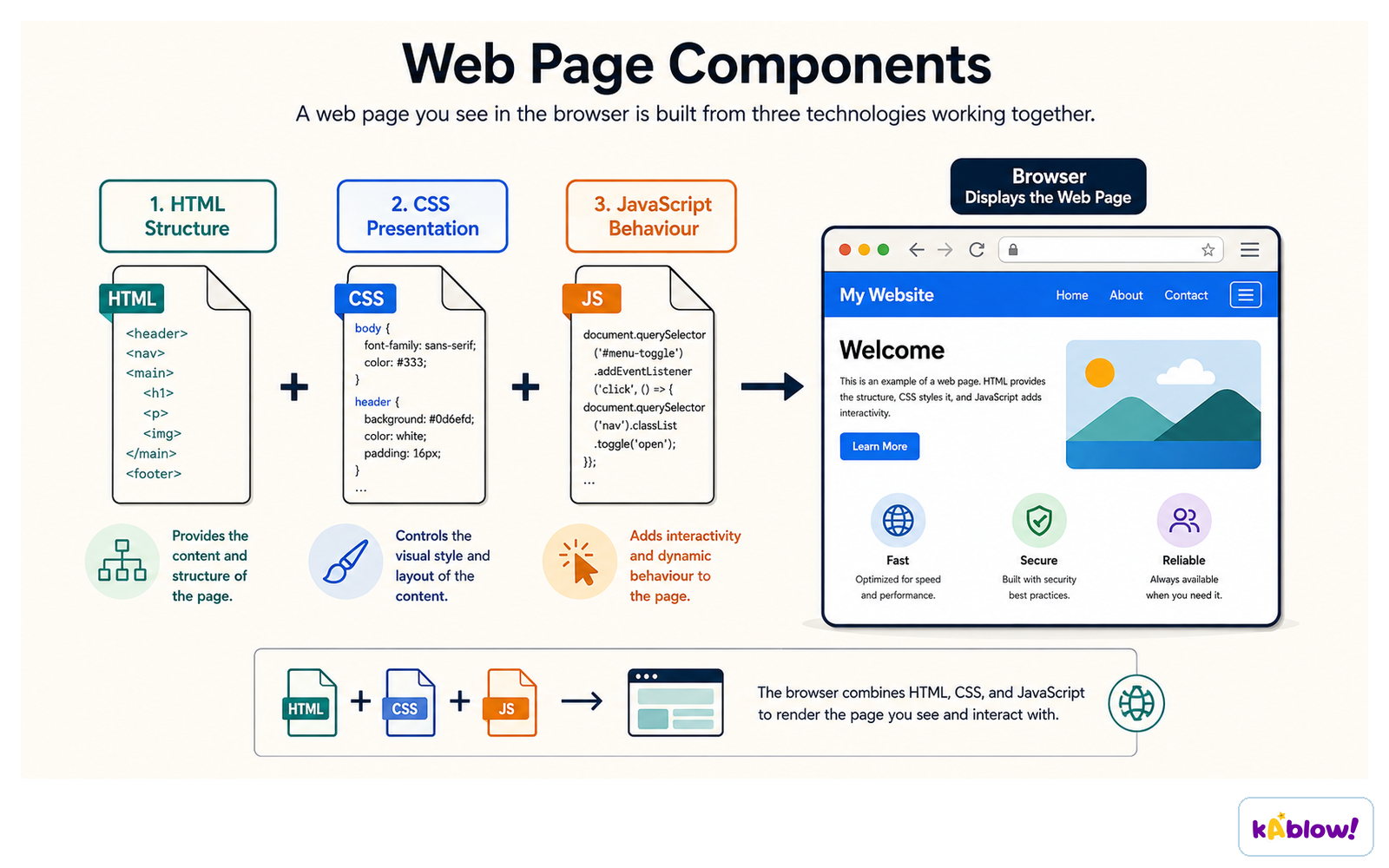
HTML gives a page its structure, CSS its presentation, and JavaScript its behaviour.
URLs and Hyperlinks
- A URL (Uniform Resource Locator) is the address of a web resource.
- URLs identify and locate servers and resources on the Web.
- Hyperlinks are embedded URLs in a page that let you jump to other resources.
- Following hyperlinks across sites is called web surfing or navigation.
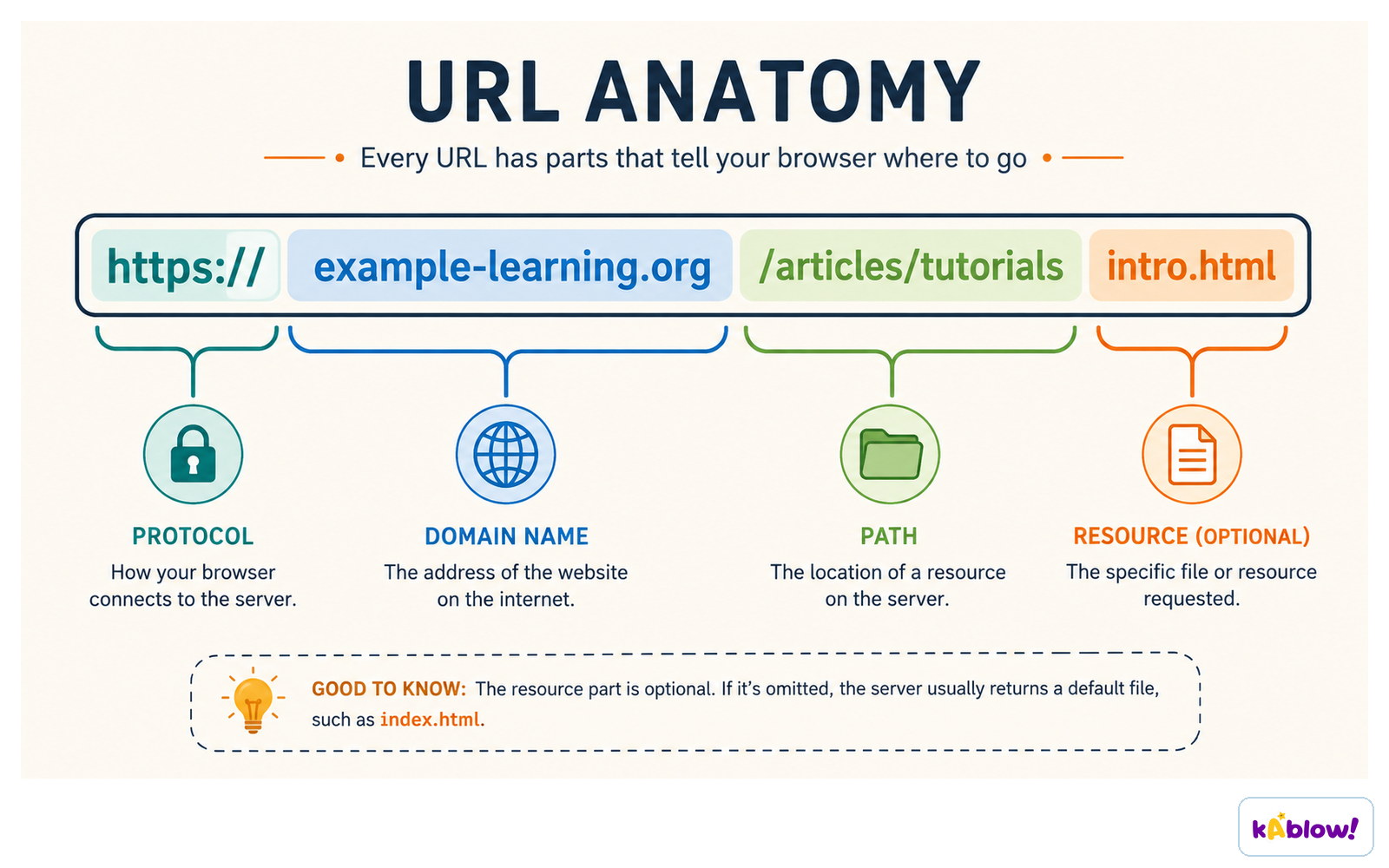
A URL has a protocol, a domain name, a path, and an optional resource.
Web Servers and Browsers
- Web servers store and deliver web pages to users.
- Web browsers are programs that request and display web pages.
- The first browser was called WorldWideWeb, later renamed Nexus.
- Browsers like Mosaic and Netscape made the Web graphical and popular.
- Modern browsers can run web applications that work like software.
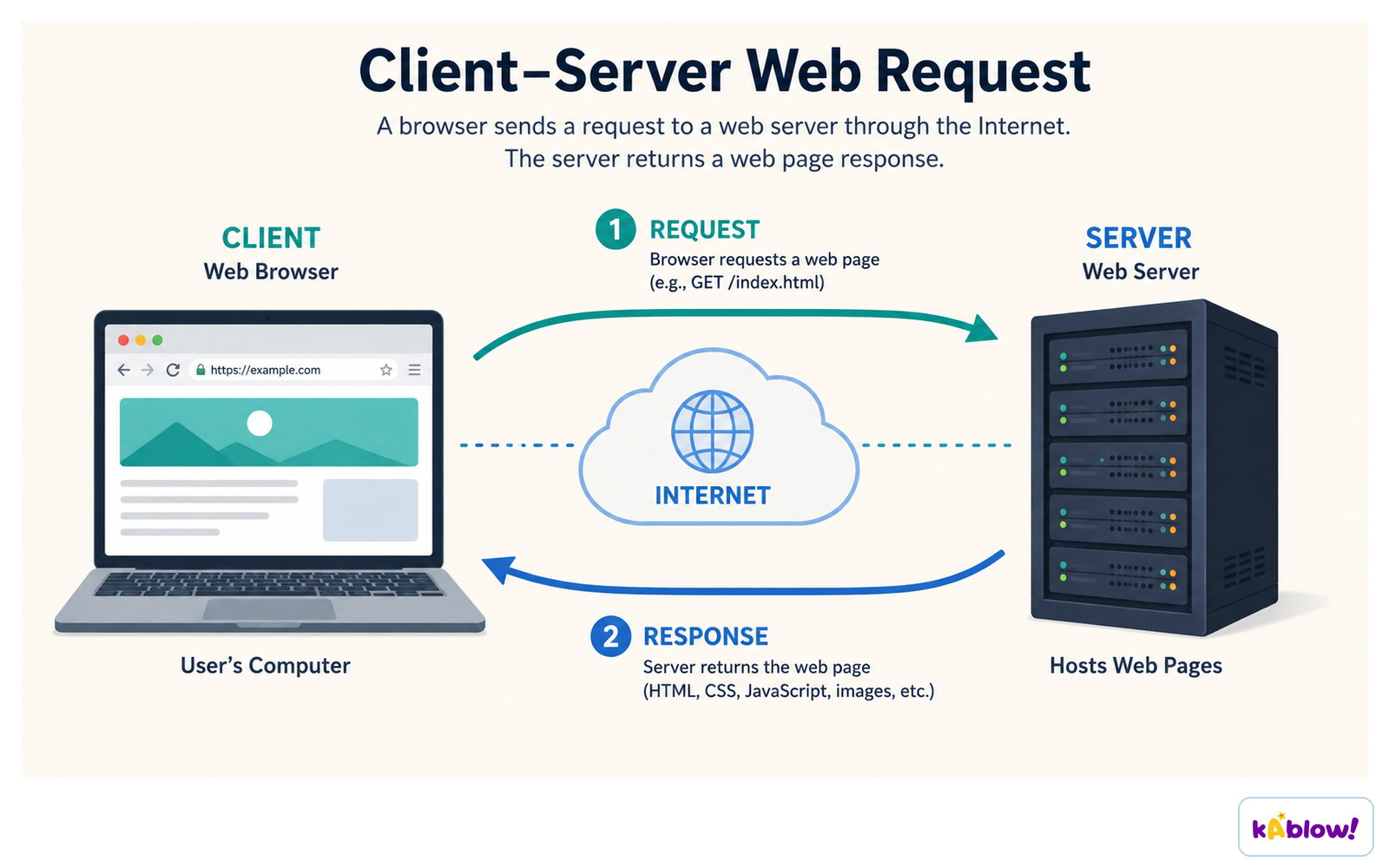
A browser sends a request to a web server across the internet, and the server returns the page.
How Search Engines Work
- Search engines use programs called crawlers (or spiders) to browse the Web.
- Crawlers follow hyperlinks to discover new and updated pages.
- They index the content of pages in a huge database.
- When you search, the engine ranks pages by relevance and importance.
- Ranking uses factors like keywords, links, and page quality.
History and Development
- Tim Berners-Lee proposed the Web in 1989 to solve document sharing at CERN.
- He built the first HTTP server and browser by 1990.
- The Web was released to the public in 1991 and became free in 1993.
- The Mosaic browser (1993) made the Web popular with images and forms.
- Netscape and Internet Explorer competed in the "browser wars".
- The W3C (World Wide Web Consortium) was founded by Berners-Lee to set standards.
Key Concepts and Impact
- The Web is decentralised – no central control over links or content.
- It supports many media types: text, graphics, speech, and video.
- Web applications are pages that function like software.
- The Web is the world's dominant information platform, used by billions.
- It has driven the Information Age and transformed communication.
A browser sends a request to a web server across the internet, and the server returns the page.
Crawlers discover pages by following links, the content is indexed, and a query is matched against that index.
स्लाइड्स
Sign up free to view the lesson slides
Step through every slide for this topic — plus flashcards and revision notes — with a free account.
प्रैक्टिस सवाल
फ्री प्रीव्यू — 59 में से 8 सवाल। सभी देखने के लिए साइन अप करें।
1.The World Wide Web was invented by Tim Berners-Lee.
EasyTrue or false?
2.The World Wide Web and the Internet are the same thing.
EasyTrue or false?
3.What does URL stand for?
Easy- AUniform Resource Locator
- BUniversal Resource Link
- CUniform Resource Link
- DUniversal Resource Locator
4.A web browser is a program used to access and view web pages.
EasyTrue or false?
5.Which of the following is the primary markup language used to create web pages?
Easy- AHTTP
- BHTML
- CURL
- DXML
6.A single web server can only host one website.
EasyTrue or false?
7.Who founded the World Wide Web Consortium (W3C)?
Medium- ATim Berners-Lee
- BMarc Andreessen
- CBill Gates
- DTed Nelson
8.Search engines display web pages in the order they are created.
MediumTrue or false?
Unlock all 59 questions, flashcards & more
इस टॉपिक के हर सवाल, स्लाइड्स, फ्लैशकार्ड और रिवीज़न नोट्स देखने के लिए फ्री अकाउंट बनाएं।