Comparing design solutions
खेलकर सीखें
इन सवालों के जवाब देकर एनर्जी कमाएं, फिर मछली पकड़ें और घूमें। कोई अकाउंट नहीं चाहिए।
लेसन नोट्स
The Engineering Design Process
- Engineers do not just pick a good idea. They first define the problem and research its criteria (the outcomes a successful solution must achieve) and constraints (the limits on cost, materials, time, or safety).
- Next, the team brainstorms many possible solutions, then selects the one that best fits the criteria and constraints.
- The chosen solution is designed, built, tested, and revised — called optimizing the solution. These steps can repeat and are not always carried out in the same order.
Defining the Problem: Criteria and Constraints
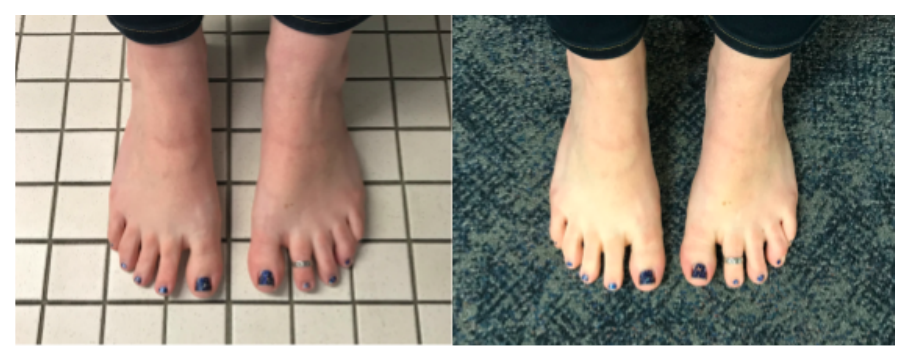
- Real design problems often start with an everyday situation. Example: a student's feet feel cold on tile floors compared with carpet, so a team is asked to design slippers that reduce heat loss from the feet to the floor.
- Possible criteria for the slippers: keep feet warm, be comfortable, be durable enough for everyday wear.
- Possible constraints: a fixed set of materials to choose from, a cost per sheet of material, and the sole needing to hold up to normal walking.
Feet on a tile floor and on carpet
Comparing Material Options
- Before choosing a material, engineers list its benefits and its considerations (drawbacks) side by side, using the same categories for every option, so the comparison is fair.
- Felt and fleece are warm but not very durable; foam is lightweight and flexible but has limited insulation and can flatten over time; cardboard is easy to shape but not durable; cotton socks are breathable and comfortable but not sturdy enough for a sole.
- No single material wins on every point — comparing them side by side against the same criteria is what makes the choice systematic instead of a guess.
Slipper material options: benefits and considerations
Choosing a Systematic Testing Method
- A systematic comparison also needs a fair way to test each candidate design. Engineers choose a testing method before comparing results, so every design is measured the same way.
- Three ways to test how well a slipper resists heat loss: place a thermometer under it on a cold surface and compare readings after a set time (Temperature Measurement Test); use a heating pad or warm water bottle inside it and time how long the temperature takes to drop (Heat Source Test); or use a heat-sensitive camera to track surface temperature and heat loss over time (Heat Transfer Rate Test).
- The best method depends on what equipment is available and how precisely the team needs to measure heat loss.
Choosing a testing method for the slipper
Using a Decision Matrix to Rate Materials
- A decision matrix turns the criteria into numbers: each material is rated on a scale (here, 1 = poor to 5 = excellent) for every criterion, plus its cost.
- Ratings let materials be compared directly: foam rates highest for insulation (5) but lowest for comfort (2); fleece rates highest for comfort (5) but low for durability (2).
- Because each column captures a different criterion, no material has to be "best overall" — the matrix shows exactly where each one is strong and where it is weak.
Decision matrix: rating each slipper material
Making Trade-offs
- Because constraints limit resources, engineers almost never get a material that scores highest on every criterion — they must make trade-offs.
- Combining materials is one way to balance trade-offs: pairing a comfortable material like fleece with a more insulating material like foam can meet more criteria together than either material meets alone.
- Which trade-off is worth making depends on which criteria matter most for that particular design — durability might matter more for a sole, comfort more for the inner lining.
Optimizing: Testing and Revising the Design
- Choosing a design from a decision matrix is not the end of the process — a prototype still has to be built and tested using the systematic method chosen earlier.
- If test results show the design does not meet a criterion well enough, engineers analyze the data and revise the design, then test it again.
- This cycle of designing, testing, and revising is called optimizing: no solution is perfect, but repeated testing and refinement produce a workable one.
स्लाइड्स
Sign up free to view the lesson slides
Step through every slide for this topic — plus flashcards and revision notes — with a free account.
प्रैक्टिस सवाल
फ्री प्रीव्यू — 39 में से 8 सवाल। सभी देखने के लिए साइन अप करें।
1.What is the main purpose of a decision matrix in engineering design?
Easy- ATo randomly select a design solution
- BTo systematically compare design solutions against criteria and constraints
- CTo list all possible design ideas without evaluation
- DTo calculate the cost of each design solution
2.In a decision matrix, what do the rows and columns typically represent?
Easy- ARows represent criteria and columns represent alternatives
- BRows represent alternatives and columns represent criteria
- CRows represent weights and columns represent scores
- DRows represent constraints and columns represent criteria
3.A team is comparing two bridge designs: Design A and Design B. They use a decision matrix with criteria: Cost (weight 3), Safety (weight 5), and Aesthetics (weight 2). Design A scores: Cost 4, Safety 3, Aesthetics 5. Design B scores: Cost 5, Safety 4, Aesthetics 3. What is the total weighted score for Design A?
Medium- A12
- B37
- C47
- D41
4.In a decision matrix, what does a high weight for a criterion indicate?
Medium- AThe criterion is less important
- BThe criterion is more important
- CThe criterion is difficult to measure
- DThe criterion is a constraint
5.Which of the following best describes a belief decision matrix?
Hard- AEach element is a single numerical score
- BEach element is a belief distribution representing uncertainty in the assessment
- CEach element is a grade from a set of predefined grades
- DEach element is a binary value (0 or 1)
6.When using a decision matrix, what does a higher total weighted score indicate?
Medium- AThe design is more expensive
- BThe design better meets the criteria
- CThe design has more constraints
- DThe design is less safe
7.What is a constraint in engineering design?
Easy- AA desired feature of the design
- BA limitation or restriction that the design must satisfy
- CA method to test the design
- DA score in a decision matrix
8.A decision matrix has criteria: Durability, Cost, and Environmental Impact. Each is scored on a scale of 1 to 5. If a design scores 4, 3, and 2 respectively, and all criteria have equal weight, what is the total score?
Medium- A9
- B24
- C12
- D27
Unlock all 39 questions, flashcards & more
इस टॉपिक के हर सवाल, स्लाइड्स, फ्लैशकार्ड और रिवीज़न नोट्स देखने के लिए फ्री अकाउंट बनाएं।