Plant disease
Belajar sambil bermain
Jawab soal-soal ini untuk dapat energi, lalu memancing dan menjelajah. Tanpa akun.
Catatan pelajaran
Plant Pathogens and Pests
- Plants can be infected by viral, bacterial and fungal pathogens, and can also be infested by insects.
- Tobacco mosaic virus (TMV) is a viral pathogen that causes a mosaic pattern of discolouration on leaves.
- Rose black spot is a fungal disease that causes black spots on leaves.
- Aphids are insects that feed on plant sap; they have long sharp mouthpieces that pierce the stem and reach the phloem.
- Aphids can remove large quantities of phloem sap, which weakens the plant and reduces growth.
- Aphids can also act as vectors, transferring diseases from plant to plant.
Detecting Plant Diseases
- Detecting and treating plant infections quickly is important to reduce damage.
- Common symptoms of plant disease include stunted growth, spots on leaves, areas of decay (rot), growths, malformed stems or leaves, discolouration, and the presence of pests.
- Symptoms can be caused by more than one disease, making identification difficult.
- In gardens, diseases can be identified by comparing symptoms with those described in gardening manuals or online.
- For crops or forest trees, experts may take samples to a laboratory for DNA analysis to identify the specific pathogen.
- Testing kits containing monoclonal antibodies can be used to identify pathogens quickly and easily.
Mineral Deficiencies in Plants
- Plants need the correct amount of nutrients to function properly.
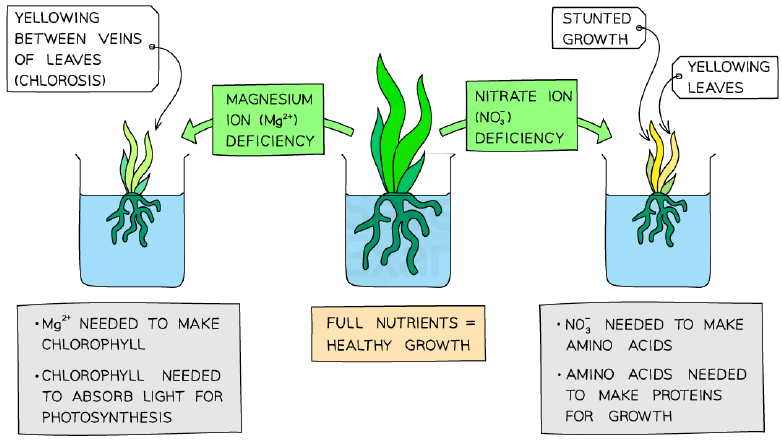
- Nitrate deficiency causes stunted growth because nitrate ions are needed for protein synthesis and therefore growth.
- Magnesium deficiency causes chlorosis (yellowing of leaves) because magnesium ions are needed to make chlorophyll.
- Mineral deficiencies can be treated by adding fertilisers to the soil.
- Fertilisers are often shown as NPK ratios (nitrogen, phosphorus, potassium) depending on the needs of the plant.
- When choosing a fertiliser, match the symptoms to the mineral deficiency: e.g. stunted roots indicate potassium deficiency, lack of flowers/fruits indicates phosphate deficiency.
Mineral deficiencies in plants
Physical Plant Defences
- Plants have physical defences that prevent pathogens from entering.
- The cellulose cell wall provides support and protection from microorganisms.
- The waxy cuticle on leaves is a barrier to microbes; the only entry point is through the stomata.
- Bark is a tough layer of dead cells around the stem that prevents pathogens from entering.
- Deciduous trees lose their leaves in winter, which can remove infections along with the leaves.
Chemical Plant Defences
- Many plants produce chemicals with antimicrobial properties that kill or inhibit pathogens.
- Some plants produce poisons to deter herbivores from eating them.
- Examples of plants with antimicrobial chemicals include tea tree oil, mint and witch hazel.
- Plants are being studied as potential sources of new antibiotics as more bacteria become resistant to current ones.
Mechanical Adaptations Against Herbivores
- Mechanical adaptations help plants avoid being eaten by herbivores.
- Thorns and hairs deter animals from feeding.
- Some leaves droop or curl when touched, which can dislodge insects or make the plant less appealing.
- Mimicry can trick animals; for example, some plants have spots that mimic butterfly eggs, so butterflies do not lay their eggs on the leaves.
- Defences against herbivores also help defend against pathogens because they prevent damage that would allow pathogens to enter.
Effects of Plant Diseases
- Plant diseases can reduce yield for farmers, leading to financial loss.
- TMV causes a mosaic pattern of discolouration on leaves and can reduce chlorophyll production.
- Reduced chlorophyll means less photosynthesis, so the plant has less energy for growth, resulting in stunted growth.
- Aphid infestations can weaken plants by removing sap and can transmit diseases.
- Mineral deficiencies can also reduce yield; for example, nitrate deficiency causes stunted growth.
Controlling Pests and Diseases
- Chemical pesticides are poisons sprayed onto plants; they kill all insects, including beneficial ones.
- Biological control involves releasing natural predators, such as ladybirds, to eat aphids.
- Biological control is specific to the pest and does not harm other insects, but it may take longer to work.
- Chemical pesticides can harm non-target species and may need repeated application.
- To prevent the spread of disease, tools should be disinfected after use on infected plants.
- For TMV, disinfecting tools kills the virus and prevents it from being transferred to healthy plants.
Slide
Sign up free to view the lesson slides
Step through every slide for this topic — plus flashcards and revision notes — with a free account.
Soal latihan
Pratinjau gratis — 8 dari 58 soal. Daftar untuk melihat semuanya.
1.Which mineral ion deficiency causes chlorosis in plants?
Easy- AMagnesium
- BNitrate
- CPhosphate
- DPotassium
2.Which mineral ion deficiency causes stunted growth in plants?
Easy- ANitrate
- BMagnesium
- CCalcium
- DIron
3.What is chlorosis?
Easy- AYellowing of leaves due to lack of chlorophyll
- BDeath of leaf tissue causing black spots
- CStunted growth due to lack of proteins
- DCurling of leaves due to viral infection
4.Aphids are a type of insect pest that can act as vectors for plant diseases.
EasyTrue or false?
5.Which of the following is a physical defence of a plant against pathogens?
Easy- ACellulose cell wall
- BProduction of antibacterial chemicals
- CThorns
- DDrooping leaves when touched
6.Which of the following is a chemical defence of a plant against pathogens?
Easy- AAntibacterial chemicals
- BWaxy cuticle
- CBark
- DCellulose cell wall
7.Which of the following is a mechanical adaptation against herbivores?
Easy- AThorns
- BWaxy cuticle
- CCellulose cell wall
- DProduction of caffeine
8.Which of the following are symptoms of plant disease? (select all that apply)
Easy- AStunted growth
- BSpots on leaves
- CAreas of decay (rot)
- DIncreased flowering
- EMalformed stems or leaves
Unlock all 58 questions, flashcards & more
Buat akun gratis untuk melihat setiap soal, slide, kartu flash, dan catatan ulasan topik ini.