Bulk and surface properties of matter including nanoparticles
Belajar sambil bermain
Jawab soal-soal ini untuk dapat energi, lalu memancing dan menjelajah. Tanpa akun.
Catatan pelajaran
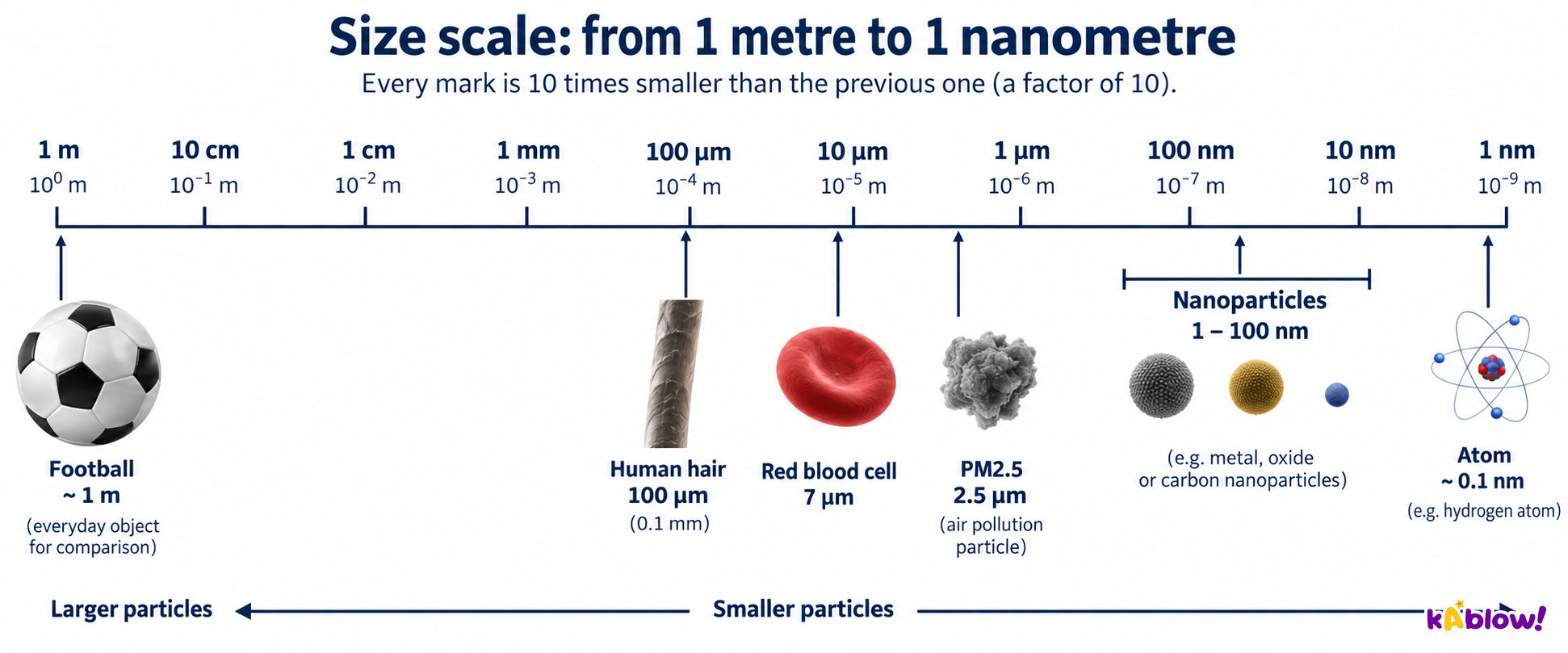
Particle Size Categories
- Particles are grouped by diameter into coarse particles, fine particles, and nanoparticles.
- Coarse particles (also called particulate matter or dust) have diameters between 1 × 10⁻⁵ m and 2.5 × 10⁻⁶ m.
- Fine particles have diameters between 100 and 2500 nm (1 × 10⁻⁷ m to 2.5 × 10⁻⁶ m).
- Nanoparticles are between 1 and 100 nm in size and usually contain only a few hundred atoms.
- Atoms and simple molecules are around 100 times smaller than nanoparticles.
- The terms PM2.5 and PM10 describe fine and coarse particles respectively, based on size in micrometres.
Scale
Nanoparticles and Nanoscience
- Nanoscience is the study of structures that are 1–100 nm in size.
- Research into the production and application of nanoparticles is called nanotechnology.
- Nanoparticles are much smaller than fine particles, which are themselves smaller than coarse particles.
- A nanometre is 1 × 10⁻⁹ m (0.000 000 001 m).
- A micrometre is 1 × 10⁻⁶ m.
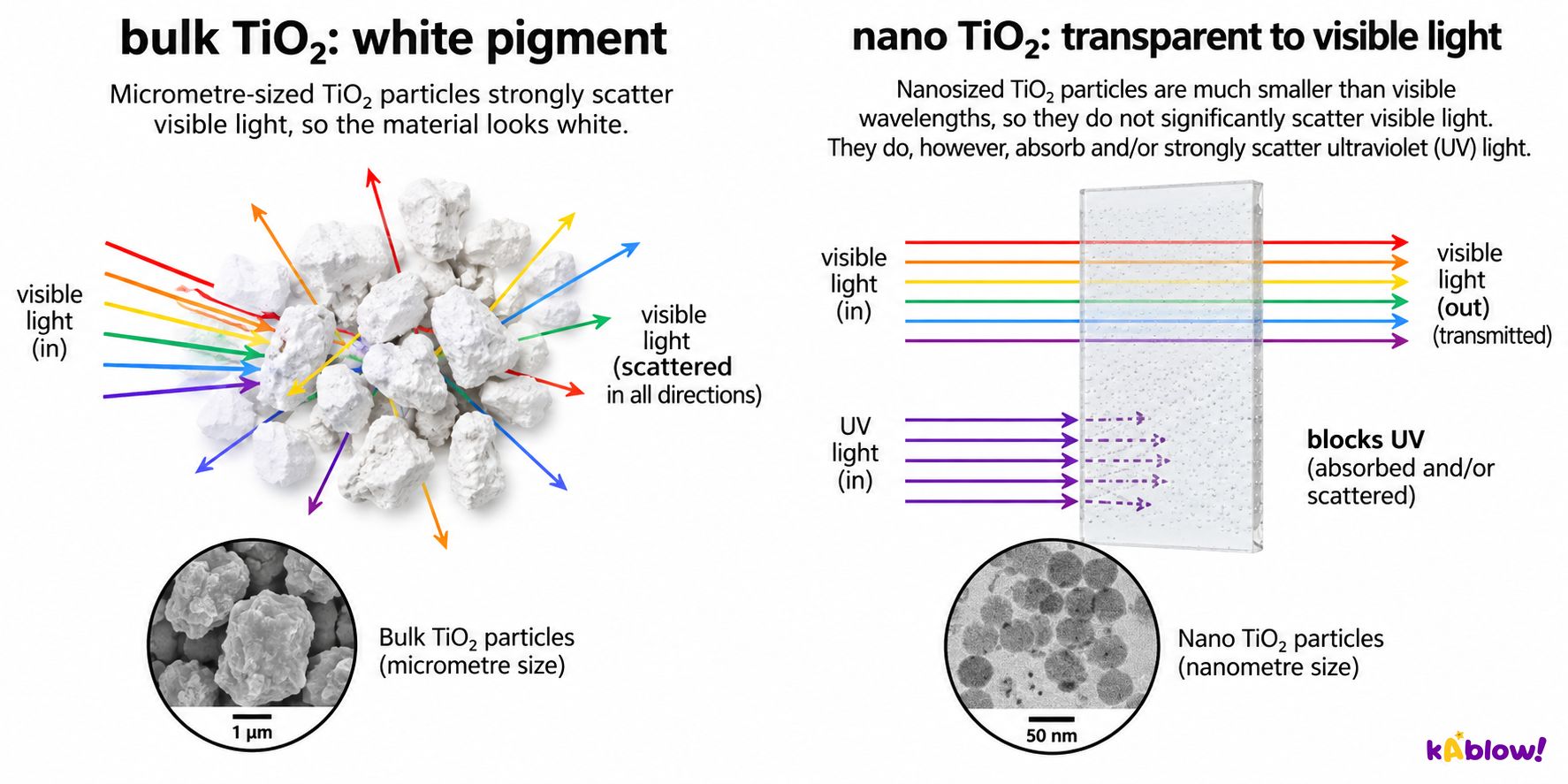
- Nanoparticles may have different properties from the same material in bulk form.
Tio2
Surface Area to Volume Ratio
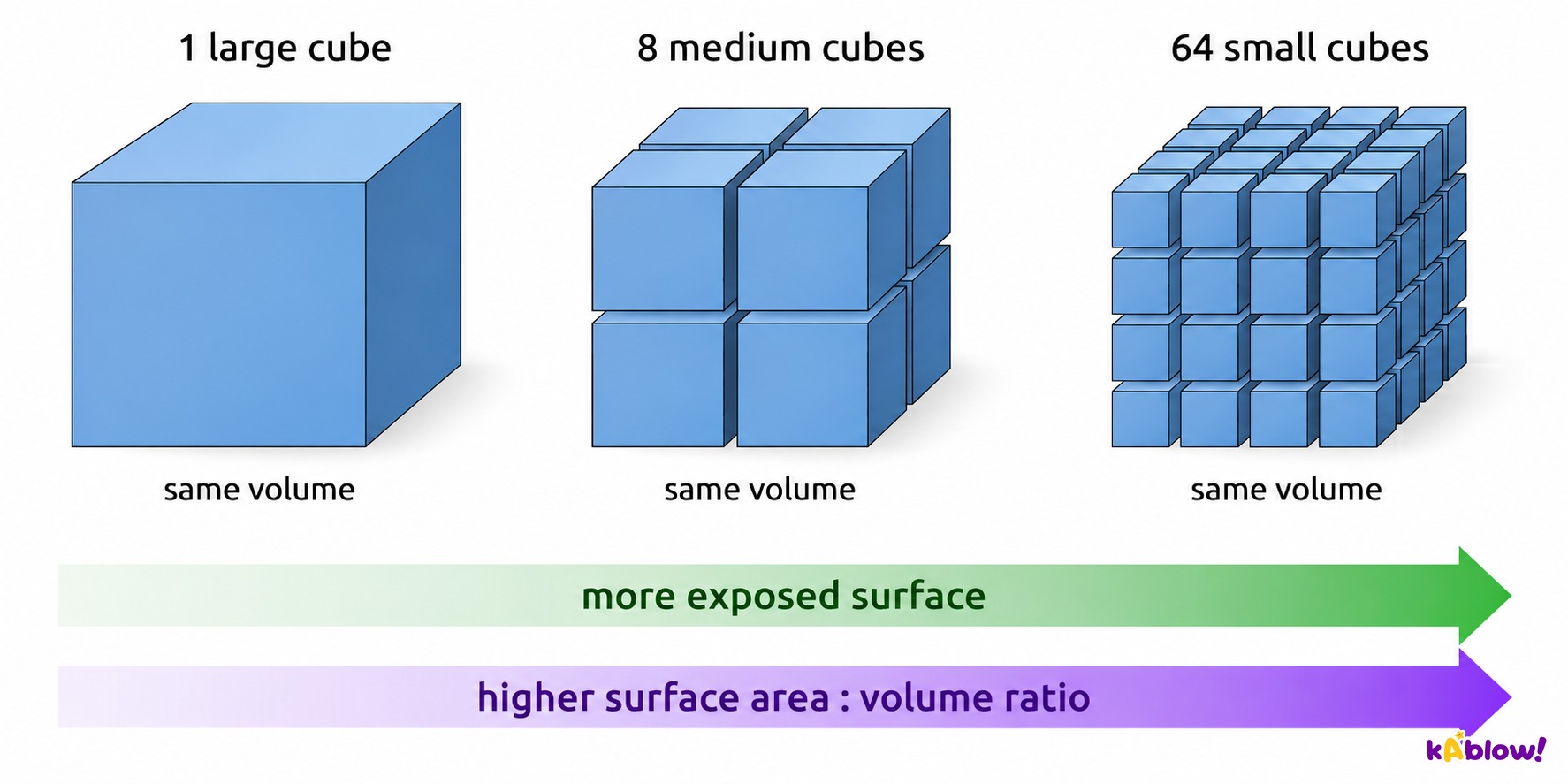
- Nanoparticles have a very high surface area to volume ratio.
- As particles decrease in size, their surface area increases in relation to their volume.
- As the side of a cube decreases by a factor of 10, the surface area to volume ratio increases by a factor of 10.
- This high ratio is why nanoparticles may have different properties from the same material in bulk form.
- It also means that smaller quantities of nanoparticles are needed to be effective compared to materials with larger particle sizes.
- The surface area to volume ratio is important in catalysis and surface chemistry: the higher the ratio, the more surface area is available for reaction, so the better the catalyst.
Ratio
Uses of Nanoparticles
- The main industrial application of nanoparticles is in catalysis due to their high surface area to volume ratios.
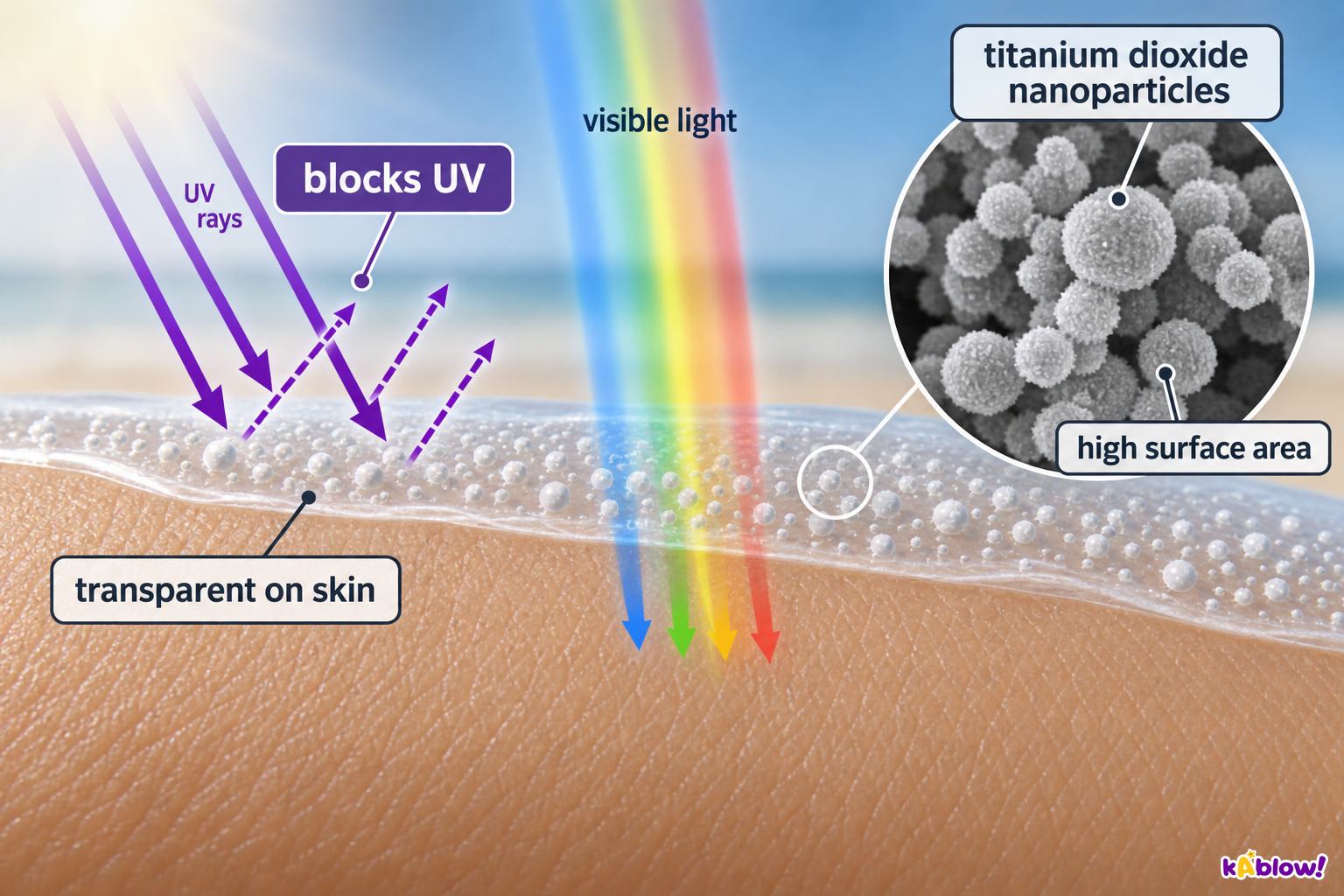
- Titanium dioxide in nanoparticle form is used in sunscreens as it blocks UV light but leaves no white marks on the skin.
- The same chemical in bulk form is used as a white pigment in paints.
- Fullerenes (nanoparticles made of carbon) are used in medicine and drug design as they are more easily absorbed and can deliver drugs to target areas more effectively.
- Fullerenes are also used in electronic circuitry and as coatings for artificial limbs and joints.
- Silver nanoparticles are sprayed onto fibres of medical clothing and surgical masks, giving the flexibility of a material with the added benefit of the antibacterial properties of silver.
- Silver nanoparticle coated clothing can act as a built-in deodorant.
Sunscreen
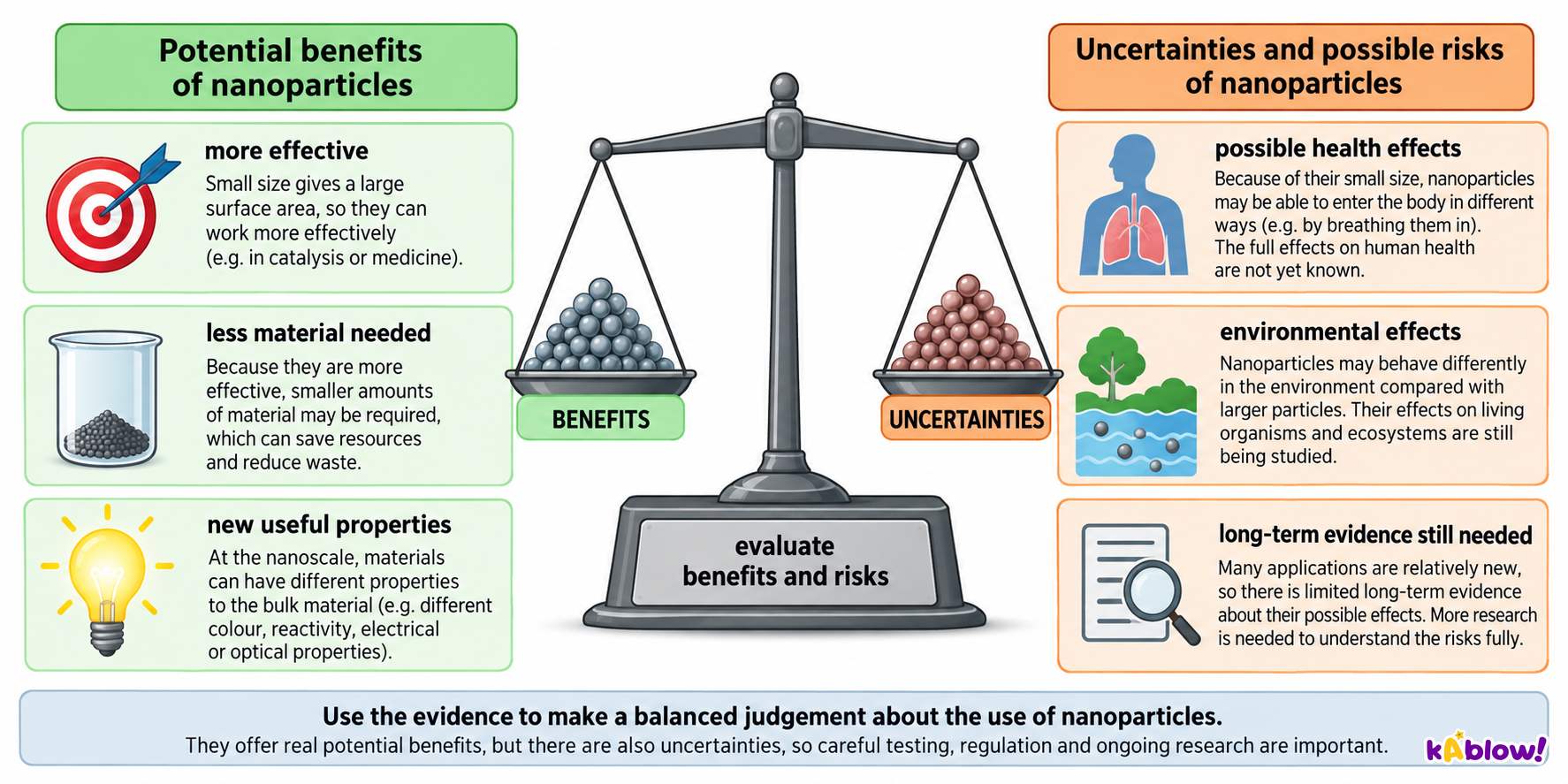
Advantages and Disadvantages of Nanoparticles
- Nanoparticles have widespread uses and applications that can provide an immense advance in materials technology.
- The use of nanoparticles is in its early stages, so there are still many unknown factors and potential risks.
- There is a lack of understanding about how nanoparticles may affect health.
- Although there have been no serious short-term side effects, there could be long-term side effects not yet detected because they haven't been in use long enough.
- Even a small amount of toxicity in a nanoparticle would be multiplied due to the high surface area to volume ratio.
- Nanoparticles are not easily disposed of by the body, which is a cause for caution in medical applications.
Risks
Ceramics, Polymers, Composites and Metals
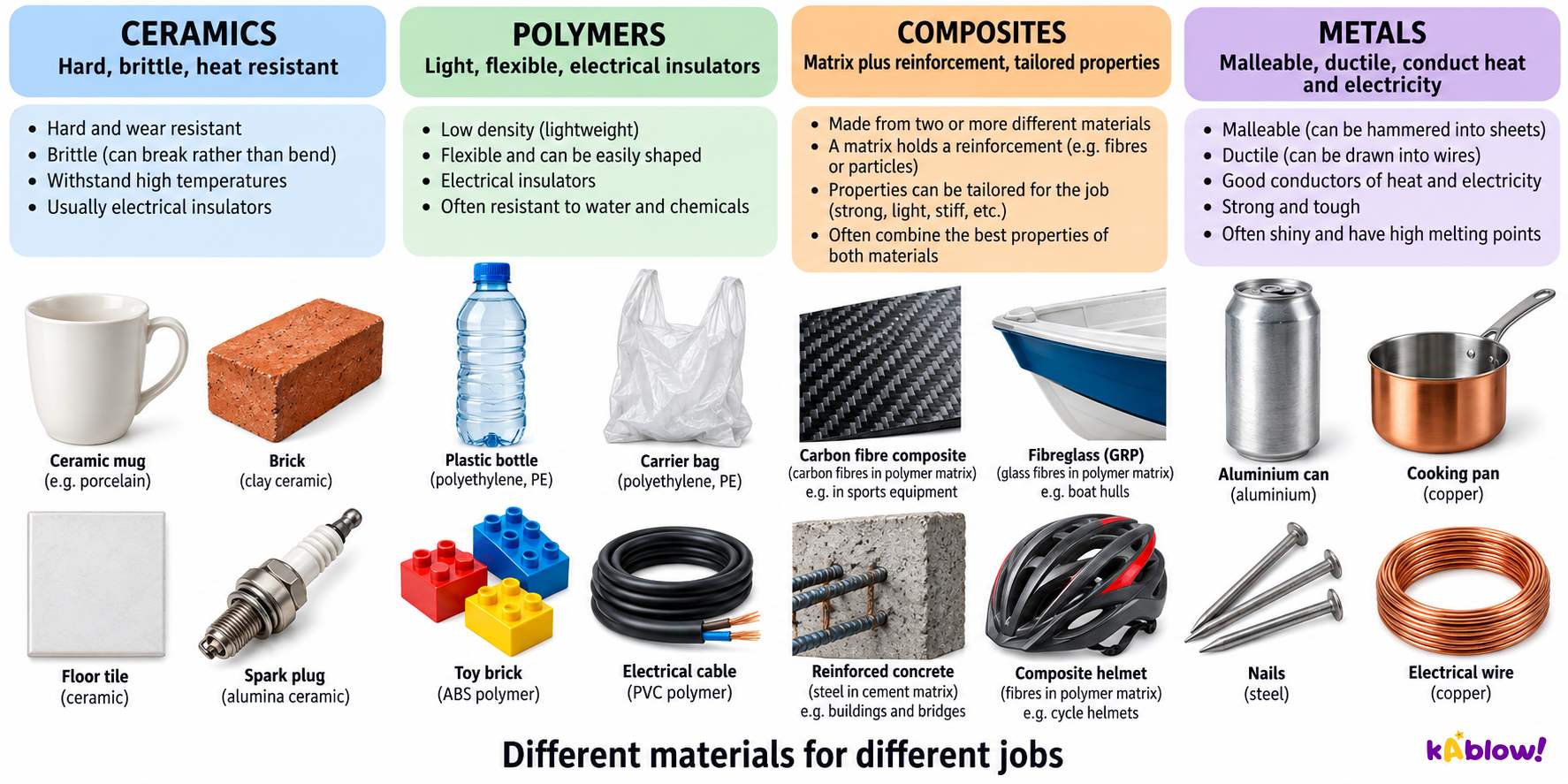
- Glass ceramics are transparent, strong, and insulate against heat; they are more durable than other materials, making them suitable for windows.
- Soda-lime glass is made by heating a mixture of limestone, sand, and sodium carbonate until it melts, then cooling it.
- Borosilicate glass is made using sand and boron trioxide and has a higher melting point than soda-lime glass.
- Clay ceramics are hardened materials that resist compressive forces; clay hardens at high temperatures and when fired produces a very strong and hard material.
- Polymers can be tailor-designed to have specific properties, can be opaque or transparent, are usually tough and flexible, and are poor conductors of heat and electricity.
- Composites are made from two components: a reinforcement and a matrix; the matrix binds the reinforcement together.
- Common composites include fibreglass and steel reinforced concrete; their properties depend on the reinforcement and matrix used, so they can be tailor-engineered.
- Metals are shiny, malleable, and ductile, can be mixed to form alloys, and are good conductors of heat and electricity.
Materials
Effective Use of Materials
- Glass and steel are extremely useful building materials due to their high strength and durability.
- Glass is transparent, hard, and has high compressive strength, making it ideal for walls and windows.
- Metals are used in electrical cabling and electronics because they conduct electricity; copper is commonly used as it is a good conductor and very malleable.
- Aluminium is strong but light, giving it a high strength-to-weight ratio, making it ideal for airplanes.
- Steel reinforced concrete has immense tensile and compressive strength, allowing it to be used as columns and supporting structures.
- Carbon-fibre composites are extremely strong and low weight, used in aviation, aeronautics, and professional racing bicycles.
- Polymers are poor conductors of heat and electricity, making them good thermal and electrical insulators; they are used to insulate electrical wiring to prevent shocks and overheating.
- The low melting points and flexibility of polymers enable them to be moulded into many shapes.
Materials
Key Terminology and Calculations
- Nanoparticle: a particle between 1 and 100 nm in size.
- Coarse particle: a particle with a diameter between 1 × 10⁻⁵ m and 2.5 × 10⁻⁶ m.
- Fine particle: a particle with a diameter between 100 and 2500 nm.
- Surface area to volume ratio: the amount of surface area per unit volume; it increases as particle size decreases.
- Nanoscience: the study of structures that are 1–100 nm in size.
- Catalyst: a substance that increases the rate of a reaction without being used up.
- Order of magnitude: a rough estimate of size, often to the nearest power of ten.
- You should be able to calculate surface areas and volumes of cubes, and make order of magnitude calculations.
Slide
Sign up free to view the lesson slides
Step through every slide for this topic — plus flashcards and revision notes — with a free account.
Soal latihan
Pratinjau gratis — 8 dari 60 soal. Daftar untuk melihat semuanya.
1.Place the following particles in order of size, starting with the smallest.
Easy- Coarse particles
- Nanoparticles
- Fine particles
2.What is the approximate size range of nanoparticles?
Easy- A1–100 nm
- B100–2500 nm
- C2500–10,000 nm
- D1–100 μm
3.Particle X has a diameter of 2.5 × 10⁻⁷ m. Which category is it most likely to belong to?
Easy- ACoarse particles
- BFine particles
- CNanoparticles
- DAtoms
4.Why are nanoparticles effective catalysts even when only a very small quantity is used?
Easy- AThey are reactive compounds
- BThey have a high surface area to volume ratio
- CThey have a low boiling point
- DThey can adopt different shapes
5.Nanoparticles usually contain only a few hundred atoms.
EasyTrue or false?
6.As the side of a cube decreases by a factor of 10, its surface area to volume ratio decreases by a factor of 10.
EasyTrue or false?
7.Which of the following are uses of nanoparticles? (select all that apply)
Medium- ACatalysts
- BSunscreens
- CDrug delivery to cells
- DExtracting iron from its ore
- EDeodorants in clothing
8.Which of the following is NOT a use of nanoparticles?
Easy- ADrug delivery to cells
- BExtracting iron from its ore
- CProducing suncreams
- DCatalysts
Unlock all 60 questions, flashcards & more
Buat akun gratis untuk melihat setiap soal, slide, kartu flash, dan catatan ulasan topik ini.