Nutrients and a balanced diet
Belajar sambil bermain
Jawab soal-soal ini untuk dapat energi, lalu memancing dan menjelajah. Tanpa akun.
Untuk pendidik: slide pelajaran, catatan ulasan siap pakai untuk Nutrients and a balanced diet (MYP Biology, Year 1) — gunakan dalam pelajaranmu, atau jalankan topik sebagai aktivitas kelas interaktif yang dimainkan pembelajar sebagai permainan langsung.
Catatan pelajaran
Big idea: food and you
- Big idea: the key concept is Relationships, the related concept is Function (what each nutrient does for the body) and the global context is Globalization and sustainability: how food choices link people and the planet.
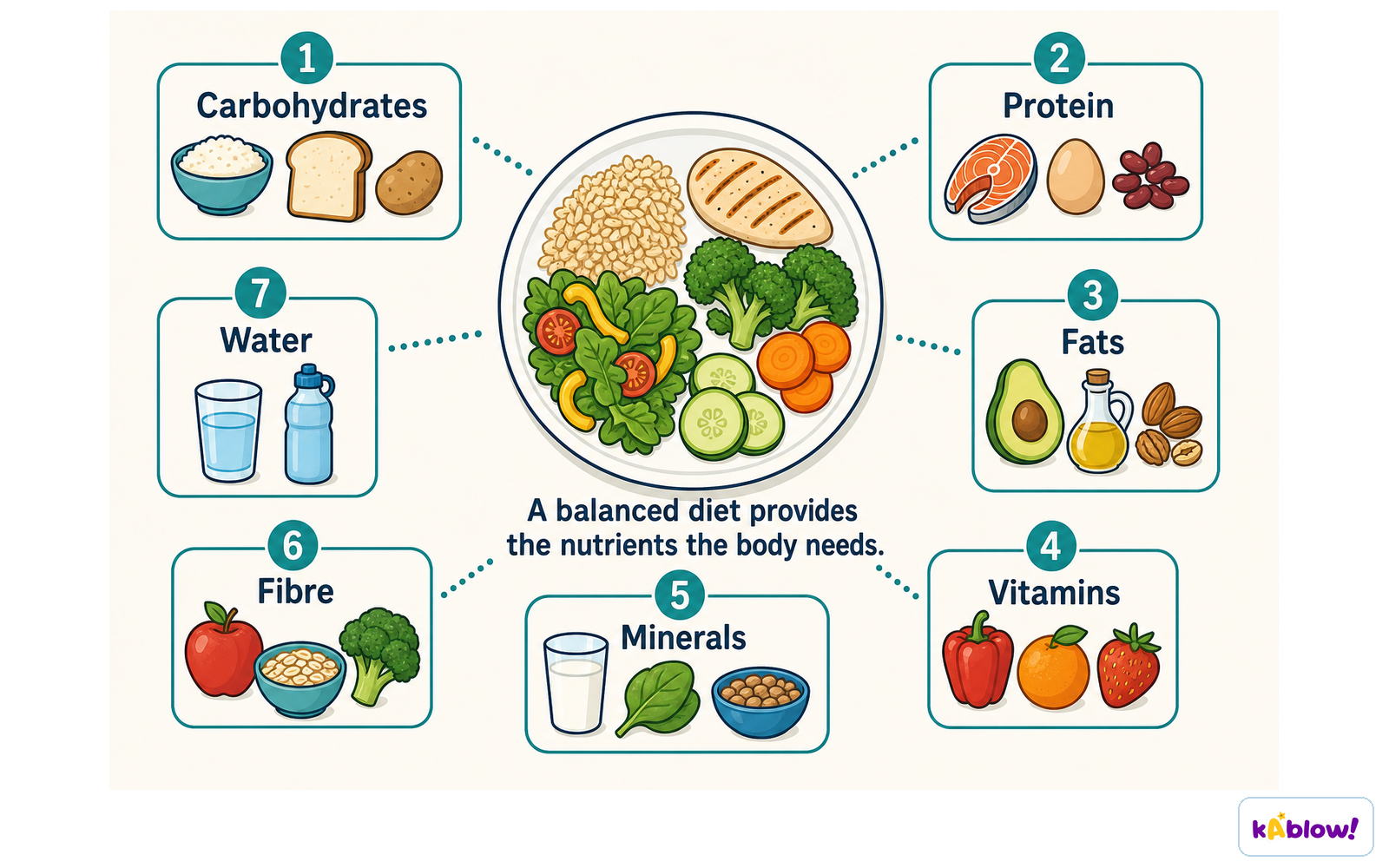
- A nutrient is a substance in food that the body needs. There are seven groups: carbohydrates, proteins, fats, vitamins, minerals, fibre and water.
- A balanced diet contains all seven groups, in the right amounts for your age, size and activity.
- Each nutrient has its own function. You need a variety of foods because no single food contains everything.
- Malnutrition means an unbalanced diet. It can mean too little of a nutrient or too much energy.
The seven nutrient groups
Carbohydrates, proteins and fats
- Carbohydrates are the main source of energy. Starch is found in bread, pasta, rice and potatoes. Sugars are found in fruit and sweets.
- Proteins are needed for growth and repair. Good sources are meat, fish, eggs, milk, beans and lentils.
- Fats are an energy store, insulate the body and protect organs. Sources include butter, oils, nuts and oily fish.
- Fat releases about 37 kJ per gram, more than twice the energy of carbohydrate or protein, which each give about 17 kJ per gram.
- Energy is measured in kilojoules (kJ). Food labels may also show kilocalories (kcal).
Vitamins, minerals, fibre and water
- Vitamins and minerals are needed in small amounts to keep the body working. They do not give energy.
- Vitamin C (citrus fruit, peppers) keeps skin and gums healthy. Vitamin D (oily fish, eggs, and sunlight on skin) helps the body absorb calcium.
- Calcium (milk, cheese) builds strong bones and teeth. Iron (red meat, spinach, beans) is needed to make haemoglobin.
- Fibre (wholegrains, vegetables) cannot be digested. It adds bulk that keeps food moving through the gut.
- Water carries substances around in the blood, is needed for chemical reactions and is lost in sweat, so we must drink every day.
- A deficiency disease happens when a nutrient is missing. Scurvy (vitamin C) causes bleeding gums and slow healing. Rickets (vitamin D) makes bones soft and bent. Anaemia (iron) makes a person tired and pale.
How much energy do you need?
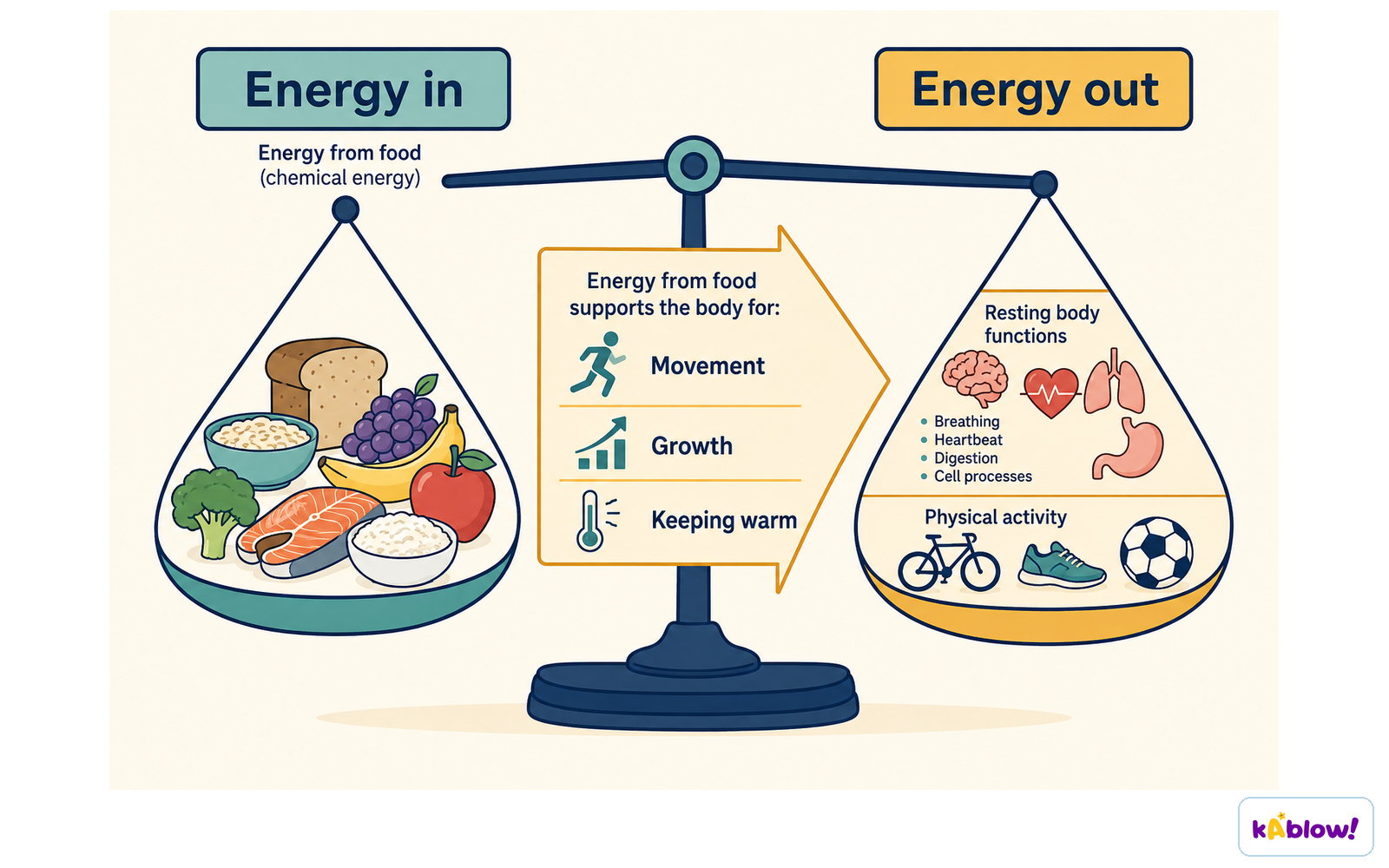
- Your body uses energy from food for movement, growth and keeping warm, and to keep your body working even when you rest.
- How much energy a person needs depends on their age, size and how active they are. An athlete needs more than someone who sits all day.
- Growing teenagers need a lot of energy and protein because their bodies are growing quickly.
- If you take in more energy than you use, the extra is stored as fat. If you take in less, the body uses its stores and you lose weight.
- A balanced diet matches the energy you take in to the energy you use.
Energy in and energy out
Reading a food label and making choices
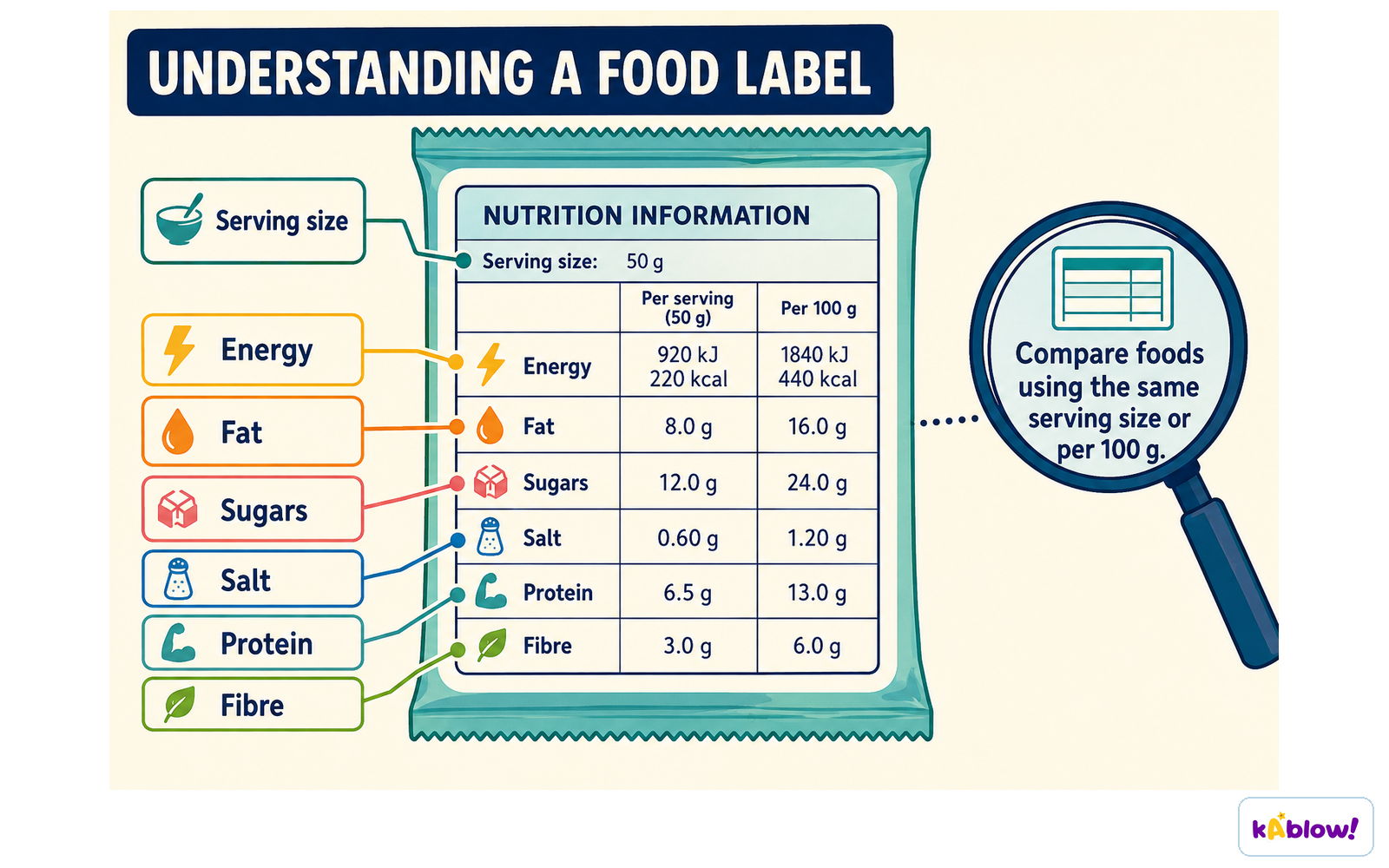
- A nutrition label shows energy, fat, sugars, salt, protein and fibre. It gives amounts per serving and per 100 g.
- Use the per 100 g column to compare foods fairly. Multiply to work out the amount in a serving: a 50 g serving is half of the per 100 g figure.
- Ingredients are listed by weight, largest first. If sugar is near the top, the food contains a lot of sugar.
- Your choices affect people and the planet. Food that travels a long way has many food miles. Beans and lentils generally need less land and water than beef.
- Across the world some people do not have enough food and others eat too much energy. Both are forms of malnutrition.
Reading a food label
Think like a scientist: which snack has the most energy?
- You can compare the energy in foods by burning a small piece under a boiling tube of water and measuring how much the water warms up.
- The independent variable is the type of food. The dependent variable is the rise in water temperature. Control variables are the volume of water, the mass of food, the starting temperature and the distance from the flame.
- Safety: wear goggles, tie back long hair, and check nobody has a nut allergy before using nuts.
- Inquiry task: write a method to compare three snacks. Say what you will change, measure and keep the same, and how you will make your results reliable (repeat and find a mean).
- Evaluate: some heat escapes into the air, so the results are lower than the true energy content. Suggest one way to reduce the heat lost.
Slide
Sign up free to view the lesson slides
Step through every slide for this topic — plus flashcards and revision notes — with a free account.
Soal latihan
Pratinjau gratis — 8 dari 53 soal. Daftar untuk melihat semuanya.
1.Which nutrient is the body's main source of energy?
Easy- AVitamins
- BCarbohydrates
- CMinerals
- DWater
2.Which nutrient do we need for growth and repair?
Easy- AFibre
- BWater
- CVitamin C
- DProtein
3.Which of these foods is a good source of protein?
Easy- ACooking oil
- BRice
- COranges
- DEggs
4.Which of these foods is rich in starch, a type of carbohydrate?
Easy- AChicken
- BOlive oil
- CPasta
- DCheese
5.A lack of which vitamin causes scurvy?
Easy- AVitamin A
- BVitamin D
- CVitamin C
- DVitamin B
6.A lack of which mineral can cause anaemia?
Easy- ACalcium
- BIron
- CSodium
- DPotassium
7.Which part of the body does rickets affect?
Easy- AThe bones
- BThe skin
- CThe lungs
- DThe eyes
8.What is one job of water in the body?
Easy- AIt is the main store of energy in the body
- BIt is used to build new muscle tissue
- CIt carries dissolved substances in blood
- DIt is turned into fat when we drink lots
Unlock all 53 questions, flashcards & more
Buat akun gratis untuk melihat setiap soal, slide, kartu flash, dan catatan ulasan topik ini.
Soal ujian lampau
Latihan soal ujian lampau untuk topik ini segera hadir.
Segera hadir