Periodic patterns and electron arrangements
Belajar sambil bermain
Jawab soal-soal ini untuk dapat energi, lalu memancing dan menjelajah. Tanpa akun.
Catatan pelajaran
Big idea: periodic patterns and electron arrangements
- Key concept: Relationships. The proton number identifies the element. Electron arrangements explain periodic patterns; atoms in the same main group have similar outer-shell arrangements.
- Related concepts: Models and evidence. Use a scientific explanation to make predictions, then test it against observations.
- Global context: Scientific and technical innovation. Predicting chemical properties helps scientists choose materials.
Elements, Compounds & Mixtures
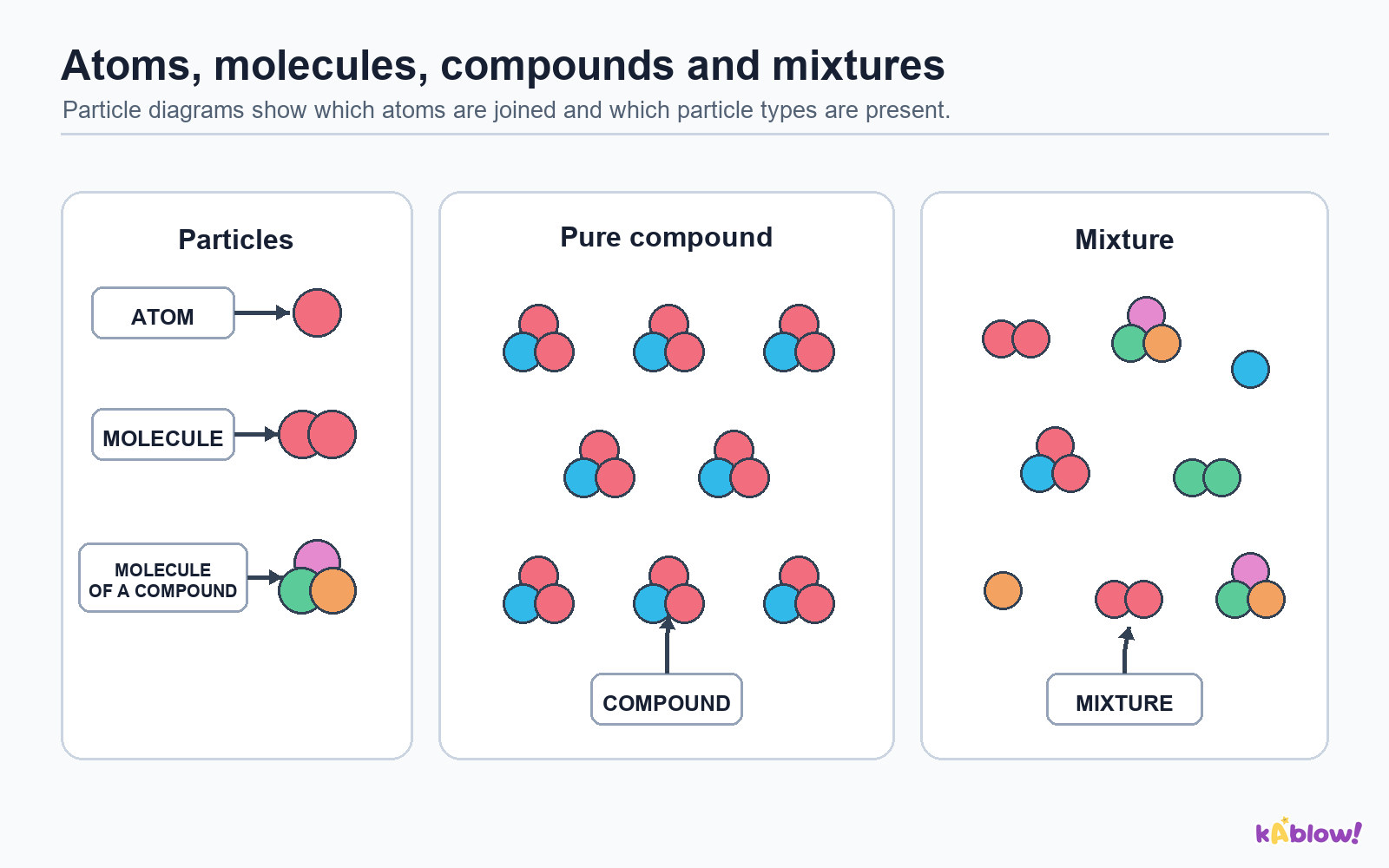
- Element: substance made of atoms with the same number of protons; cannot be split chemically.
- Compound: pure substance of two or more elements chemically combined; cannot be separated by physical means.
- Mixture: combination of substances not chemically combined; separable by physical methods (e.g., filtration).
- Examples: element = copper; compound = CO₂; mixture = sand and water.
Particle diagram showing elements, compounds and mixtures
Atomic Structure
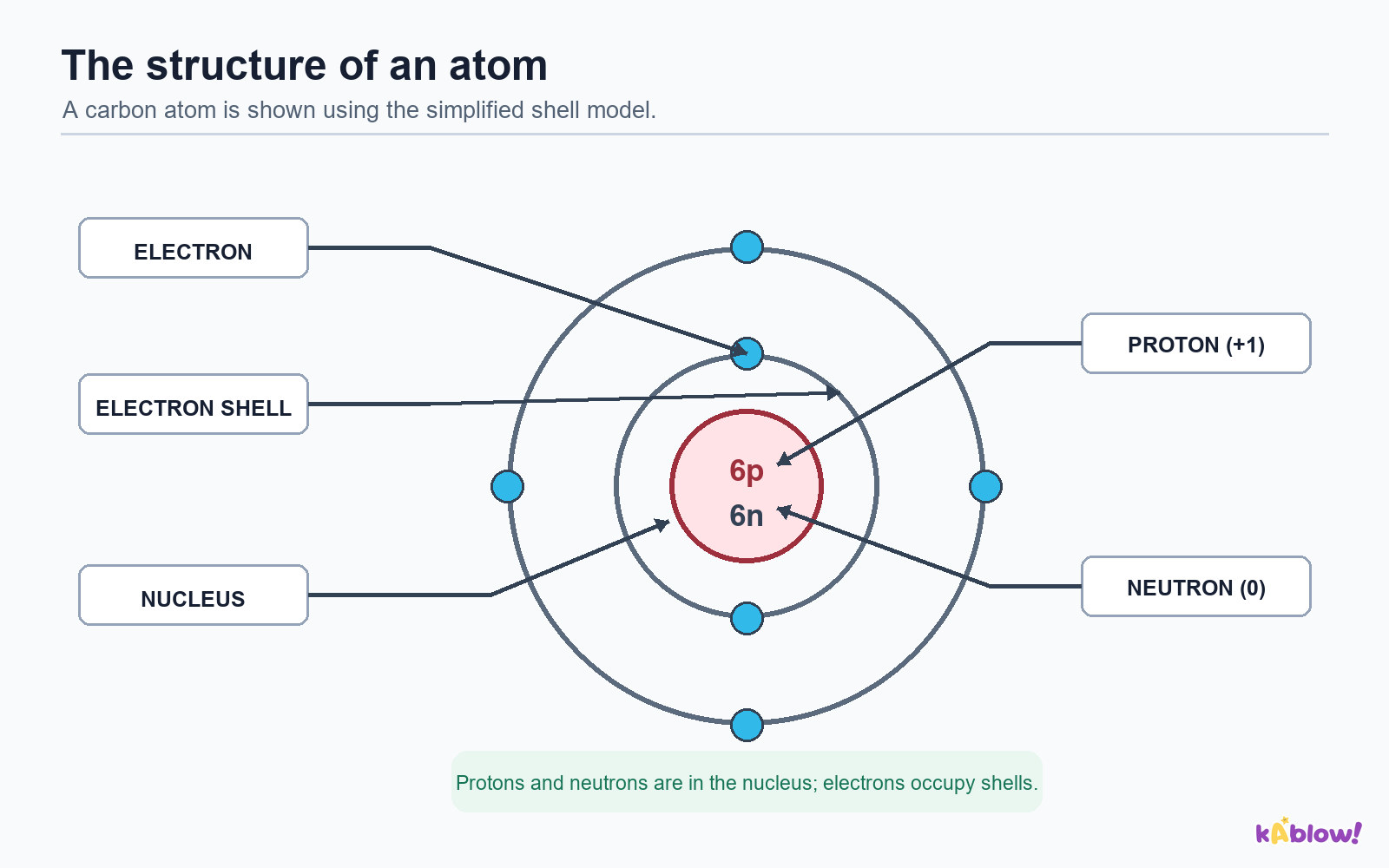
- Atoms consist of protons, neutrons (in nucleus) and electrons (in shells).
- Proton: relative mass 1, charge +1; Neutron: relative mass 1, charge 0; Electron: relative mass 1/1840, charge -1.
- Atomic number (Z) = number of protons; determines element and equals electrons in neutral atom.
- Mass number (A) = total protons + neutrons; also called nucleon number.
- Number of neutrons = mass number – atomic number.
The structure of the carbon atom
Electronic Configuration
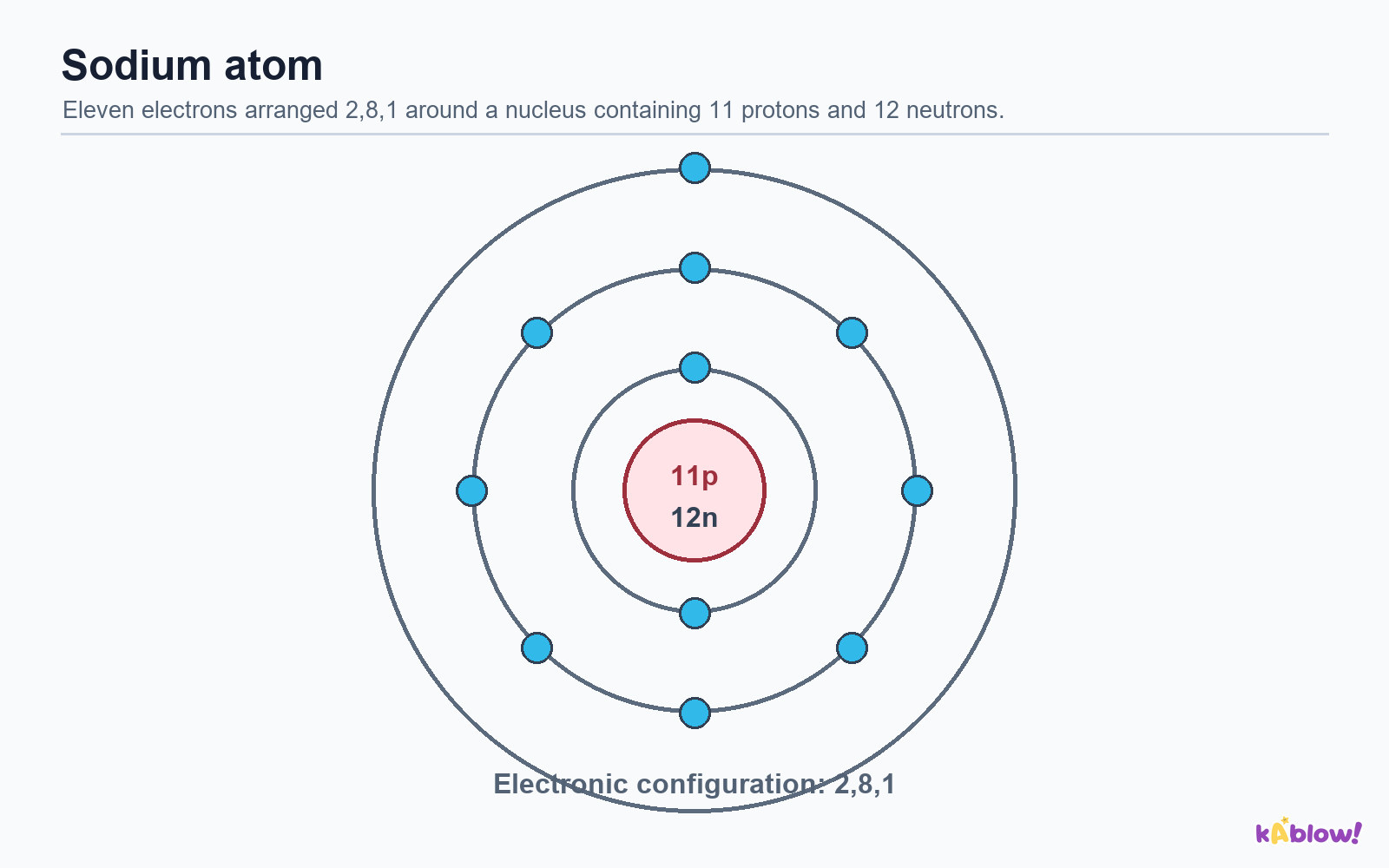
- Electrons occupy shells (energy levels); first shell holds 2, second 8, third 8 (simplified).
- Electronic configuration lists electrons per shell, e.g., carbon = 2,4.
- Outermost shell (valence shell) determines chemical properties; full outer shell = stable (noble gas).
- Number of occupied shells = Period number; number of outer electrons = Group number (for Groups I–VII).
- Ions: e.g., Na⁺ has configuration 2,8 (lost one electron).
Sodium atom: electron configuration 2,8,1
Isotopes
- Isotopes: same element, same number of protons, different number of neutrons.
- Isotopes have identical chemical properties (same outer electrons) but different physical properties (mass).
- Notation: e.g., carbon-14 or ¹⁴C.
Relative Atomic Mass
- Relative atomic mass (Aᵣ) = weighted average mass of all isotopes compared to 1/12 mass of carbon-12.
- Formula: Aᵣ = (Σ(% abundance × mass)) / 100.
- Example: rubidium: (72×85 + 28×87)/100 = 85.6.
Periodic Table & Groups
- Elements in same Group have same number of outer electrons and similar chemical properties.
- Noble gases (Group 0/VIII) have full outer shells and are unreactive.
- Group number for Groups I–VII equals number of outer electrons.
- Period number equals number of occupied electron shells.
Think like a scientist
- Use a teacher-provided dataset to compare the electron arrangements and properties of elements in a period.
- Comparison: the element being compared. Outcome: the electron arrangement and chemical properties.
- Control: compare atoms in their neutral state. Explain why this makes the comparison fairer.
- Evidence: Use a consistent method, repeated observations where appropriate and a table with labelled quantities and units. Keep unexpected results and investigate their cause.
- Safety: Practical activities need teacher supervision and an appropriate risk assessment. Use the provided data or simulation where the investigation specifies it.
- Inquiry task: State a testable question, predict the outcome using the science, then explain how your observations would support or challenge the prediction.
Evaluate the science
- Predicting chemical properties helps scientists choose materials.
- A simple shell model predicts many trends but does not describe the full behaviour of electrons.
- Evaluation task: Link your conclusion to evidence, identify a limitation and suggest a specific improvement. Distinguish a measured result from an explanation of its cause.
Slide
Sign up free to view the lesson slides
Step through every slide for this topic — plus flashcards and revision notes — with a free account.
Soal latihan
Pratinjau gratis — 8 dari 45 soal. Daftar untuk melihat semuanya.
1.Which option correctly describes the relative charges and masses of the subatomic particles?
Easy- AProton +1, neutron 0, electron -1; relative mass of proton 1, neutron 1, electron 0.00054
- BProton +1, neutron 0, electron -1; relative mass of proton 0.00054, neutron 1, electron 0
- CProton 0, neutron +1, electron -1; relative mass of proton 1, neutron 1, electron 0.00054
- DProton +1, neutron 0, electron 0; relative mass of proton 1, neutron 1, electron 0.00054
2.The atomic number of element Q is 9 and its mass number is 19. In which group of the Periodic Table should element Q be placed?
Easy- AGroup 0
- BGroup I
- CGroup VII
- DGroup II
3.Which two atoms are isotopes?
Easy- AQ and S
- BQ and T
- CR and T
- DR and S
4.Which of the following statements is correct?
Easy- AElements contain different atoms
- BCompounds consist of elements that are not chemically combined
- CMixtures consist of elements that are chemically combined
- DA mixture can contain elements and compounds
5.Which statement about carbon is correct?
Medium- AIt has 4 electron shells.
- BIt has 2 outer shell electrons.
- CIt has 12 nucleons.
- DIt has an electron configuration of 2,8,2.
6.Element X contains 12 of each sub-atomic particle. What is the correct Group number for element X?
Medium- AGroup 0
- BGroup I
- CGroup VII
- DGroup II
7.The X⁺ ion of element X has 16 electrons and a nucleon number of 37. What is the correct Group number for element X?
Hard- AVII
- BVIII
- CIII
- DI
8.Which row correctly describes the number of outer shell electrons and properties of isotopes?
Hard- ANumber of electrons: same; Chemical properties: same
- BNumber of electrons: same; Chemical properties: different
- CNumber of electrons: different; Chemical properties: same
- DNumber of electrons: different; Chemical properties: different
Unlock all 45 questions, flashcards & more
Buat akun gratis untuk melihat setiap soal, slide, kartu flash, dan catatan ulasan topik ini.