Homeostasis
Belajar sambil bermain
Jawab soal-soal ini untuk dapat energi, lalu memancing dan menjelajah. Tanpa akun.
Catatan pelajaran
Homeostasis: Maintaining the Internal Environment
- Homeostasis is the process of maintaining a constant internal environment within preset limits.
- It is critically important because it maintains optimal conditions for enzyme action and cell function.
- Sensory cells detect information about conditions inside and outside the body; if conditions change, the body responds to keep them constant.
- Physiological factors controlled by homeostasis in mammals include core body temperature, blood pH, blood glucose concentration, and osmotic concentration of the blood.
The negative feedback cycle
Negative Feedback Loops
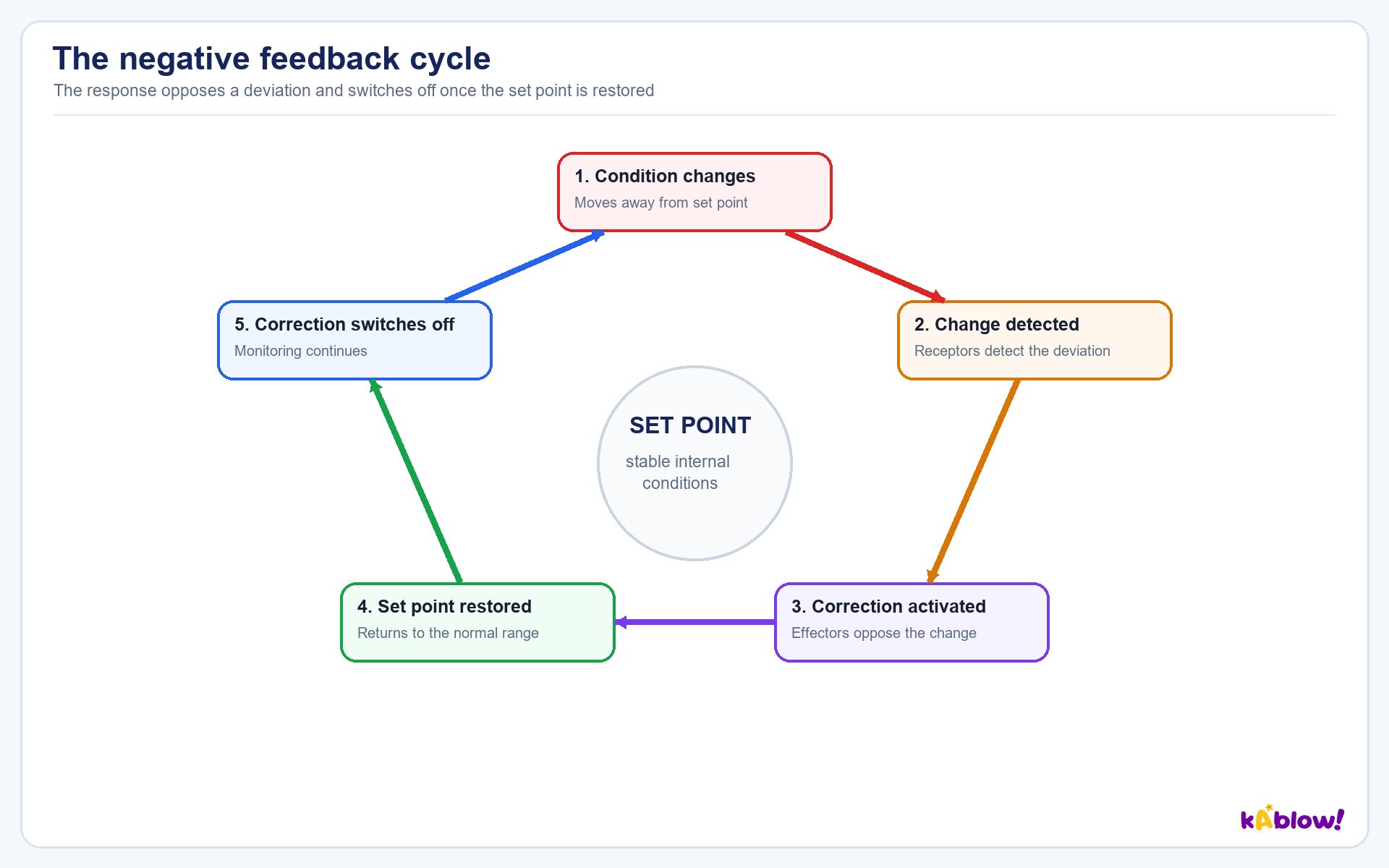
- Most homeostatic control mechanisms use negative feedback loops, which reverse the effects of any change to return values to a set point.
- Negative feedback maintains conditions within set limits, unlike positive feedback, which amplifies any change.
- A negative feedback loop involves a receptor (detects change), a coordination system (brain and nervous system transfer information), and an effector (muscles and glands bring about a response).
- The factor is continuously monitored: if it increases, the body responds to decrease it; if it decreases, the body responds to increase it.
Regulation of Blood Glucose: The Pancreas and Hormones
- Blood glucose concentration is kept within narrow limits because glucose is essential for respiration and affects the osmotic balance between cells and blood.
- The pancreas contains groups of cells called the islets of Langerhans, which form the endocrine tissue; the exocrine tissue produces digestive enzymes.
- The islets of Langerhans contain α cells that secrete glucagon and β cells that secrete insulin.
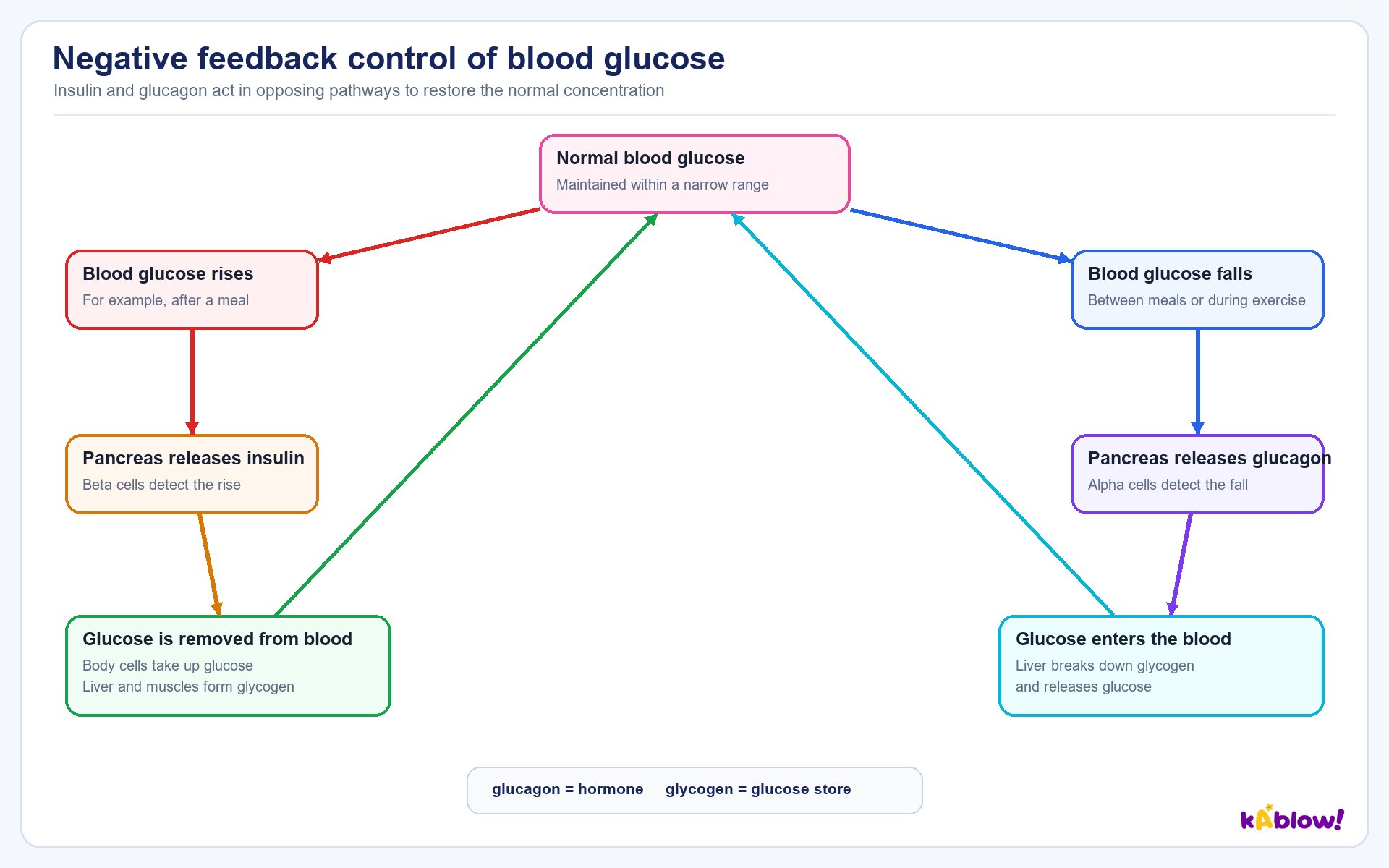
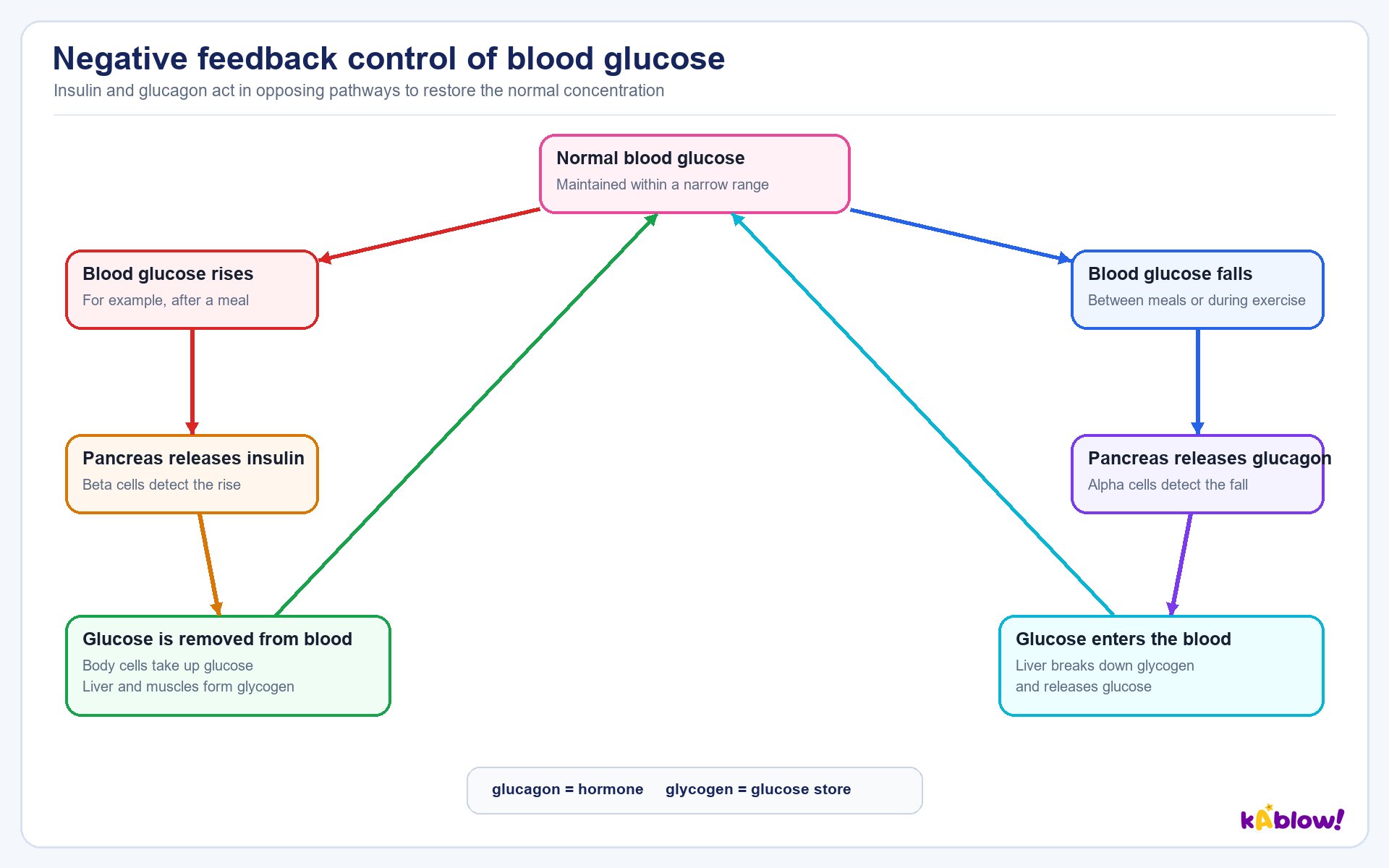
- Insulin lowers blood glucose concentration, while glucagon increases it.
Control of blood glucose
The Effects of Insulin
- Blood glucose increases after a carbohydrate-containing meal; this is detected by β cells, which synthesise and secrete insulin.
- Insulin is transported in the blood to target cells, mainly in the liver and muscles.
- Insulin causes glucose channels in cell surface membranes to open, allowing glucose to move into cells by facilitated diffusion.
- Insulin stimulates glycogenesis (conversion of excess glucose to glycogen for storage), increases the rate of respiration, and promotes conversion of glucose to fatty acids for fat storage.
The Effects of Glucagon
- Glucagon is synthesised and secreted by α cells when blood glucose falls, such as after fasting or exercise.
- Glucagon is transported in the blood to target cells.
- Glucagon activates enzymes that hydrolyse glycogen in liver and muscle cells, releasing glucose into the blood; this is glycogenolysis.
- Glucagon decreases the rate of respiration and stimulates gluconeogenesis (conversion of amino acids to glucose).
Diabetes: Type 1 and Type 2
- Diabetes is a condition in which the homeostatic control of blood glucose has failed or deteriorated, allowing blood glucose concentration to rise.
- Excess glucose appears in the urine because the kidneys cannot filter it all out; this causes large volumes of urine and thirst due to dehydration.
- Glucose remains in the blood rather than entering cells, so cellular respiration is reduced, causing fatigue.
- Dangerously high blood glucose after a meal can cause organ damage.
- Type 1 diabetes is caused by an autoimmune response that attacks the β cells of the islets of Langerhans, so the pancreas fails to produce sufficient insulin; it normally begins in childhood.
- Type 2 diabetes is more common and usually develops in older adults; the pancreas still produces insulin, but cell membrane receptors have reduced in number or no longer respond, causing insulin resistance.
- Type 1 diabetes is treated with regular blood tests, insulin injections, and a modified diet (reduced carbohydrate intake).
- Type 2 diabetes is managed with medication to lower blood glucose, a low-carbohydrate diet, and regular exercise; obesity is a major risk factor.
Opposing actions of insulin and glucagon
Thermoregulation as Negative Feedback Control
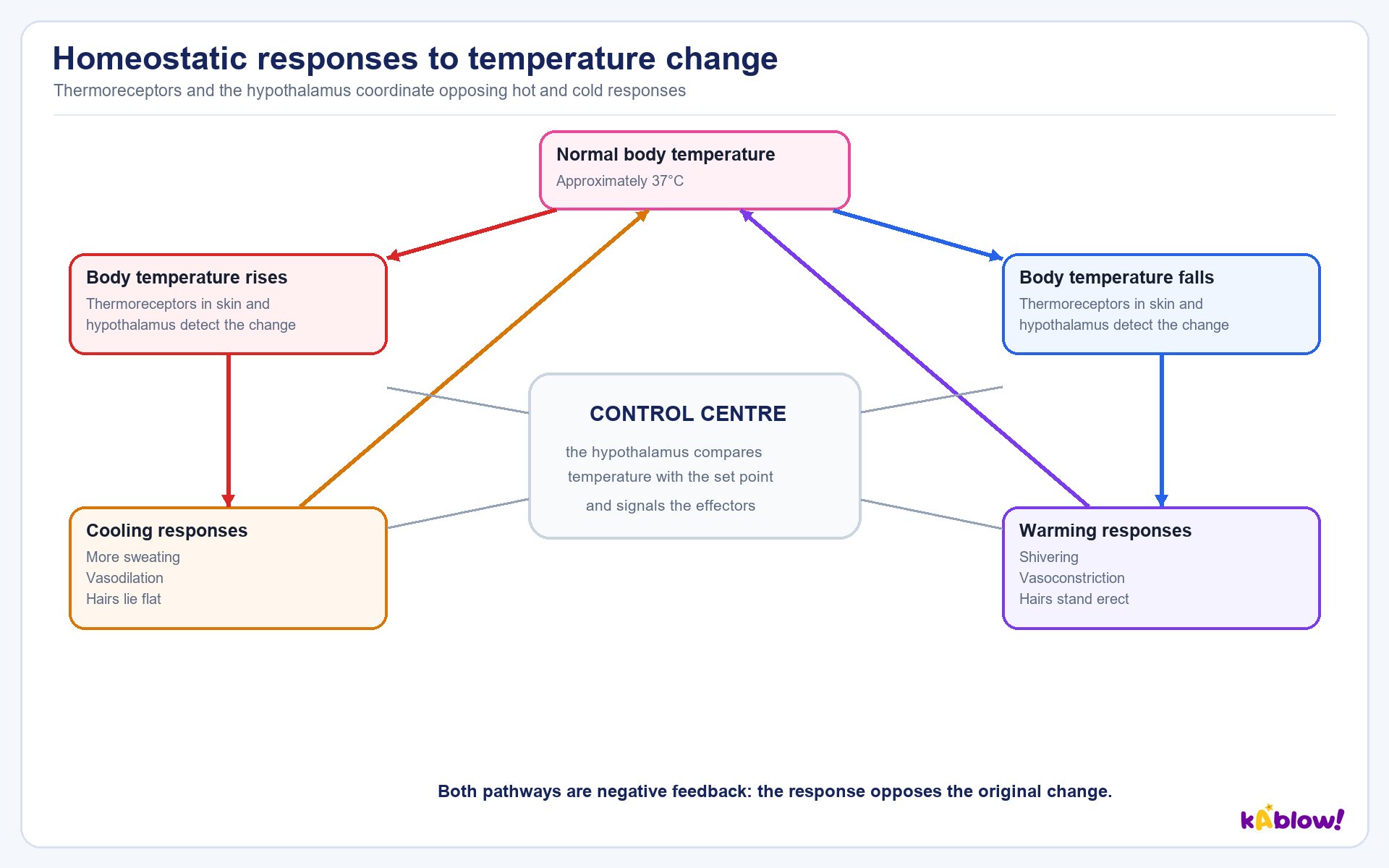
- Thermoregulation is the control of internal body temperature; it is an example of negative feedback.
- Peripheral thermoreceptors in the skin monitor external body temperature, while receptors inside the hypothalamus monitor internal body temperature.
- Effectors respond by controlling heat loss at the skin and modifying heat generation by metabolism.
- The hypothalamus regulates secretion of thyrotropin-releasing hormone, which stimulates the pituitary to release thyroid-stimulating hormone; this stimulates the thyroid gland to release thyroxin.
- Thyroxin increases metabolic rate, altering heat generation by cell metabolism.
- Muscle tissue shivering raises metabolic rate and releases heat; white adipose tissue provides insulation, and brown adipose tissue generates heat before shivering begins (non-shivering thermogenesis).
Responses to a change in body temperature
Mechanisms of Thermoregulation
- A stable core temperature of about 37 °C is vital for enzyme activity; lower temperatures slow reactions, and temperatures that are too high cause enzymes to denature.
- Endotherms (e.g. mammals and birds) maintain a constant internal body temperature using physiological mechanisms (shivering, altered metabolism) and behavioural mechanisms (seeking shade, sunbathing).
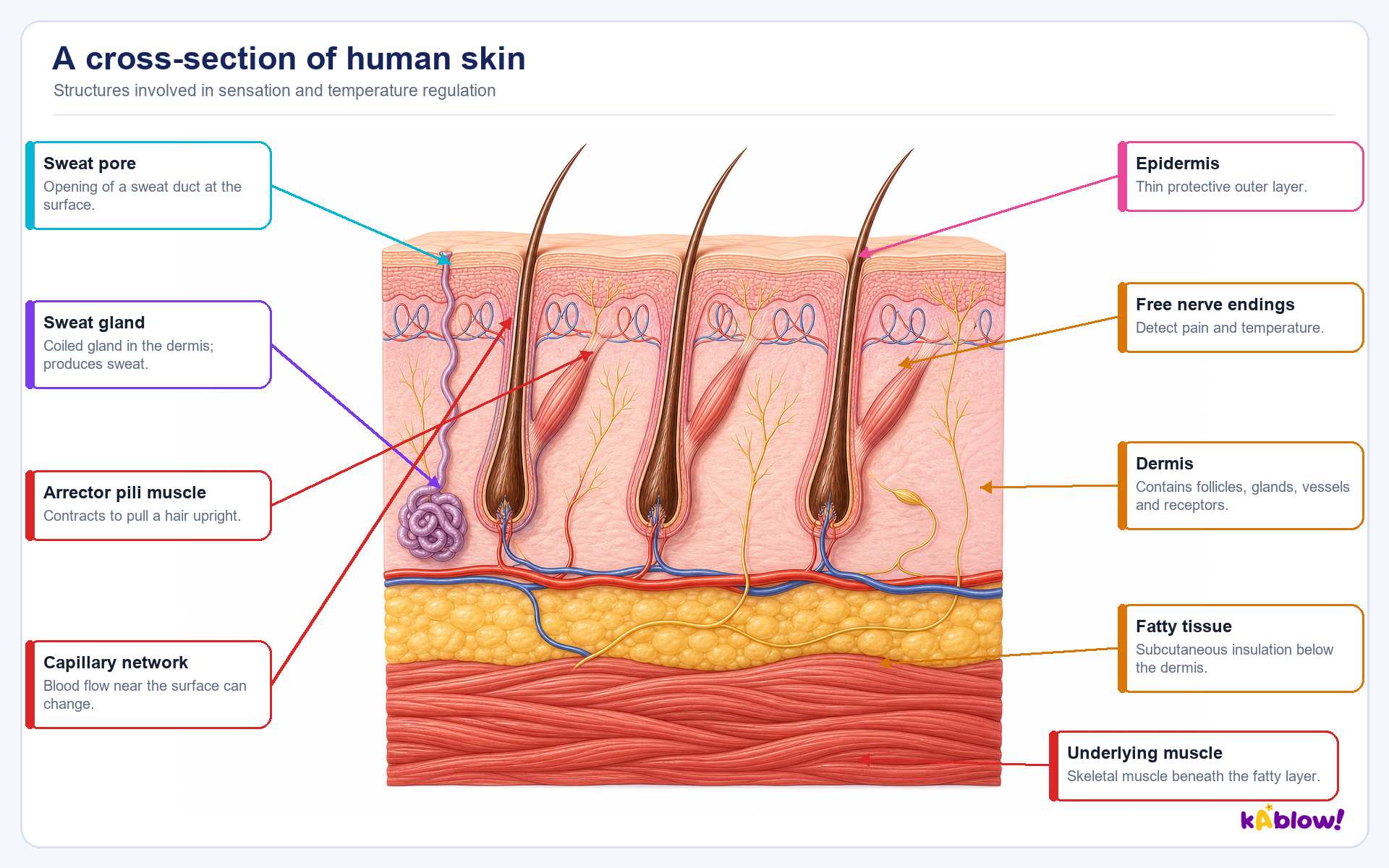
- Responses to an increase in temperature include vasodilation (arteriole muscles relax, more blood flows through skin capillaries, more heat lost by radiation), sweating (cooling by evaporation), and flattening of hairs (hair erector muscles relax, allowing air to circulate).
- Responses to a decrease in temperature include vasoconstriction (arteriole muscles contract, less blood flows through skin capillaries; blood diverted through shunt vessels deeper in the skin), erection of hairs (hair erector muscles contract, trapping insulating air), shivering (rapid muscle contraction and relaxation generates heat), uncoupled respiration in brown adipose tissue (energy released as heat, mainly in newborn infants), and boosting metabolic rate via thyroxine.
A cross-section of human skin
Slide
Sign up free to view the lesson slides
Step through every slide for this topic — plus flashcards and revision notes — with a free account.
Soal latihan
Pratinjau gratis — 8 dari 61 soal. Daftar untuk melihat semuanya.
1.Which cells in the pancreas secrete insulin?
Easy- Aα cells
- Bβ cells
- CExocrine cells
- DAll of the above
2.Which of the following statements (I–IV) correctly describe type I diabetes? I. It usually develops in those aged 40 and over, however more and more young people are developing the condition. II. It is a condition in which the pancreas fails to produce sufficient insulin to control blood glucose levels. III. It is normally treated with regular blood tests to check glucose levels, insulin injections, and a diabetes-appropriate diet. IV. It is more common than type II diabetes.
Easy- AII and III
- BII, III and IV
- CI, III and IV
- DI and II
3.Which of the following are roles of thyroxin? I. Targets metabolically active regions, such as adipose tissue. II. Increase the rate of protein synthesis. III. Inhibits the appetite and reduces food intake. IV. Increase the generation of body heat.
Medium- AII only
- BI and II only
- CII and IV only
- DI, II, III and IV
4.A one-year-old child displays fatigue and excessive thirst over a period of time. A urine test reveals the presence of glucose. Which of the following would be the most likely diagnosis?
Medium- AType I diabetes as the body is unable to respond to the presence of insulin.
- BType I diabetes as the β cells in the islets of Langerhans were destroyed.
- CType II diabetes as the body does not have sufficient insulin receptors on target cells.
- DType II diabetes as the α cells in the islets of Langerhans was destroyed.
5.In which of the following scenarios would there be an increase in the breakdown of glycogen in the liver?
Easy- AWhen the β cells of the islets of Langerhans secrete insulin.
- BWhen the β cells of the islets of Langerhans secrete glucagon.
- CAfter eating a meal high in carbohydrates.
- DWhen the α cells of the islets of Langerhans secrete glucagon.
6.Which of the following is the best definition of homeostasis?
Easy- AThe process of maintaining a constant internal environment.
- BThe process of amplifying changes in the internal environment.
- CThe process of controlling body temperature only.
- DThe process of producing hormones in response to external stimuli.
7.Which of the following is NOT an example of a physiological factor controlled by homeostasis in mammals?
Easy- ACore body temperature
- BBlood pH
- CBlood glucose concentration
- DBlood group
8.Which of the following correctly describes negative feedback?
Medium- AIt amplifies any change within a system.
- BIt reverses the effects of any change to return values to a set point.
- CIt only operates when body temperature increases.
- DIt maintains conditions without the need for receptors.
Unlock all 61 questions & more
Buat akun gratis untuk melihat setiap soal, slide, kartu flash, dan catatan ulasan topik ini.