Biological Molecules
Belajar sambil bermain
Jawab soal-soal ini untuk dapat energi, lalu memancing dan menjelajah. Tanpa akun.
Catatan pelajaran
Chemical Elements in Living Organisms
- Most biological molecules are organic, meaning they contain carbon.
- The three main groups are carbohydrates, proteins, and lipids.
- These molecules are built from smaller subunits joined together.
Carbohydrates
- Carbohydrates are long chains of simple sugars (monosaccharides).
- Glucose is a monosaccharide; two glucose molecules join to form maltose (a disaccharide).
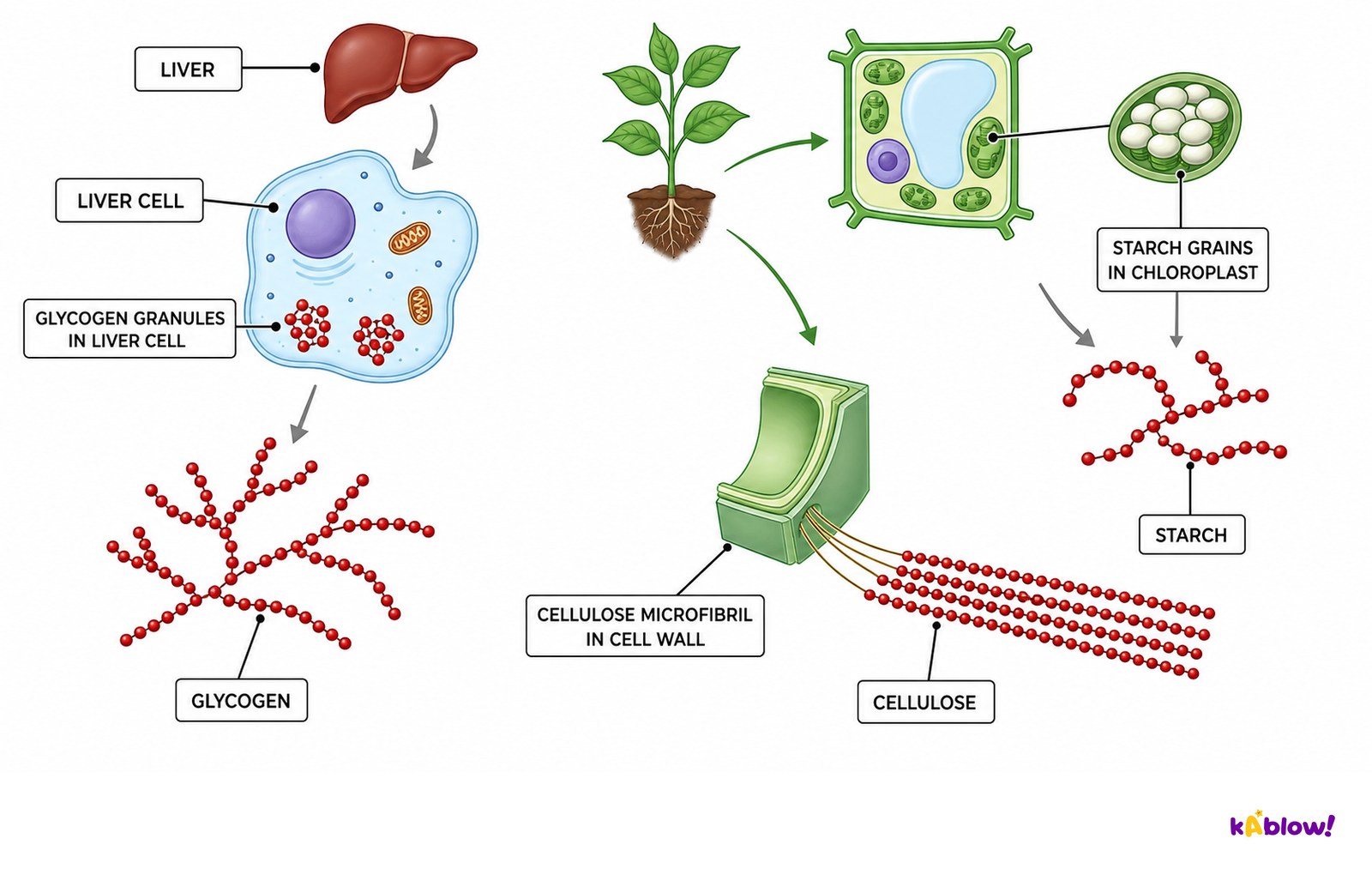
- Many glucose molecules join to form starch, glycogen, or cellulose (polysaccharides).
- Starch, glycogen, and cellulose are all made from glucose.
Glycogen, cellulose and starch are all made from glucose molecules
Lipids (Fats and Oils)
- Most lipids are triglycerides, made of 1 glycerol molecule bonded to 3 fatty acid chains.
- Fatty acids vary in size and structure.
- Fats are solid at room temperature; oils are liquid at room temperature.
Structure of a triglyceride: one glycerol molecule bonded to three fatty acid chains.
Proteins
- Proteins are long chains of amino acids (about 20 different types).
- All amino acids have the same basic structure but differ in their R group.
- The sequence of amino acids determines the protein; even a small change produces a different protein.
General structure of an amino acid: central carbon bonded to amino group, carboxyl group, hydrogen, and R group.
Food Tests
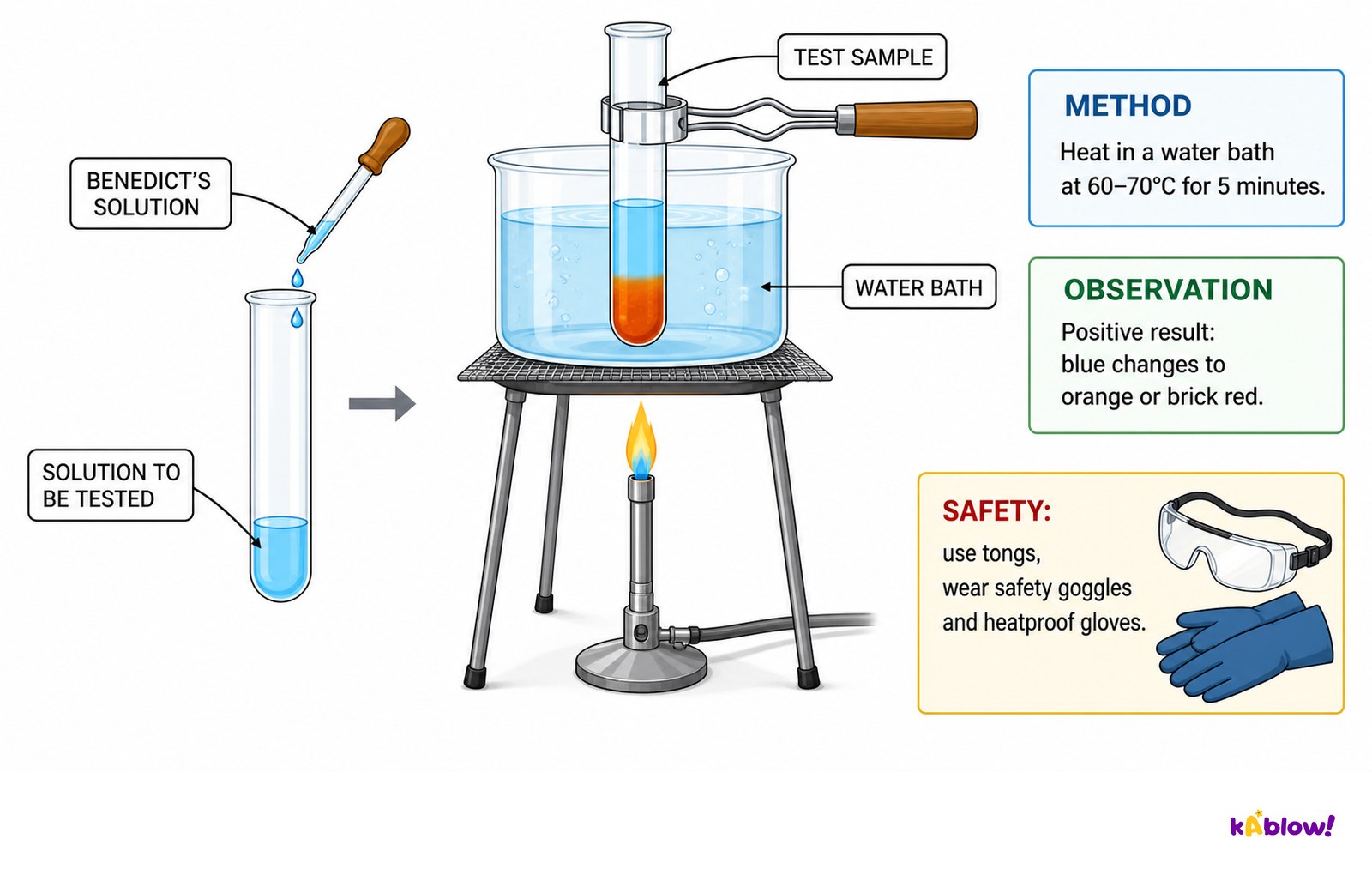
- Benedict's test for reducing sugars: add Benedict's solution, heat at 60–70°C for 5 min; positive: blue → orange/brick red.
- Iodine test for starch: add iodine solution; positive: orange-brown → blue-black.
- Biuret test for protein: add Biuret solution; positive: blue → violet/purple.
- Emulsion test for lipids: mix sample with ethanol, then add cold water; positive: cloudy emulsion forms.
- DCPIP test for vitamin C: add sample to DCPIP solution; positive: blue colour disappears.
The Benedict's test for glucose
Slide
Sign up free to view the lesson slides
Step through every slide for this topic — plus flashcards and revision notes — with a free account.
Soal latihan
Pratinjau gratis — 8 dari 48 soal. Daftar untuk melihat semuanya.
1.Which elements are present in all carbohydrates, proteins, and lipids?
Easy- ACarbon, hydrogen, oxygen
- BCarbon, hydrogen, oxygen, nitrogen
- CCarbon, hydrogen, oxygen, nitrogen, sulfur
- DCarbon, hydrogen, oxygen, phosphorus
2.What is the basic structural unit of a carbohydrate?
Easy- AAmino acid
- BSimple sugar (monosaccharide)
- CGlycerol
- DFatty acid
3.Which test is used to detect the presence of starch?
Easy- ABenedict's test
- BIodine test
- CBiuret test
- DEmulsion test
4.What colour change indicates a positive result for the Benedict's test for reducing sugars?
Easy- ABlue to violet
- BOrange-brown to blue-black
- CBlue to orange/brick red
- DColourless to cloudy white
5.A student tests a food sample with Biuret solution and observes a colour change from blue to violet. Which nutrient is present?
Easy- AStarch
- BGlucose
- CProtein
- DLipid
6.Which of the following is a disaccharide formed when two glucose molecules join together?
Easy- AStarch
- BGlycogen
- CMaltose
- DCellulose
7.What are the building blocks of proteins?
Easy- AMonosaccharides
- BGlycerol and fatty acids
- CNucleotides
- DAmino acids
8.A student adds DCPIP solution to a fruit juice sample. The blue colour disappears. What does this indicate?
Medium- AThe juice contains reducing sugar
- BThe juice contains starch
- CThe juice contains vitamin C
- DThe juice contains protein
Unlock all 48 questions & more
Buat akun gratis untuk melihat setiap soal, slide, kartu flash, dan catatan ulasan topik ini.