Transport In Plants
Belajar sambil bermain
Jawab soal-soal ini untuk dapat energi, lalu memancing dan menjelajah. Tanpa akun.
Catatan pelajaran
Xylem & Phloem
- Xylem vessels transport water and minerals from roots to stem and leaves, and provide support.
- Phloem vessels transport food (mainly sucrose and amino acids) from leaves to other parts.
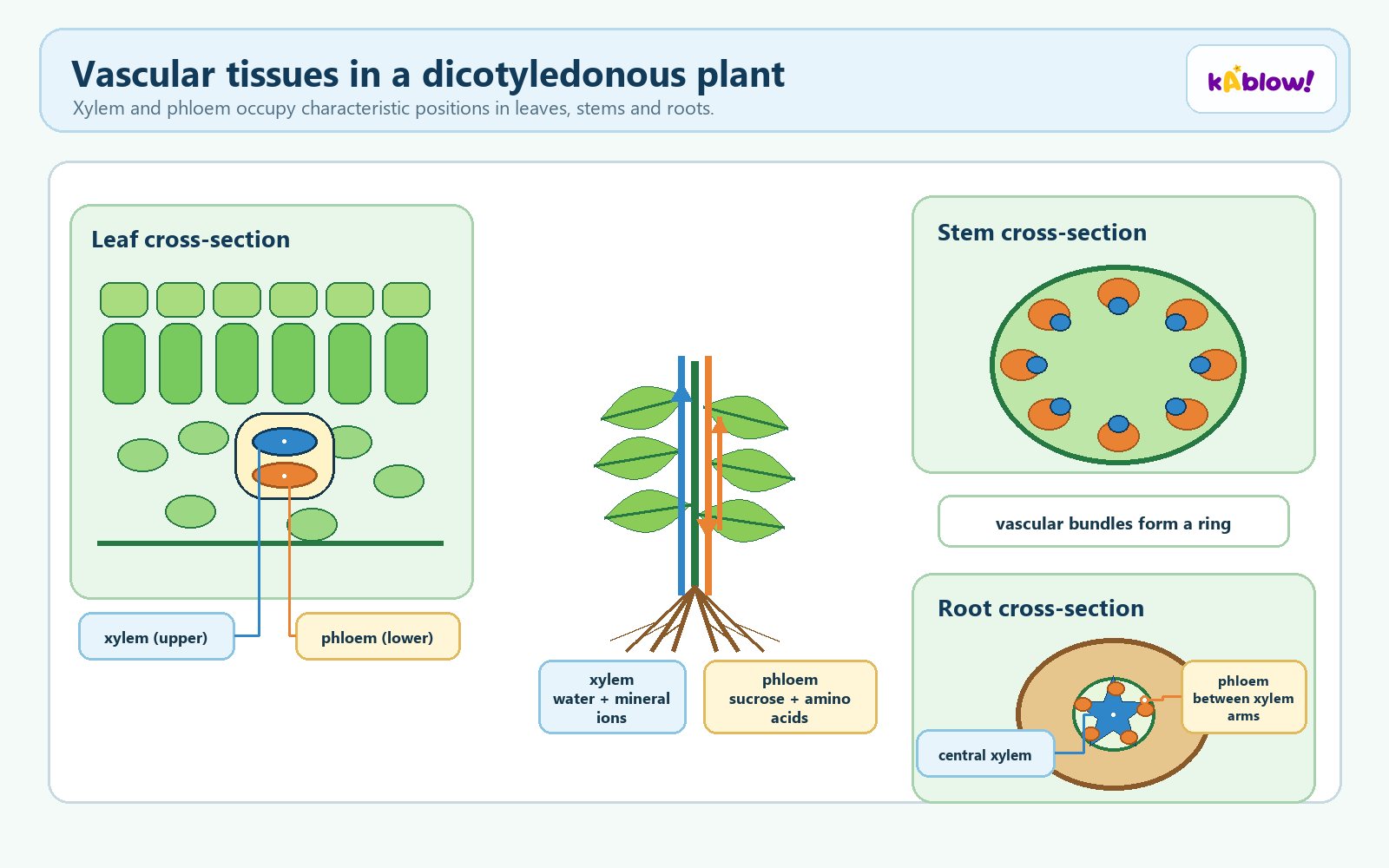
- Xylem and phloem are arranged in vascular bundles throughout root, stem and leaves.
- In cross-section, xylem is always on the inside and phloem on the outside.
Vascular tissues in a dicotyledonous plant
Root Hair Cells
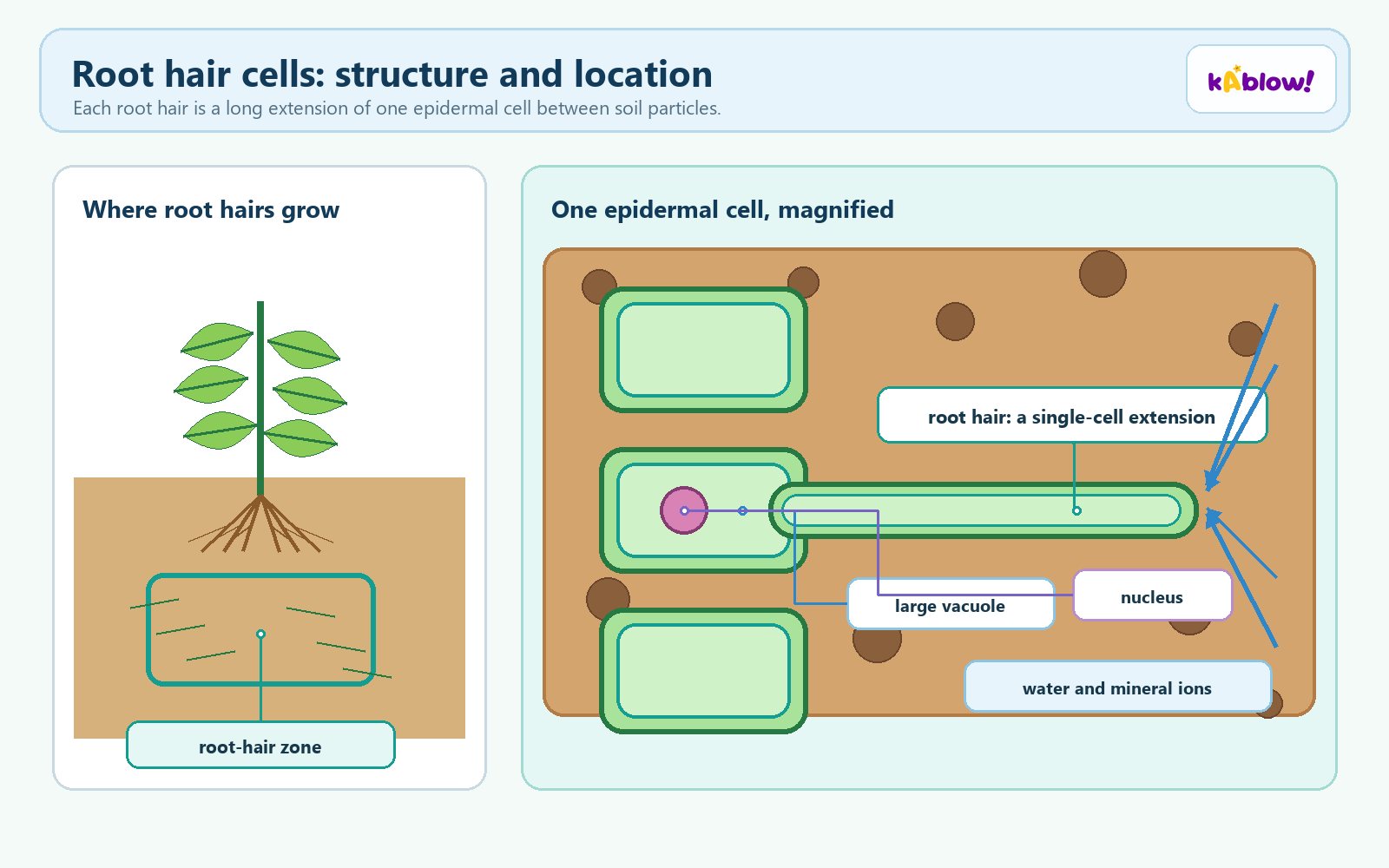
- Root hair cells are found in the epidermis of plant roots.
- They have root hairs that grow between soil particles, increasing surface area.
- This adaptation aids absorption of water and mineral ions from the soil.
Root hair cells: structure and location
Pathway Taken by Water
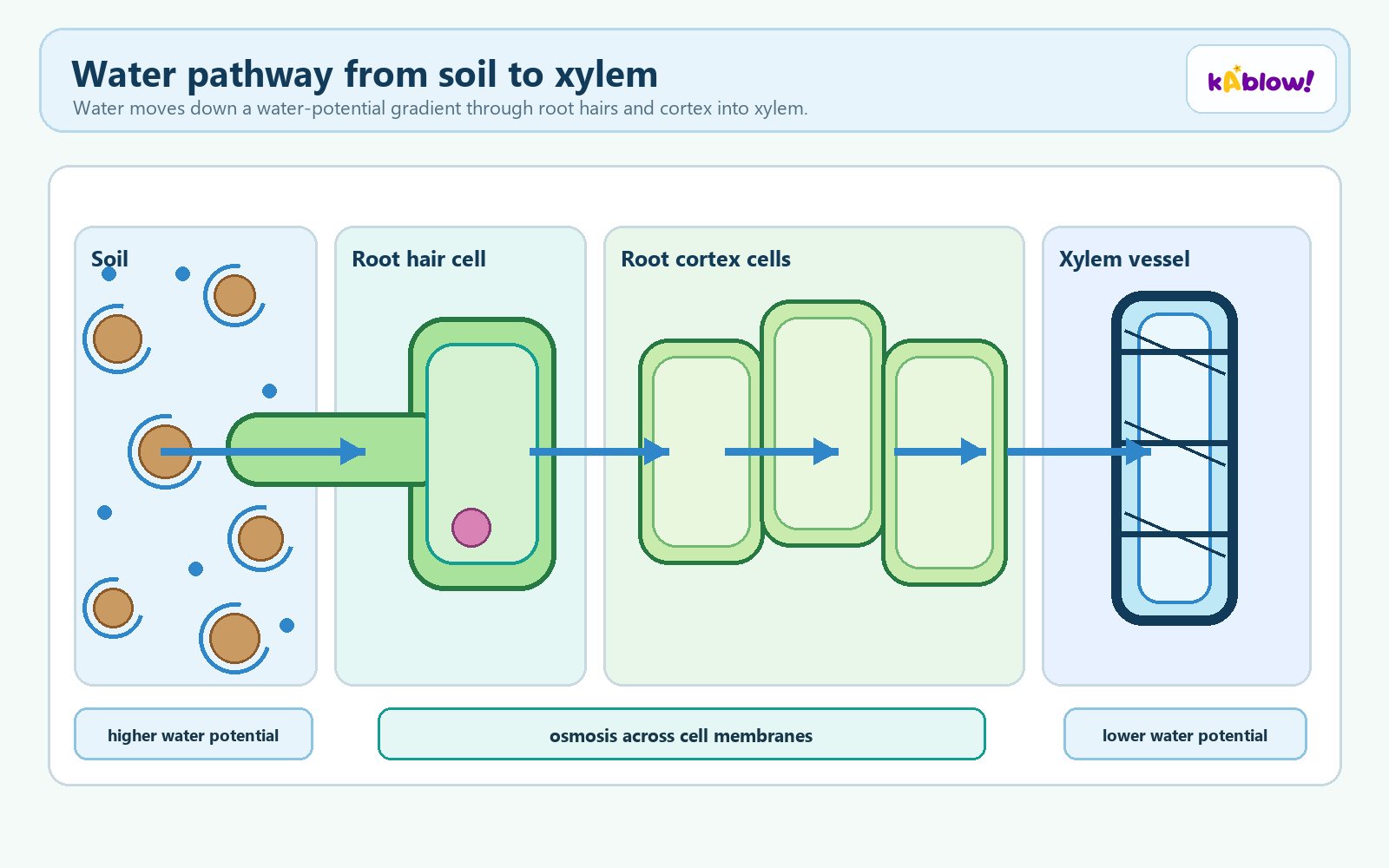
- Water enters root hair cells by osmosis.
- It then moves through root cortex cells into xylem vessels.
- Water is carried up the xylem to leaf mesophyll cells.
- Pathway: root hair cell → root cortex cells → xylem → leaf mesophyll cells.
Water pathway from soil to xylem
Transpiration
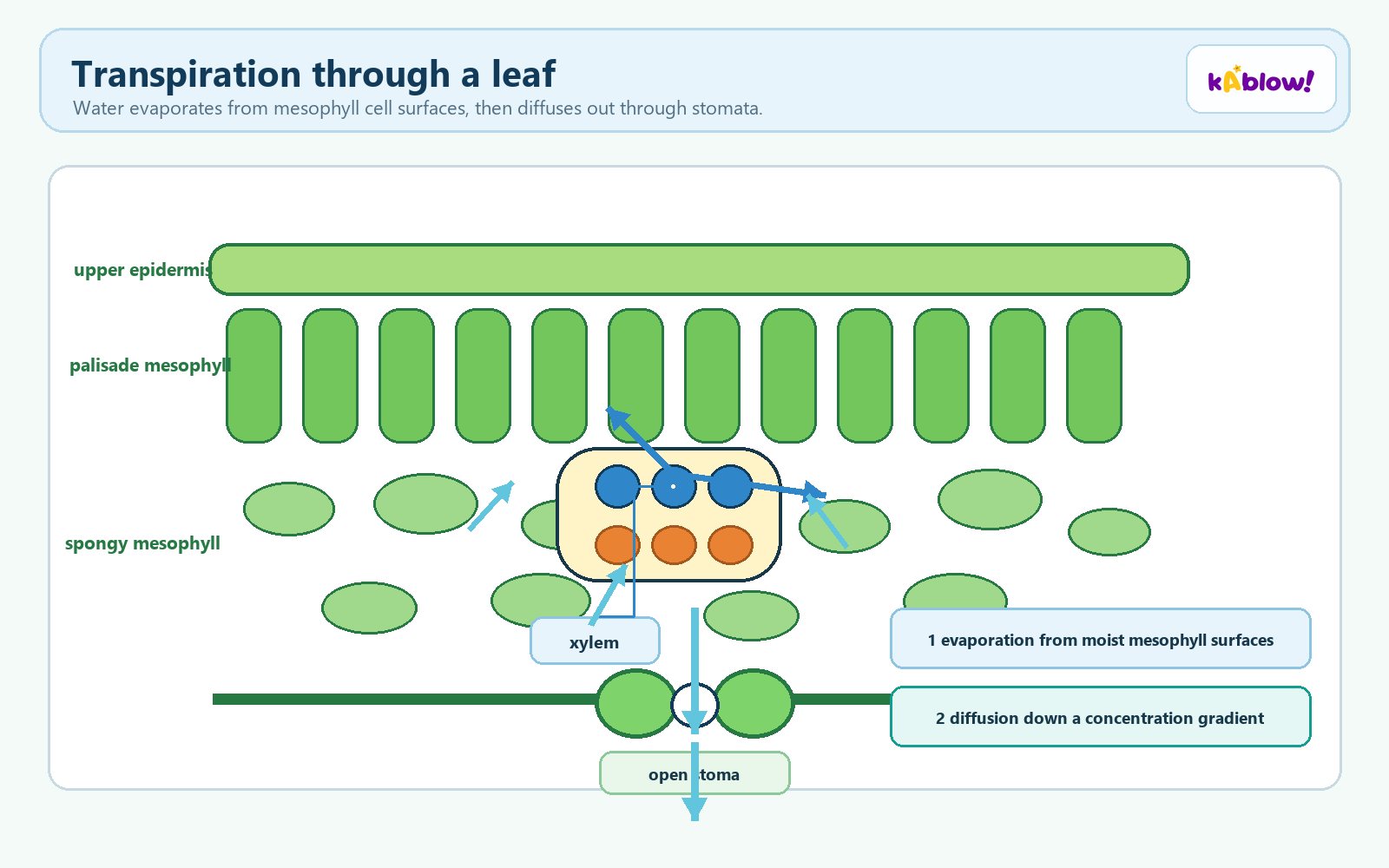
- Transpiration is the loss of water vapour from leaves.
- Water evaporates from spongy mesophyll cells into air spaces.
- Water vapour then diffuses out through stomata.
Transpiration through a leaf
Investigating Temperature & Wind Speed
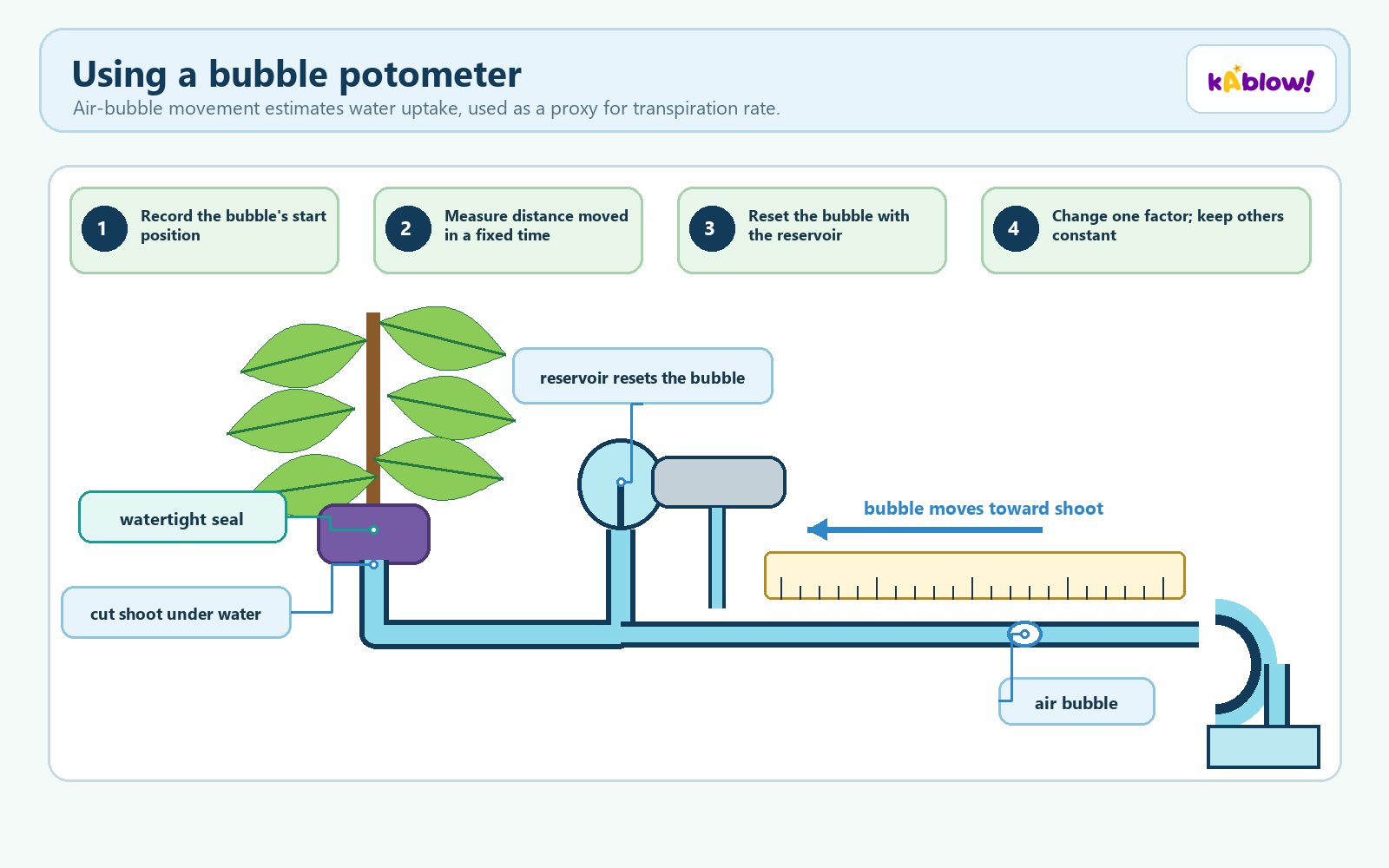
- Use a potometer to measure transpiration rate.
- Cut shoot underwater to prevent air entering xylem.
- Seal apparatus with Vaseline to make it airtight.
- Introduce a single air bubble in the capillary tube.
- Measure distance bubble moves in a set time (e.g. 20 min).
- Higher temperature or higher wind speed increases transpiration rate.
- Keep all other factors constant for a fair test.
Using a bubble potometer
Explaining Effects of Temperature, Wind Speed & Humidity
- High temperature increases evaporation and diffusion rate, so transpiration increases.
- High wind speed removes water vapour near leaf, maintaining concentration gradient, so transpiration increases.
- High humidity reduces concentration gradient, so transpiration decreases.
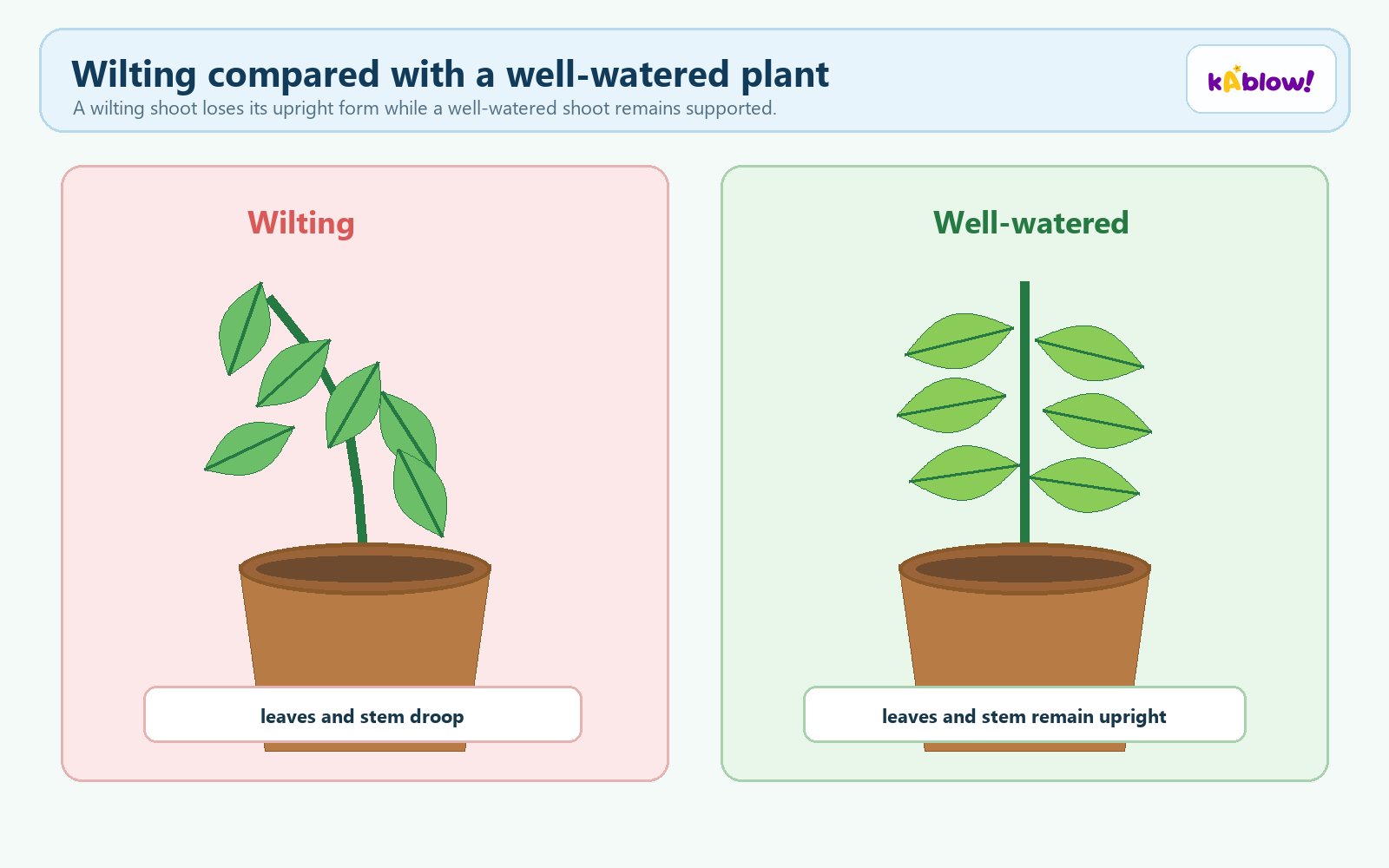
- If water loss exceeds uptake, wilting occurs – cells lose turgor and plant collapses.
Wilting compared with a well-watered plant
Translocation
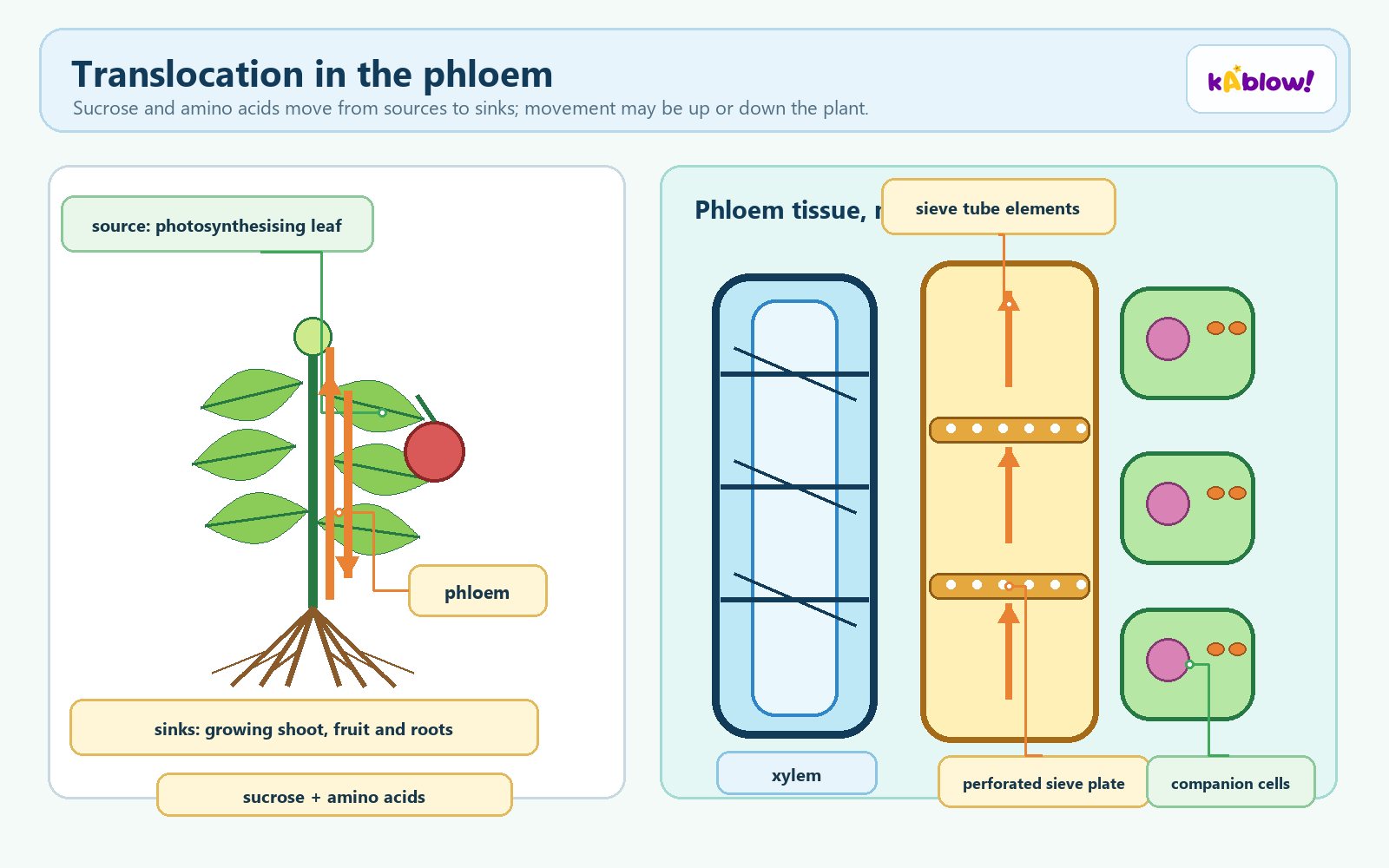
- Translocation is the transport of sucrose and amino acids in phloem.
- Glucose is converted to sucrose for transport.
- Phloem cells are joined end-to-end with holes in end walls for easy flow.
- Movement is from source (where produced) to sink (where used/stored).
- Direction can change: e.g. in spring, storage organs are source; in summer, leaves are source.
Translocation in the phloem
Slide
Sign up free to view the lesson slides
Step through every slide for this topic — plus flashcards and revision notes — with a free account.
Soal latihan
Pratinjau gratis — 8 dari 53 soal. Daftar untuk melihat semuanya.
1.Name the two types of transport vessels in plants.
Easy2.Transpiration is the loss of water vapour from the leaves of plants.
EasyTrue or false?
3.Complete the sentence about the pathway of water:
EasyWater enters the root hair cells, passes through the root cortex, then enters the ____ vessels, and finally reaches the leaf mesophyll cells.
4.Match each plant structure with its correct function.
Medium- Xylem
- Phloem
- Root hair cell
- Absorbs water and minerals
- Transports water and minerals
- Transports sucrose and amino acids
5.Which factor increases the rate of transpiration?
Easy- ALow temperature
- BHigh humidity
- CHigh wind speed
- DLow light intensity
6.State two environmental factors that affect the rate of transpiration.
Easy7.Translocation is the transport of sucrose and amino acids in the phloem from sources to sinks.
EasyTrue or false?
8.In a potometer experiment, the air bubble moves 8 mm in 20 minutes at 20°C. What is the rate of transpiration in mm per minute?
Medium- A1.4
- B-0.6
- C0.4
- D2.4
Unlock all 53 questions & more
Buat akun gratis untuk melihat setiap soal, slide, kartu flash, dan catatan ulasan topik ini.