Identification Of Ions And Gases
Belajar sambil bermain
Jawab soal-soal ini untuk dapat energi, lalu memancing dan menjelajah. Tanpa akun.
Catatan pelajaran
Identification of Anions
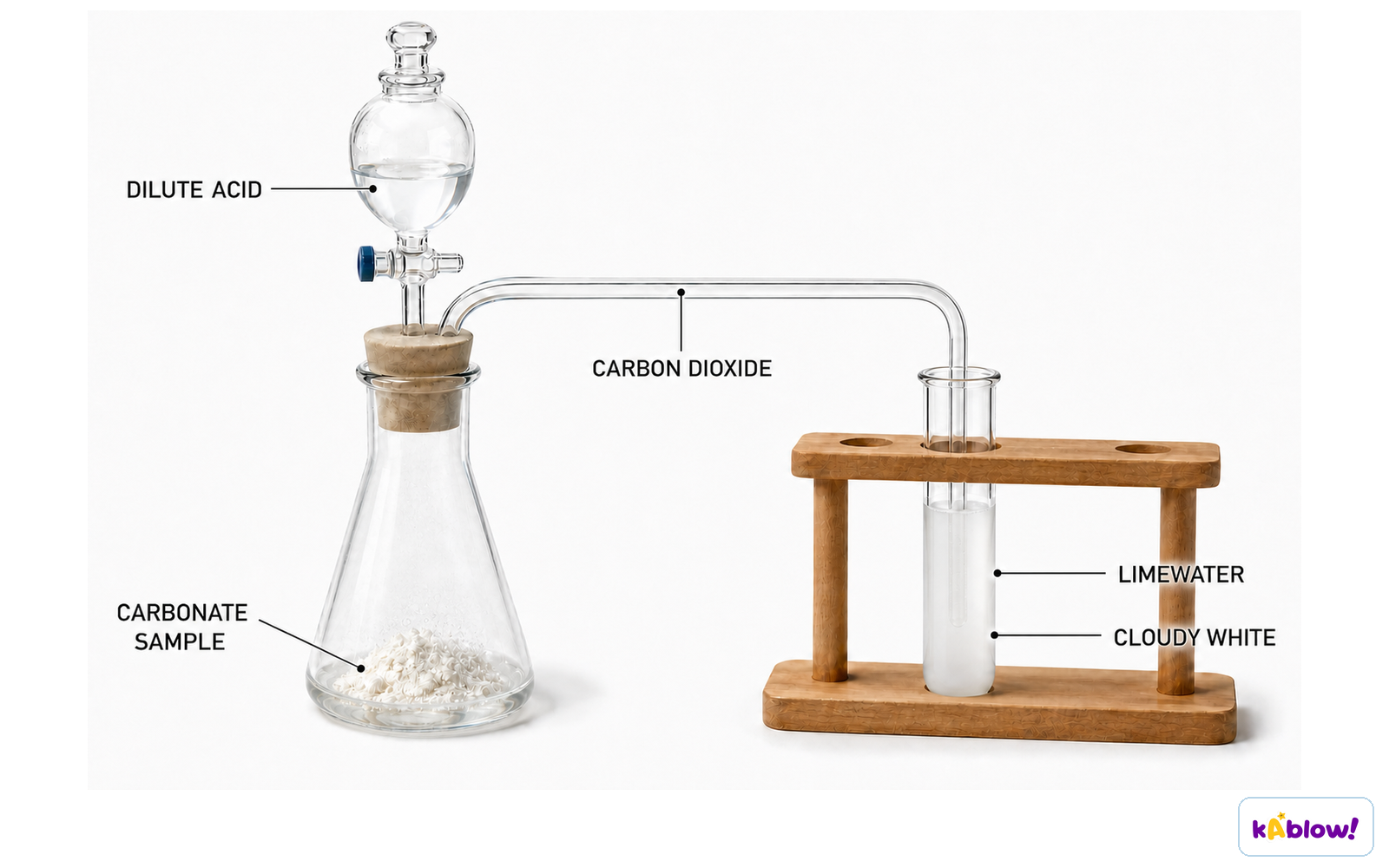
- Carbonate (CO₃²⁻): Add dilute acid; bubble gas through limewater – turns cloudy (white precipitate of CaCO₃).
- Halide ions (Cl⁻, Br⁻, I⁻): Acidify with nitric acid, then add AgNO₃ solution. Precipitate colour: Cl⁻ = white (AgCl), Br⁻ = cream (AgBr), I⁻ = yellow (AgI).
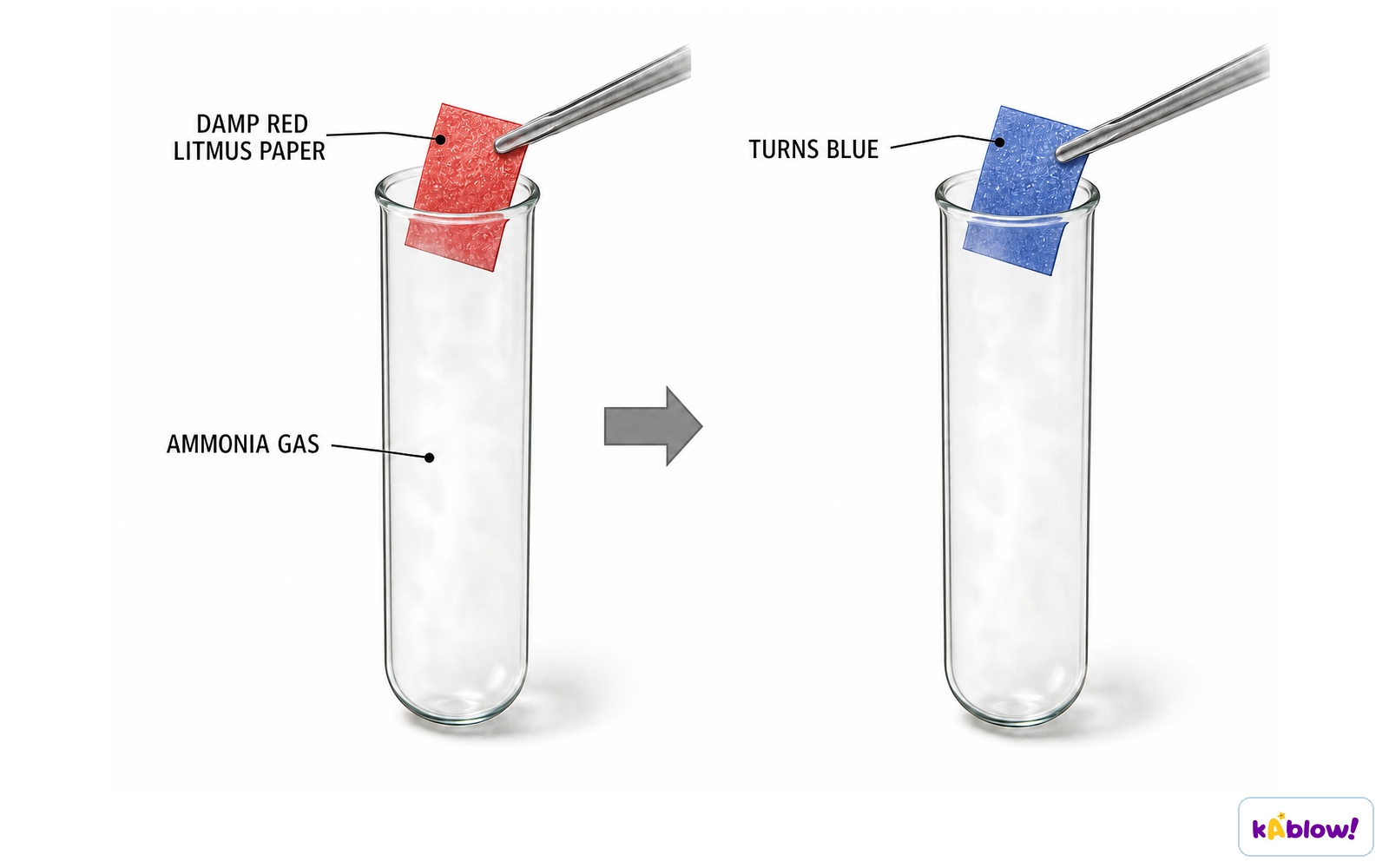
- Nitrate (NO₃⁻): Add NaOH(aq) and aluminium foil; warm gently. Releases ammonia gas – turns damp red litmus blue.
- Sulfate (SO₄²⁻): Acidify with nitric acid, then add barium nitrate solution. White precipitate of BaSO₄ forms.
Testing for carbonate ions
Identification of Cations – NaOH & Ammonia Tests
- Add few drops NaOH(aq) then excess; observe precipitate colour and solubility.
- Ca²⁺: white precipitate, insoluble in excess NaOH and excess ammonia.
- Cu²⁺: light blue precipitate, insoluble in excess NaOH, dissolves in excess ammonia to form dark blue solution.
- Fe²⁺: green precipitate, insoluble in excess NaOH and ammonia.
- Fe³⁺: brown precipitate, insoluble in excess NaOH and ammonia.
- Zn²⁺: white precipitate, dissolves in excess NaOH and excess ammonia to form colourless solution.
- NH₄⁺: warm with NaOH – releases ammonia gas (damp red litmus turns blue).
Metal ion tests summary
Flame Tests for Metal Cations
- Clean nichrome/platinum wire loop by dipping in concentrated acid and heating in blue Bunsen flame.
- Dip loop into sample and hold in edge of blue flame; observe colour.
- Li⁺ → crimson; Na⁺ → yellow; K⁺ → lilac; Cu²⁺ → blue-green.
- Avoid wire glowing red (confuses colour); use blue flame for strong heating.
Flame test colours
Identification of Gases
- Ammonia (NH₃): damp red litmus turns blue; sharp choking smell.
- Carbon dioxide (CO₂): bubble through limewater – turns cloudy/milky (white CaCO₃ precipitate).
- Chlorine (Cl₂): damp blue litmus turns red then bleached white; toxic – use fume cupboard.
- Hydrogen (H₂): lighted splint at mouth of tube gives ‘squeaky pop’ (rapid combustion).
- Oxygen (O₂): glowing splint relights (or glows brightly).
Testing for ammonia gas
Key Tips & Common Mistakes
- For carbonate test, say ‘bubble gas through limewater’ – not just ‘limewater turns cloudy’.
- Halide test: use nitric acid not HCl (Cl⁻ would interfere).
- Sulfate test: add nitric acid first to remove carbonates that also give white precipitate.
- Add NaOH/ammonia slowly – some precipitates dissolve in excess and may be missed.
- Distinguish colourless (no colour) from clear (transparent, may have colour).
Slide
Sign up free to view the lesson slides
Step through every slide for this topic — plus flashcards and revision notes — with a free account.
Soal latihan
Pratinjau gratis — 8 dari 58 soal. Daftar untuk melihat semuanya.
1.Which row correctly describes the test for each gas?
Easy- AA: oxygen - lighted splint pops; hydrogen - glowing splint relights; chlorine - damp blue litmus turns red then white
- BB: oxygen - glowing splint relights; hydrogen - lighted splint pops; chlorine - damp blue litmus turns red then white
- CC: oxygen - glowing splint relights; hydrogen - lighted splint pops; chlorine - damp red litmus turns blue then white
- DD: oxygen - lighted splint pops; hydrogen - glowing splint relights; chlorine - damp red litmus turns blue then white
2.Halide ions in solution are detected using silver nitrate solution. Which row correctly describes the colour of the precipitate for each halide?
Easy- AA: chloride - cream; bromide - white; iodide - silver
- BB: chloride - yellow; bromide - cream; iodide - white
- CC: chloride - white; bromide - cream; iodide - yellow
- DD: chloride - white; bromide - cream; iodide - silver
3.A solution containing an unknown substance was analysed. On the addition of acidified silver nitrate solution a yellow precipitate formed. A flame test produced a lilac coloured flame. What is the identity of the unknown solid?
Medium- AA: Lithium iodide
- BB: Lithium bromide
- CC: Potassium iodide
- DD: Potassium bromide
4.Metal cations can be detected using flame tests. Which row correctly describes the colour of the flame for each metal cation?
Easy- AA: Li+ - lilac; K+ - green; Cu2+ - yellow
- BB: Li+ - red; K+ - lilac; Cu2+ - green
- CC: Li+ - green; K+ - lilac; Cu2+ - red
- DD: Li+ - red; K+ - orange; Cu2+ - blue
5.A student tested copper sulfate solution and potassium iodide solution using flame tests. The student's method did not produce the distinct lilac flame colour using potassium iodide solution. Which statement would not cause the lack of lilac flame?
Medium- AA: The metal wire loop being overheated
- BB: Using the safety flame of the Bunsen burner
- CC: The same metal wire loop being used for each experiment
- DD: The metal wire loop being dipped in concentrated acid and burned between flame tests
6.The results of two tests on a solid are shown below. Test 1: Acidified silver nitrate added - cream precipitate formed. Test 2: Aqueous sodium hydroxide added - red-brown precipitate formed. What is the solid?
Medium- AA: Iron(II) bromide
- BB: Iron(III) bromide
- CC: Iron(II) chloride
- DD: Iron(III) chloride
7.Which reaction would result in the production of a gas that would produce a squeaky pop with a lit splint?
Medium- AA: Iron(II) oxide + sulfuric acid
- BB: Methane + oxygen during complete combustion
- CC: Magnesium + hydrochloric acid
- DD: Carbon dioxide and water in the presence of light and chlorophyll
8.A solution of an unknown salt is tested by adding aqueous sodium hydroxide. A blue precipitate is formed which is insoluble in excess. The mixture is then warmed and aluminium foil is added. A gas is released which turns damp red litmus paper blue. What is the salt?
Hard- AA: Copper(II) nitrate
- BB: Copper(II) sulfate
- CC: Ammonium nitrate
- DD: Ammonium sulfate
Unlock all 58 questions, flashcards & more
Buat akun gratis untuk melihat setiap soal, slide, kartu flash, dan catatan ulasan topik ini.