Polymers
Belajar sambil bermain
Jawab soal-soal ini untuk dapat energi, lalu memancing dan menjelajah. Tanpa akun.
Catatan pelajaran
Polymers: The Basics
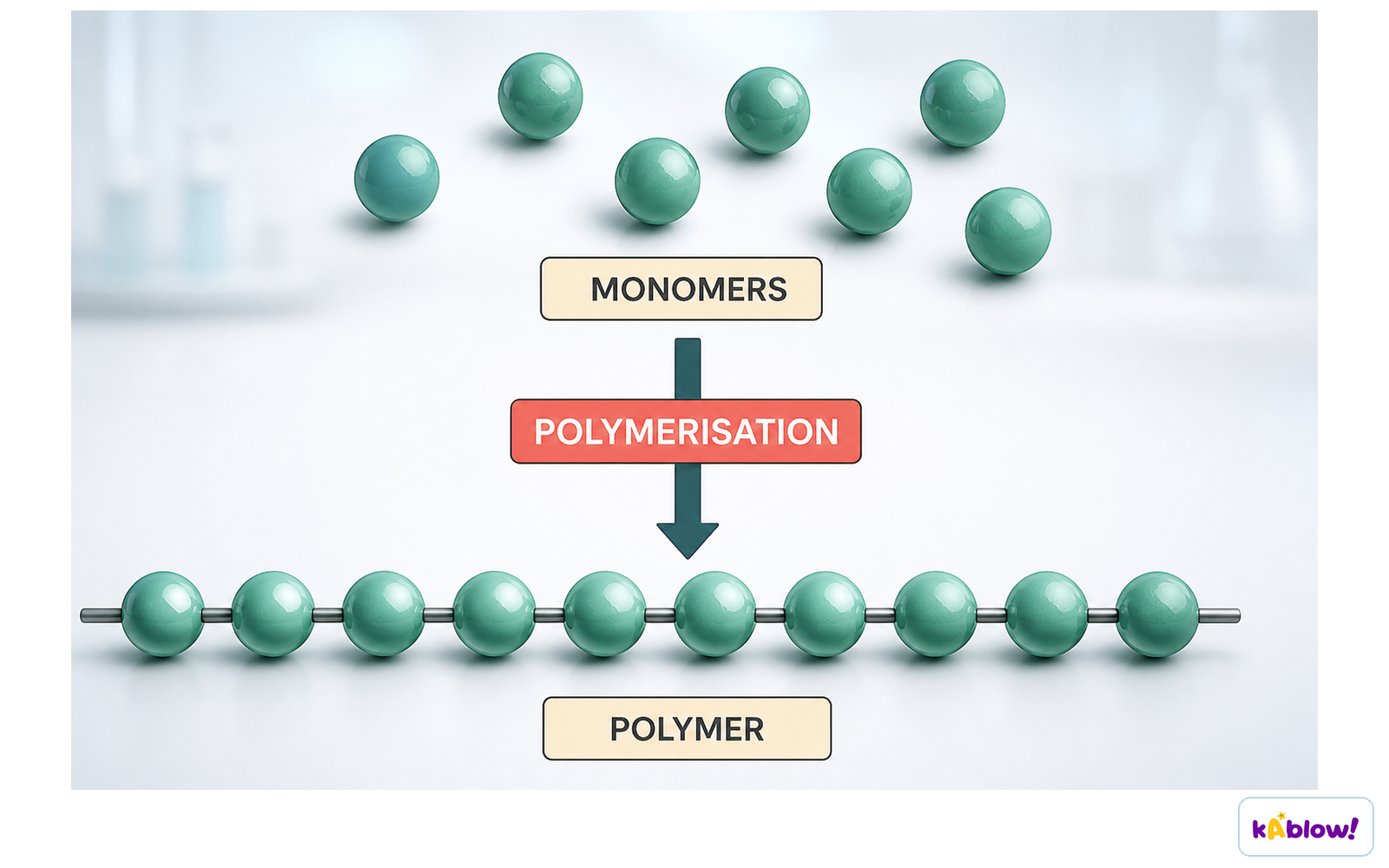
- Polymers are large molecules built from many smaller monomers.
- Each monomer is joined to the next by covalent bonds.
- Examples include poly(ethene), PVC, and nylon.
Monomers joining to form a polymer
Addition Polymerisation
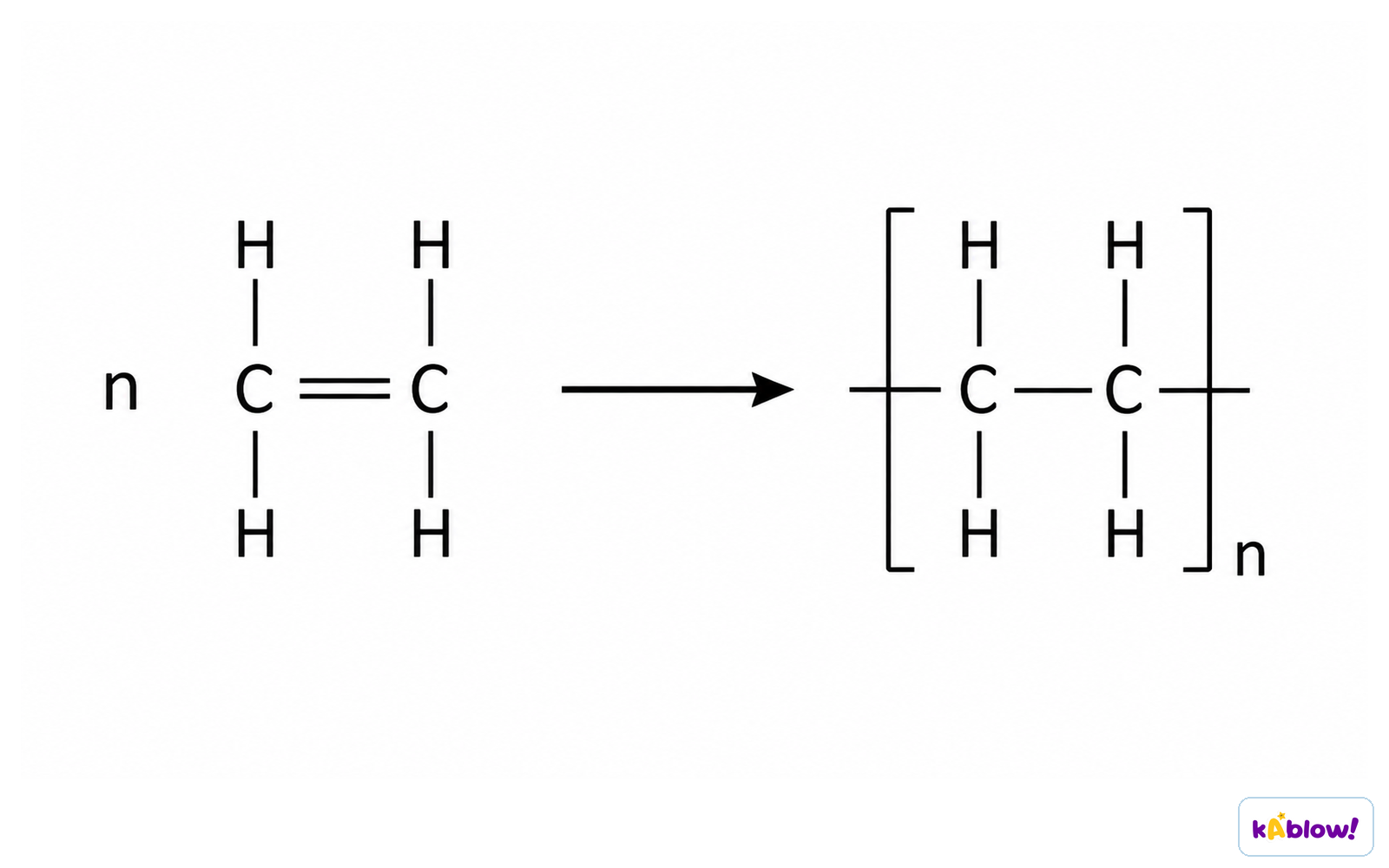
- Addition polymerisation occurs in monomers containing a C=C double bond (alkenes).
- The C=C bond breaks, allowing monomers to join into a long chain.
- Only one product (the polymer) is formed.
- Example: ethene monomers → poly(ethene).
- The polymer contains only single bonds.
Poly(ethene) formed by addition polymerisation
Naming Addition Polymers
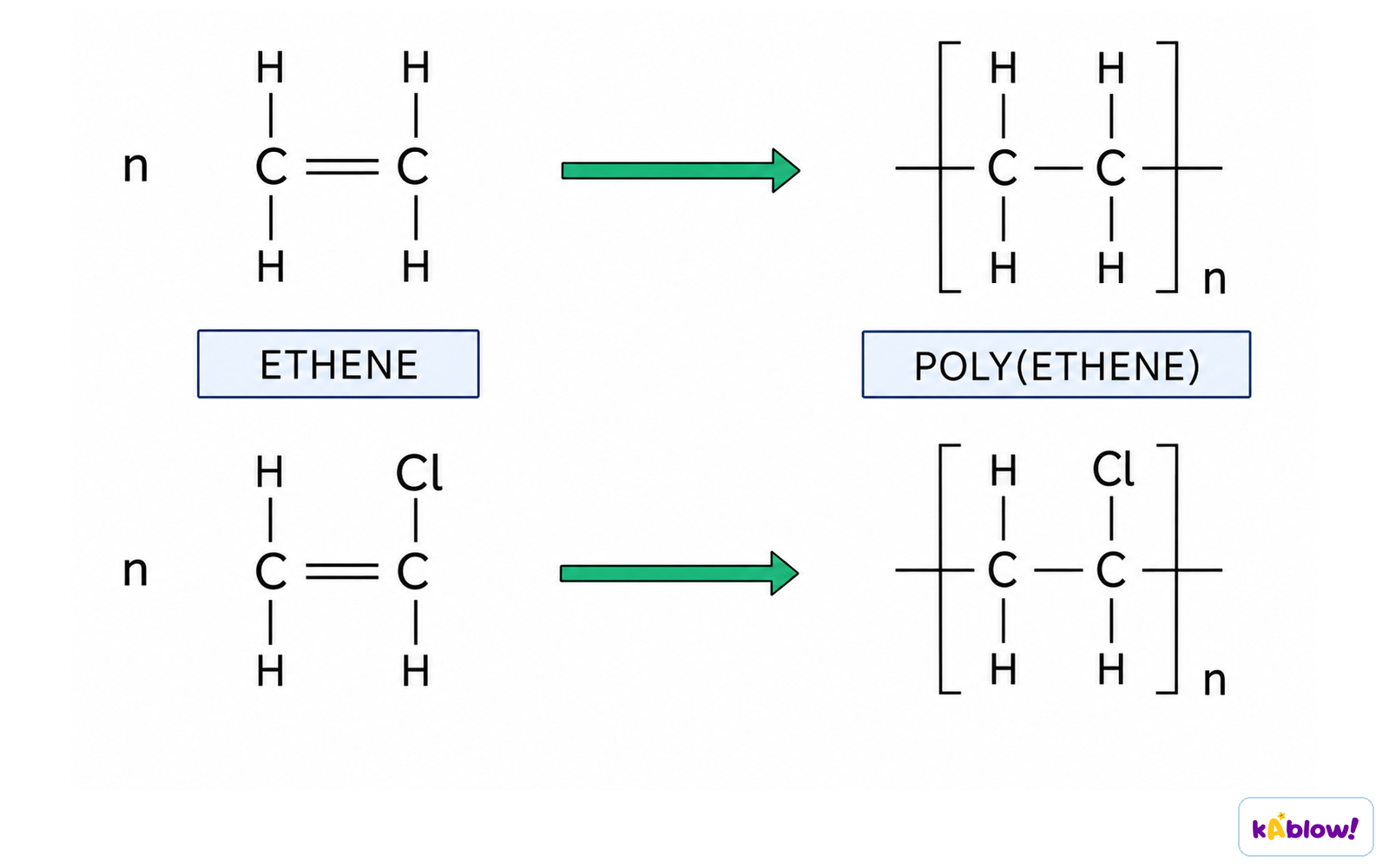
- Name = poly- + monomer name in brackets, e.g., propene → poly(propene).
- The repeat unit shows the polymer structure.
- To draw a repeat unit: change the C=C to a single bond, add continuation bonds at ends, and write a subscript n.
Repeat units of poly(ethene) and poly(chloroethene)
Deducing Monomer from Polymer
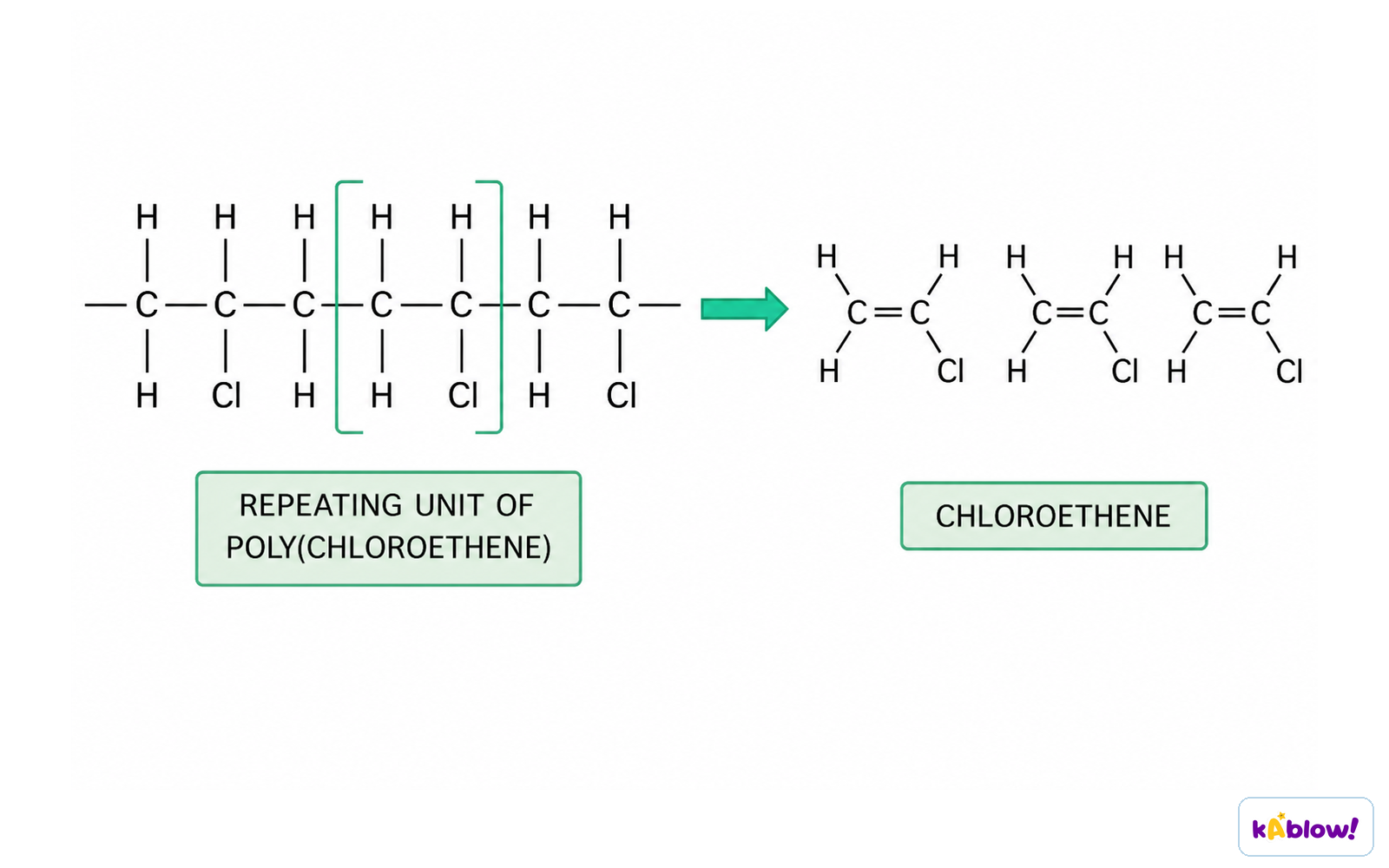
- Identify the repeating unit in the polymer chain.
- Change the single bond in the repeat unit to a double bond.
- Remove the continuation bonds at each end to obtain the monomer.
Deducing the monomer from a poly(chloroethene) repeat unit
Condensation Polymers (Extended Tier)
- Formed when two different monomers link together with the removal of a small molecule, usually water.
- Each monomer has two functional groups (one at each end).
- The polymer and one water molecule per linkage are produced.
Nylon (Polyamide)
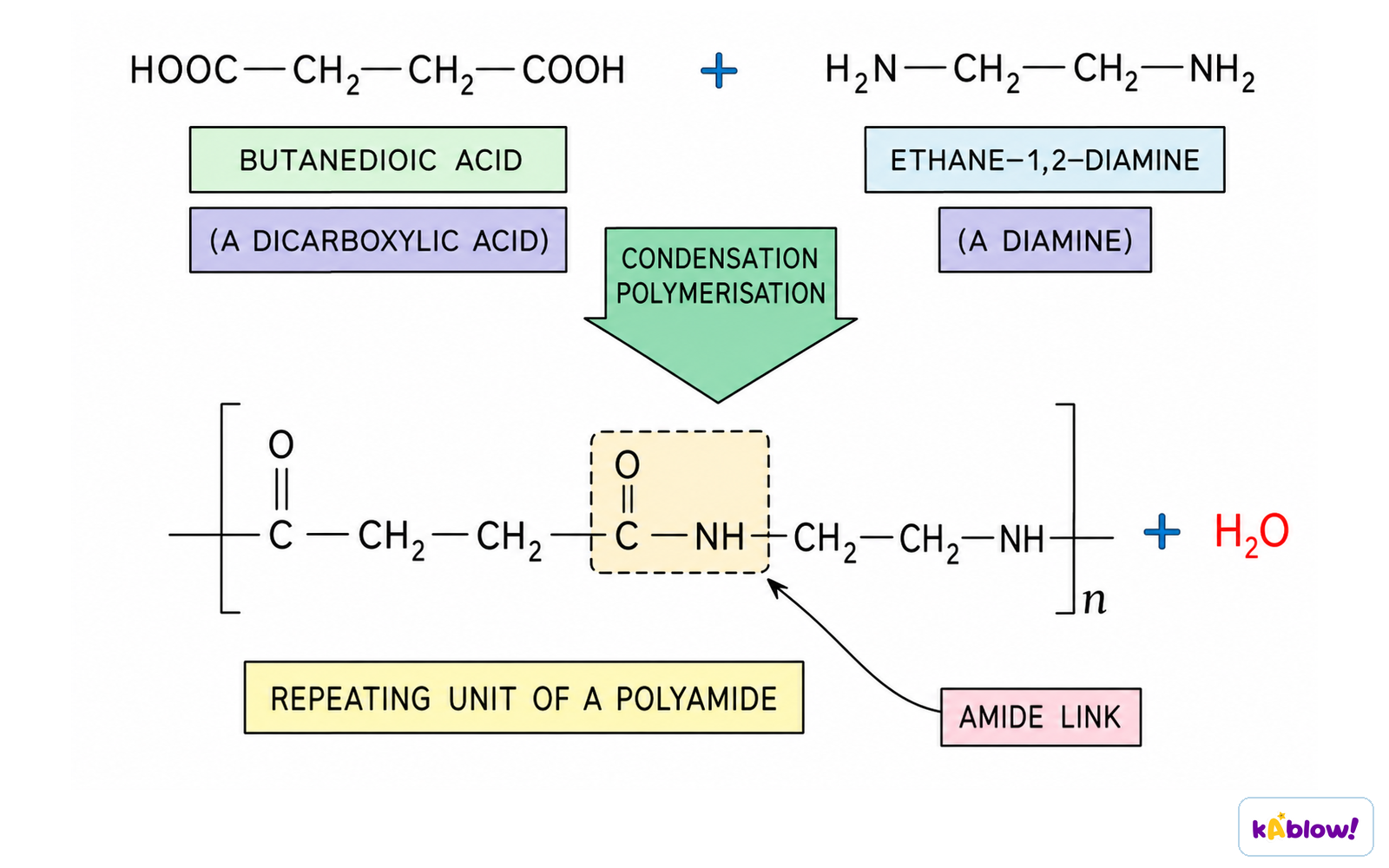
- Made from a dicarboxylic acid (two -COOH groups) and a diamine (two -NH₂ groups).
- An amide linkage forms with loss of water.
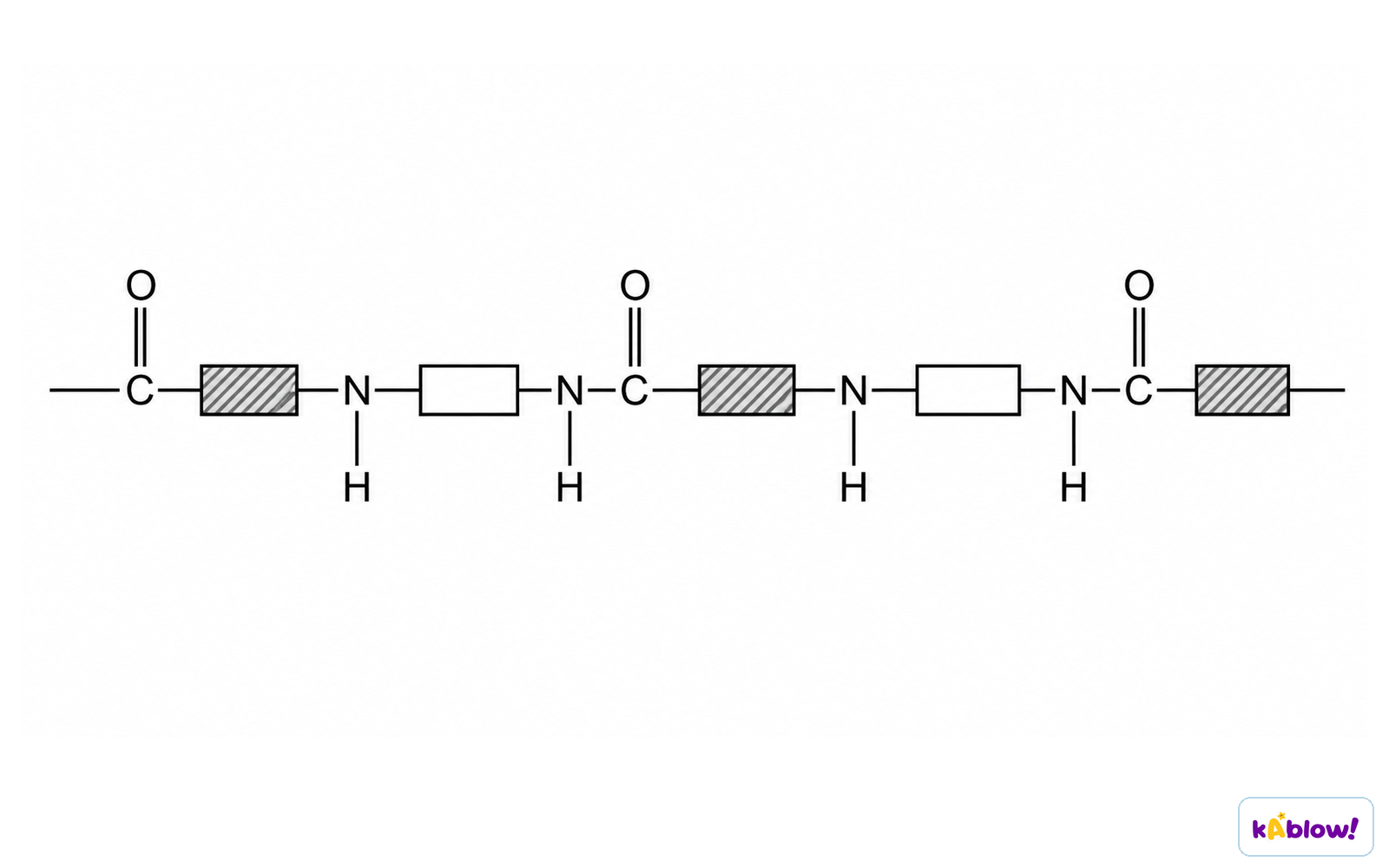
- Structure can be shown using boxes for carbon chains.
Formation of a polyamide (nylon)
PET (Polyester)
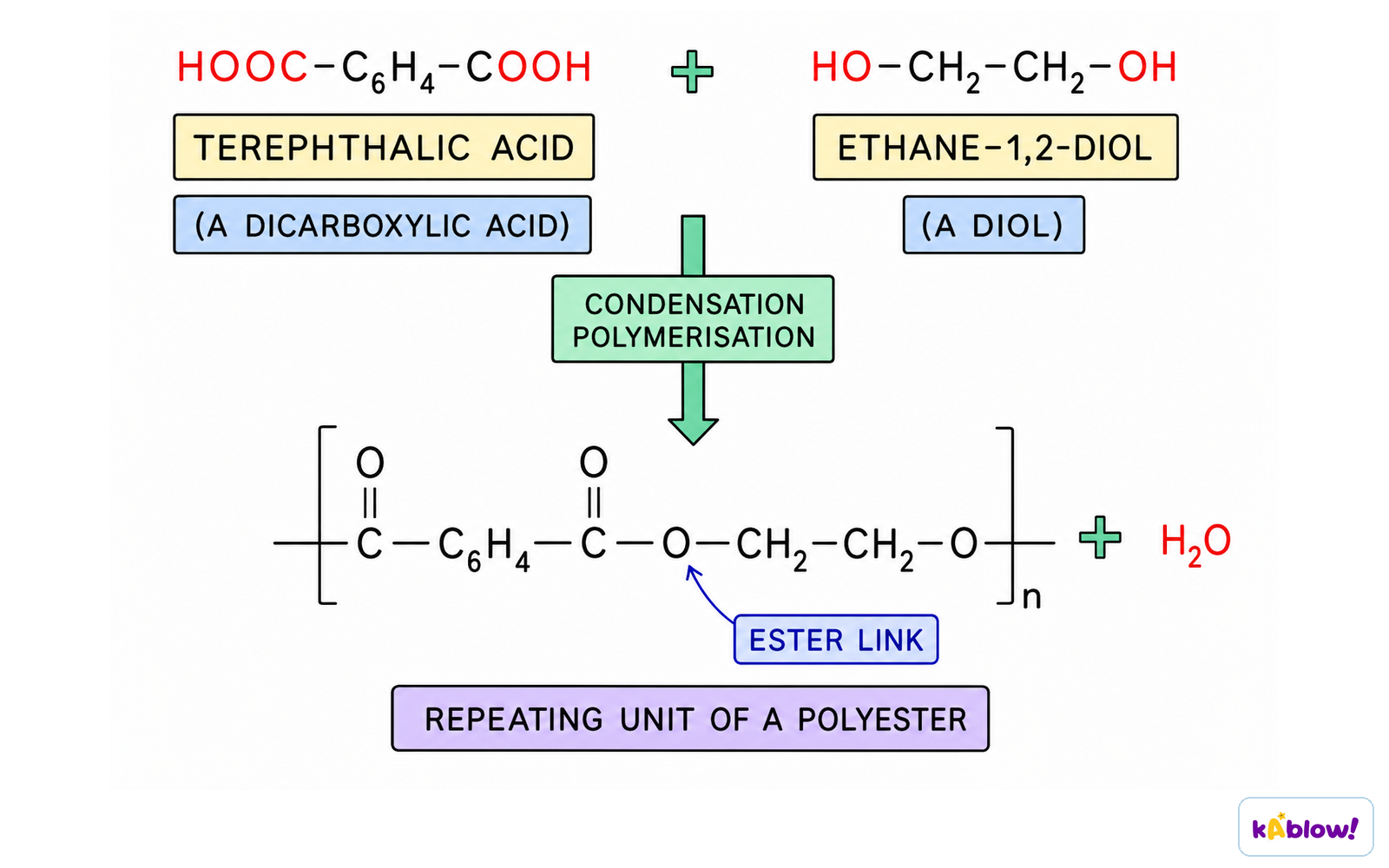
- Made from a dicarboxylic acid and a diol (two -OH groups).
- An ester linkage forms with loss of water.
- PET is also known as terylene and used in synthetic fibres.
Formation of PET (a polyester)
Slide
Sign up free to view the lesson slides
Step through every slide for this topic — plus flashcards and revision notes — with a free account.
Soal latihan
Pratinjau gratis — 8 dari 56 soal. Daftar untuk melihat semuanya.
1.Which of the following is a polymer?
Easy- AEthene
- BPoly(ethene)
- CEthanol
- DEthanoic acid
2.What is the name of the small molecule that links together to form a polymer?
Easy3.Fill in the blanks.
EasyDuring addition polymerisation, the ____ bond in the monomer breaks and only ____ product is formed.
4.Condensation polymerisation produces only the polymer molecule as the product.
EasyTrue or false?
5.Match each polymer type with its monomer functional groups.
Medium- Nylon
- PET
- Poly(ethene)
- Dicarboxylic acid and diamine
- Dicarboxylic acid and diol
- Alkene
6.What small molecule is removed during condensation polymerisation?
Easy7.Which of the following is a polyamide?
Easy- APoly(ethene)
- BNylon
- CPET
- DPVC
8.How many water molecules are released when 10 monomers of a dicarboxylic acid and 10 monomers of a diamine polymerise to form nylon? (Assume all monomers react completely.)
Hard- A12
- B11
- C9
- D10
Unlock all 56 questions, flashcards & more
Buat akun gratis untuk melihat setiap soal, slide, kartu flash, dan catatan ulasan topik ini.