Thermal energy and heat transfer
Belajar sambil bermain
Jawab soal-soal ini untuk dapat energi, lalu memancing dan menjelajah. Tanpa akun.
Catatan pelajaran
Key Concepts: Heat, Temperature, and Thermal Energy
- Heat is the transfer of thermal energy from one object to another due to a temperature difference, measured in joules (J).
- Temperature is a measure of the average kinetic energy of particles, measured in degrees Celsius (°C).
- Thermal energy is the total internal energy of a system, depending on both temperature and mass.
- Heat flows from hotter to colder objects until thermal equilibrium is reached.
- Temperature is not the same as heat; a large body of water can have lower temperature but greater thermal energy than a small hot object.
Particle Motion and Kinetic Energy
- All matter is made of particles in constant motion; this motion is kinetic energy.
- Thermal energy is a form of kinetic energy related to particle motion.
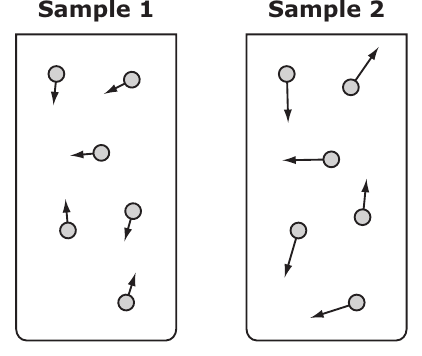
- Higher temperature means faster particle motion and greater average kinetic energy.
- Particles in solids vibrate in fixed positions; liquids and gases have more freedom to move.
- Heating a substance increases particle kinetic energy, causing expansion and phase changes (e.g., melting, boiling).
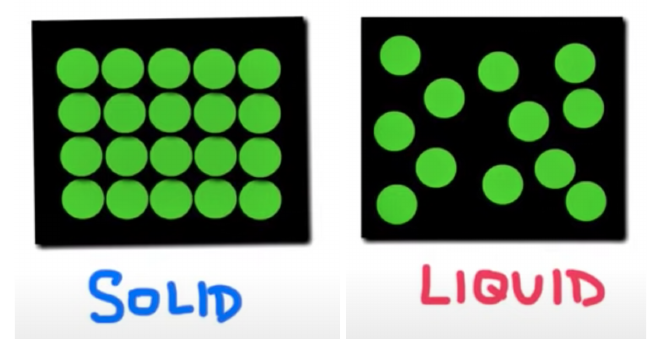
Particles in a solid are packed close together in a fixed pattern; in a liquid they are still close but free to move past each other.
Density and Mass Effects on Thermal Energy
- Density describes how closely particles are packed; higher density means more matter in a given space.
- Solids have less kinetic energy than liquids of the same amount because particles are closer and move less.
- Liquids have less kinetic energy than gases because gas particles move freely and rapidly.
- Larger objects have more total kinetic energy than smaller objects of the same material and temperature due to more particles.
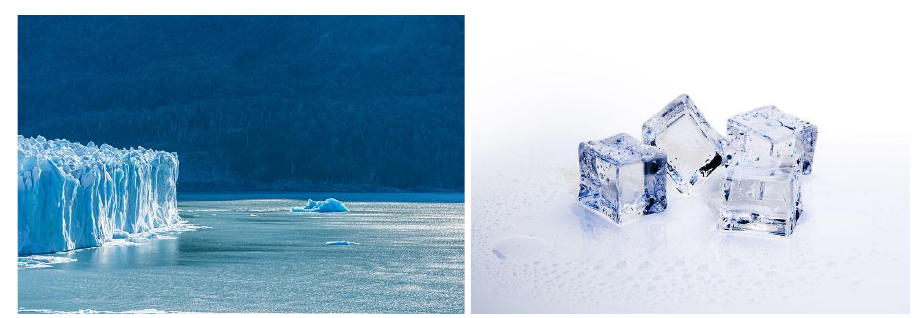
- For example, an iceberg has more thermal energy than ice cubes because it has more mass.
A large iceberg has more total kinetic (thermal) energy than a few small ice cubes of the same substance and temperature, because it is made of far more particles.
Heat Transfer: Conduction
- Conduction is the transfer of thermal energy between objects that are touching, via particle collisions.
- In conduction, faster-moving particles transfer energy to slower neighbors, like a row of dominoes.
- Metals are good thermal conductors because they conduct heat quickly.
- Materials that do not conduct heat well are thermal insulators (e.g., plastic, wood, air).
- When you touch a metal block, it feels colder than plastic because metal conducts heat away from your hand faster.
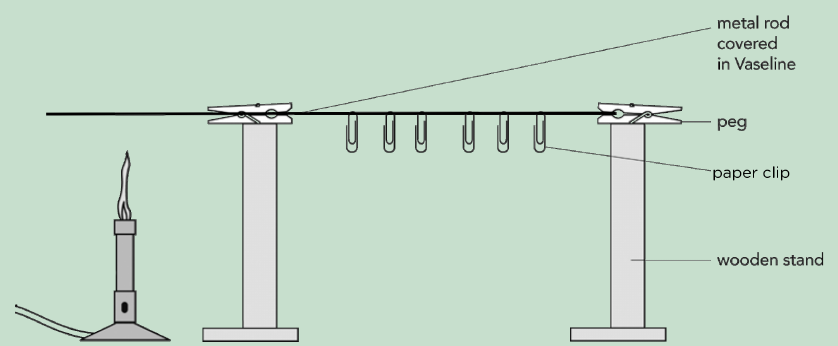
A metal rod with paper clips attached along its length is heated at one end with a Bunsen burner; the clips closest to the flame drop first as heat is conducted along the rod.
Heat Transfer: Convection
- Convection is the transfer of thermal energy by the movement of fluids (liquids or gases).
- Heated fluid expands, becomes less dense, and rises; cooler fluid sinks, creating convection currents.
- Convection currents explain why water in a pot heats throughout, not just at the bottom.
- Convection occurs only in fluids because particles can move; solids cannot form convection currents.
- Examples include heating a room with a heater and the movement of lava lamp blobs.
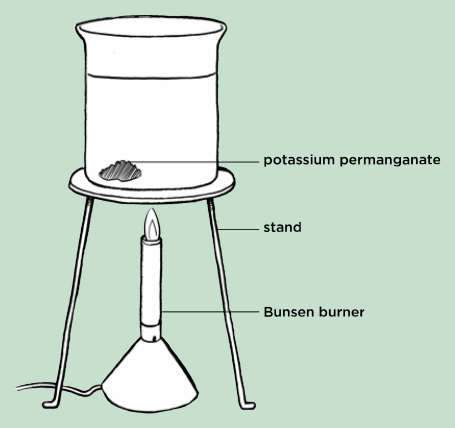
A beaker of water with potassium permanganate crystals is heated from below with a Bunsen burner to show convection currents.
Heat Transfer: Radiation
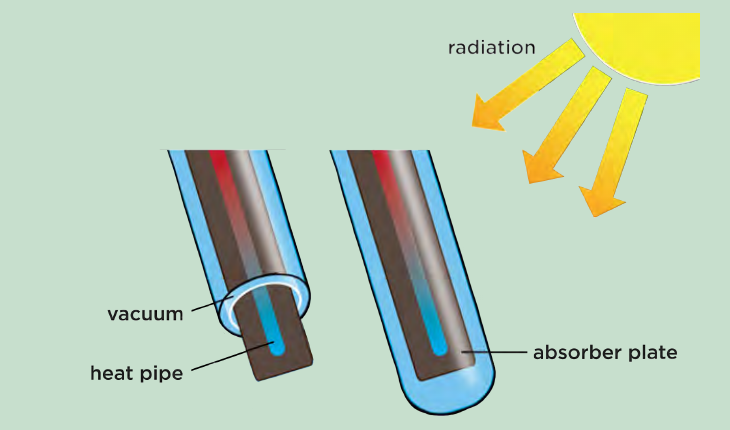
- Radiation is the transfer of thermal energy through electromagnetic waves, requiring no medium.
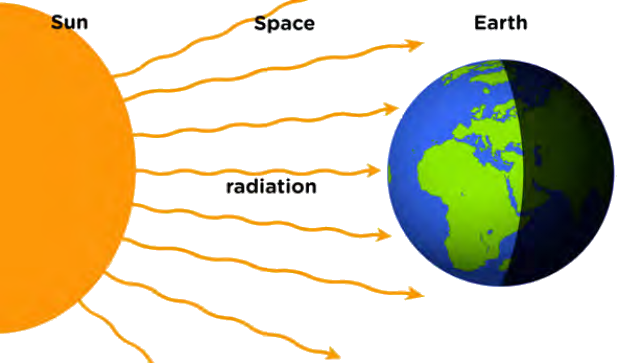
- The Sun warms Earth through radiation across empty space.
- Radiation can be absorbed or reflected by surfaces; dark, matt surfaces absorb more radiation than light, shiny surfaces.
- Shiny surfaces reflect radiation, helping keep things cool (e.g., thermal blankets).
- Radiation is felt from a fire even at a distance, as energy travels through air.
Radiation from the Sun warming Earth
Thermal Conductors and Insulators
- Thermal conductors allow heat to transfer easily; metals like copper and aluminum are good conductors.
- Thermal insulators slow down heat transfer; air, plastic, wood, and wool are insulators.
- Insulating materials often trap air, which is a poor conductor.
- Cooking utensils have plastic or wood handles to prevent burns.
- House insulation (e.g., pink fiberglass) traps air to reduce heat transfer in and out.
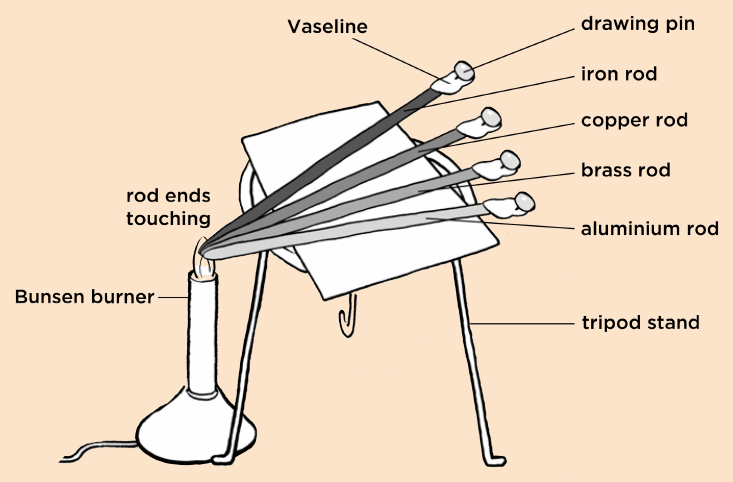
Four metal rods (iron, copper, brass, aluminium) with drawing pins attached by Vaseline are heated at one end on a tripod stand to compare thermal conductivity.
Engineering Design for Heat Transfer
- Engineering design involves defining problems, identifying criteria (success outcomes) and constraints (limitations).
- Engineers brainstorm solutions, then build and test prototypes iteratively.
- Testing and refining designs optimize solutions, as no design is perfect initially.
- For heat transfer, materials are chosen based on their structure: conductors or insulators.
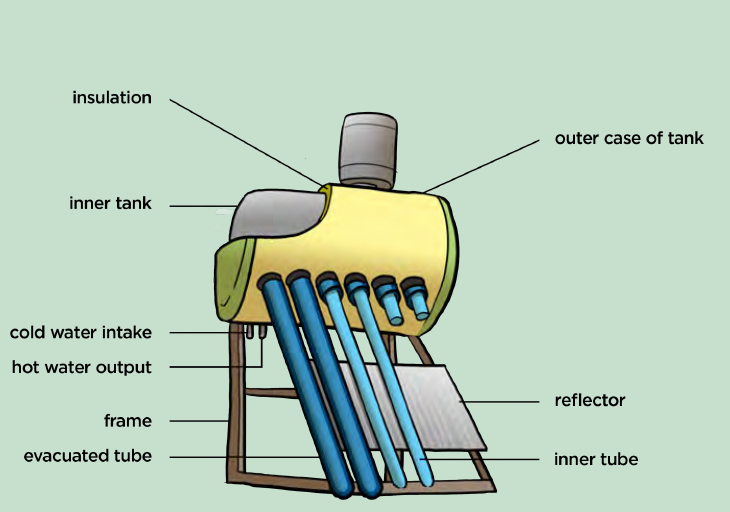
- Example: Solar water heaters use evacuated tubes with a vacuum to minimize heat loss.
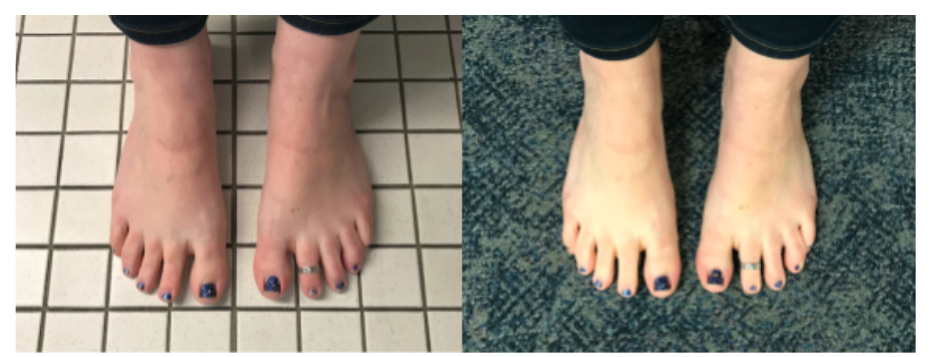
Bare feet feel much colder standing on tile than on carpet, even though both surfaces are at the same room temperature.
Applications and Everyday Examples
- Take-away coffee cups use paper and corrugated cardboard to insulate and prevent burns.
- Thermal blankets for marathon runners are shiny to reflect radiation back to the body.
- Air conditioners are placed high because cool air sinks; heaters are placed low because warm air rises.
- Dark clothing absorbs more solar radiation, keeping you warmer in cold weather.
- Birds fluff feathers to trap air, improving insulation.
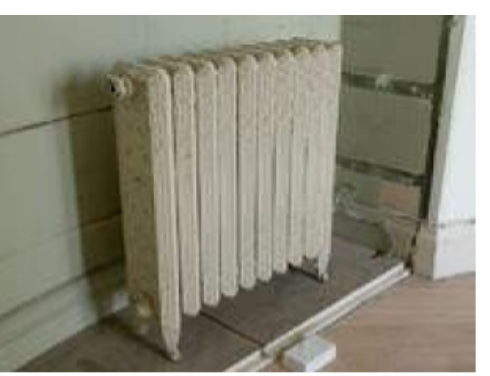
A household radiator: hot water inside heats the metal by conduction, and the metal then radiates thermal energy into the room.
Slide
Sign up free to view the lesson slides
Step through every slide for this topic — plus flashcards and revision notes — with a free account.
Soal latihan
Pratinjau gratis — 8 dari 44 soal. Daftar untuk melihat semuanya.
1.Which of the following is the best definition of thermal energy?
Easy- AThe total kinetic energy of particles in a substance
- BThe average kinetic energy of particles in a substance
- CThe heat transferred between two objects
- DThe temperature of a substance
2.Which statement correctly describes the relationship between temperature and heat?
Easy- ATemperature is a measure of average kinetic energy, while heat is the transfer of thermal energy due to temperature difference.
- BTemperature is the total thermal energy of an object, while heat is the average kinetic energy.
- CTemperature and heat are the same thing.
- DHeat is measured in degrees Celsius, while temperature is measured in joules.
3.Heat is the transfer of thermal energy from an object at a higher temperature to an object at a lower temperature.
EasyTrue or false?
4.Which method of heat transfer does NOT require a medium (particles) to travel through?
Easy- AConduction
- BConvection
- CRadiation
- DConduction and convection
5.Which of the following is an example of heat transfer by conduction?
Easy- AWarming your hands by a campfire
- BFeeling the heat from the Sun
- CThe handle of a metal spoon becoming hot when placed in hot soup
- DHot air rising in a room
6.Which statement explains why a metal block feels colder than a plastic block at the same temperature?
Medium- AThe metal block is at a lower temperature.
- BThe metal block conducts heat away from your hand faster.
- CThe plastic block is a better conductor of heat.
- DThe metal block has less thermal energy.
7.Convection currents can occur in solids because particles are free to move.
EasyTrue or false?
8.An ice cube is placed on an aluminium block and an identical ice cube is placed on a plastic block. Both blocks start at the same room temperature. Which ice cube will melt faster?
Easy- AThe one on the aluminium block
- BThe one on the plastic block
- CBoth melt at the same rate
- DNeither melts
Unlock all 44 questions, flashcards & more
Buat akun gratis untuk melihat setiap soal, slide, kartu flash, dan catatan ulasan topik ini.