Photosynthesis
遊んで学ぼう
問題に答えてエネルギーを集めたら、釣りや探検を楽しもう。アカウント不要。
教育者の方へ: Photosynthesis(MYP Biology、Year 2)向けのすぐ使えるレッスンスライド, 復習ノート — レッスンで使うか、学習者がライブゲームとして遊ぶインタラクティブなクラス活動としてトピックを実施できます。
レッスンノート
Big idea: plants turn light into food
- Big idea (key concept): Change. In photosynthesis, simple substances are changed into new ones and light energy is changed into a different form of energy.
- Related concept: Energy. Almost all the energy that living things use started as sunlight. Photosynthesis is the step that gets that energy into food chains.
- Global context: Globalization and sustainability. Photosynthesis grows the world’s crops, makes the oxygen we breathe and removes carbon dioxide from the air. That is why forests, farmland and oceans matter to people everywhere.
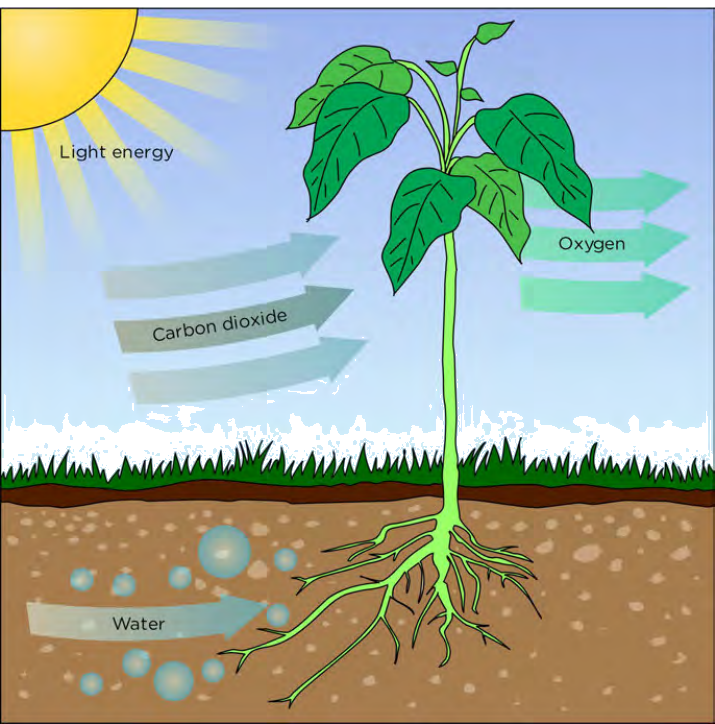
- Photosynthesis is the process in which plants, algae and some bacteria use light energy to make glucose from carbon dioxide and water, and release oxygen.
- Plants are producers: they make their own food. Animals cannot, so every animal depends on plants, either directly or through the animals it eats.
- Light is energy, not a material. The raw materials are carbon dioxide and water, so a growing tree gets most of its mass from air and water, not from the soil.
Light, carbon dioxide and water go in; oxygen comes out
The equation and where it happens
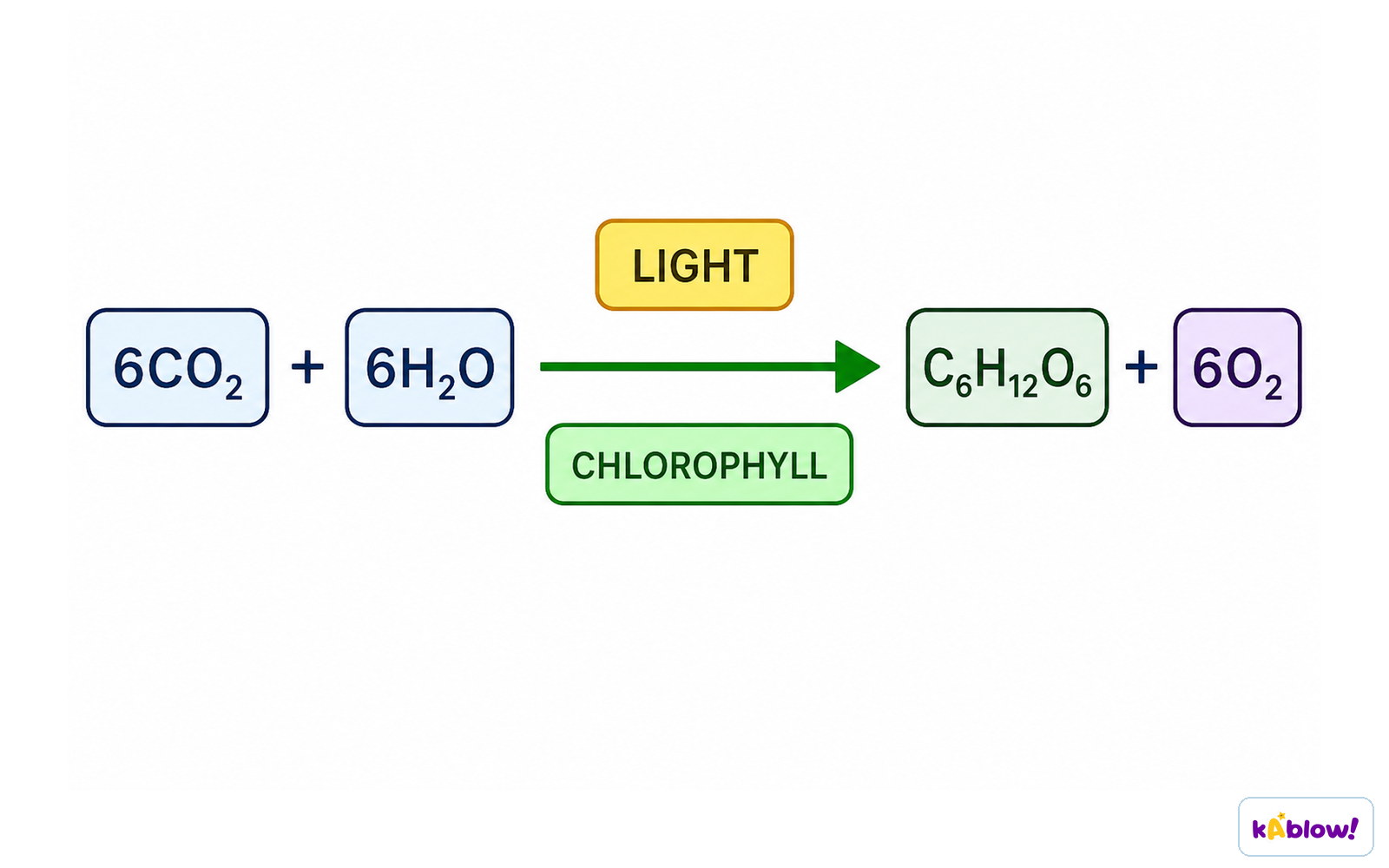
- Word equation: carbon dioxide + water → glucose + oxygen, with light energy absorbed by chlorophyll.
- Symbol equation: 6CO₂ + 6H₂O → C₆H₁₂O₆ + 6O₂. There are 6 carbon, 18 oxygen and 12 hydrogen atoms on each side, so the atoms are only rearranged, never lost.
- The reaction takes in energy. Light energy is changed into chemical energy stored in the glucose.
- It happens in chloroplasts, small green structures found in leaf cells and other green parts of a plant.
- Chloroplasts contain chlorophyll, a green pigment that absorbs light, mostly red and blue light. Green light is reflected, which is why leaves look green.
- Do not mix it up with respiration. Photosynthesis makes glucose and needs light. Respiration releases energy from glucose and goes on all the time, day and night, in plants as well as animals.
The balanced equation for photosynthesis
How a leaf is built for photosynthesis
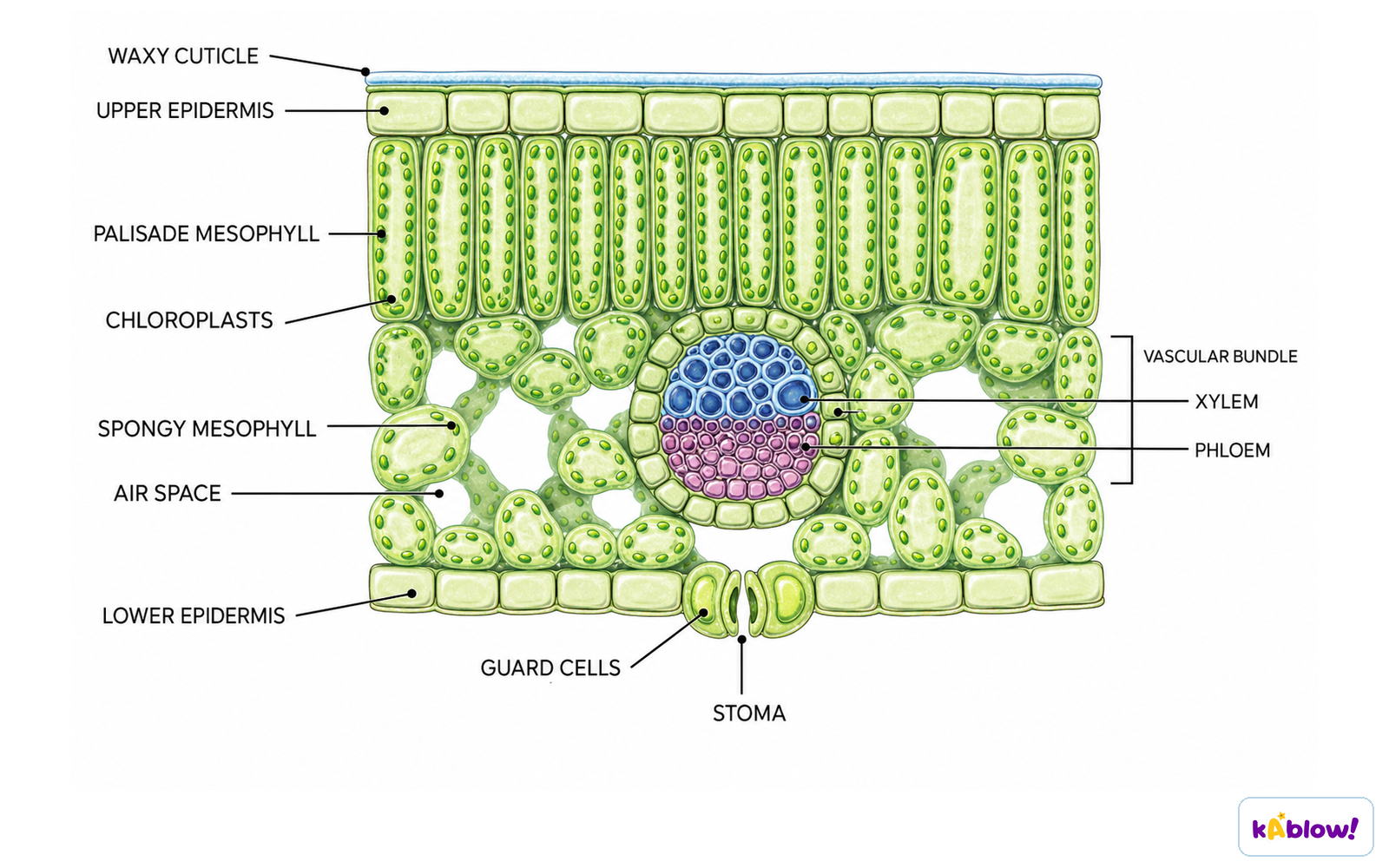
- A leaf is broad and flat, giving a large surface area to catch light, and thin, so gases only diffuse a short distance to reach the cells.
- The waxy cuticle and the upper epidermis are transparent, so light passes through to the cells underneath. The cuticle also cuts down water loss.
- Palisade mesophyll cells are tall and packed close together near the top, where the light is strongest. They contain the most chloroplasts, so most photosynthesis happens here.
- Spongy mesophyll cells are loosely packed with air spaces between them, so carbon dioxide can diffuse through the leaf to every cell.
- Stomata (one is a stoma) are tiny pores, mostly on the underside. Two guard cells open and close each one. Carbon dioxide diffuses in; oxygen and water vapour diffuse out.
- Veins (vascular bundles) bring water in the xylem and carry glucose away as sucrose in the phloem.
Inside a leaf: the layers of a cross-section
What happens to the glucose, and what else plants need
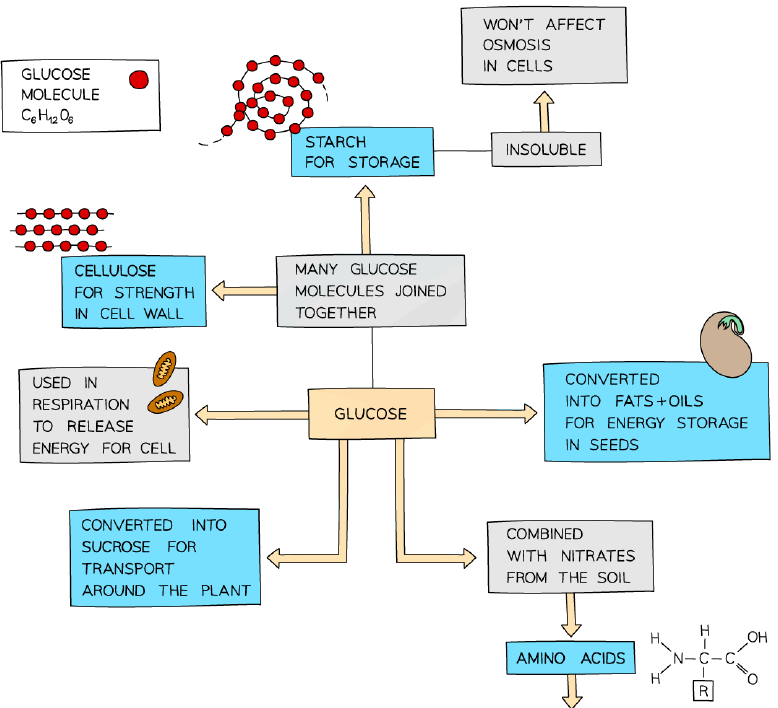
- Some glucose is used in respiration, to release energy for growth and for all the other jobs of the cell.
- Some is turned into starch for storage. Starch is insoluble, so it stays in the cell without dissolving and changing how much water the cell holds.
- Some is built into cellulose, which makes strong cell walls. Some is turned into sucrose, a soluble sugar that travels around the plant, and some into fats and oils, stored in seeds.
- Glucose contains only carbon, hydrogen and oxygen. To make amino acids (and then proteins) the plant combines glucose with nitrate ions taken up from the soil.
- Plants also need magnesium ions to make chlorophyll. Without them, leaves turn yellow (chlorosis) because less light is absorbed. Too little nitrate gives stunted growth and yellow leaves.
- This is why farmers add fertiliser: it replaces the minerals that crops remove from the soil. Too much can wash into rivers and harm other living things, which is a sustainability trade-off.
The fates of glucose in a plant
Limiting factors
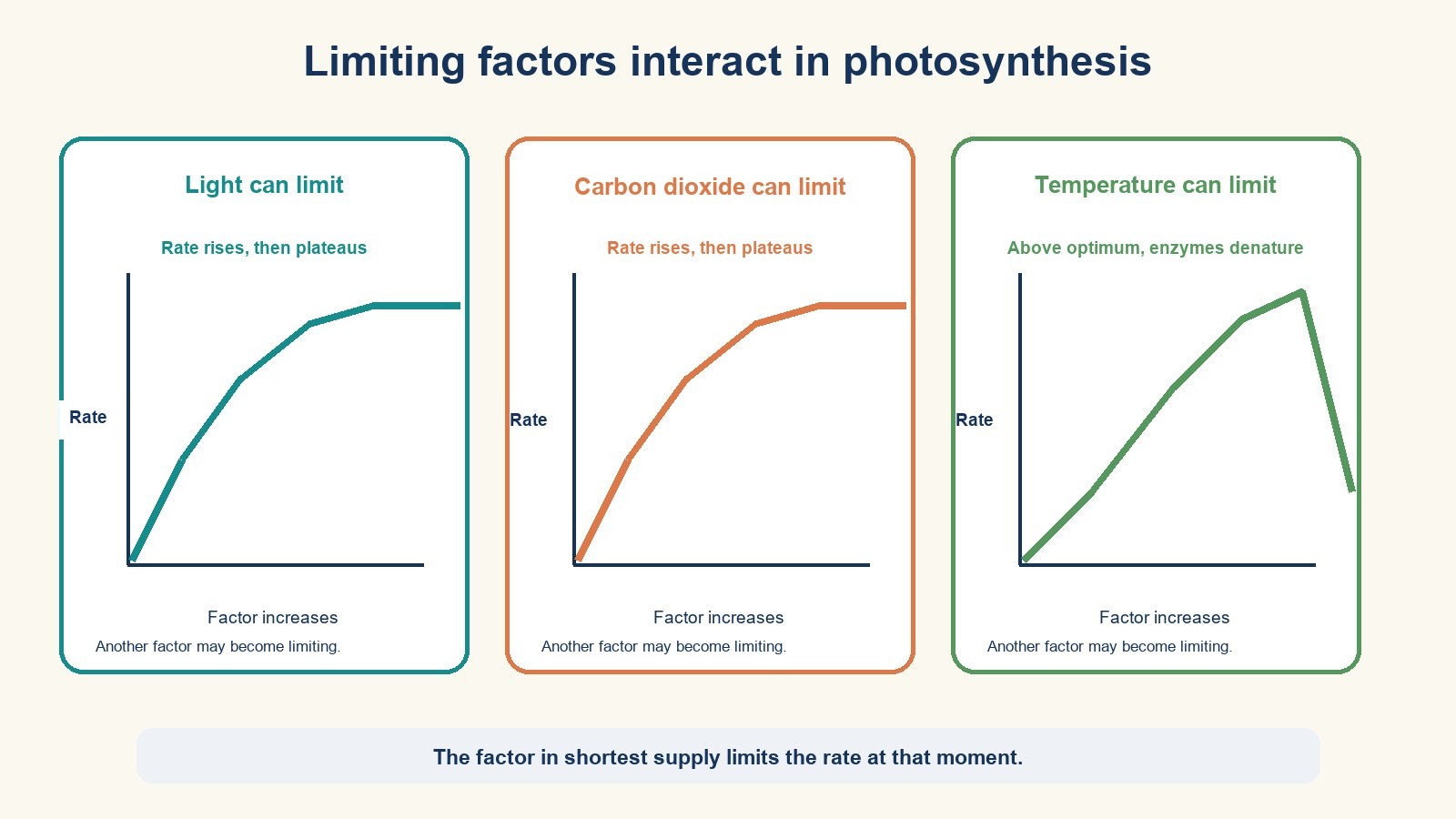
- The rate of photosynthesis depends on light intensity, carbon dioxide concentration and temperature.
- A limiting factor is the one in shortest supply. It sets the rate, so increasing any other factor makes no difference until the limiting factor is increased.
- As light intensity or carbon dioxide increases, the rate rises and then levels off. At that point something else has become the limiting factor.
- As temperature rises, the rate rises too, because enzymes work faster. Above the optimum temperature the enzymes start to denature and the rate falls sharply. The optimum depends on the plant.
- The limiting factor can change during a day: light on a dull morning, temperature on a cold bright day, carbon dioxide in a sealed greenhouse.
- Growers use this idea. Lamps, heaters and extra carbon dioxide can raise yields, but they cost money and energy, so growers weigh the extra crop against the extra cost.
How light, carbon dioxide and temperature limit the rate
Think like a scientist: testing for starch, and measuring the rate
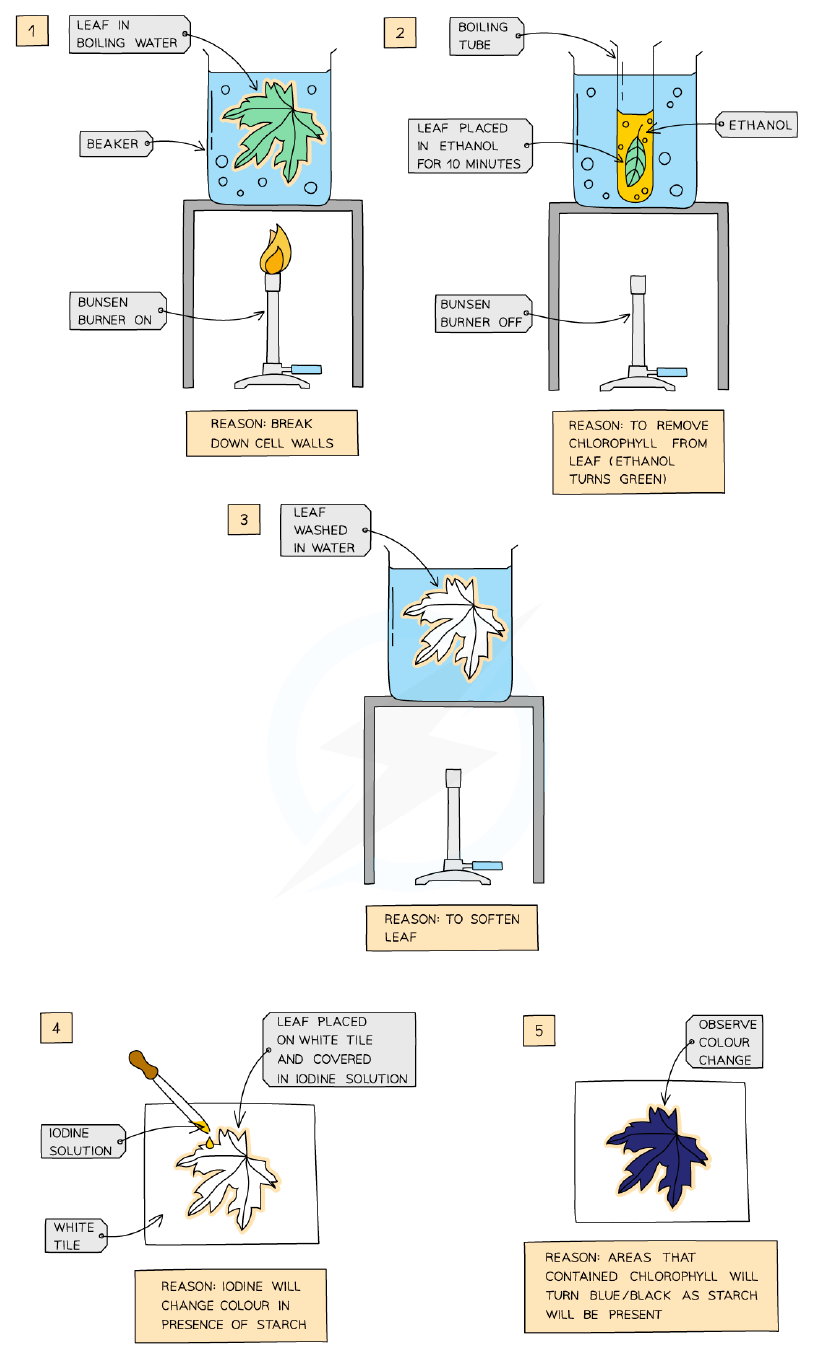
- Testing a leaf for starch. (1) Dip the leaf in boiling water to kill it and soften it. (2) Heat it in ethanol, in a hot water bath with the flame off, to remove the chlorophyll. (3) Rinse it in water. (4) Add iodine solution.
- Iodine turns blue-black if starch is present and stays orange-brown if it is not. Starch is made from glucose, so starch in a leaf is evidence that photosynthesis has happened.
- A variegated leaf has green and white patches. After the test only the green parts turn blue-black, which shows chlorophyll is needed. To test for light, destarch a plant first by keeping it in the dark for a day or two, so any starch you find was made during the experiment.
- Inquiry task: pondweed in water gives off bubbles of oxygen in the light. Plan an investigation into how the distance of a lamp affects the rate of photosynthesis. The independent variable is the distance of the lamp; the dependent variable is the number of bubbles per minute.
- Control the other variables: the same pondweed, the same temperature (use a heat shield or a water bath), the same amount of dissolved carbon dioxide (sodium hydrogencarbonate), and the same time for counting.
- Evaluate: counting bubbles is hard when they come fast, so how could you improve it? Why repeat each distance three times and calculate a mean? Why might the bubble size vary?
The five steps of the starch test
スライド
練習問題
無料プレビュー — 47問中8問。すべて見るには登録を。
1.What is photosynthesis?
Easy- AReleasing energy from glucose in cells
- BMaking glucose using light energy
- CTaking in oxygen through the roots
- DAbsorbing minerals from the soil
2.Which gas do plants take in for photosynthesis?
Easy- AOxygen
- BNitrogen
- CCarbon dioxide
- DHydrogen
3.Which gas is released as a product of photosynthesis?
Easy- AOxygen
- BCarbon dioxide
- CWater vapour only
- DNitrogen
4.Which part of a plant takes in water from the soil?
Easy- AThe leaves
- BThe flowers
- CThe stem
- DThe roots
5.Photosynthesis takes place in the chloroplasts of plant cells.
EasyTrue or false?
6.Plants take in oxygen as a raw material for photosynthesis.
EasyTrue or false?
7.What is the name of the green pigment that absorbs light for photosynthesis?
Easy- AStarch
- BCellulose
- CChlorophyll
- DHaemoglobin
8.Match each raw material for photosynthesis to how the plant gets it.
Easy- Carbon dioxide
- Water
- Light energy
- Absorbed by the roots
- Absorbed by chlorophyll
- Diffuses in through the stomata
過去問
このトピックの過去問練習は近日公開。
近日公開