Conservation Of Biodiversity
遊んで学ぼう
問題に答えてエネルギーを集めたら、釣りや探検を楽しもう。アカウント不要。
レッスンノート
What is Biodiversity?
- Biodiversity is the variety of life that exists in a specified area, from global to local scales.
- It is important for the resilience of ecosystems; more biodiverse ecosystems are more stable and resistant to change.
- Biodiversity is studied at three levels: ecosystem, species, and genetic diversity.
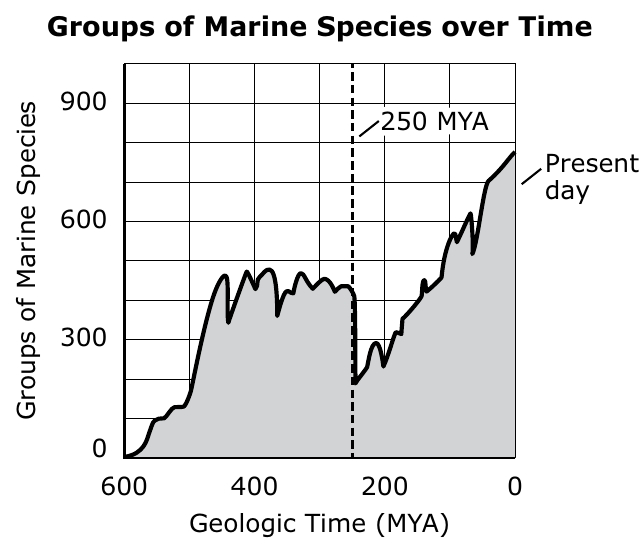
Marine diversity over 600 million years
Ecosystem Diversity
- Ecosystem diversity is the range of different ecosystems or habitats within a particular area.
- A large number of different habitats means high ecosystem diversity; few habitats means low ecosystem diversity.
- Coral reefs are complex with many microhabitats and niches, so they have high ecosystem diversity.
- Large sandy deserts have very low ecosystem diversity because conditions are similar throughout.
Species Diversity
- Species richness is the number of species within an ecosystem.
- Species evenness is the number of individuals of each species within an ecosystem.
- High species diversity requires both high species richness and high species evenness.
- An ecosystem with many species but few individuals of most species has high richness but low evenness.
- An ecosystem with few species but many individuals of each has high evenness but low richness.
- Ecosystems with high species diversity are usually more stable and resilient to environmental changes.
- For example, pine forests dominated by one or two tree species can collapse if a pathogen wipes out a dominant species.
Genetic Diversity
- Genetic diversity is the number of different alleles of genes present in a species or population.
- It depends on the proportion of genes with more than one allele and the number of different alleles each gene has.
- Genetic differences can exist between populations of the same species due to different selection pressures.
- Genetic differences also exist between individuals within a population.
- Genetic diversity helps populations adapt to and survive changes in the environment.
Biodiversity Change Over Time
- Recent estimates suggest there could be around 8.7 million species on Earth, but only about 1.2 million have been recorded and classified.
- The fossil record shows that many past species are now extinct, and there are more species alive today than ever before.
- Speciation increases the number of species; when speciation outpaces extinction, global biodiversity increases.
- Despite recent extinctions, past periods of speciation mean global biodiversity is still higher than ever.
- Classification is subjective; taxonomists may be 'lumpers' (focus on similarities) or 'splitters' (focus on differences).
- Incorrect classification affects estimates: lumping too much makes estimates too small, splitting too much makes them too large.
Anthropogenic Extinction
- Anthropogenic extinction is extinction caused by human activities.
- Scientists believe we are experiencing a mass extinction event, potentially the sixth mass extinction.
- North Island giant moa was a large flightless bird hunted to extinction by humans by 1300.
- Caribbean monk seals were hunted for oil and meat and declared extinct in 2008.
- You need to know three case studies: North Island giant moas, Caribbean monk seals, and a third species of your choice.
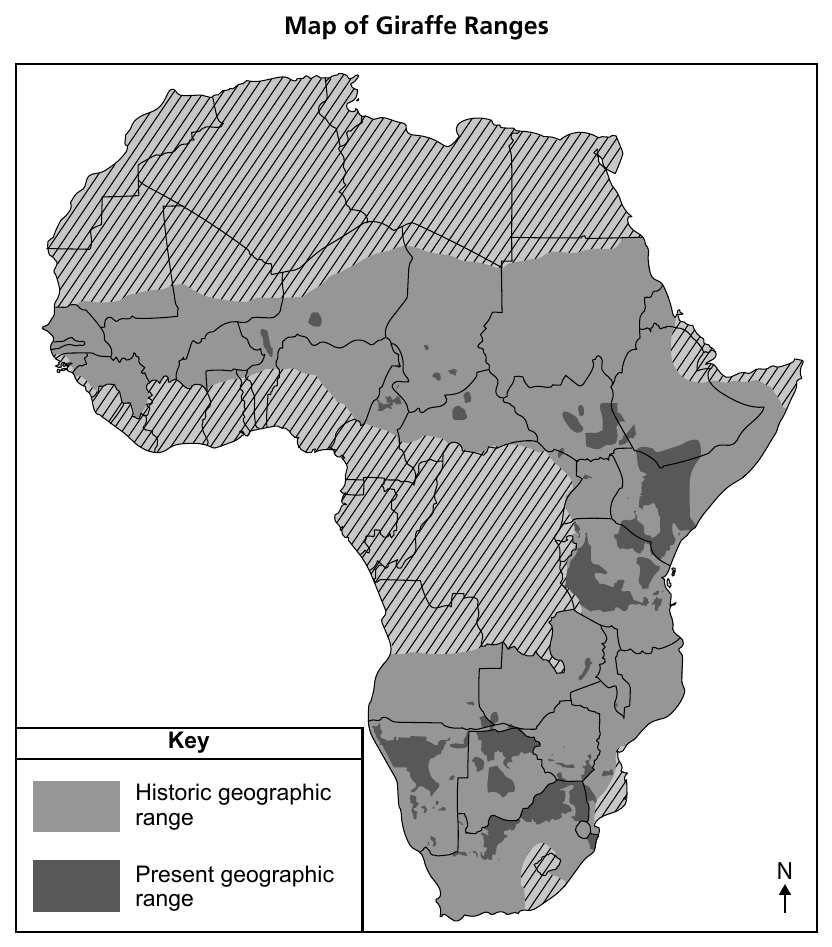
Shrinking range of the giraffe
Ecosystem Loss
- Human activities damage and destroy ecosystems, e.g. deforestation.
- Mixed dipterocarp forests in Southeast Asia are being lost; some areas have lost over 50% of their forests.
- Clear-cutting removes all trees, providing timber and clearing land for agriculture such as palm oil plantations.
- You need to know two case studies: mixed dipterocarp forests and a second ecosystem loss case study of your choice.
Evidence for Biodiversity Loss
- Reliable evidence requires many surveys in a wide range of habitats, repeat data over time, and assessment of both species richness and evenness.
- Citizen scientists are members of the public who help gather data, increasing volume but with a trade-off in quality.
- IPBES gathers information, recommends policies, and communicates findings on global biodiversity.
- IUCN maintains the Red List, which assesses over 150,000 species and lists more than 42,000 as threatened.
- IUCN categories include LC (least concern), NT (near threatened), VU (vulnerable), EN (endangered), CR (critically endangered), EW (extinct in the wild), and E (extinct).
Causes of Biodiversity Loss
- The growth of the global human population (over 8 billion) is likely the main cause of the biodiversity crisis.
- Overexploitation includes overfishing and hunting for ivory, oil, or fur.
- Urbanisation causes direct habitat loss and fragmentation by roads.
- Deforestation clears land for agriculture, timber, mining, and quarries; agriculture often involves monocultures with low biodiversity.
- Pollution includes microplastics and fertiliser runoff into water bodies.
- Invasive species such as grey squirrels, cane toads, and rats damage native habitats.
- Disease can wipe out species, e.g. chytrid fungus has wiped out 90 amphibian species.
How to Preserve Biodiversity
- A mixture of approaches is needed because there is no single solution and conflicts exist between human and natural needs.
- In situ conservation includes protected areas, rewilding, and reclamation.
- Ex situ conservation includes zoos, botanic gardens, seed banks, and tissue banks.
- Protected areas such as national parks and nature reserves restrict human access, regulate industry, and limit hunting.
- Rewilding restores ecosystems to be self-sustaining; active rewilding involves human intervention, passive rewilding leaves nature to recover.
- Reclamation restores areas damaged by human activities, such as abandoned quarries.
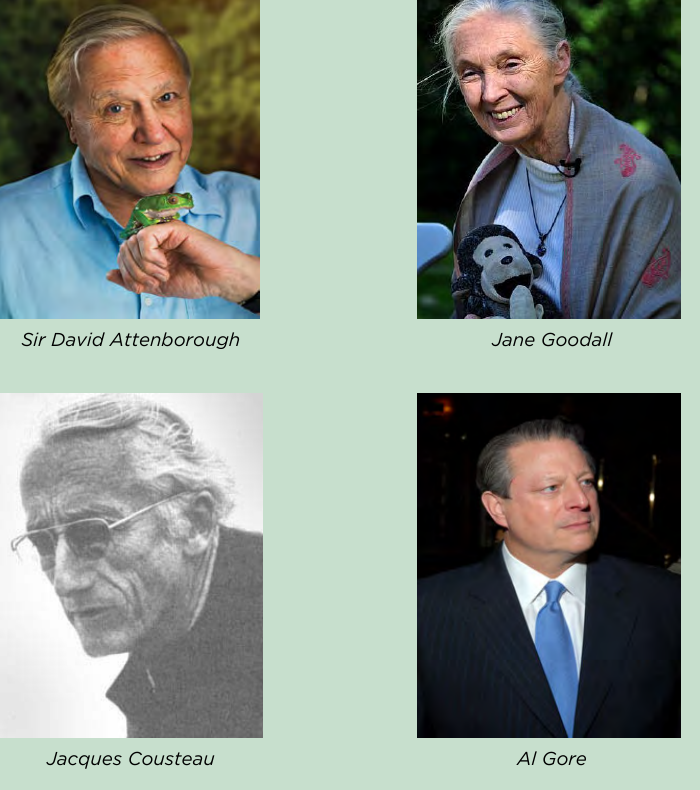
Raising awareness of biodiversity
Ex Situ Conservation Methods
- Zoos use captive breeding and artificial insemination to increase numbers and genetic diversity, and are valuable for research.
- Botanic gardens use cuttings, seeds, tissue culture, and cloning to establish captive plant populations for reintroduction and research.
- Seed banks store dried seeds in cool, temperature-controlled conditions; seeds are periodically grown and replaced to maintain viability.
- The Svalbard Global Seed Vault in Norway stores seeds from almost 1 million plant species.
- Tissue banks (frozen zoos) store genetic material at very low temperatures; germplasm (sperm, eggs, embryos) can be used for breeding, somatic tissue for DNA research and potential cloning.
Prioritising Species for Conservation
- The EDGE programme (Evolutionarily Distinct and Globally Endangered) works with ZSL to prioritise species.
- Priority species must be both evolutionarily distinct (few close relatives, unusual traits) and globally endangered (on the IUCN Red List).
- Examples of EDGE species include largetooth sawfish, Chinese giant salamander, and purple frog.
- EDGE does not make conservation decisions but provides information to stakeholders for debate.
- Complex ethical, environmental, political, social, cultural, and economic issues affect conservation priorities.
スライド
練習問題
無料プレビュー — 64問中8問。すべて見るには登録を。
1.Which of the following best defines biodiversity?
Easy- AThe variety of life that exists in a specified area
- BThe total number of individuals of a single species in an area
- CThe number of different alleles in a population
- DThe total biomass of all organisms in an ecosystem
2.Which of the following is a correct explanation for biodiversity change?
Easy- ASpecies extinctions occur due to anthropogenic extinction.
- BScientists have changed the way species are classified.
- CClassification can be subjective.
- DThere are more species alive today than have been alive in the past.
3.Which of the following describe(s) anthropogenic extinction? (select all that apply)
Medium- ANorth Island giant moas were hunted to extinction between 1200-1300.
- BAn asteroid strike resulted in the extinction of most of the dinosaurs around 65 million years ago.
- CCaribbean monk seals were hunted to extinction to provide oil and food.
- DThe extinction of the dinosaurs was caused by human hunting.
- EThe vaquita declined due to bycatch in gillnets.
4.Biodiversity can be studied at three levels: ecosystem, species, and genetic.
EasyTrue or false?
5.Which statement(s) about biodiversity is/are correct? I. Biodiversity is a measure of the number of species present. II. Biodiversity can be assessed at the ecosystem level. III. Genetic diversity considers the number of genes that a species has.
Medium- AI only
- BI and II only
- CII and III only
- DI, II and III
6.Which of the following is an important factor in mixed dipterocarp ecosystem loss in Southeast Asia?
Easy- AIntroduction of non-native species.
- BEstablishment of nature reserves.
- CClear-cutting of trees to provide agricultural land.
- DChanges in atmospheric oxygen levels.
7.Match each type of biodiversity with its correct description.
Medium- Ecosystem diversity
- Species diversity
- Genetic diversity
- The number of different alleles of genes present
- The range of different ecosystems or habitats within an area
- The number of species and individuals of each species within an ecosystem
8.Which of the statements about conservation is correct?
Medium- AThe EDGE programme is concerned with conserving all evolutionarily distinct species.
- BIn-situ conservation is appropriate for all endangered species.
- CEx-situ conservation provides opportunities for important research.
- DOnly body tissue can be stored in tissue banks.