Reproduction
遊んで学ぼう
問題に答えてエネルギーを集めたら、釣りや探検を楽しもう。アカウント不要。
レッスンノート
Sexual vs Asexual Reproduction
- Sexual reproduction involves two parents and the fusion of gamete nuclei to form a zygote, producing offspring that are genetically different from each other.
- Gametes are sex cells (sperm and ovum in animals; pollen nucleus and ovum in plants) with a haploid nucleus – half the chromosome number of body cells.
- In humans, body cells have 46 chromosomes; gametes have 23. Fusion of gametes restores the diploid number (46) in the zygote.
- Asexual reproduction does not involve gametes or fertilisation; only one parent is required, so offspring are genetically identical (clones).
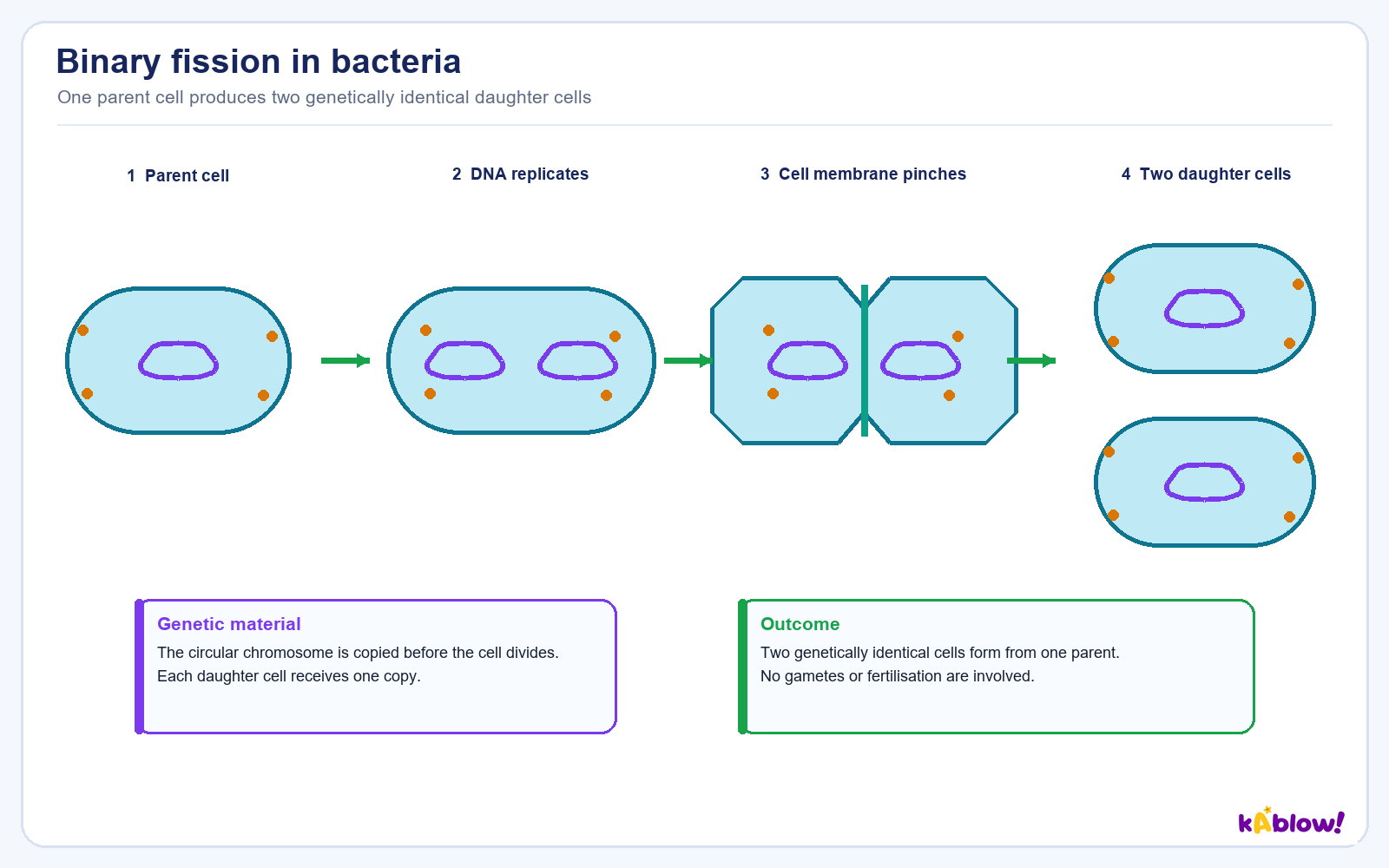
- Many plants reproduce asexually; bacteria reproduce by binary fission, producing exact genetic copies.
- Key differences between sexual and asexual reproduction include: number of parents, type of cell division, genetic similarity of offspring, sources of genetic variation, number of offspring, and time taken.
Binary fission in bacteria
Meiosis and Gamete Formation
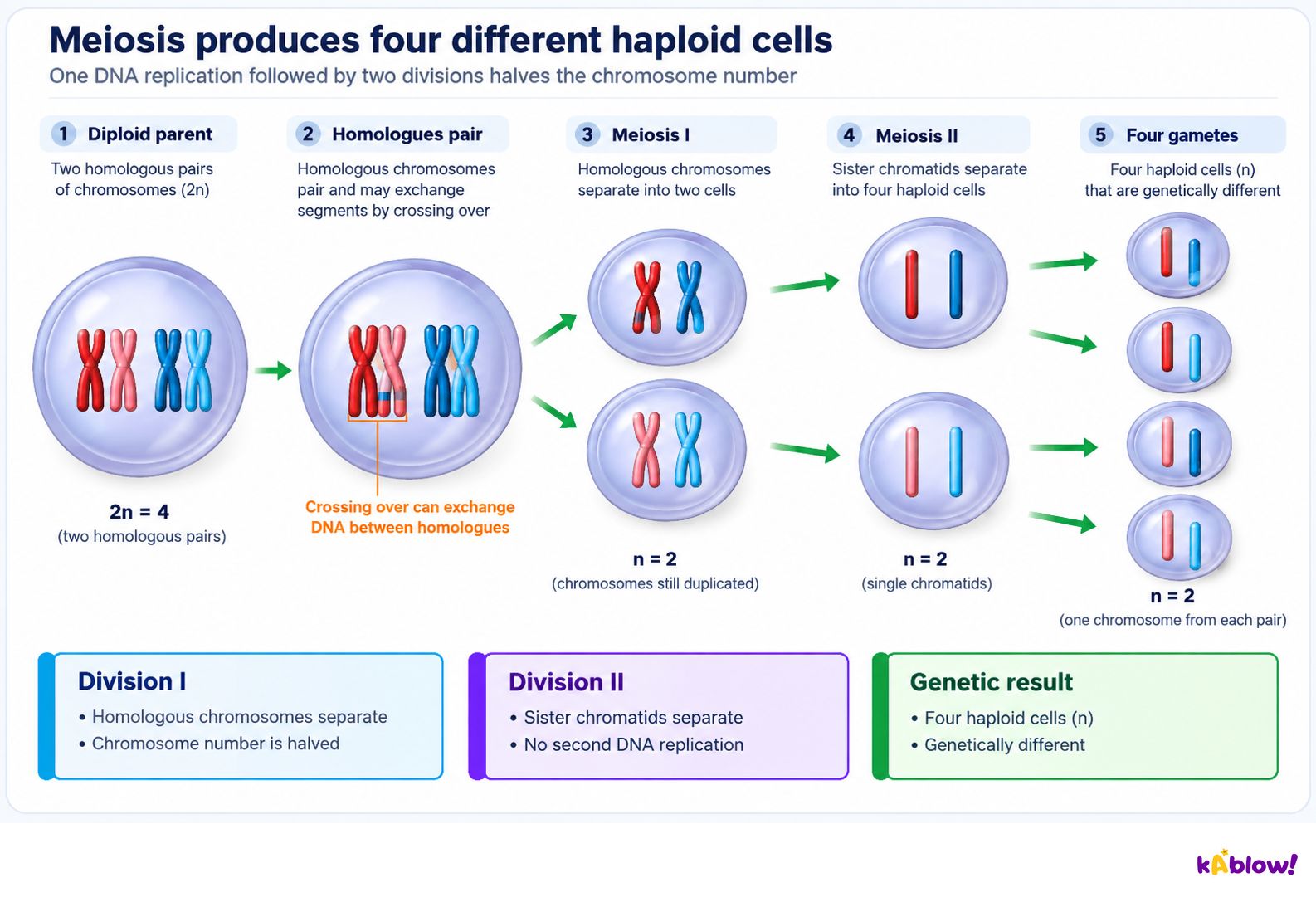
- Meiosis is a form of nuclear division that produces haploid cells from diploid cells, forming gametes in plants and animals.
- Meiosis occurs in two successive divisions: meiosis I and meiosis II, each with prophase, metaphase, anaphase and telophase.
- Crossing over – non-sister chromatids exchange alleles during meiosis I – and independent assortment – random alignment of homologous pairs during meiosis I – create genetic variation.
- Random fertilisation – millions of combinations of sperm and egg – further increases genetic variation.
- In males, meiosis occurs in the testes producing spermatozoa; in females, in the ovaries producing ova.
- In flowering plants, meiosis occurs in the anthers (male) and ovaries (female); male gametes are in pollen grains, female gametes in ovules.
Meiosis
Male and Female Reproductive Systems
- You should be able to draw and annotate diagrams of the female and male reproductive systems and recall the function of each structure.
- The female reproductive system includes the ovaries (produce eggs), oviducts (site of fertilisation), uterus (where the embryo implants and develops), cervix and vagina.
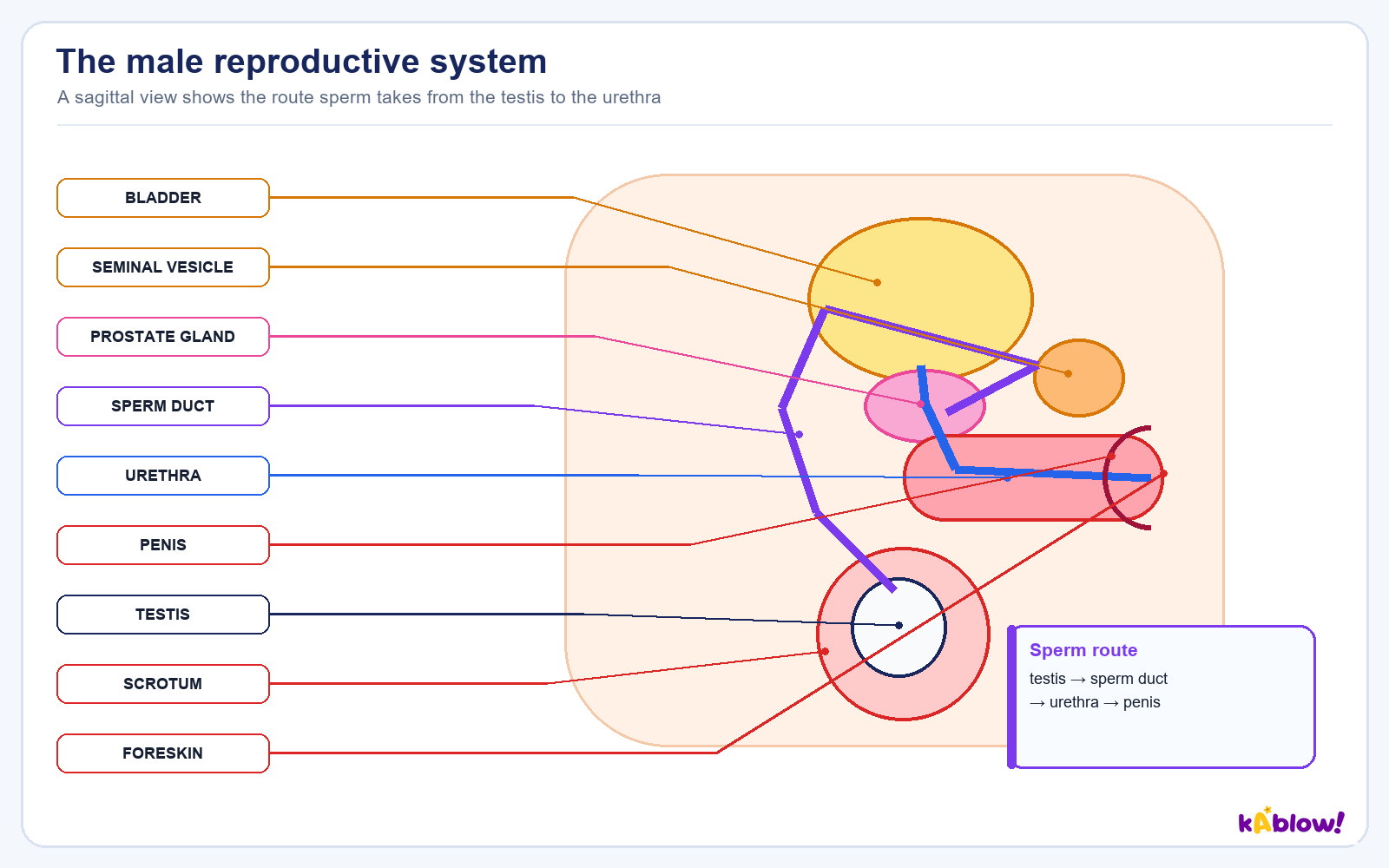
- The male reproductive system includes the testes (produce sperm and testosterone), epididymis (sperm maturation and storage), sperm duct, prostate gland and urethra.
- Human females release only one egg cell per menstrual cycle, whereas a male releases many thousands of sperm cells per ejaculation.
- This difference reflects the fact that only one sperm cell can fertilise an egg cell, so many sperm are needed to increase the chance of fertilisation.
The male reproductive system
The Menstrual Cycle
- The menstrual cycle is a series of changes in the female body leading up to and following the release of an egg; it averages 28 days and is controlled by hormones.
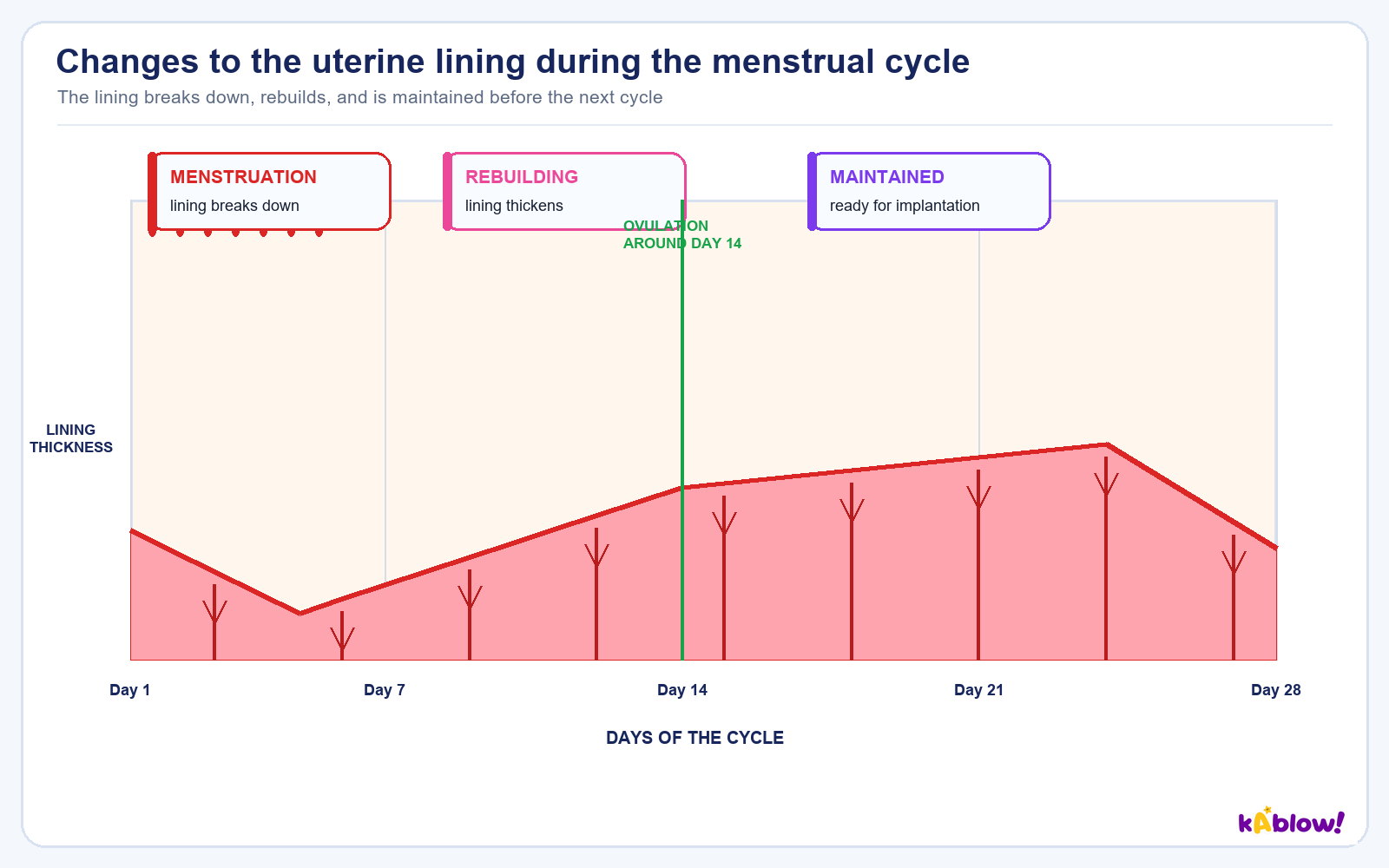
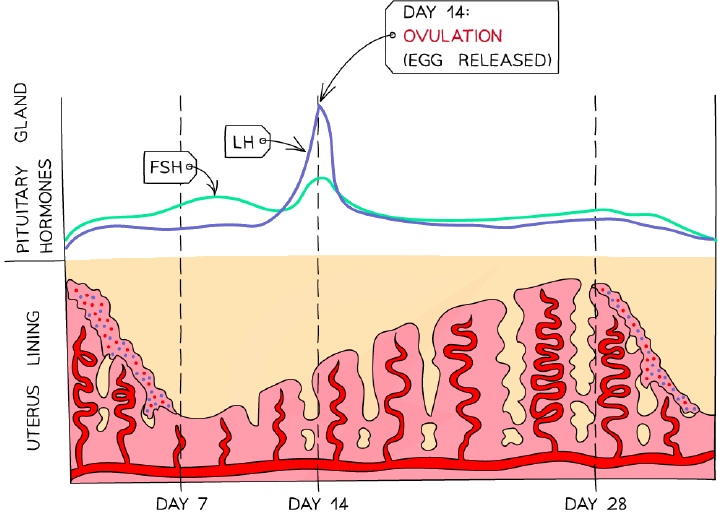
- The endometrium (uterus lining) thickens from day 7 to day 28 in preparation for a fertilised egg.
- Ovulation occurs about halfway through the cycle on day 14; the egg is released from the ovary and travels down the oviduct.
- Eggs develop inside fluid-filled sacs called follicles; after ovulation the follicle becomes the corpus luteum.
- If fertilisation does not occur, the corpus luteum deteriorates, progesterone falls, and the endometrium breaks down causing menstruation (days 1–7).
- Four hormones control the cycle: FSH and LH from the pituitary gland; oestrogen and progesterone from the ovaries.
- FSH stimulates follicle development and oestrogen secretion; LH triggers ovulation and stimulates progesterone production from the corpus luteum.
- Oestrogen causes endometrium thickening and egg maturation; progesterone maintains and thickens the endometrium.
The menstrual cycle
Feedback Mechanisms in the Menstrual Cycle
- Positive feedback: oestrogen increases FSH receptors on follicles, making them more receptive to FSH, which stimulates more oestrogen production.
- Negative feedback: high oestrogen levels inhibit FSH secretion.
- Positive feedback: high oestrogen stimulates LH release from the pituitary, causing ovulation around day 14.
- After ovulation, LH causes the follicle wall to develop into the corpus luteum, which secretes more oestrogen (positive feedback).
- Negative feedback: progesterone thickens and maintains the endometrium but inhibits FSH and LH secretion from the pituitary.
- A fall in progesterone as the corpus luteum deteriorates causes the endometrium to break down, resulting in menstruation.
Hormones and the uterus lining
In Vitro Fertilisation (IVF)
- IVF is a treatment for infertility where eggs are fertilised by sperm outside the body in controlled laboratory conditions.
- First, the woman takes a drug to inhibit FSH and LH secretion from the pituitary, stopping oestrogen and progesterone secretions and temporarily halting the menstrual cycle.
- Then injections of FSH and LH stimulate follicle development; the high FSH concentration causes superovulation – many more follicles than normal mature.
- Eggs are collected and fertilised by sperm in sterile laboratory conditions; fertilised eggs develop into embryos.
- About 48 hours after fertilisation, one or more embryos (tiny balls of cells) are inserted into the mother's uterus.
- Extra progesterone is given to ensure the endometrium is maintained.
- The success rate of IVF is low (~30%), but medical advancements are improving it.
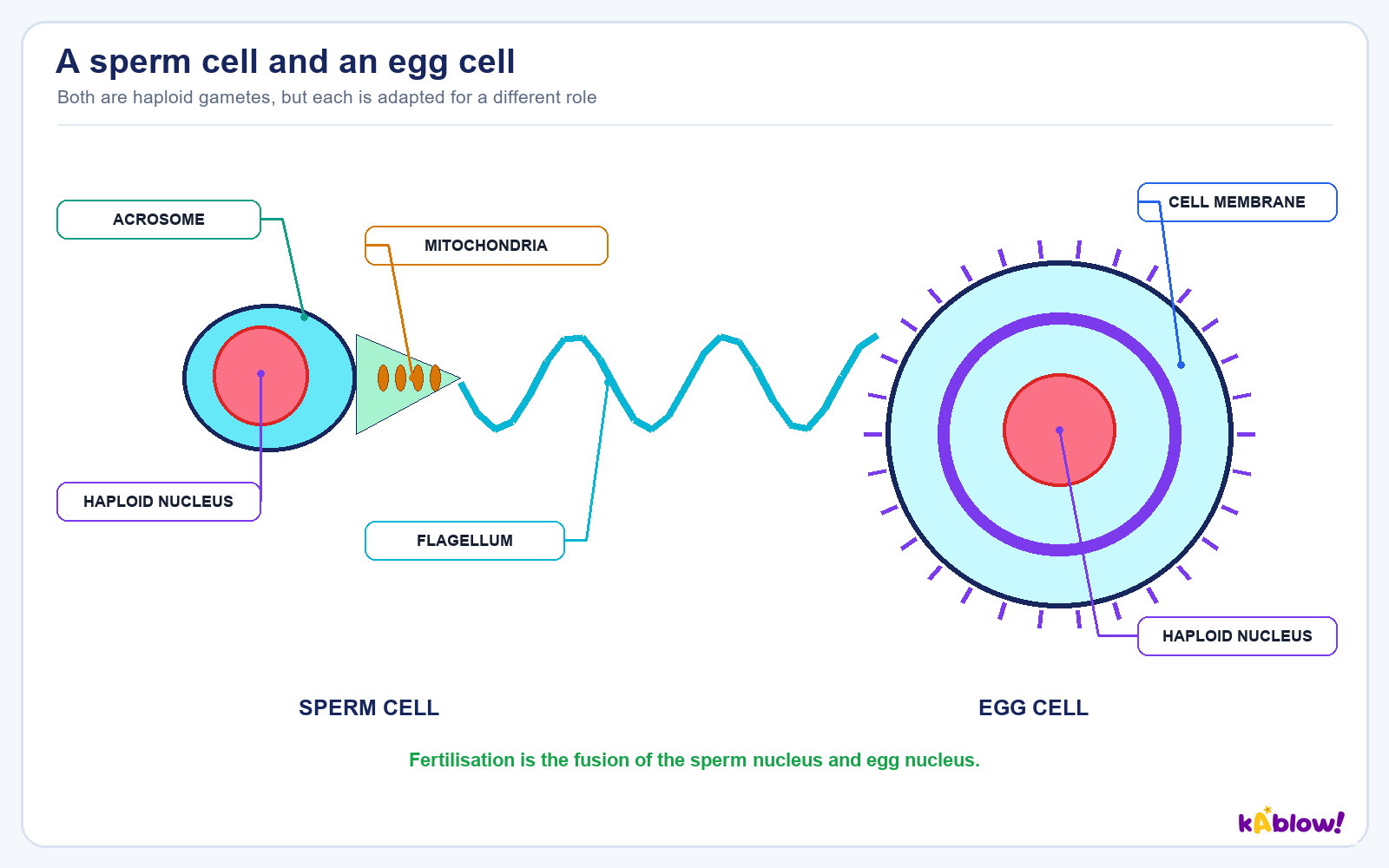
A sperm cell and an egg cell
Fertilisation and Preventing Polyspermy
- Fertilisation is the fusion of a sperm and egg cell nucleus to give rise to a diploid zygote.
- Sperm are attracted to the egg by chemical signals; the first sperm to reach the egg fuses its membrane with the egg cell membrane.
- The sperm nucleus enters the egg; vesicles from the egg destroy the sperm tail and mitochondria.
- Pronuclei form around the two haploid sets of chromosomes; DNA replication occurs before they fuse and the first mitotic division takes place.
- Polyspermy is the entry of more than one sperm into a single oocyte; it is prevented by the acrosome reaction and the cortical reaction.
- The acrosome reaction: digestive enzymes from the acrosome digest the glycoproteins of the zona pellucida, allowing the sperm to reach the oocyte membrane.
- The cortical reaction: cortical granules release enzymes by exocytosis that digest binding proteins and harden the zona pellucida, preventing further sperm entry.
Gametogenesis: Spermatogenesis and Oogenesis
- Gametogenesis is gamete formation involving both mitosis and meiosis; spermatogenesis produces sperm, oogenesis produces ova.
- Spermatogenesis occurs in the seminiferous tubules of the testes from puberty onwards; interstitial (Leydig) cells produce testosterone.
- Spermatogonia divide by mitosis, differentiate into primary spermatocytes, then undergo meiosis I (secondary spermatocytes) and meiosis II (spermatids).
- Spermatids mature into sperm cells associated with Sertoli cells, then detach and pass through the epididymis.
- Oogenesis begins in the ovaries of the female foetus before birth; oogonia divide by mitosis for the first 7 months of foetal development.
- Oogonia grow and enter meiosis I, surrounded by follicle cells to form primary follicles; oogenesis pauses until puberty.
- At puberty, FSH stimulates follicle development; meiosis I produces a secondary oocyte and a polar body; meiosis II completes only after sperm entry.
- The secondary oocyte becomes an ovum briefly between the end of meiosis II and fusion of nuclei; a second polar body is produced.
Plant Reproduction: Pollination and Fertilisation
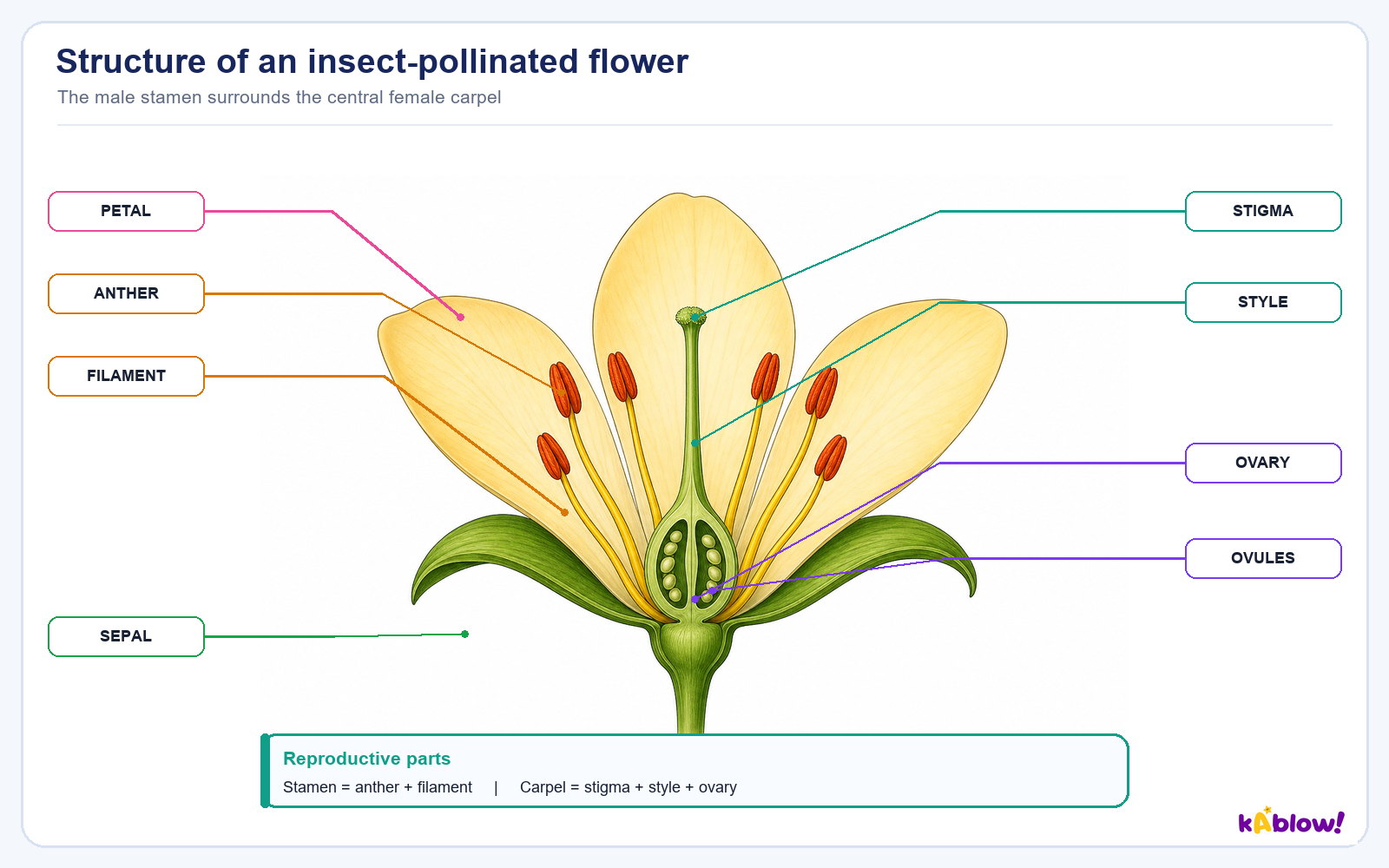
- In flowering plants, male gametes are produced in the anther and female gametes in the ovule.
- Pollen sacs in the anther contain diploid mother cells that undergo meiosis to form four haploid pollen grains; mitosis produces more male gametes.
- A diploid cell in the ovule undergoes meiosis to produce four haploid egg cells; only one survives and undergoes mitosis to form female gametes.
- Pollination is the transfer of pollen from the anther to the stigma; it can be by insects (or other animals) or by wind.
- Insect-pollinated flowers have colourful petals, scent and nectar to attract pollinators; wind-pollinated flowers have lightweight pollen and feathery stigmas.
- After pollination, a pollen tube grows down the style to the ovary; two male nuclei travel down it – one fuses with an ovule nucleus to form the zygote, the other forms the food store.
- Fertilisation occurs when haploid male and female nuclei fuse to form a diploid zygote; the ovule becomes the seed and the ovary develops into the fruit.
Structure of an insect-pollinated flower
Preventing Self-Pollination and Seed Dispersal & Germination
- Self-pollination results in less genetic variation; cross-pollination improves genetic variation and relies on pollinators or wind.
- Self-incompatibility mechanisms prevent self-pollination: pollen may fail to germinate, fail to enter the style, degenerate before fertilisation, or the embryo may degenerate.
- Seed dispersal distributes seeds away from the parent plant, reducing competition; methods include wind, water, animals and explosions.
- Wind-dispersed seeds are lightweight and parachute- or wing-shaped; animal-dispersed seeds may be in fleshy fruit or have sticky/hooked surfaces.
- Germination requires water (swells seed, bursts testa, activates enzymes), oxygen (for respiration) and warmth (optimal enzyme activity).
- The radicle emerges first, forming the root; the hypocotyl is the first structure above ground, and leaves appear from the cotyledon for photosynthesis.
Hormones, Puberty and the Placenta
- Puberty is triggered by GnRH from the hypothalamus, which stimulates the pituitary to secrete LH and FSH; these enhance the effects of oestrogen and testosterone.
- Male secondary sexual characteristics include deepening of the voice, growth of facial and body hair, and increased muscle mass.
- Female secondary sexual characteristics include breast development, widening of hips, and growth of body hair.
- The placenta is a structure that allows exchange of substances between maternal and foetal blood; it produces hormones including hCG and progesterone.
- hCG is secreted in early pregnancy and maintains the corpus luteum, which continues to secrete progesterone to maintain the endometrium.
- Substances cross the placenta by diffusion (oxygen, carbon dioxide), facilitated diffusion (glucose), osmosis (water) and endocytosis (antibodies).
- Chorionic villi increase in number throughout pregnancy to increase surface area for exchange.
スライド
練習問題
無料プレビュー — 62問中8問。すべて見るには登録を。
1.Which of the following best defines a gamete?
Easy- AA diploid cell containing two copies of each chromosome
- BA haploid sex cell such as a sperm or ovum
- CA fertilised egg cell containing 46 chromosomes
- DA body cell that divides by mitosis
2.A human body cell contains 46 chromosomes. How many chromosomes are present in a human sperm cell?
Easy- A92
- B46
- C23
- D12
3.Which process produces genetically identical offspring from a single parent without the fusion of gametes?
Medium- ASexual reproduction
- BMeiosis
- CAsexual reproduction
- DFertilisation
4.Which statement correctly describes crossing over during meiosis?
Medium- AHomologous pairs of chromosomes line up randomly at the equator during meiosis I
- BNon-sister chromatids exchange alleles during meiosis I
- CSperm and egg cells fuse randomly during fertilisation
- DSister chromatids separate during meiosis II
5.Which of the following are mechanisms that lead to genetic variation in the gametes produced by sexual reproduction? (select all that apply)
Medium- ACrossing over
- BBinary fission
- CIndependent assortment
- DRandom fertilisation
- EMitosis
6.In humans, each gamete contains 23 chromosomes, while a zygote contains 46 chromosomes.
EasyTrue or false?
7.Asexual reproduction produces offspring that are genetically identical to each other and to the parent.
EasyTrue or false?
8.Match each flower structure with its function.
Medium- Sepal
- Petal
- Anther
- Stigma
- Protects the developing flower while inside the bud
- Is colourful to attract pollinators
- Produces the male gametes (pollen)
- Receives pollen during pollination