Reproduction
遊んで学ぼう
問題に答えてエネルギーを集めたら、釣りや探検を楽しもう。アカウント不要。
教育者の方へ: Reproduction(Biology、SL)向けのすぐ使えるレッスンスライド, 復習ノート — レッスンで使うか、学習者がライブゲームとして遊ぶインタラクティブなクラス活動としてトピックを実施できます。
レッスンノート
Sexual vs Asexual Reproduction
- Sexual reproduction involves two parents and the fusion of gamete nuclei to form a zygote, producing offspring that are genetically different from each other.
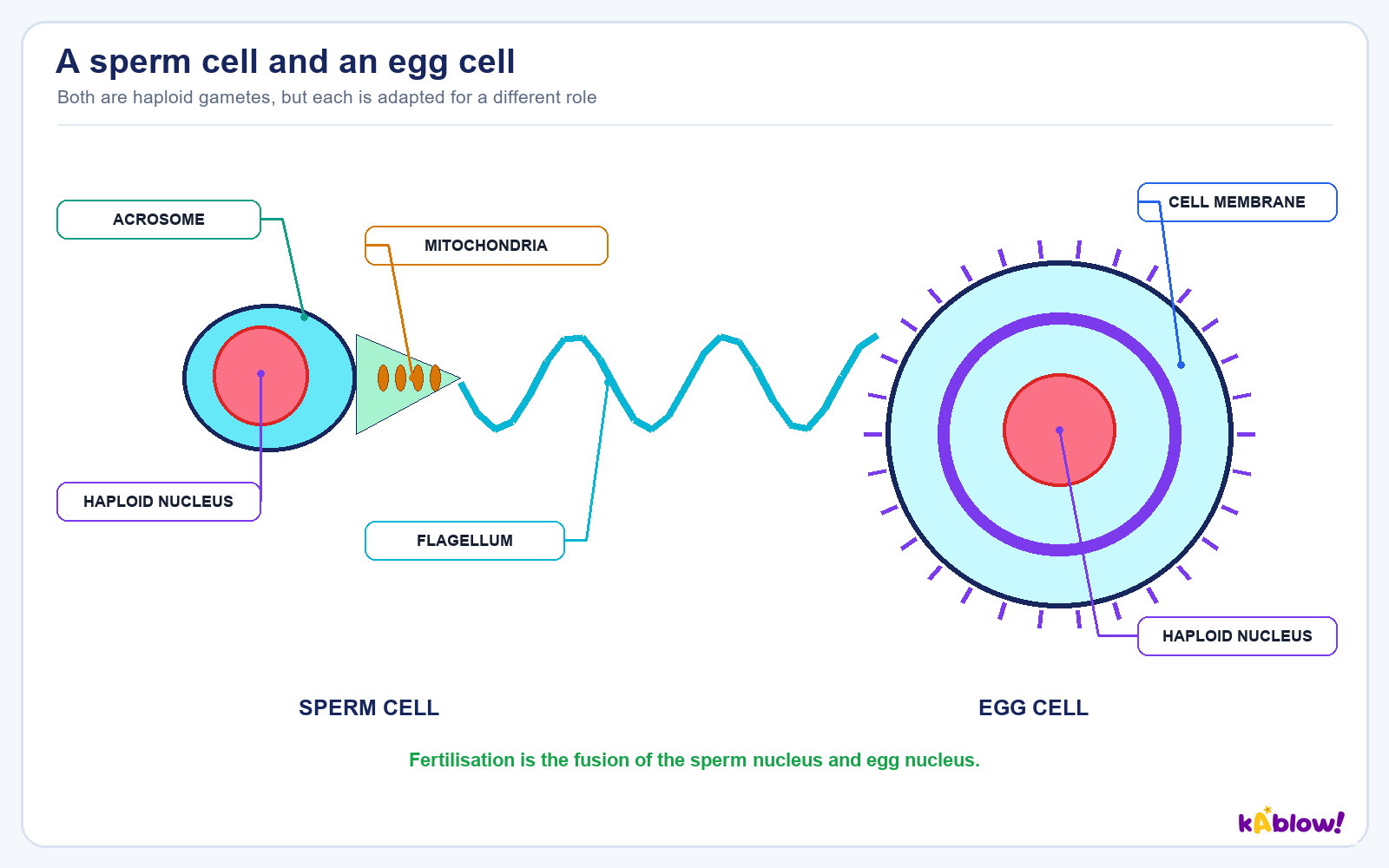
- A gamete is a sex cell (sperm and ovum in animals; pollen nucleus and ovum in plants) with a haploid nucleus – half the chromosome number of body cells.
- In humans, body cells have 46 chromosomes; gametes have 23. Fusion of gametes restores the diploid number (46) in the zygote.
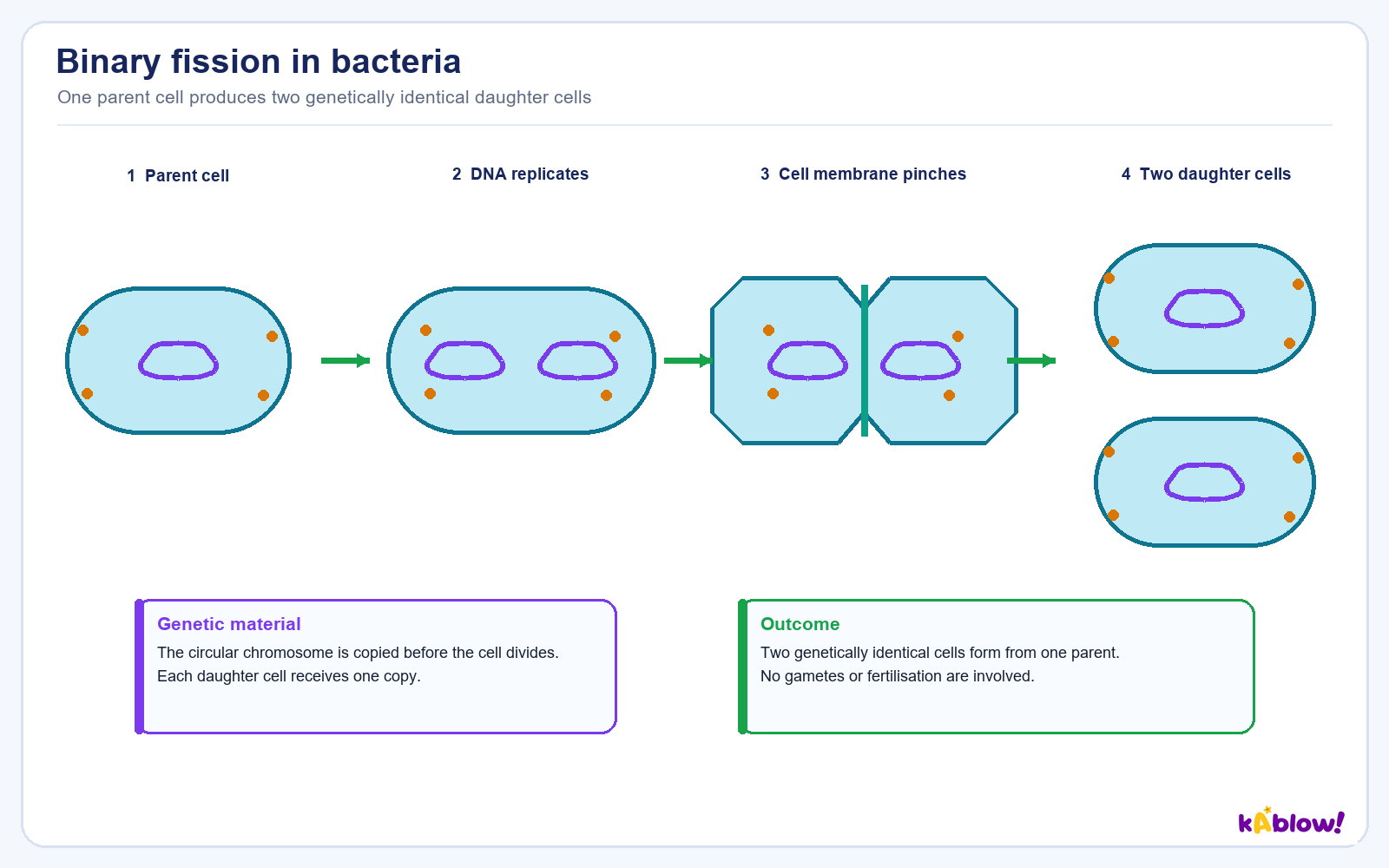
- Asexual reproduction does not involve gametes or fertilisation; only one parent is required, so offspring are genetically identical clones.
- Many plants reproduce asexually; bacteria use binary fission to produce exact genetic copies.
- Key differences between sexual and asexual reproduction include: number of parents, type of cell division, genetic similarity of offspring, sources of genetic variation, number of offspring, and time taken.
Binary fission in bacteria
Meiosis and Gamete Formation
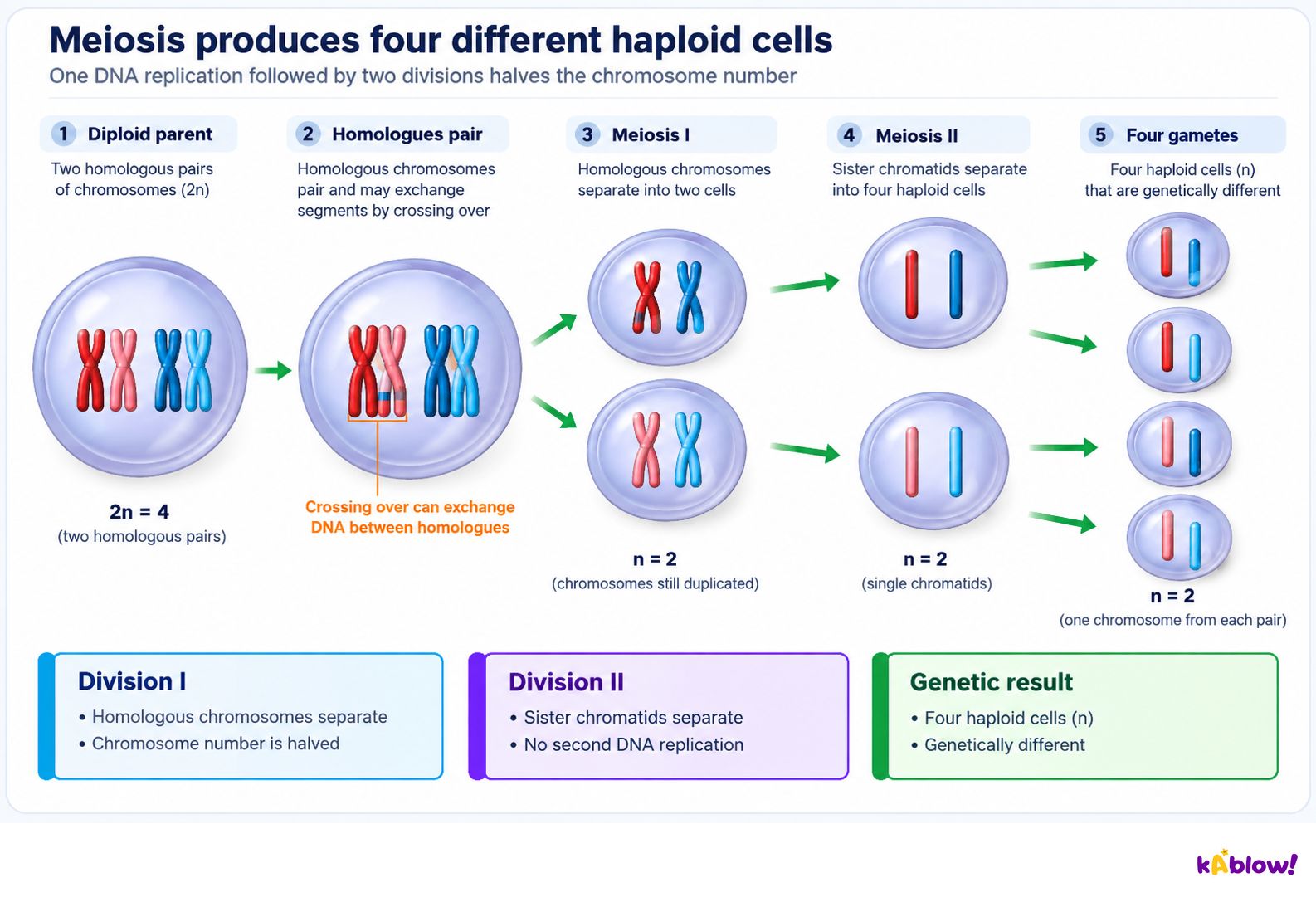
- Meiosis is a nuclear division that produces haploid cells from diploid cells, forming gametes in plants and animals.
- It occurs in two successive divisions: meiosis I and meiosis II, each with prophase, metaphase, anaphase and telophase.
- Genetic variation is generated by crossing over (exchange of alleles between non-sister chromatids during meiosis I), independent assortment (random alignment of homologous pairs during meiosis I), and random fertilisation.
- In animals, meiosis occurs in the testes (sperm) and ovaries (ova); in flowering plants, it occurs in the anthers and ovaries.
- Male gametes in plants are carried in pollen grains; female gametes are held in ovules within the ovary.
Meiosis
Male and Female Reproductive Systems
- You should be able to draw and annotate diagrams of the female and male reproductive systems and recall the function of each structure.
- Female structures include the ovaries (produce eggs and hormones), oviducts (carry egg to uterus), uterus (where embryo implants), cervix and vagina.
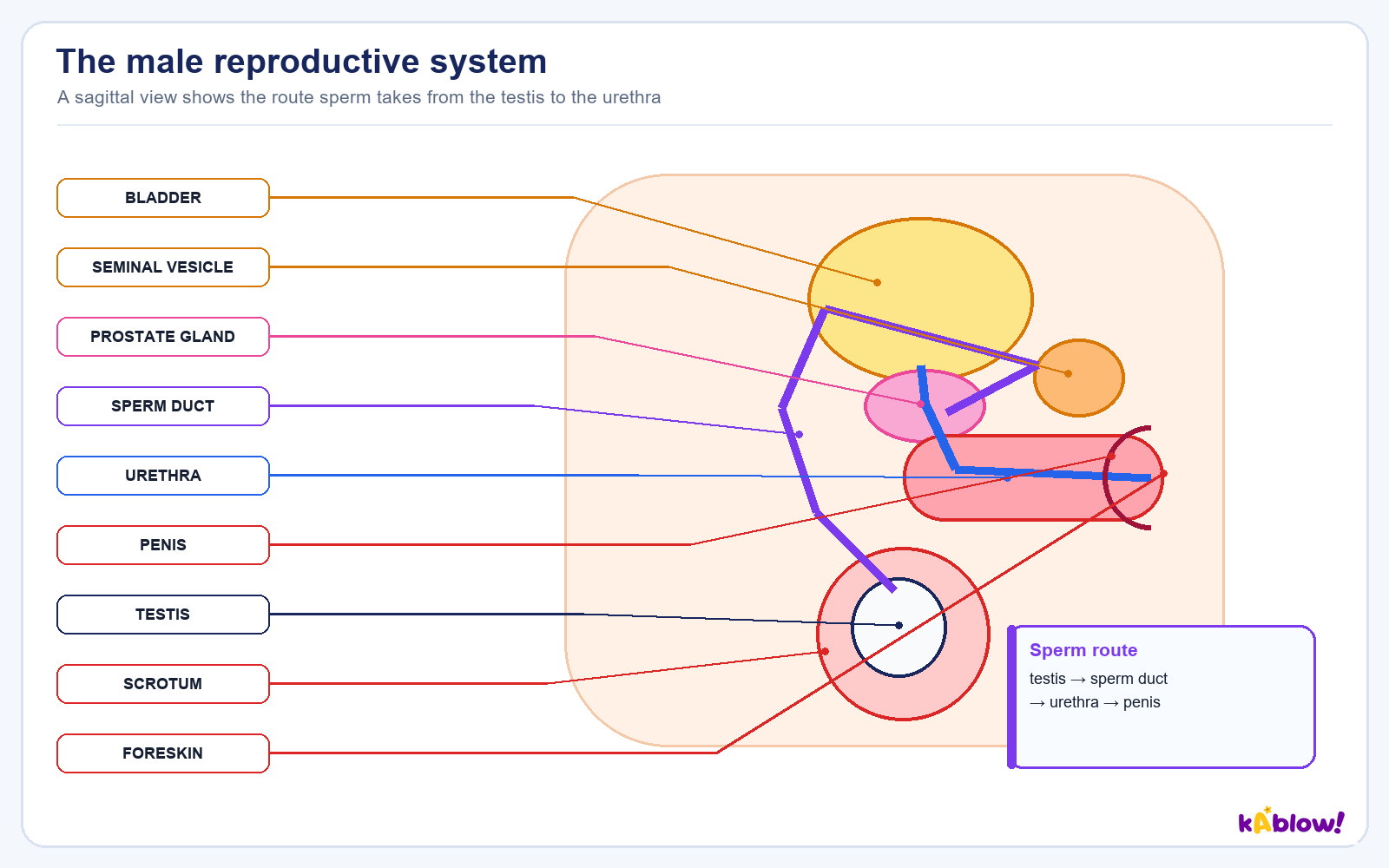
- Male structures include the testes (produce sperm and testosterone), scrotum, sperm ducts, prostate gland, urethra and penis.
- Human females release only one egg cell per menstrual cycle, whereas a male releases many thousands of sperm cells per ejaculation; only one sperm can fertilise an egg.
The male reproductive system
The Menstrual Cycle
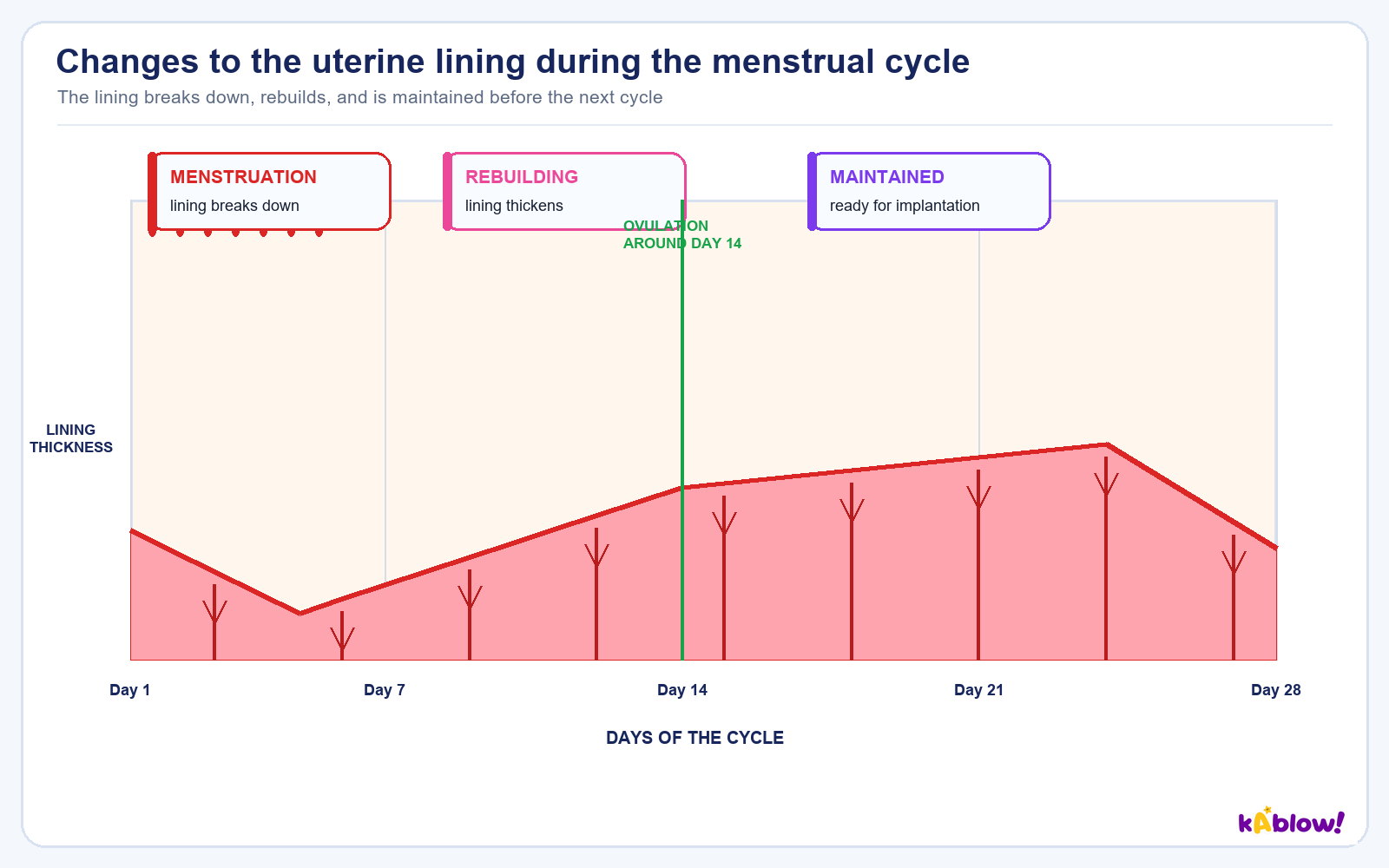
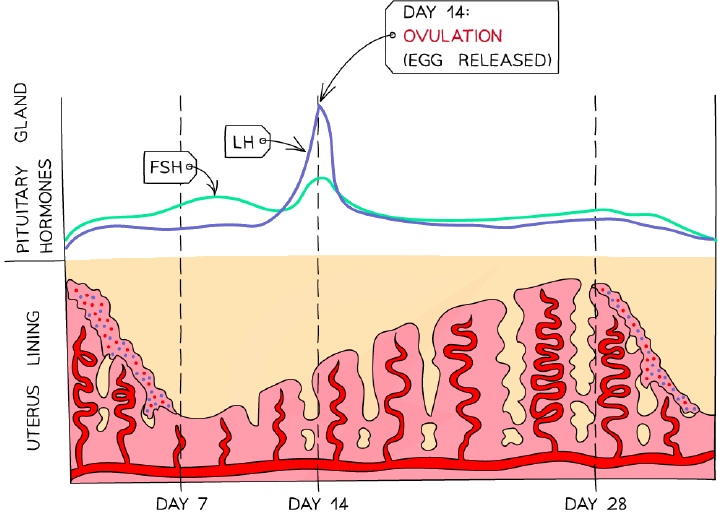
- The menstrual cycle is a series of changes in the female body leading up to and following the release of an egg; it averages 28 days and is controlled by hormones.
- The endometrium (uterus lining) thickens from day 7 to day 28 in preparation for a fertilised egg.
- Ovulation occurs around day 14; the egg is released from a fluid-filled follicle in the ovary and travels down the oviduct.
- The empty follicle becomes the corpus luteum.
- If fertilisation does not occur, the corpus luteum deteriorates, progesterone falls, and the endometrium breaks down, causing menstruation (roughly days 1–7).
The menstrual cycle
Hormonal Control of the Menstrual Cycle
- FSH (follicle-stimulating hormone) is secreted by the pituitary gland; it stimulates development of immature egg cells in follicles and stimulates oestrogen secretion by the follicle wall.
- LH (luteinising hormone) is released when oestrogen peaks; it causes ovulation and stimulates the corpus luteum to produce progesterone.
- Oestrogen is produced by the egg follicle and corpus luteum; it causes the endometrium to thicken and the egg cell to mature, peaking just before day 14.
- Progesterone is produced by the corpus luteum; it thickens and maintains the endometrium. A fall in progesterone causes menstruation.
- Positive feedback: oestrogen increases FSH receptors, making follicles more receptive to FSH, which stimulates more oestrogen production; high oestrogen also stimulates LH release.
- Negative feedback: high oestrogen inhibits FSH secretion; progesterone inhibits FSH and LH secretion from the pituitary gland.
Hormones and the uterus lining
Fertilisation and IVF
- Fertilisation is the fusion of a sperm and egg cell nucleus to form a diploid zygote.
- Sperm are attracted to the egg by chemical signals; the first sperm fuses with the egg membrane and its nucleus enters. Vesicles from the egg destroy the sperm tail and mitochondria.
- The two haploid sets of chromosomes form pronuclei; DNA replication occurs, then the pronuclei fuse and the first mitotic division of the diploid cell takes place.
- IVF (in vitro fertilisation) involves fertilising eggs with sperm outside the body. The woman first takes a drug to inhibit FSH and LH, halting the menstrual cycle.
- She is then given FSH and LH injections to stimulate follicle development; the high FSH causes superovulation (many more follicles mature than normal).
- Eggs are collected and fertilised in the laboratory; embryos are inserted into the uterus about 48 hours after fertilisation. Extra progesterone is given to maintain the endometrium.
- IVF success rate is low (~30%) but is improving with medical advances.
A sperm cell and an egg cell
Plant Reproduction and Pollination
- In flowering plants, male gametes are produced in the anther and female gametes in the ovule.
- The anther contains pollen sacs; each diploid mother cell undergoes meiosis to form four haploid pollen grains, then mitosis produces more male gametes.
- In the ovule, a diploid cell undergoes meiosis to produce four haploid egg cells; only one survives and undergoes mitosis to produce female gametes.
- Pollination is the transfer of pollen from the anther of one flower to the stigma of another. It can be by insects (or other animals) or by wind.
- Insect-pollinated flowers often produce nectar to attract insects; as the insect feeds, pollen sticks to its body and is transferred to the next flower.
- Wind-pollinated flowers shed pollen into the air; pollination is random and relies on air currents.
- After pollination, a pollen tube grows down the style to the ovary; two male nuclei travel down it – one fuses with an ovule nucleus to form the zygote, the other forms the embryo's food store.
- After fertilisation, the ovule becomes a seed and the ovary develops into the fruit.
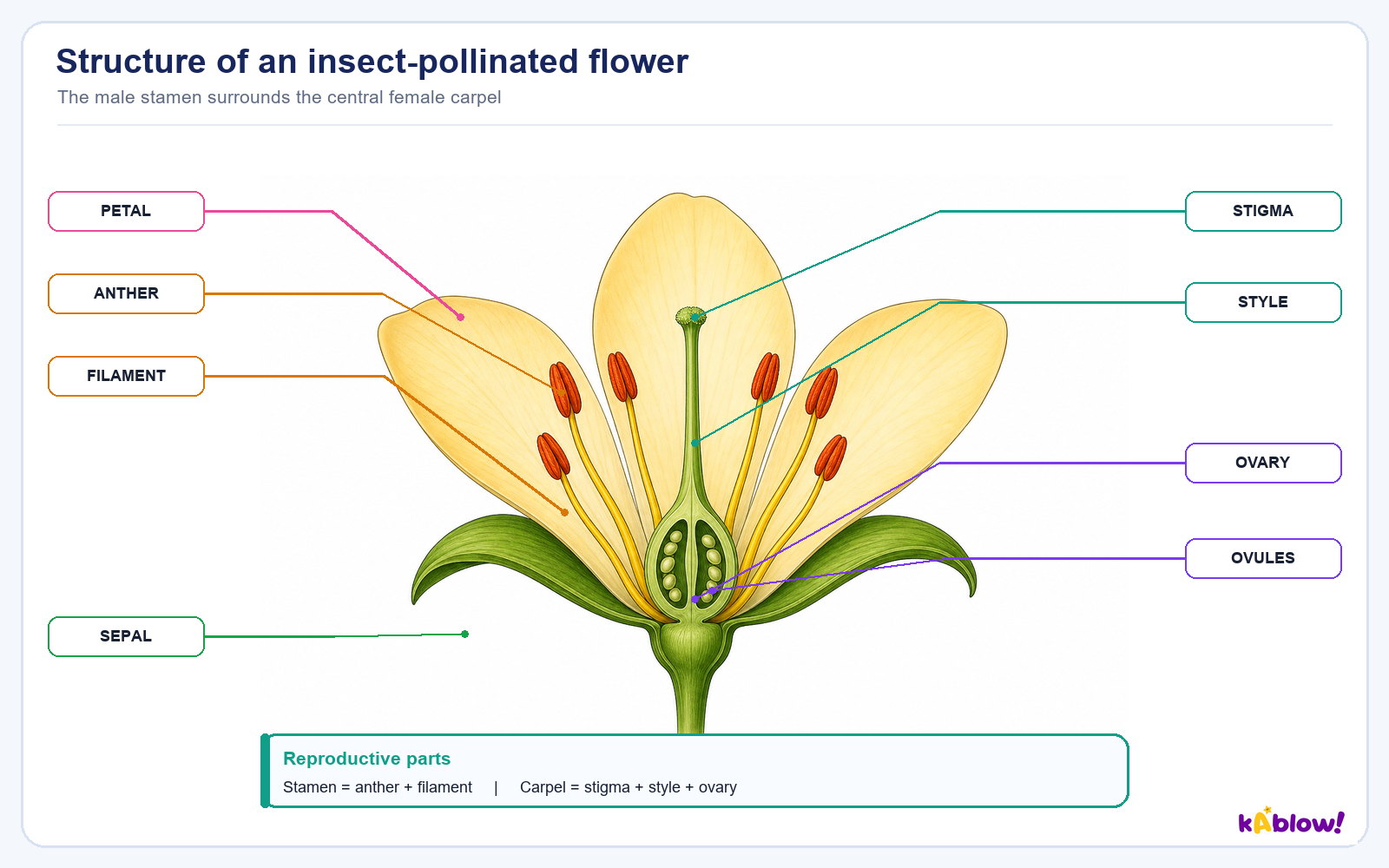
Structure of an insect-pollinated flower
Flower Structure and Preventing Self-Pollination
- Key flower structures: sepal (protects developing flower in bud), petal (colourful to attract pollinators), anther (produces male gametes), pollen (contains male nuclei), filament (stalk holding up anther), stigma (receives pollen), style (supports stigma), ovary (contains ovules), ovule (where female gametes develop).
- Self-pollination occurs when pollen lands on the stigma of the same flower or another flower on the same plant; it results in less genetic variation.
- Cross-pollination is the transfer of pollen from one plant to another of the same species; it improves genetic variation.
- Plants prevent self-pollination by: different maturation times of pollen and ovules; self-incompatibility mechanisms (chemicals prevent pollen tube growth); having separate male and female flowers or separate male and female plants.
- Wind-pollinated plants are less likely to self-pollinate because wind carries pollen far from the parent plant.
Seed Dispersal and Germination
- Seed dispersal distributes seeds away from the parent plant to reduce competition.
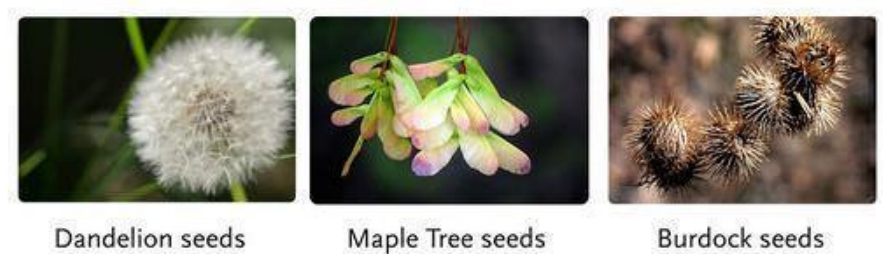
- Methods of dispersal: wind or water (lightweight parachute- or wing-shaped seeds), animals (fleshy fruits eaten and seeds egested; sticky or hooked seeds catch on fur/feathers), and explosions (pods burst, propelling seeds).
- Pollination is the transfer of pollen from anther to stigma; seed dispersal is the distribution of mature seeds. Both can involve wind, water or animals.
- Germination is the start of growth in a seed, requiring water, oxygen and warmth.
- Water allows the seed to swell, bursts the seed coat (testa), and activates enzymes; oxygen is needed for respiration; warmth is needed for enzyme-controlled reactions.
- A seed contains a plant embryo and food reserves (endosperm) transferred via cotyledons.
- During germination, water is taken up by imbibition, activating biochemistry; the radicle emerges first (forms root), then the hypocotyl (shoot) grows upwards, and first leaves appear from the cotyledon so photosynthesis can begin.
Dandelion, maple tree, and burdock seeds, each adapted for a different method of dispersal.
スライド
練習問題
無料プレビュー — 56問中8問。すべて見るには登録を。
1.What is a gamete?
Easy- AA sex cell such as a sperm or ovum
- BA fertilised egg cell
- CA body cell containing 46 chromosomes
- DA cell produced by binary fission
2.How many chromosomes are found in a human gamete?
Easy- A23
- B46
- C92
- D22
3.Which of the following is a form of asexual reproduction?
Easy- ABinary fission in bacteria
- BFusion of sperm and egg nuclei
- CPollination in flowering plants
- DMeiosis in the testes
4.Which statement correctly describes the offspring of asexual reproduction?
Medium- AThey are genetically identical to the parent and to each other
- BThey are genetically different from the parent
- CThey contain half the number of chromosomes of the parent
- DThey are produced by the fusion of two gametes
5.Which of the following is an advantage of sexual reproduction?
Medium- AIt produces genetic variation in the offspring
- BIt requires only one parent
- CIt produces offspring that are clones
- DIt is faster than asexual reproduction
6.Which of the following are mechanisms that lead to genetic variation during sexual reproduction? (select all that apply)
Medium- ACrossing over
- BIndependent assortment
- CRandom fertilisation
- DBinary fission
- EMitosis
7.In which organs does meiosis occur in humans?
Medium- ATestes and ovaries
- BLiver and kidneys
- CLungs and heart
- DBrain and spinal cord
8.What is the name of the cell formed when a sperm fertilises an egg?
Easy- AZygote
- BGamete
- CEmbryo
- DBlastocyst
過去問
このトピックの過去問練習は近日公開。
近日公開