Gas Exchange In Humans
遊んで学ぼう
問題に答えてエネルギーを集めたら、釣りや探検を楽しもう。アカウント不要。
教育者の方へ: Gas Exchange In Humans(Biology、CIE)向けのすぐ使えるレッスンスライド, 復習ノート, 図解 — レッスンで使うか、学習者がライブゲームとして遊ぶインタラクティブなクラス活動としてトピックを実施できます。
レッスンノート
Features of Gas Exchange Surfaces
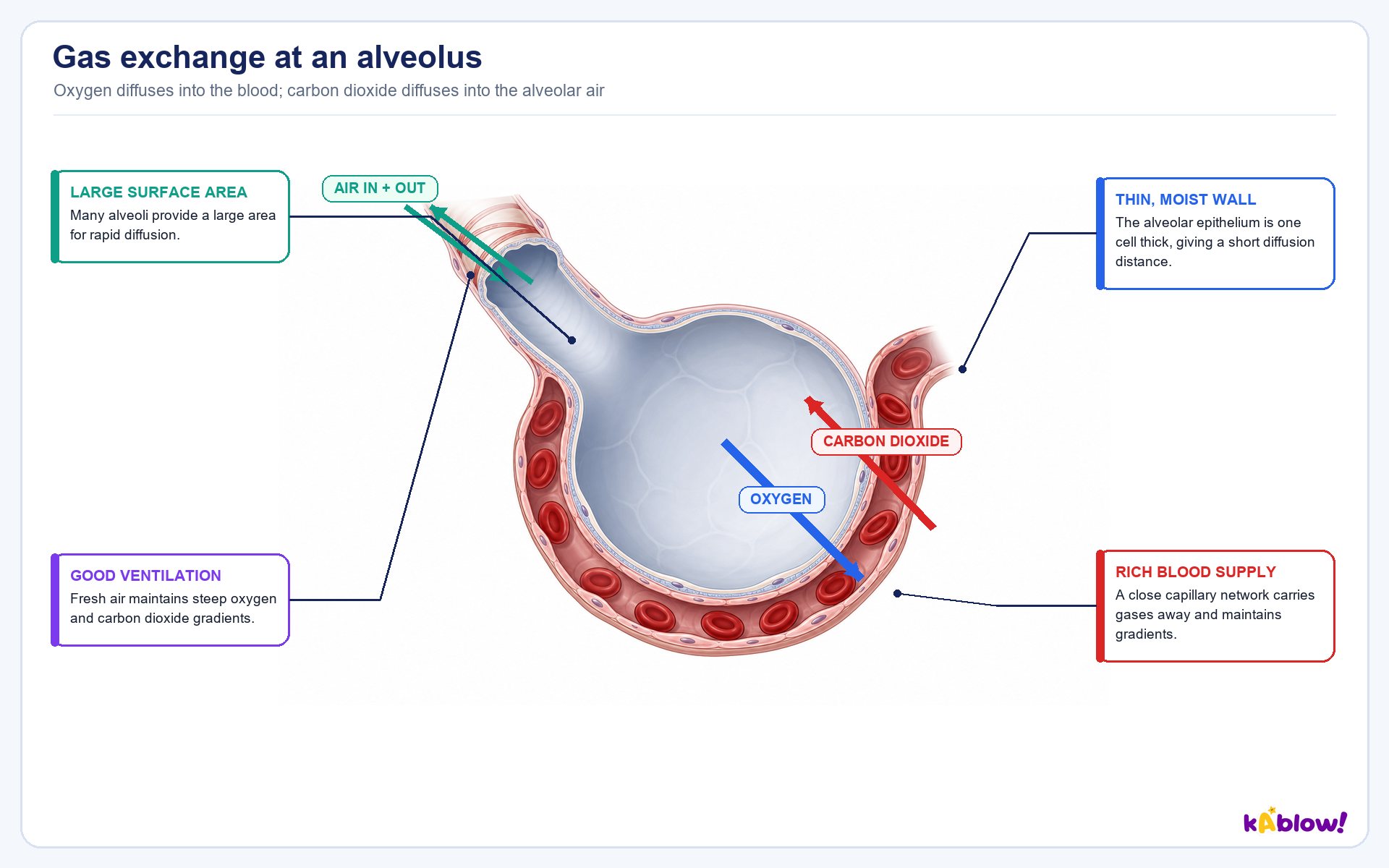
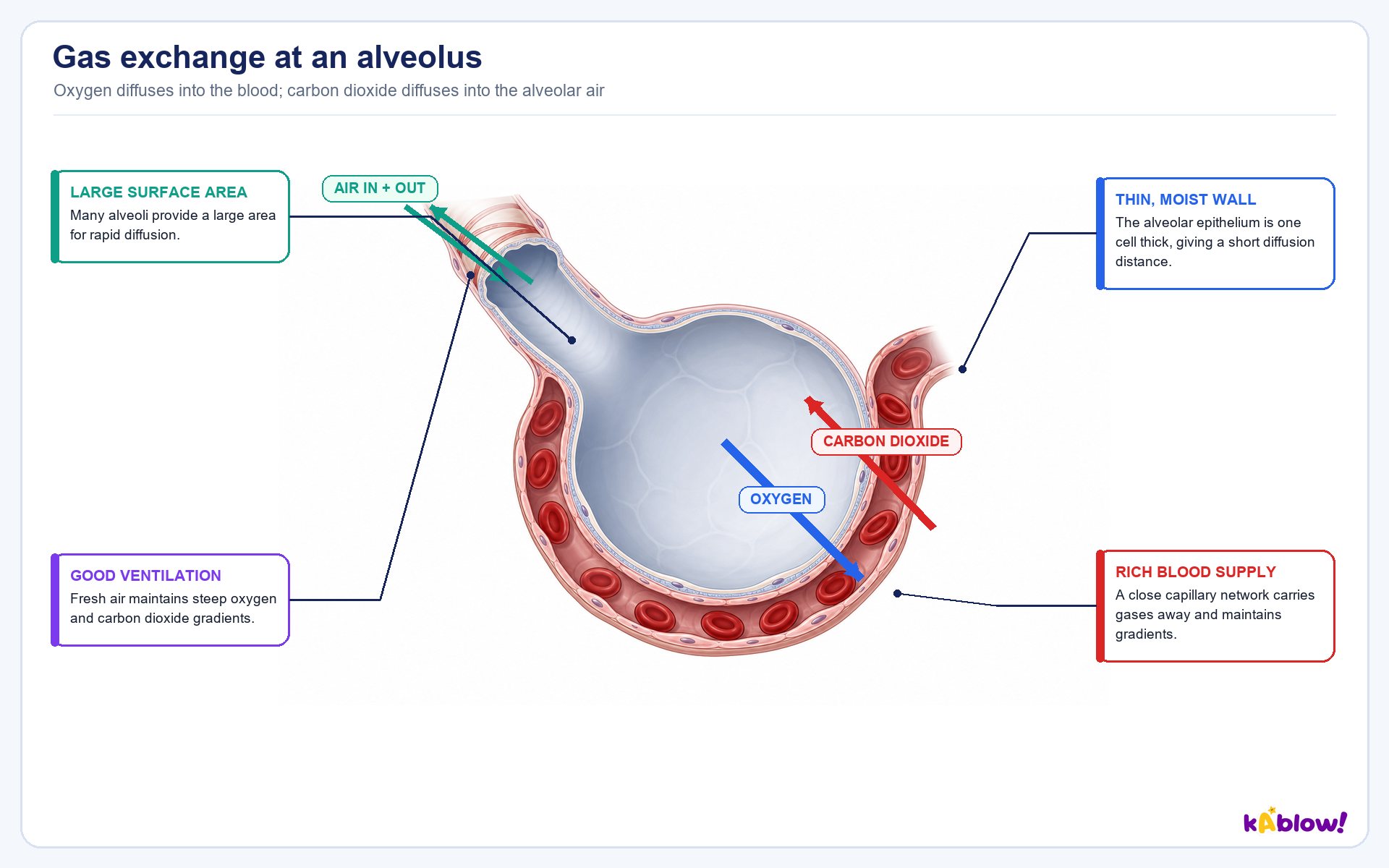
- All gas exchange surfaces share features that maximise the rate of diffusion.
- Large surface area – allows faster diffusion of gases across the surface.
- Thin walls – ensure short diffusion distances.
- Good ventilation – maintains diffusion gradients.
- Good blood supply – maintains a steep concentration gradient for faster diffusion.
- The alveolus is the gas exchange surface in humans.
Features of gas exchange surfaces
The Breathing System
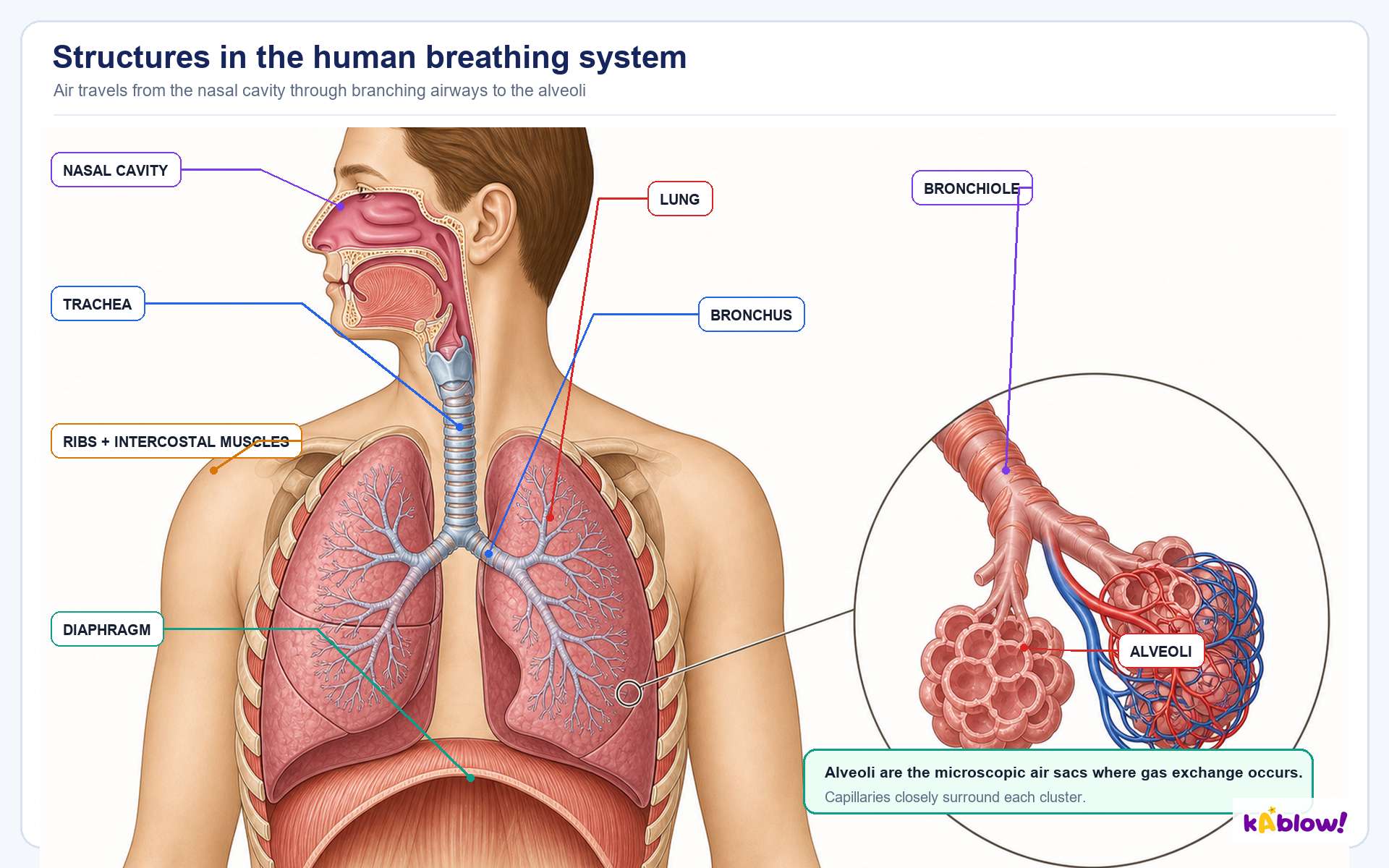
- Air enters through the nose/mouth, passes through the trachea, bronchi, bronchioles, and reaches the alveoli.
- The trachea is supported by rings of cartilage to prevent collapse.
- The bronchi branch from the trachea into each lung.
- Bronchioles are smaller branches leading to alveoli.
- Alveoli are tiny air sacs where gas exchange occurs.
- The diaphragm is a sheet of muscle separating the thorax from the abdomen.
- Intercostal muscles are located between the ribs; external (outside) and internal (inside).
Structures in the human breathing system
Ventilation: Volume & Pressure Changes
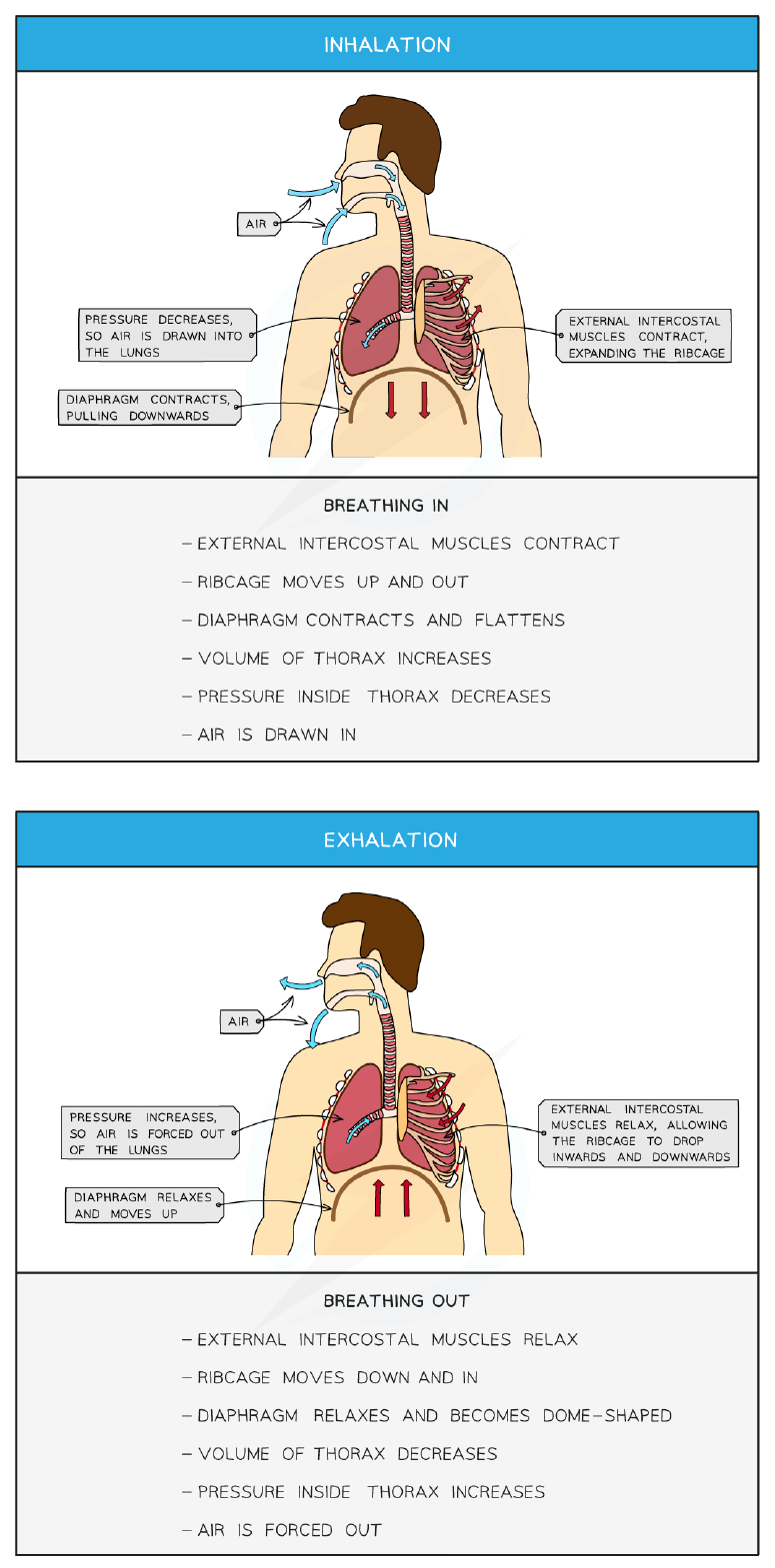
- Inspiration (inhalation): diaphragm contracts and flattens; external intercostal muscles contract, pulling ribs up and out.
- This increases thorax volume, decreases air pressure inside lungs, drawing air in.
- Expiration (exhalation): diaphragm relaxes and moves up; external intercostal muscles relax, ribs drop down and in.
- This decreases thorax volume, increases air pressure, forcing air out.
- Forced exhalation (e.g., during exercise) involves internal intercostal muscles contracting to pull ribs down more forcefully.
- Cartilage in trachea and bronchi keeps airways open during pressure changes.
Inhalation and exhalation
Differences Between Inspired and Expired Air
- Inspired air: ~21% oxygen, ~0.04% carbon dioxide, variable water vapour.
- Expired air: ~16% oxygen, ~4% carbon dioxide, more water vapour.
- Nitrogen remains constant at ~78%.
- Differences arise because oxygen diffuses into blood and carbon dioxide diffuses out in alveoli.
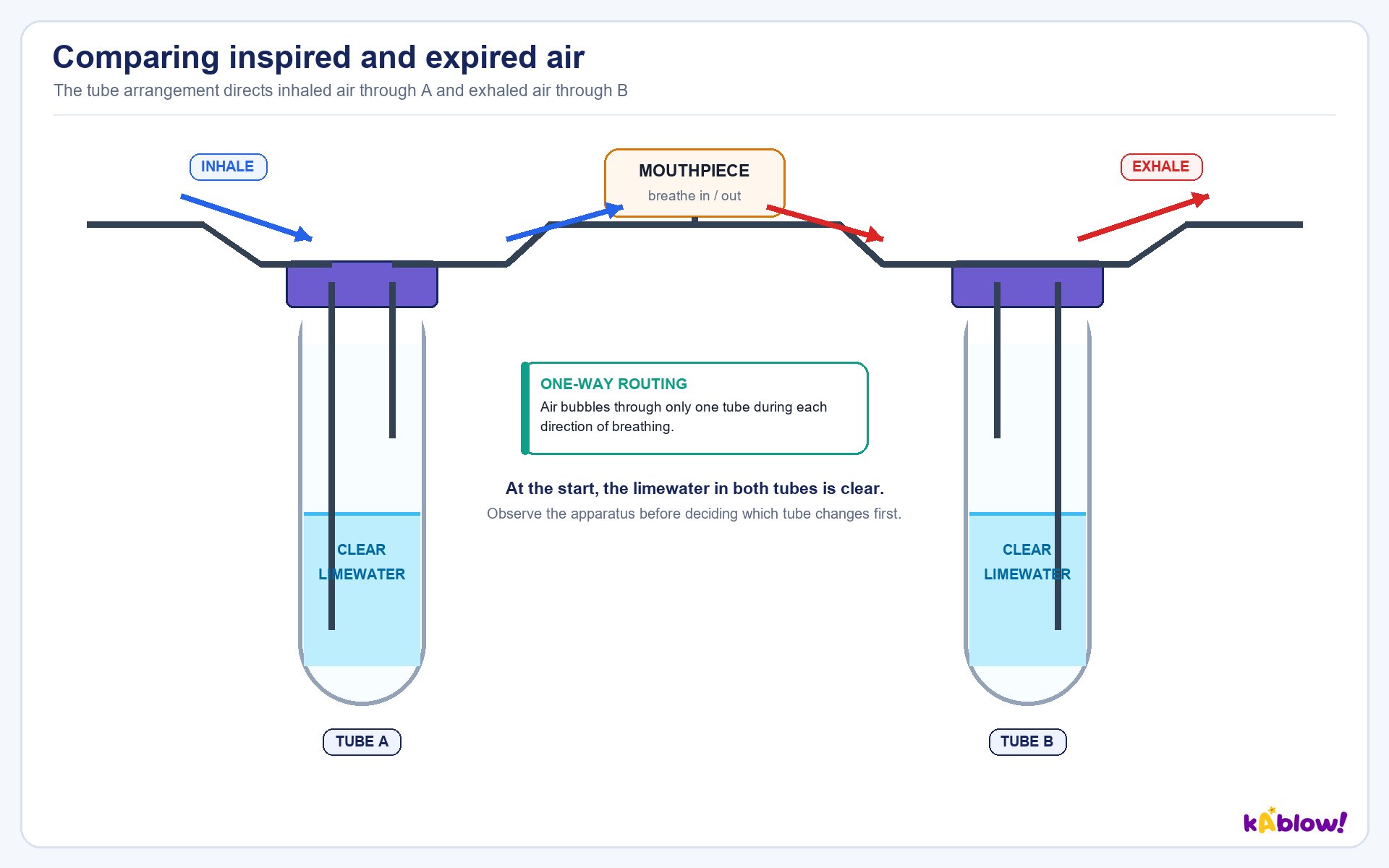
- Limewater test: expired air turns limewater cloudy (milky) due to higher CO₂; inspired air does not.
Effects of Physical Activity on Breathing
- Exercise increases both breathing rate (breaths per minute) and depth (tidal volume).
- More oxygen is needed for increased aerobic respiration in muscles; more CO₂ is produced.
- Increased CO₂ lowers blood pH, detected by chemoreceptors in the medulla oblongata.
- The brain sends nerve impulses to diaphragm and intercostal muscles to increase ventilation.
- After exercise, breathing remains elevated to repay oxygen debt (remove lactic acid).
- Investigation: count breaths per minute and measure chest expansion before and after exercise.
Protecting the Breathing System
- Airways are lined with ciliated epithelial cells and goblet cells.
- Goblet cells produce mucus that traps dust, bacteria, and particles.
- Cilia beat to move mucus upwards towards the throat, where it is swallowed or expelled.
- This prevents pathogens and debris from reaching the lungs.
スライド
練習問題
無料プレビュー — 54問中8問。すべて見るには登録を。
1.Which of the following is a feature of gas exchange surfaces that maximises the rate of gas exchange?
Easy- ALarge surface area
- BThick walls
- CPoor blood supply
- DLack of ventilation
2.What is the function of cartilage in the trachea?
Easy- ATo produce mucus
- BTo support the airways and keep them open
- CTo contract and expand the lungs
- DTo trap dust and bacteria
3.During inhalation, the diaphragm:
Easy- ARelaxes and moves upwards
- BContracts and flattens
- CRemains stationary
- DContracts and moves upwards
4.Which gas has the same percentage in inspired and expired air?
Easy- AOxygen
- BCarbon dioxide
- CNitrogen
- DWater vapour
5.What is the approximate percentage of carbon dioxide in exhaled air?
Easy- A0.04%
- B4%
- C16%
- D21%
6.In an investigation using limewater to compare inhaled and exhaled air, which observation indicates a higher carbon dioxide concentration?
Medium- ALimewater turns cloudy in the tube receiving exhaled air
- BLimewater turns cloudy in the tube receiving inhaled air
- CLimewater remains clear in both tubes
- DLimewater turns red in the tube receiving exhaled air
7.Which muscles contract during forced exhalation?
Medium- AExternal intercostal muscles only
- BInternal intercostal muscles only
- CBoth external and internal intercostal muscles
- DDiaphragm only
8.What causes the increase in breathing rate during exercise?
Medium- AIncreased oxygen levels in the blood
- BDecreased carbon dioxide levels in the blood
- CIncreased carbon dioxide levels detected by chemoreceptors
- DDecreased pH in the muscles
過去問
このトピックの過去問練習は近日公開。
近日公開