Formulae & Relative Masses
遊んで学ぼう
問題に答えてエネルギーを集めたら、釣りや探検を楽しもう。アカウント不要。
レッスンノート
Molecular Formulae
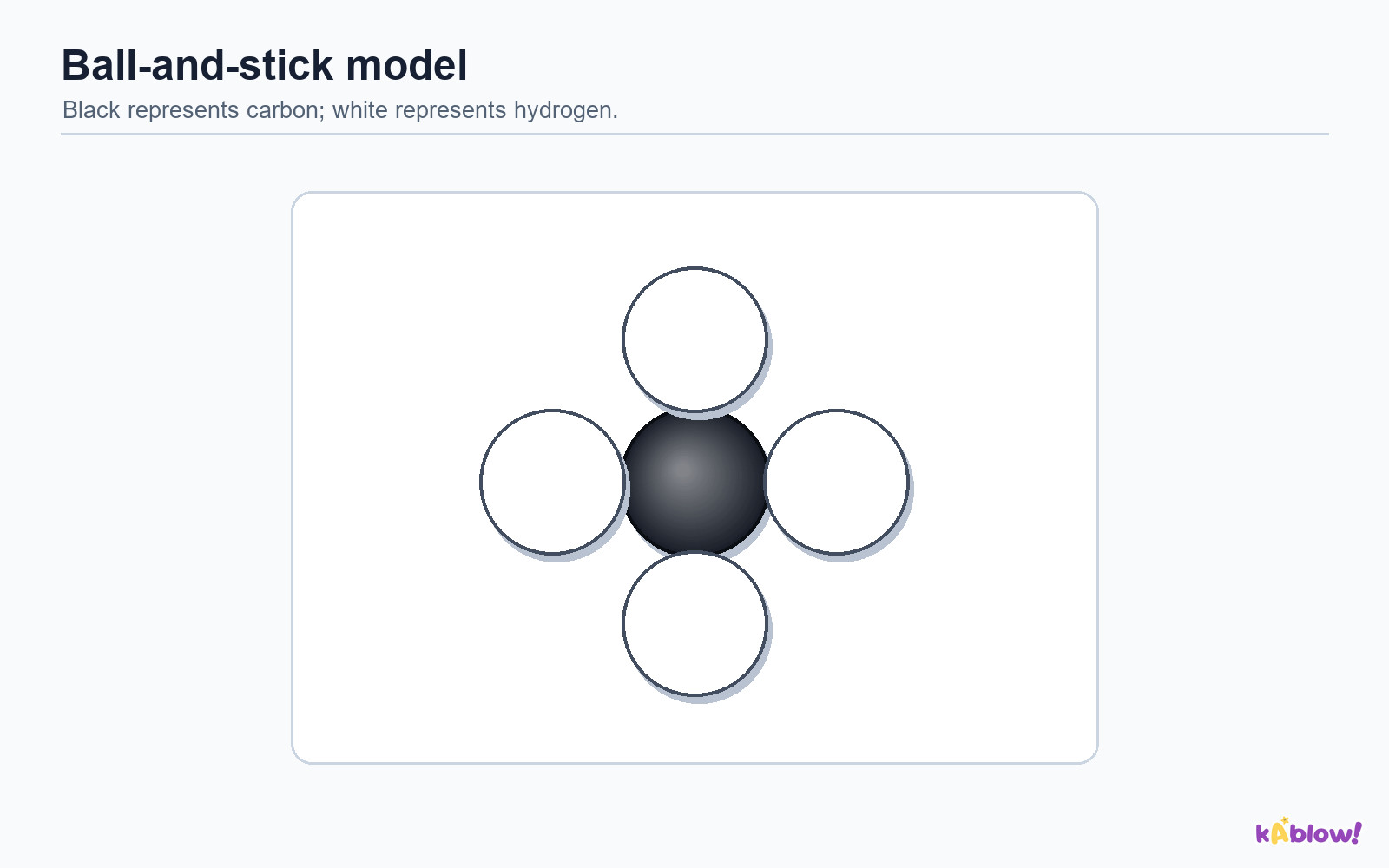
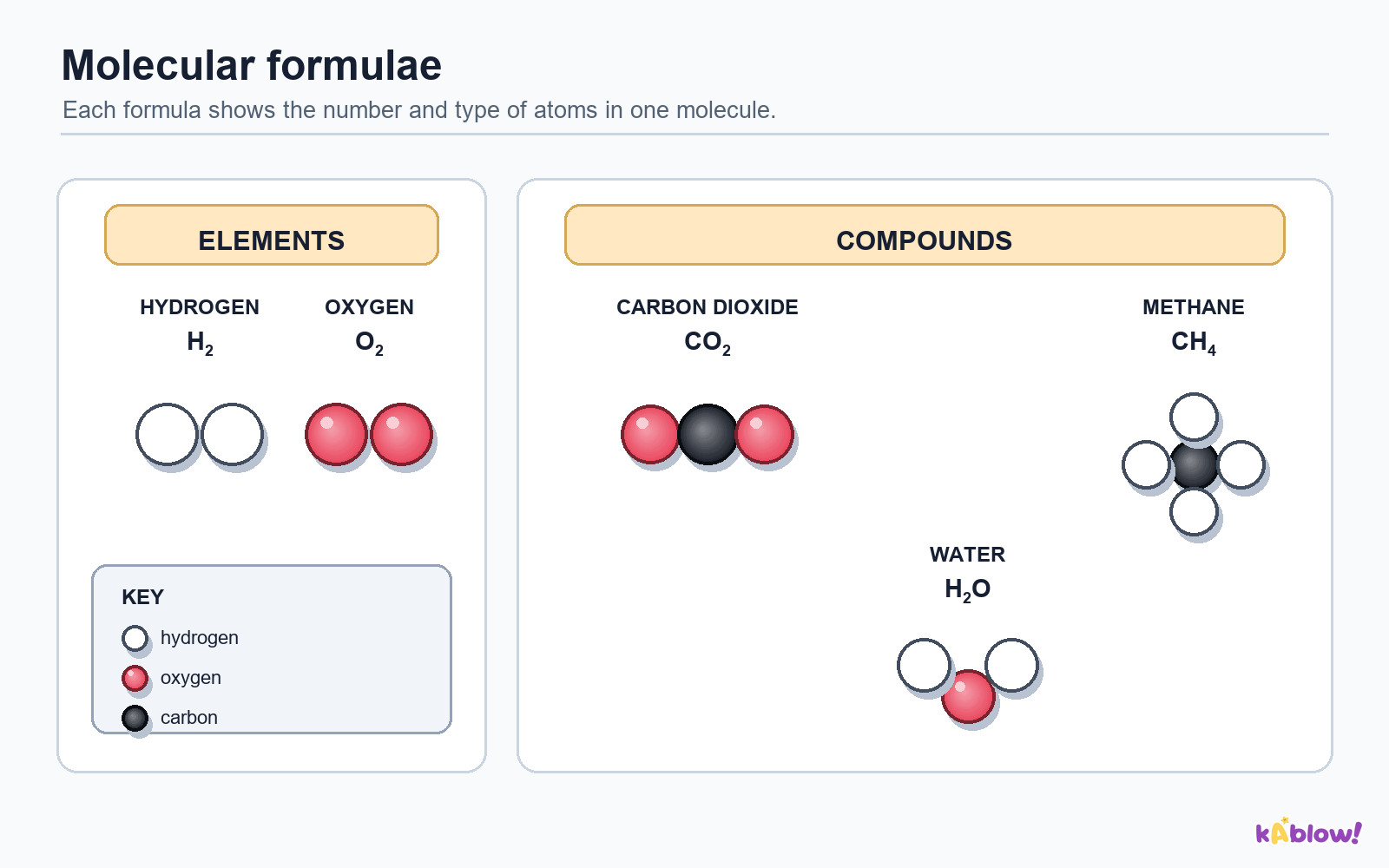
- A molecular formula shows the type and number of atoms in a molecule (e.g., H₂O, CH₄).
- Seven elements exist as diatomic molecules: H₂, N₂, O₂, F₂, Cl₂, Br₂, I₂.
- Atoms combine in fixed ratios to achieve full outer electron shells.
- The molecular formula can be deduced from the relative number of atoms present (e.g., ammonia = NH₃).
Ball-and-stick models of common elements and compounds
Empirical Formulae (Extended)
- The empirical formula is the simplest whole number ratio of atoms in a compound.
- For ionic compounds, the molecular formula is always the same as the empirical formula (e.g., NaCl).
- For molecular compounds, the empirical formula may differ (e.g., C₂H₄ has empirical formula CH₂).
- To find the empirical formula, divide the number of atoms of each element by the greatest common factor.
Formulae of Ionic Compounds (Extended)
- Ionic compounds are neutral overall; the total positive charge equals the total negative charge.
- Use direct comparison of charges: e.g., Fe²⁺ and SO₄²⁻ give FeSO₄.
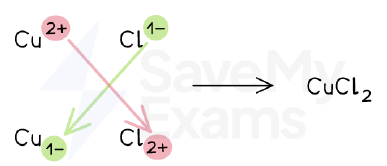
- Use the swap-and-drop method for different charges: e.g., Cu²⁺ and Cl⁻ give CuCl₂.
- Common polyatomic ions: CO₃²⁻, SO₄²⁻, OH⁻, NO₃⁻, NH₄⁺.
Swap-and-drop method for copper(II) chloride
Writing Word Equations
- Word equations show reactants and products using full chemical names: reactants → products.
- The arrow means 'to form' or 'produces'.
- Reaction conditions or catalysts can be written above the arrow.
- Example: sodium hydroxide + hydrochloric acid → sodium chloride + water.
Writing Symbol Equations
- Symbol equations use chemical formulae and must be balanced to conserve mass.
- Include state symbols: (s) solid, (l) liquid, (g) gas, (aq) aqueous.
- Write diatomic non-metals as molecules: H₂, N₂, O₂, F₂, Cl₂, Br₂, I₂.
- Balance by adjusting coefficients (numbers in front of formulae), never change subscripts.
Balancing Ionic Equations (Extended)
- Ionic compounds in aqueous solution dissociate into ions.
- Steps: write balanced symbol equation, replace ionic compounds with ions, cancel spectator ions.
- Spectator ions appear unchanged on both sides and are removed.
- Example: 2I⁻(aq) + Cl₂(aq) → 2Cl⁻(aq) + I₂(aq).
Relative Atomic Mass (Ar) & Relative Molecular Mass (Mr)
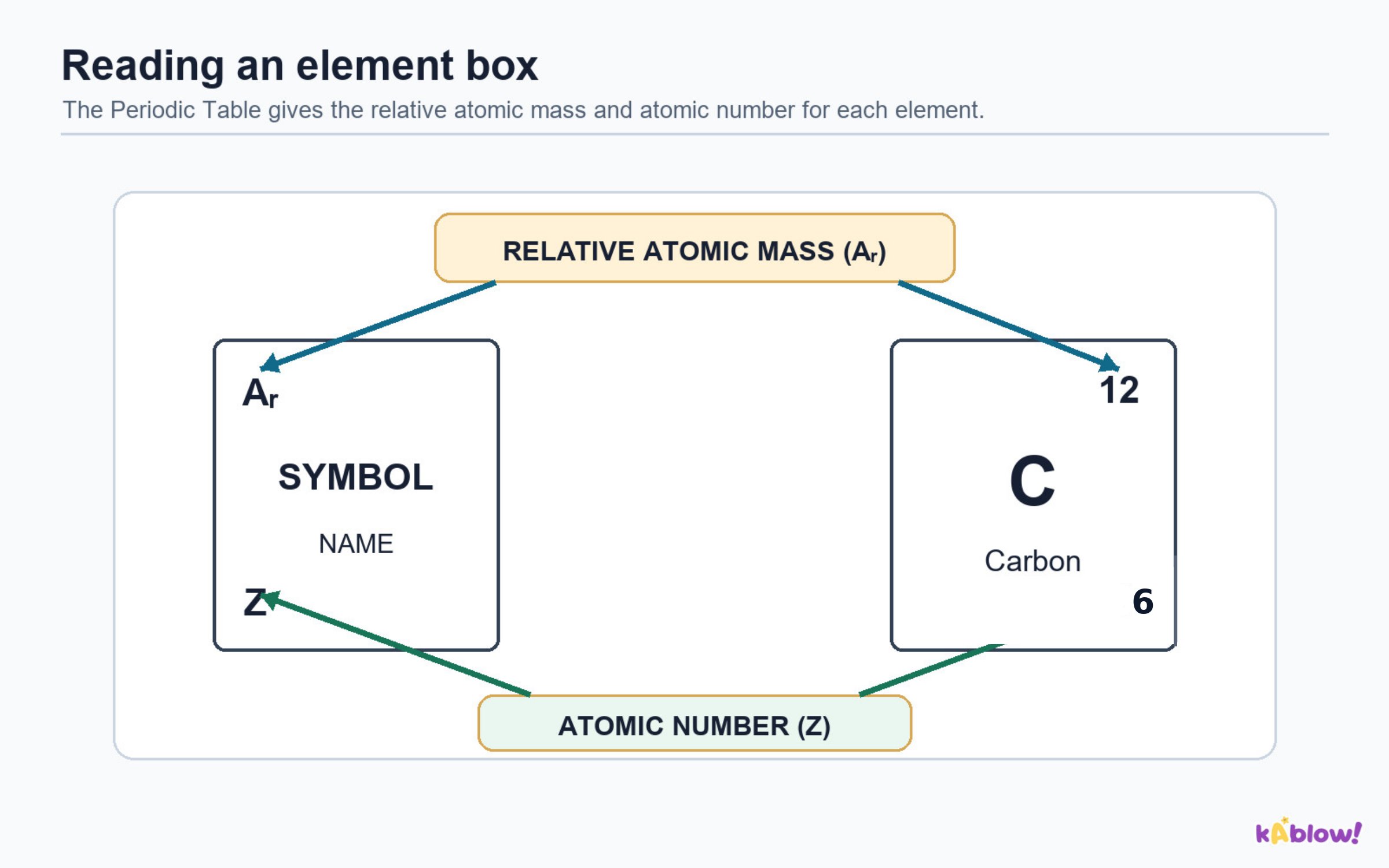
- Relative atomic mass (Ar) is the mass of an atom compared to carbon-12 (Ar = 12).
- Ar values are found on the Periodic Table; e.g., H = 1, C = 12, O = 16.
- Relative molecular mass (Mr) is the sum of Ar of all atoms in a molecule.
- For ionic compounds, the term relative formula mass is used (e.g., NaCl = 58.5).
Key for chemical symbols on the Periodic Table
Reacting Masses
- The Law of Conservation of Mass states total mass of reactants equals total mass of products.
- Use balanced equations and Ar/Mr to calculate masses of reactants or products.
- Example: 2Ca + O₂ → 2CaO; 80 g Ca reacts with 32 g O₂ to form 112 g CaO.
- Mass ratios are fixed; scaling up or down uses the same ratio.
スライド
練習問題
無料プレビュー — 54問中8問。すべて見るには登録を。
1.A molecule contains carbon, hydrogen and oxygen. For every carbon atom there are twice as many hydrogen atoms but the same number of oxygen atoms. What is the formula of the molecule?
Medium- AC2H6O
- BC2H4O2
- CC4H8O2
- DC2H2O2
2.Theobromine is a stimulant found in chocolate and in tea leaves. What is the formula of theobromine?
Easy- AC6H5N4O2
- BC7H8N4O2
- CC7H8N3O2
- DC7H7N4O2
3.Hydrogen reacts with elements from Group VII to produce compounds called hydrogen halides. An example is when a molecule of hydrogen reacts with a molecule of fluorine to produce hydrogen fluoride. What is the correct equation for the reaction?
Easy- A2H + 2F → 2HF
- BH2 + F2 → H2F2
- C2H + 2F → H2F2
- DH2 + F2 → 2HF
4.Leucine is an essential amino acid used in the synthesis of proteins in the body. What is the relative molecular mass of leucine? (Ar: C=12, H=1, N=14, O=16)
Medium- A144
- B86
- C125
- D131
5.When magnesium carbonate is heated, the products are magnesium oxide and carbon dioxide. MgCO3(s) → MgO(s) + CO2(g). What mass of magnesium oxide is formed when 21 g of magnesium carbonate thermally decomposes? (Ar: Mg=24, C=12, O=16)
Medium- A10 g
- B11 g
- C20 g
- D22 g
6.What is the balanced equation for the reaction of methane and oxygen?
Medium- ACH4(g) + 2O2(g) → CO2(g) + H2O(g)
- BCH4(g) + O2(g) → CO2(g) + 2H2O(g)
- C2CH4(g) + 4O2(g) → 2CO2(g) + H2O(g)
- DCH4(g) + 2O2(g) → CO2(g) + 2H2O(g)
7.A compound contains two atoms of oxygen and one atom of calcium. It also contains hydrogen in sufficient amounts so that the overall charge of the molecule is neutral. What is the molecular formula for the compound?
Medium- ACa(OH)4
- BCa(OH)2
- CH4CaO2
- DCaO2H2
8.Dilute sulfuric acid and barium chloride solution react to produce barium sulfate and hydrochloric acid: H2SO4 + BaCl2 → BaSO4 + 2HCl. Which row represents the correct state symbols for the reaction?
Medium- AH2SO4 (aq), BaCl2 (l), BaSO4 (s), HCl (aq)
- BH2SO4 (l), BaCl2 (aq), BaSO4 (aq), HCl (l)
- CH2SO4 (aq), BaCl2 (aq), BaSO4 (s), HCl (aq)
- DH2SO4 (l), BaCl2 (aq), BaSO4 (l), HCl (aq)