Diseases And Immunity
遊んで学ぼう
問題に答えてエネルギーを集めたら、釣りや探検を楽しもう。アカウント不要。
教育者の方へ: Diseases And Immunity(Co-ordinated Sciences (Double Award) [CIE]、Biology)向けのすぐ使えるレッスンスライド, 復習ノート, 図解 — レッスンで使うか、学習者がライブゲームとして遊ぶインタラクティブなクラス活動としてトピックを実施できます。
レッスンノート
Pathogens & Barriers
- A pathogen is a disease-causing organism that causes transmissible diseases.
- Pathogens spread via direct contact (e.g., HIV through body fluids) or indirect contact (e.g., airborne droplets).
- Viruses (e.g., cold, flu) are not living; they consist of genetic material (RNA/DNA) inside a protein coat and hijack host cells to replicate.
- Mechanical barriers: skin (physical barrier, heals with scabs), nose hairs (trap pathogens).
- Chemical barriers: mucus (traps pathogens, removed by coughing/sneezing), stomach acid (HCl kills swallowed pathogens).
- White blood cells defend by phagocytosis (engulfing pathogens) and producing antibodies (cause agglutination and signal destruction).
Methods of Transmission
Controlling the Spread of Disease
- Clean water supply prevents waterborne diseases like cholera.
- Hygienic food preparation (washing hands, proper cooking) prevents contamination by bacteria/fungi.
- Personal hygiene (soap, tissues for sneezes/coughs) reduces transmission of colds and flu.
- Waste disposal (e.g., food waste) reduces vectors like flies.
- Sewage treatment removes pathogens from waste before release into environment.
Preventing the Spread of Disease
Active Immunity (Extended)
- Active immunity is the production of antibodies and memory cells after exposure to a pathogen.
- It can be acquired naturally (infection) or artificially (vaccination).
- Active immunity is slow-acting but provides long-lasting protection.
Antigens & Antibodies (Extended)
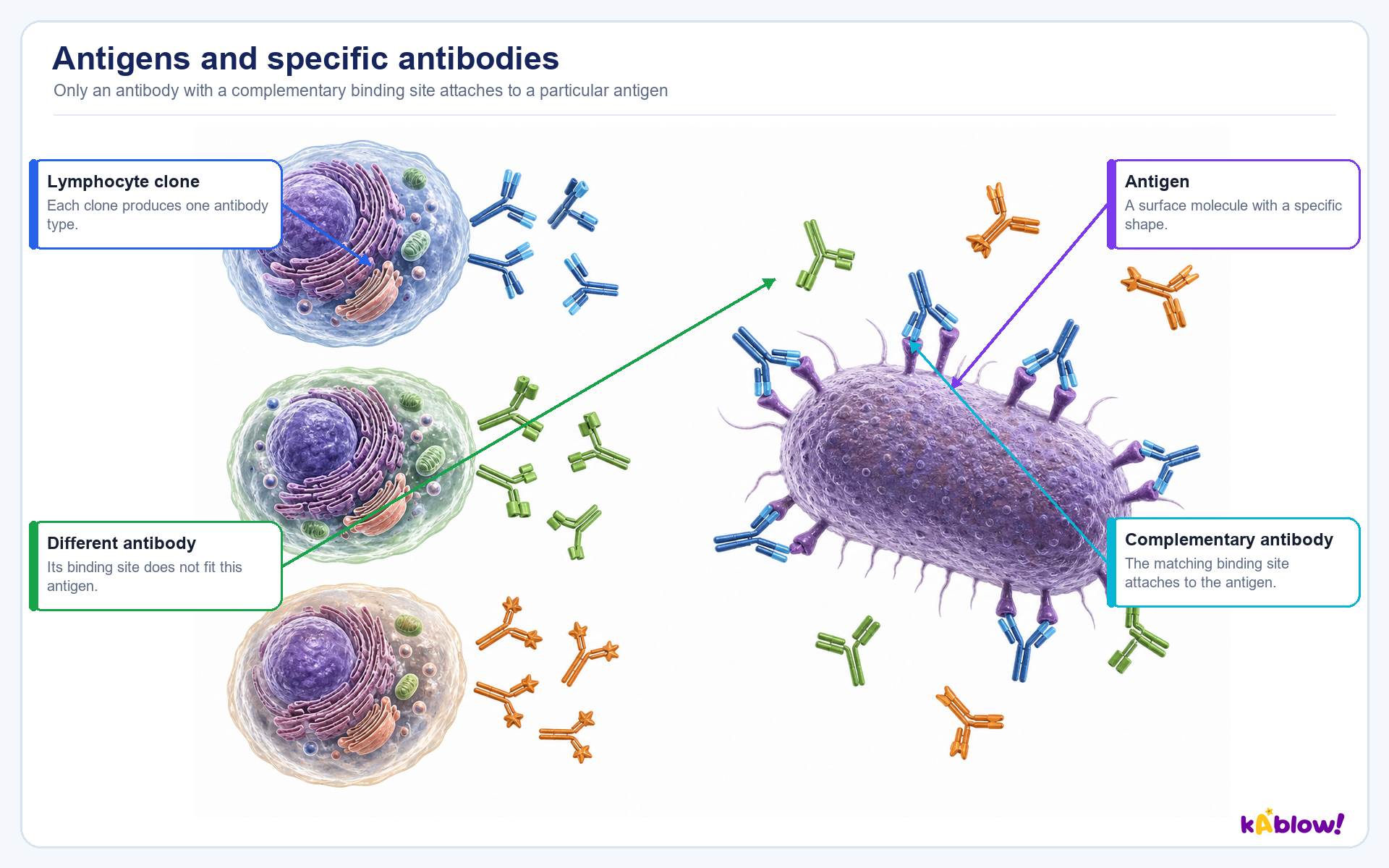
- Antigens are molecules (e.g., proteins) on cell surfaces that are recognised as foreign by lymphocytes.
- Antibodies are proteins produced by lymphocytes that are complementary in shape to specific antigens.
- Antibodies cause agglutination (clumping) of pathogens, making them easier for phagocytes to engulf and destroy.
- After infection, memory cells retain antibody instructions for a faster, stronger response on re-exposure.
- Some pathogens mutate quickly, changing antigens so memory cells may not recognise them.
Lymphocytes produce antibodies specific to an antigen
Vaccination (Extended)
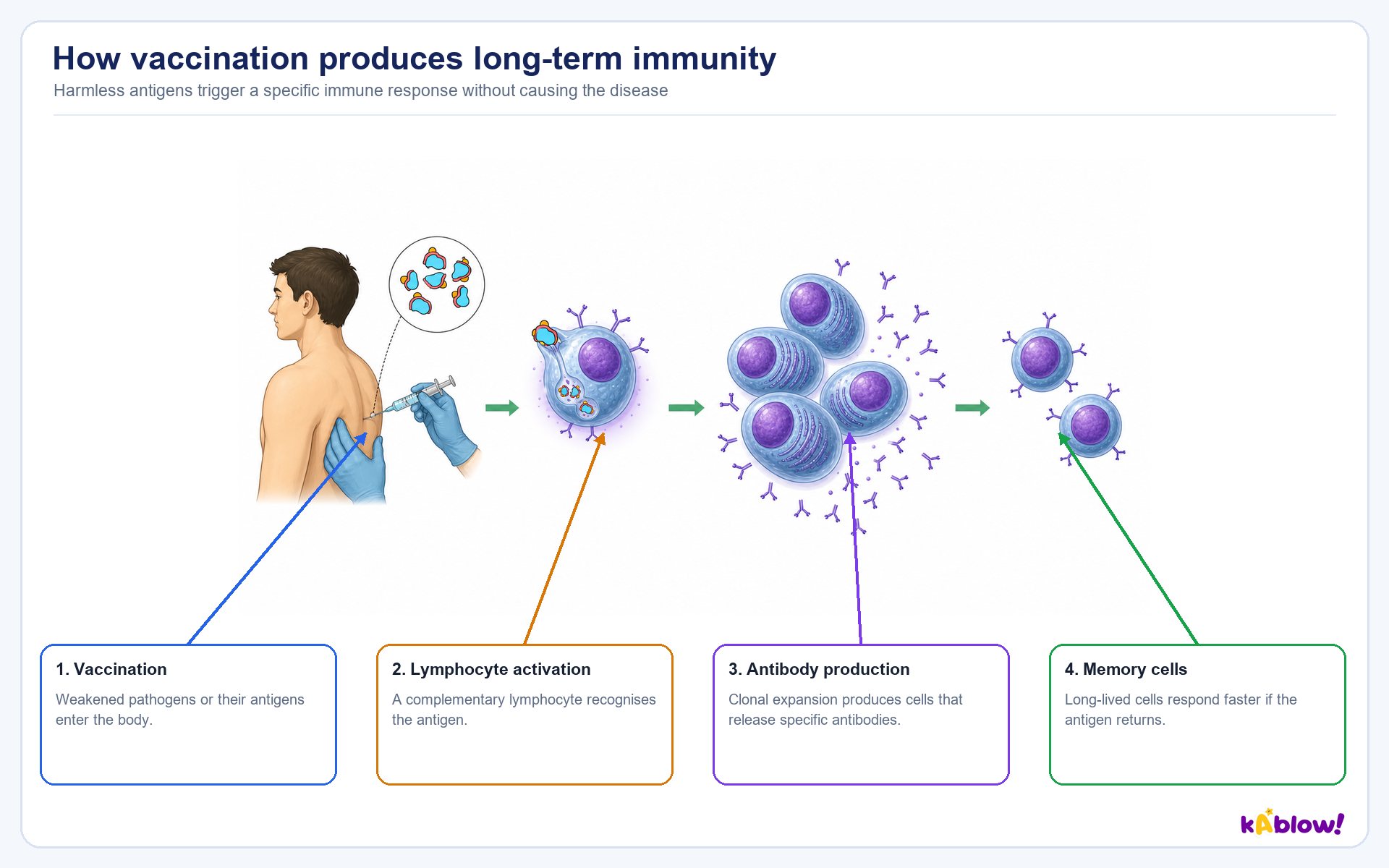
- Vaccines contain dead or weakened pathogens with specific antigens, unable to cause disease.
- Vaccination triggers an immune response: lymphocytes produce antibodies and memory cells.
- Memory cells provide long-lasting immunity without the risk of severe illness.
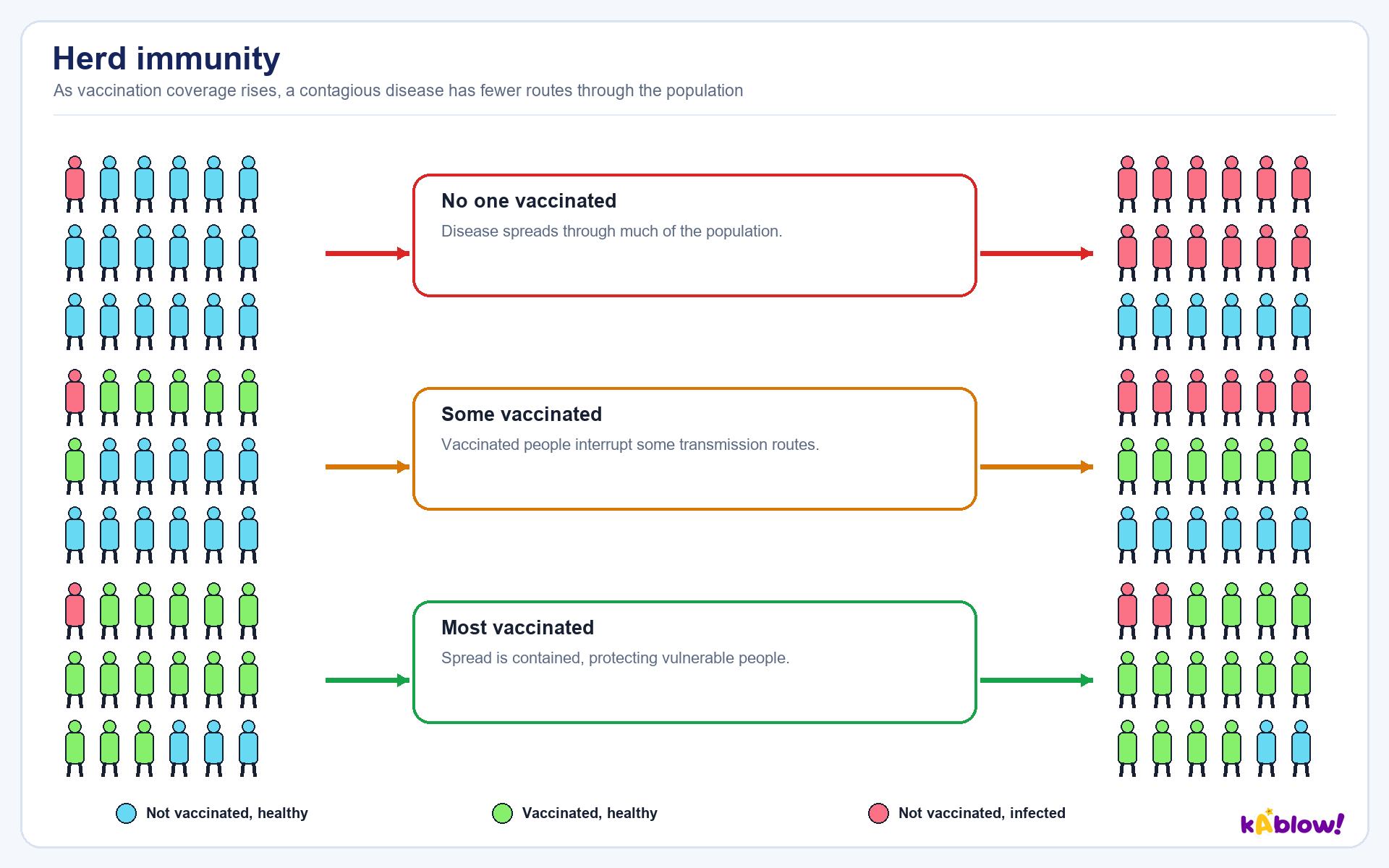
- Herd immunity occurs when a large percentage of the population is vaccinated, protecting the unvaccinated by reducing pathogen spread.
- Vaccination programmes aim to eradicate diseases (e.g., smallpox eradicated in 1980).
How a vaccine produces long-term immunity
Preventing the Spread of Disease
- Vaccination helps control spread; not all diseases have vaccines.
- Immune individuals cannot catch or spread the disease.
- Herd immunity prevents epidemics/pandemics by limiting pathogen breeding opportunities.
- If vaccination rates drop, outbreaks can occur, increasing infections and deaths.
Herd immunity
スライド
練習問題
無料プレビュー — 56問中8問。すべて見るには登録を。
1.Which of the following is a pathogen?
Easy- AVirus
- BRed blood cell
- CLymphocyte
- DAntibody
2.Viruses are considered living organisms because they can reproduce on their own.
EasyTrue or false?
3.Name one mechanical barrier that helps prevent pathogens from entering the body.
Easy4.Which type of white blood cell engulfs and digests pathogens?
Easy- ALymphocyte
- BPhagocyte
- CMemory cell
- DErythrocyte
5.Complete the sentence: Antibodies are produced by ___ in response to foreign ___.
EasyAntibodies are produced by ____ in response to foreign ____.
6.What is the role of memory cells in immunity?
Medium7.Vaccination introduces a live, active pathogen into the body to stimulate an immune response.
EasyTrue or false?
8.Define herd immunity.
Medium
過去問
このトピックの過去問練習は近日公開。
近日公開