Earth & The Solar System
遊んで学ぼう
問題に答えてエネルギーを集めたら、釣りや探検を楽しもう。アカウント不要。
教育者の方へ: Earth & The Solar System(Physics、CIE)向けのすぐ使えるレッスンスライド, 復習ノート, 図解 — レッスンで使うか、学習者がライブゲームとして遊ぶインタラクティブなクラス活動としてトピックを実施できます。
レッスンノート
The Earth, Moon & Sun
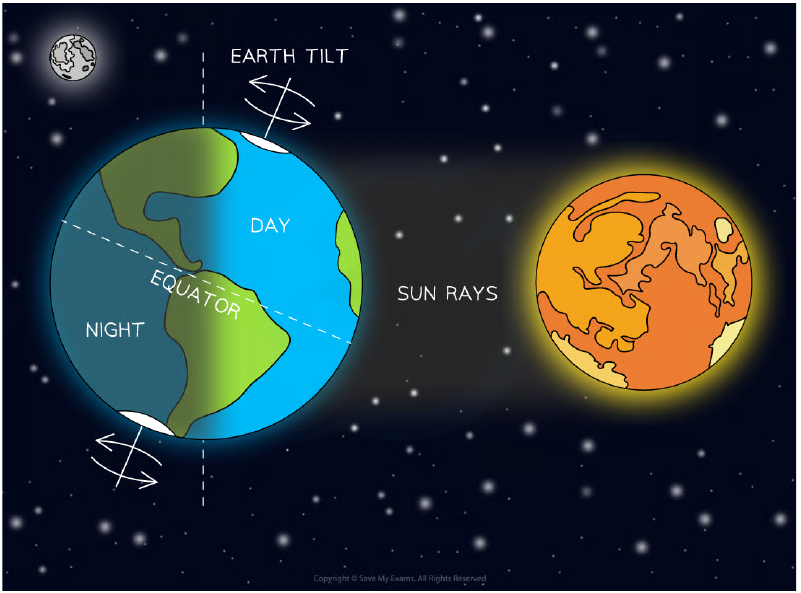
- Earth rotates on its axis once every 24 hours, causing day and night.
- Earth orbits the Sun once every 365 days (one year).
- Earth's axis is tilted at 23.5° from the vertical, causing the seasons.
- The Moon is a natural satellite orbiting Earth every 28 days; it rotates once per orbit so the same side always faces Earth.
- Moon phases result from reflected sunlight; order: new moon → first quarter → full moon → last quarter.
- Day and night are caused by Earth's rotation; seasons are caused by the combination of Earth's orbit and axial tilt.
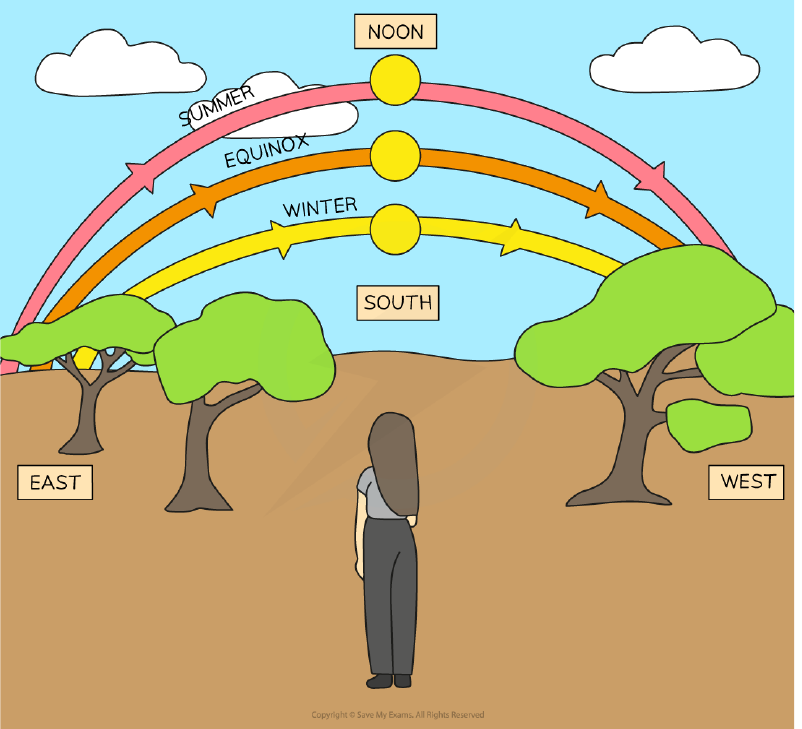
The apparent path of the Sun across the sky at noon during different seasons
The Solar System
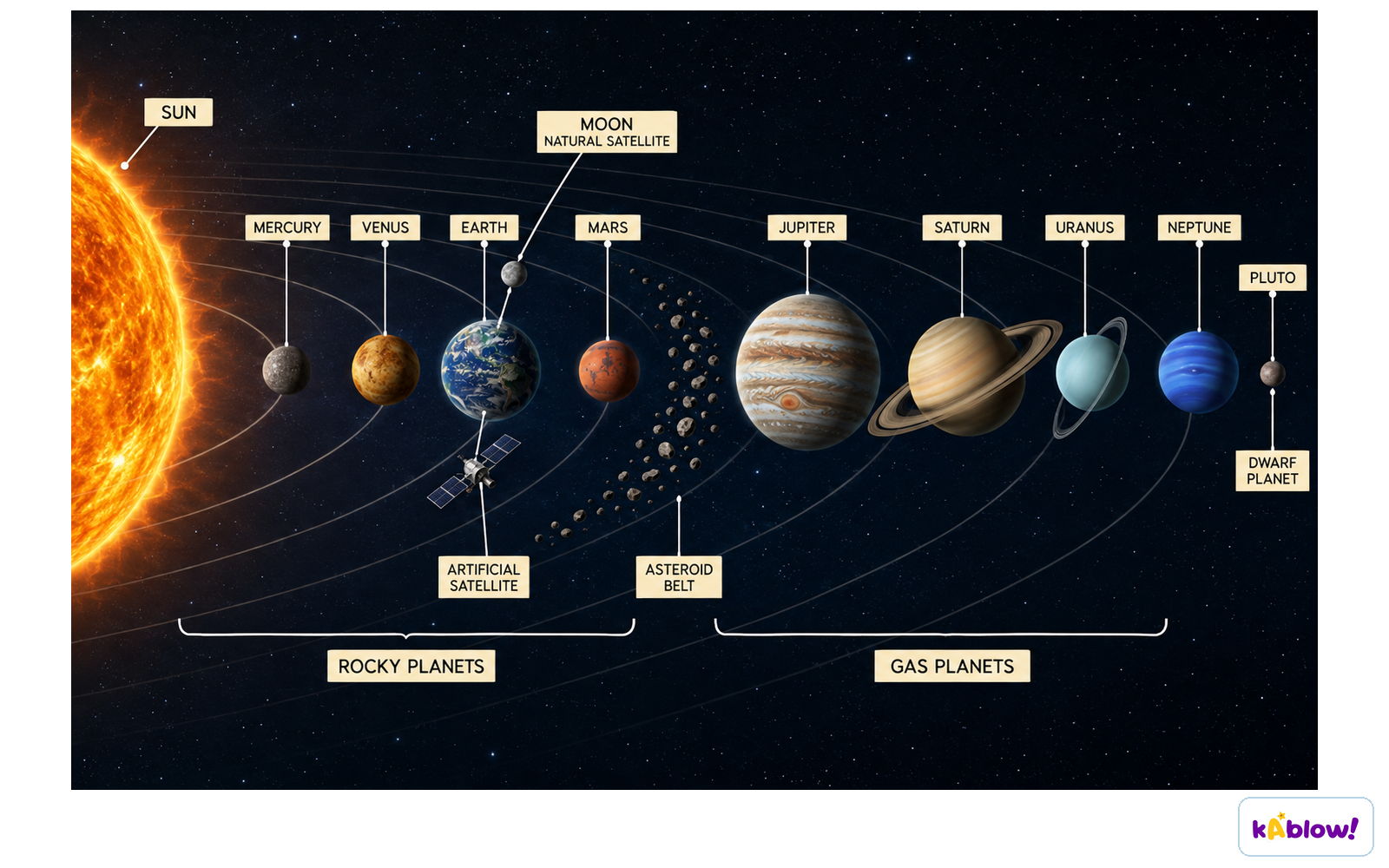
- The Solar System consists of the Sun, eight planets, dwarf planets, moons, asteroids, and comets.
- Planets in order from Sun: Mercury, Venus, Earth, Mars, Jupiter, Saturn, Uranus, Neptune.
- Inner planets (Mercury, Venus, Earth, Mars) are rocky and small; outer planets (Jupiter, Saturn, Uranus, Neptune) are gaseous and large.
- Asteroids are rocky objects found mainly in the Asteroid Belt between Mars and Jupiter.
- Comets are icy objects with highly elliptical orbits; they develop a tail when near the Sun.
- Dwarf planets (e.g., Pluto) have weaker gravity and cannot clear their orbits of debris.
The Solar System
Formation of the Solar System
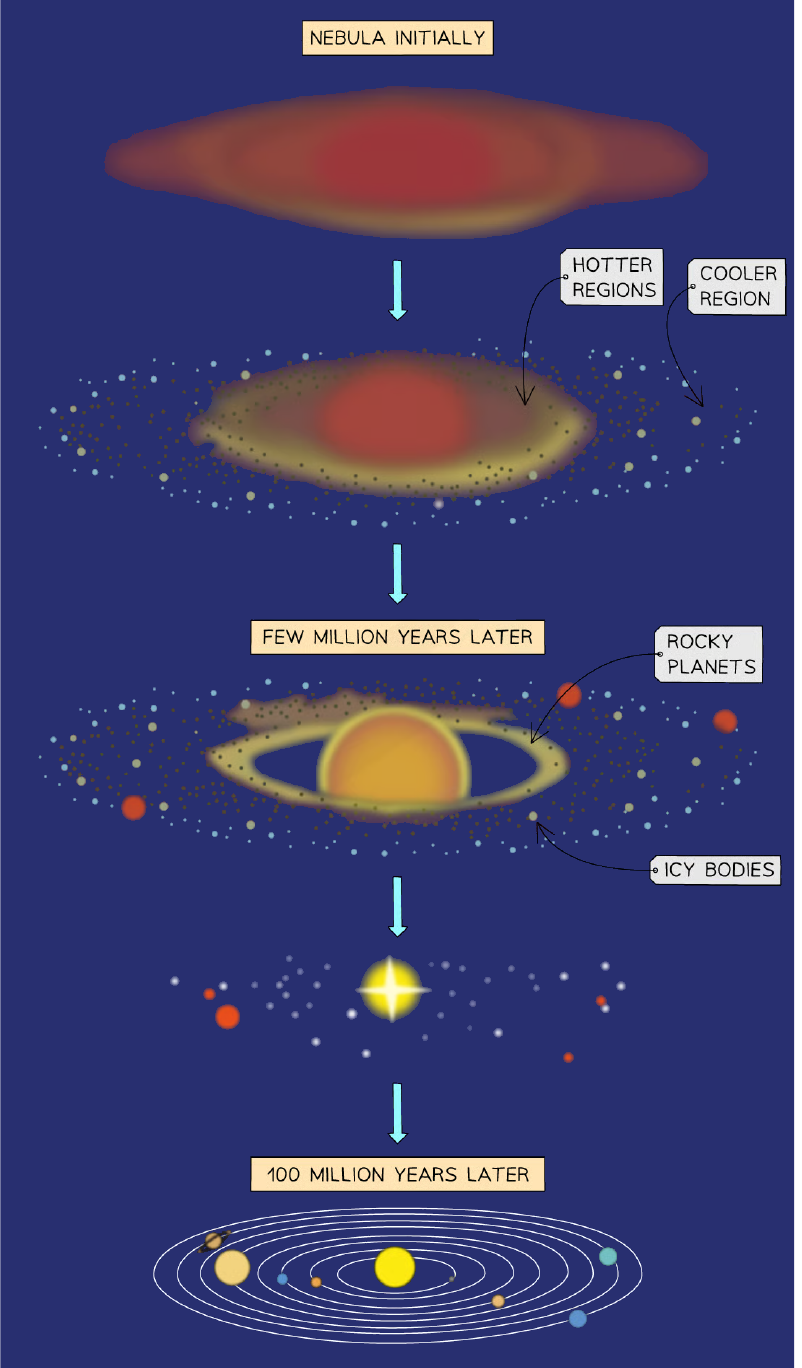
- The Solar System formed about 4.5 billion years ago from a nebula (cloud of dust and gas).
- Gravity pulled the nebula together; the Sun formed at the centre, and an accretion disc of leftover matter formed around it.
- In the hot inner region, only metals and rocky materials could solidify → inner rocky planets.
- In the cool outer region, light gases (H, He) condensed → outer gas giants.
- Accretion is the process where particles stick together under gravity to form larger objects.
Formation of the Solar System from a nebula
Light Speed Calculations
- Light travels at 3 × 10⁸ m/s in a vacuum.
- Time for light to travel a distance: time = distance / speed of light.
- Light from Sun takes 8 minutes to reach Earth, ~3 minutes to Mercury, ~5 hours to outer Solar System.
- Light from the nearest star (Proxima Centauri) takes 4 years to reach Earth.
Gravitational Field Strength
- Gravitational field strength at a planet's surface depends on its mass and radius.
- Greater mass → stronger gravitational field; greater distance from planet → weaker field.
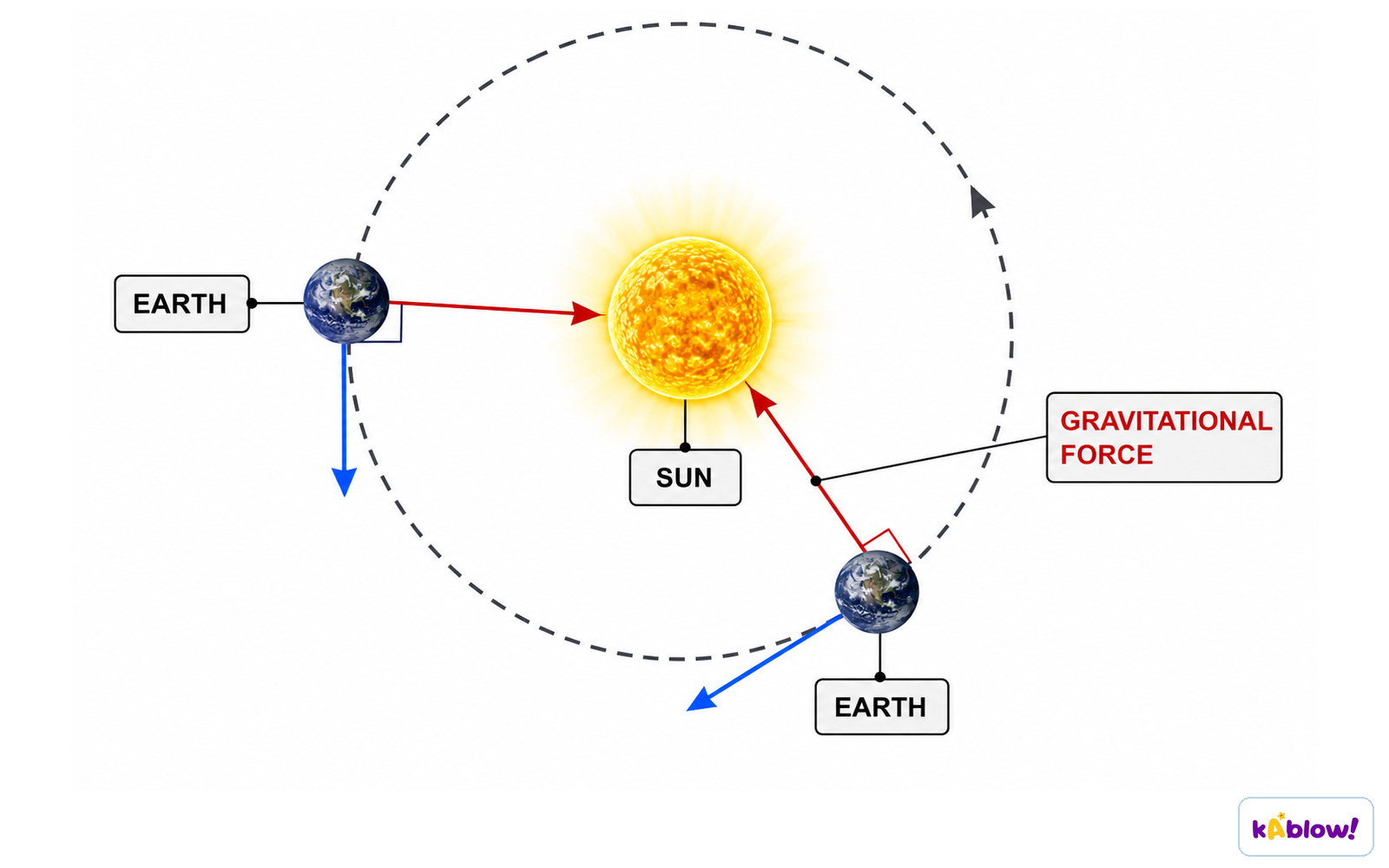
- The Sun contains >99% of the Solar System's mass, so its gravity keeps planets in orbit.
- As distance from Sun increases, orbital speed decreases and orbital period increases.
Earth orbiting the Sun with gravitational force indicated
Orbital Speed Equation (Extended)
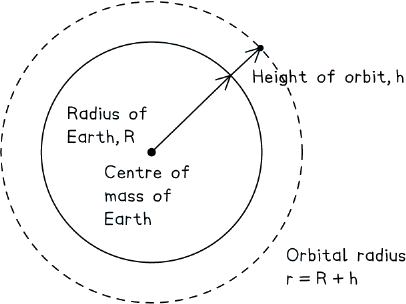
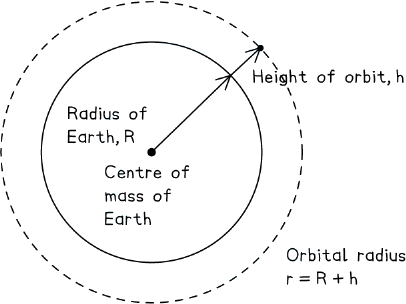
- For a circular orbit, orbital speed v = 2πr / T, where r is orbital radius and T is orbital period.
- Orbital radius is measured from the centre of the orbited body.
- Ensure units: convert km to m, minutes to seconds as needed.
- Example: Earth's orbital speed ≈ 30 km/s (from data table).
Diagram illustrating the calculation of orbital radius and orbital speed
Elliptical Orbits (Extended)
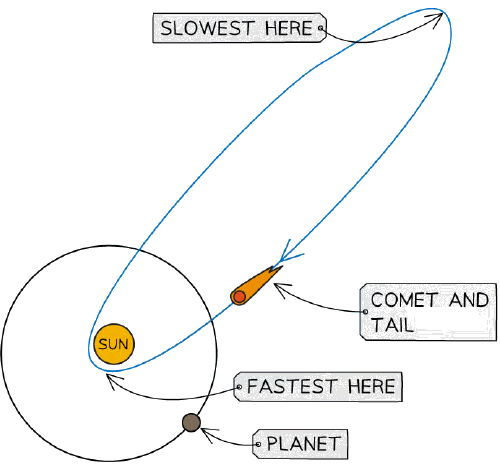
- Planets have slightly elliptical orbits; comets have highly elliptical orbits.
- The Sun is at one focus of the ellipse (not the centre).
- As a comet approaches the Sun, its speed increases (KE increases, GPE decreases).
- As it moves away, its speed decreases (GPE increases, KE decreases); energy is conserved.
Elliptical orbit of a comet around the Sun
スライド
練習問題
無料プレビュー — 53問中8問。すべて見るには登録を。
1.Which of the planets listed is the gaseous planet which is closest to the Sun?
Easy- AJupiter
- BMars
- CSaturn
- DUranus
2.Which of the following objects are described as orbiting the Sun? 1. Asteroids 2. Comets 3. Galaxies 4. Moons
Easy- A1 and 2 only
- B1, 2 and 3
- C1, 2, and 4
- D1, 2, 3 and 4
3.What creates the periodic nature of the seasons?
Medium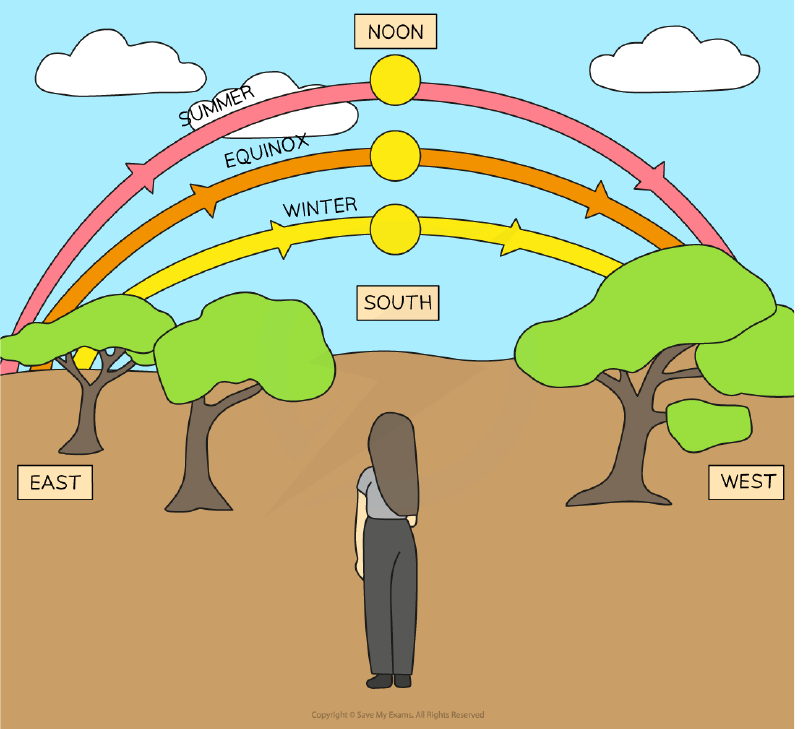
- AThe tilting of the Earth's axis
- BThe orbiting of the Earth around the Sun
- CThe combination of the orbiting of the Earth around the Sun and the Earth's tilting axis
- DThe change in temperature of the Sun
4.Which of the following statements about the strength of a gravitational field is correct?
Medium- AAt the surface of a planet it depends on the diameter of the planet
- BAround a planet it decreases as the distance from the planet increases
- CAround a planet it increases as the distance from the planet increases
- DAt the surface of a planet it depends on the mass of the planet
5.Which type of object orbits the Sun?
Easy- Aan interstellar cloud of gas and dust
- Ba comet
- Ca galaxy
- Danother star
- 6.Medium
Which line in the table best describes the angle of the Earth’s axis from the vertical, and the effect of this tilt?
Angle of tilt Effect of tilt A 23.4° Rising and setting of the Sun B 23.4° Changing of the seasons C 66.6° Rising and setting of the Sun D 66.6° Changing of the seasons - AA
- BB
- CC
- DD
- 7.Easy
Which line in the table correctly identifies the length of one year, one day and daylight hours during an equinox, all as experienced on Earth?
One Earth year / days One Earth day / hours Daylight hours during an equinox / hours A 356 8 8 B 364 12 12 C 365 12 8 D 365 24 12 - AA
- BB
- CC
- DD
8.Extended tier only Which of the following statements about orbits is true?
Medium- AAll planets, minor planets and comets have elliptical orbits
- BThe Sun is at the centre of an elliptical orbit
- COnly comets and minor planets have elliptical orbits
- DAn object in an elliptical orbit has a constant orbital radius
過去問
このトピックの過去問練習は近日公開。
近日公開