The World Wide Web: websites, browsers and search engines
遊んで学ぼう
問題に答えてエネルギーを集めたら、釣りや探検を楽しもう。アカウント不要。
教育者の方へ: The World Wide Web: websites, browsers and search engines(KS3 Computing、Computer Systems)向けのすぐ使えるレッスンスライド, 復習ノート, 図解 — レッスンで使うか、学習者がライブゲームとして遊ぶインタラクティブなクラス活動としてトピックを実施できます。
レッスンノート
The Web and the Internet
- The World Wide Web (WWW) is a global system of interconnected information, accessed via the Internet.
- The Internet is the physical network of computers; the Web is a service that runs on it.
- The Web uses HTTP (Hypertext Transfer Protocol) to transfer data between servers and browsers.
- The Web was invented by Tim Berners-Lee at CERN in 1989 and opened to the public in 1993.
- It was designed as a "universal linked information system" to share documents and resources.
Web Pages and Websites
- A web page is a document formatted in HTML (Hypertext Markup Language).
- HTML supports text, images, video, audio, and scripts for interactivity.
- A website is a collection of related web pages, usually sharing a common domain name.
- A single web server can host multiple websites; popular sites may use many servers.
- Web content comes from companies, organisations, governments, and individuals.
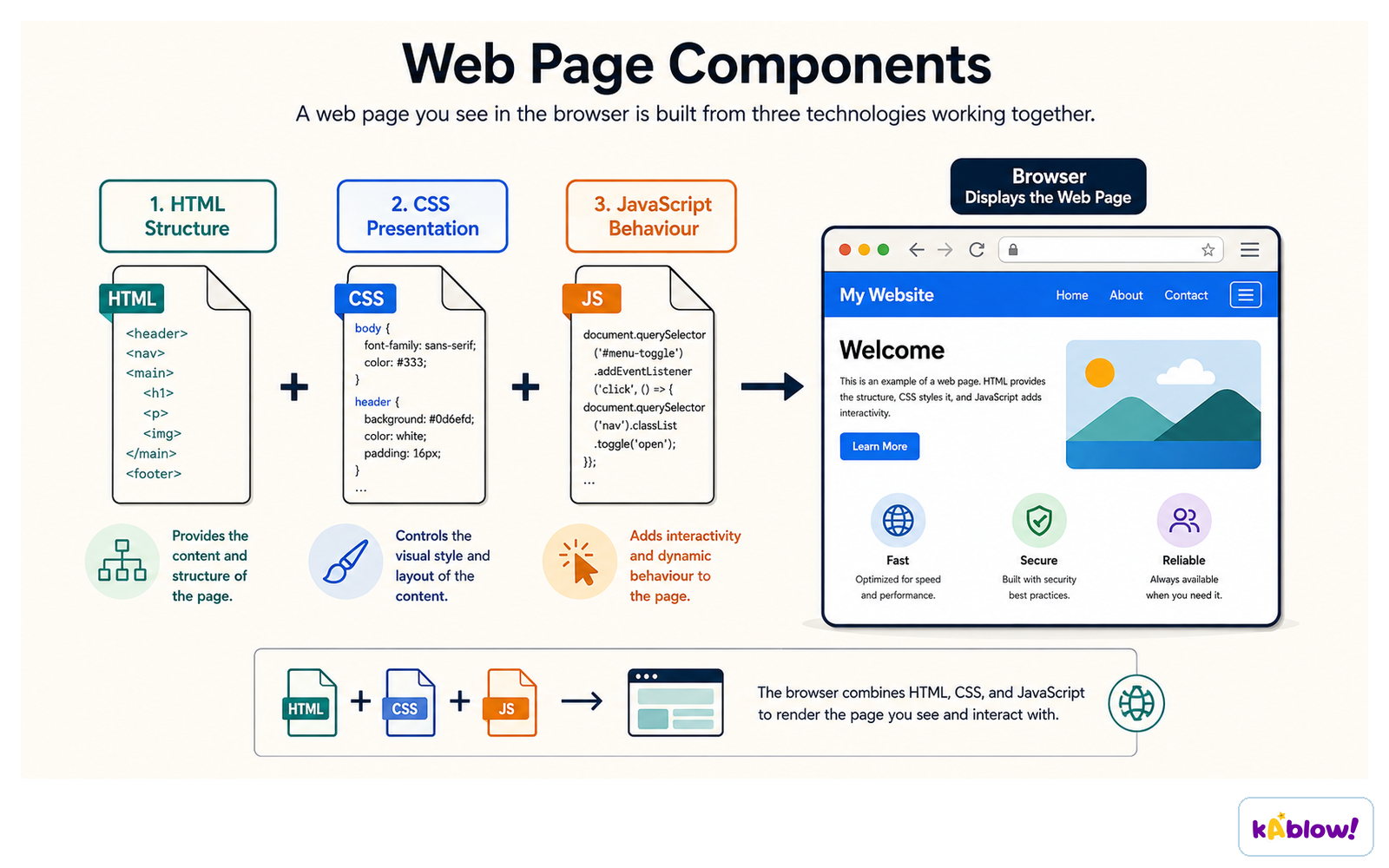
HTML gives a page its structure, CSS its presentation, and JavaScript its behaviour.
URLs and Hyperlinks
- A URL (Uniform Resource Locator) is the address of a web resource.
- URLs identify and locate servers and resources on the Web.
- Hyperlinks are embedded URLs in a page that let you jump to other resources.
- Following hyperlinks across sites is called web surfing or navigation.
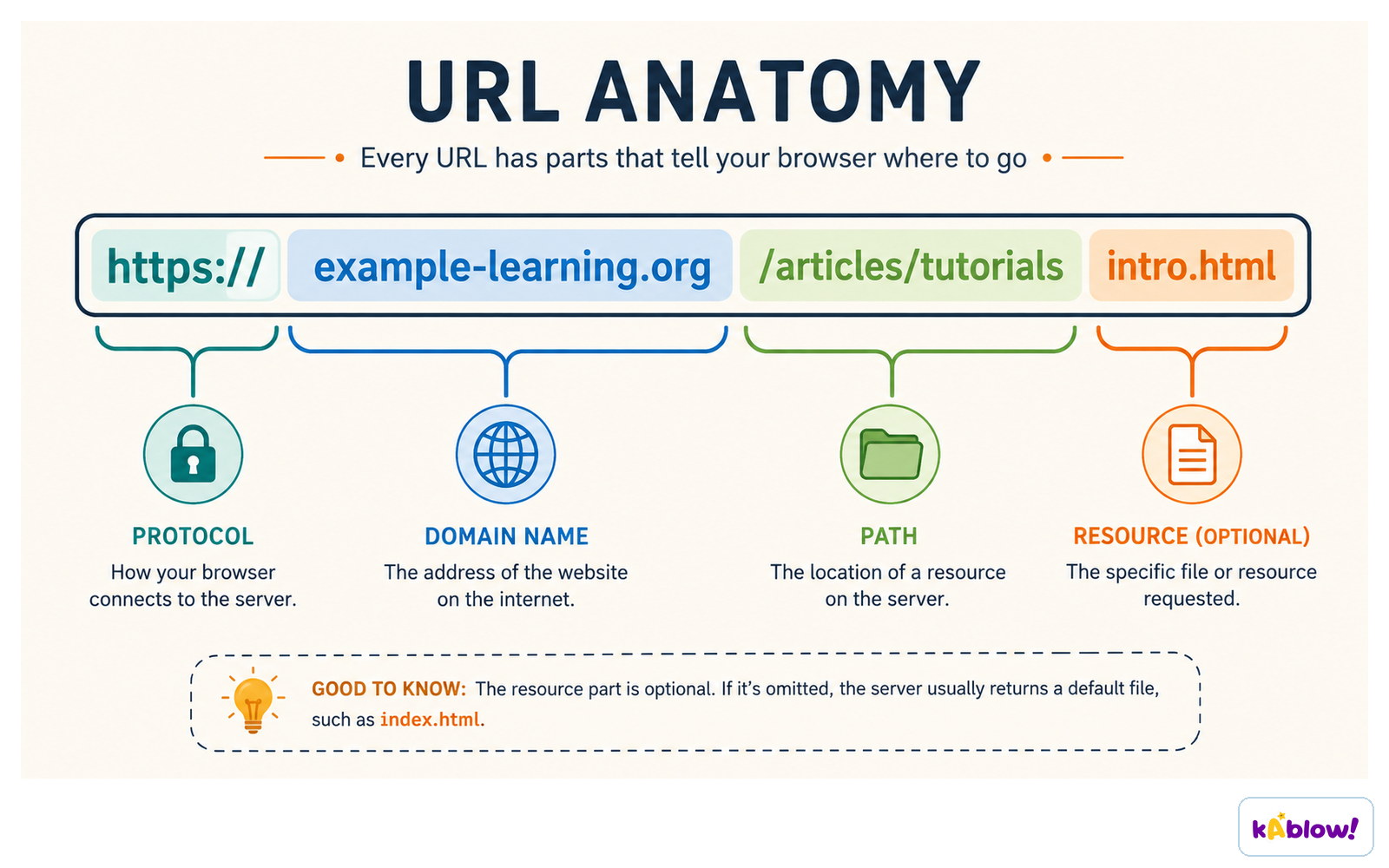
A URL has a protocol, a domain name, a path, and an optional resource.
Web Servers and Browsers
- Web servers store and deliver web pages to users.
- Web browsers are programs that request and display web pages.
- The first browser was called WorldWideWeb, later renamed Nexus.
- Browsers like Mosaic and Netscape made the Web graphical and popular.
- Modern browsers can run web applications that work like software.
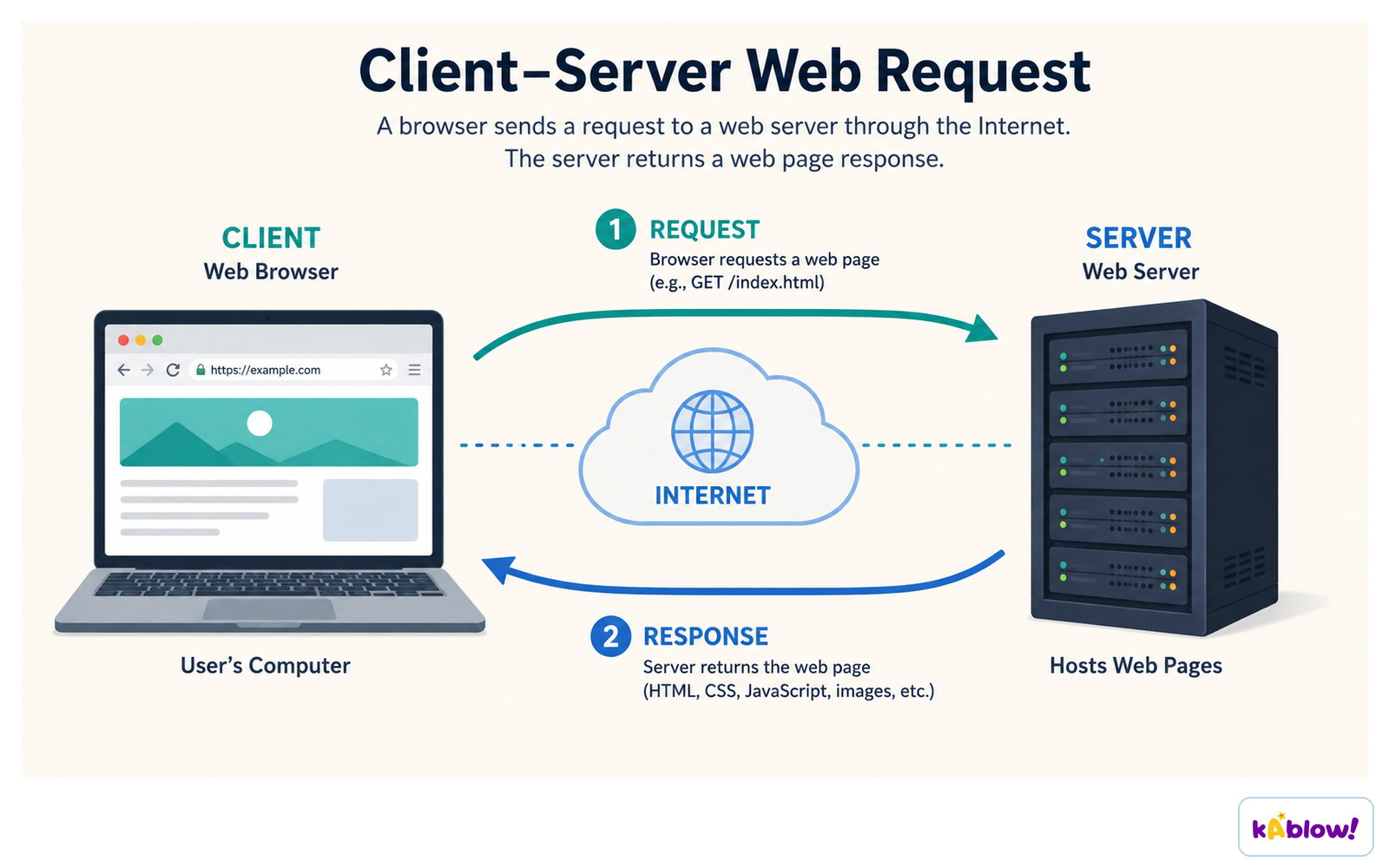
A browser sends a request to a web server across the internet, and the server returns the page.
How Search Engines Work
- Search engines use programs called crawlers (or spiders) to browse the Web.
- Crawlers follow hyperlinks to discover new and updated pages.
- They index the content of pages in a huge database.
- When you search, the engine ranks pages by relevance and importance.
- Ranking uses factors like keywords, links, and page quality.
History and Development
- Tim Berners-Lee proposed the Web in 1989 to solve document sharing at CERN.
- He built the first HTTP server and browser by 1990.
- The Web was released to the public in 1991 and became free in 1993.
- The Mosaic browser (1993) made the Web popular with images and forms.
- Netscape and Internet Explorer competed in the "browser wars".
- The W3C (World Wide Web Consortium) was founded by Berners-Lee to set standards.
Key Concepts and Impact
- The Web is decentralised – no central control over links or content.
- It supports many media types: text, graphics, speech, and video.
- Web applications are pages that function like software.
- The Web is the world's dominant information platform, used by billions.
- It has driven the Information Age and transformed communication.
A browser sends a request to a web server across the internet, and the server returns the page.
Crawlers discover pages by following links, the content is indexed, and a query is matched against that index.
スライド
練習問題
無料プレビュー — 59問中8問。すべて見るには登録を。
1.The World Wide Web was invented by Tim Berners-Lee.
EasyTrue or false?
2.The World Wide Web and the Internet are the same thing.
EasyTrue or false?
3.What does URL stand for?
Easy- AUniform Resource Locator
- BUniversal Resource Link
- CUniform Resource Link
- DUniversal Resource Locator
4.A web browser is a program used to access and view web pages.
EasyTrue or false?
5.Which of the following is the primary markup language used to create web pages?
Easy- AHTTP
- BHTML
- CURL
- DXML
6.A single web server can only host one website.
EasyTrue or false?
7.Who founded the World Wide Web Consortium (W3C)?
Medium- ATim Berners-Lee
- BMarc Andreessen
- CBill Gates
- DTed Nelson
8.Search engines display web pages in the order they are created.
MediumTrue or false?
過去問
このトピックの過去問練習は近日公開。
近日公開