Breathing
遊んで学ぼう
問題に答えてエネルギーを集めたら、釣りや探検を楽しもう。アカウント不要。
教育者の方へ: Breathing(KS3 Science、Biology)向けのすぐ使えるレッスンスライド, 復習ノート — レッスンで使うか、学習者がライブゲームとして遊ぶインタラクティブなクラス活動としてトピックを実施できます。
レッスンノート
The Respiratory System
- Breathing is the mechanical process that moves air in and out of the lungs.
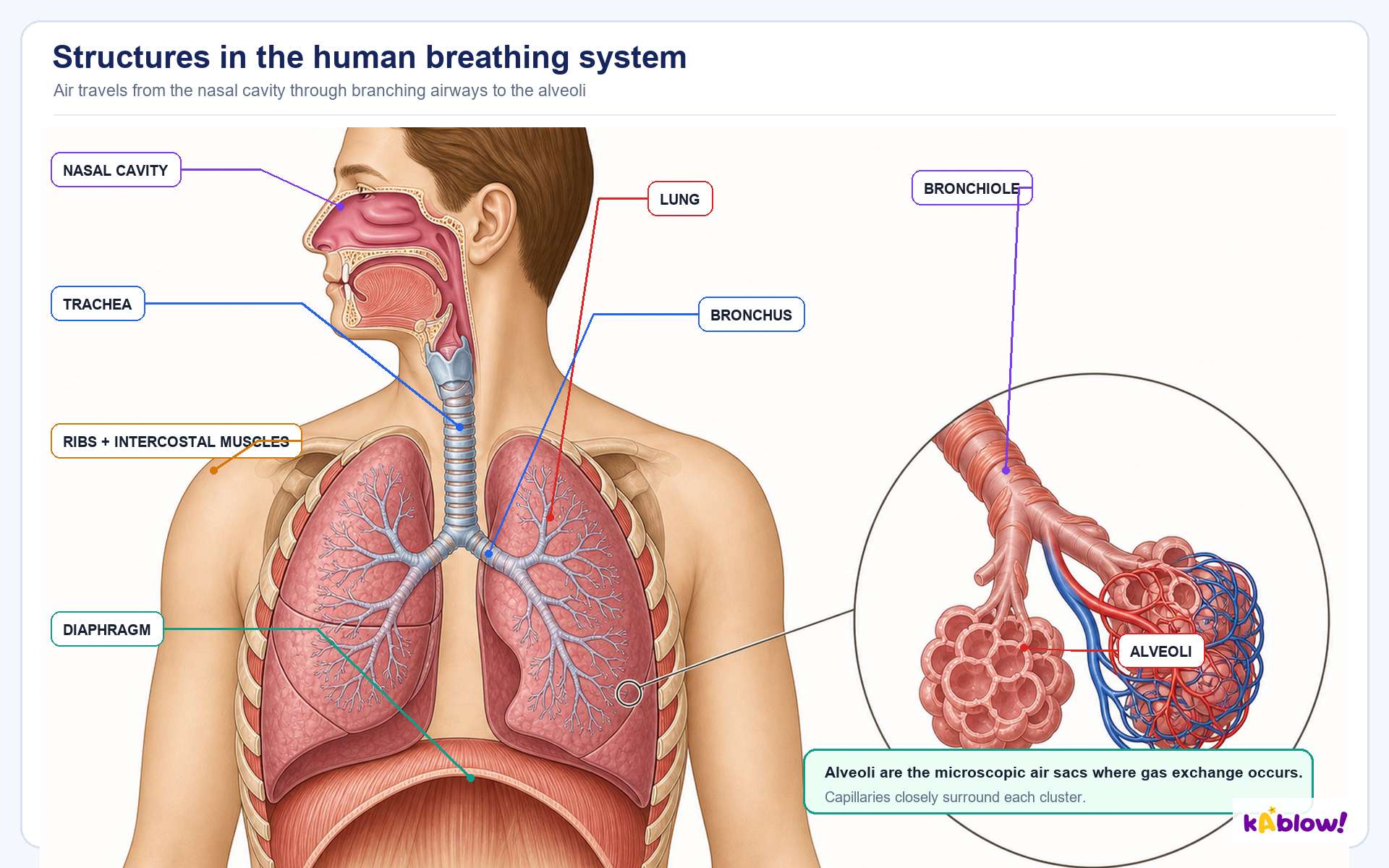
- The respiratory system includes the nose, mouth, trachea, lungs, and diaphragm.
- The nose warms and filters air, trapping dust and particles.
- The trachea (windpipe) connects the throat to the lungs.
- The trachea divides into two bronchi (one per lung), which split into smaller bronchioles.
- Bronchioles lead to tiny air sacs called alveoli, where gas exchange occurs.
- The diaphragm is a large muscle below the lungs that contracts and relaxes to change chest volume.
Air passes from the nasal cavity through the trachea, bronchi and bronchioles to the alveoli; the diaphragm sits below the lungs.
Inhalation (Breathing In)
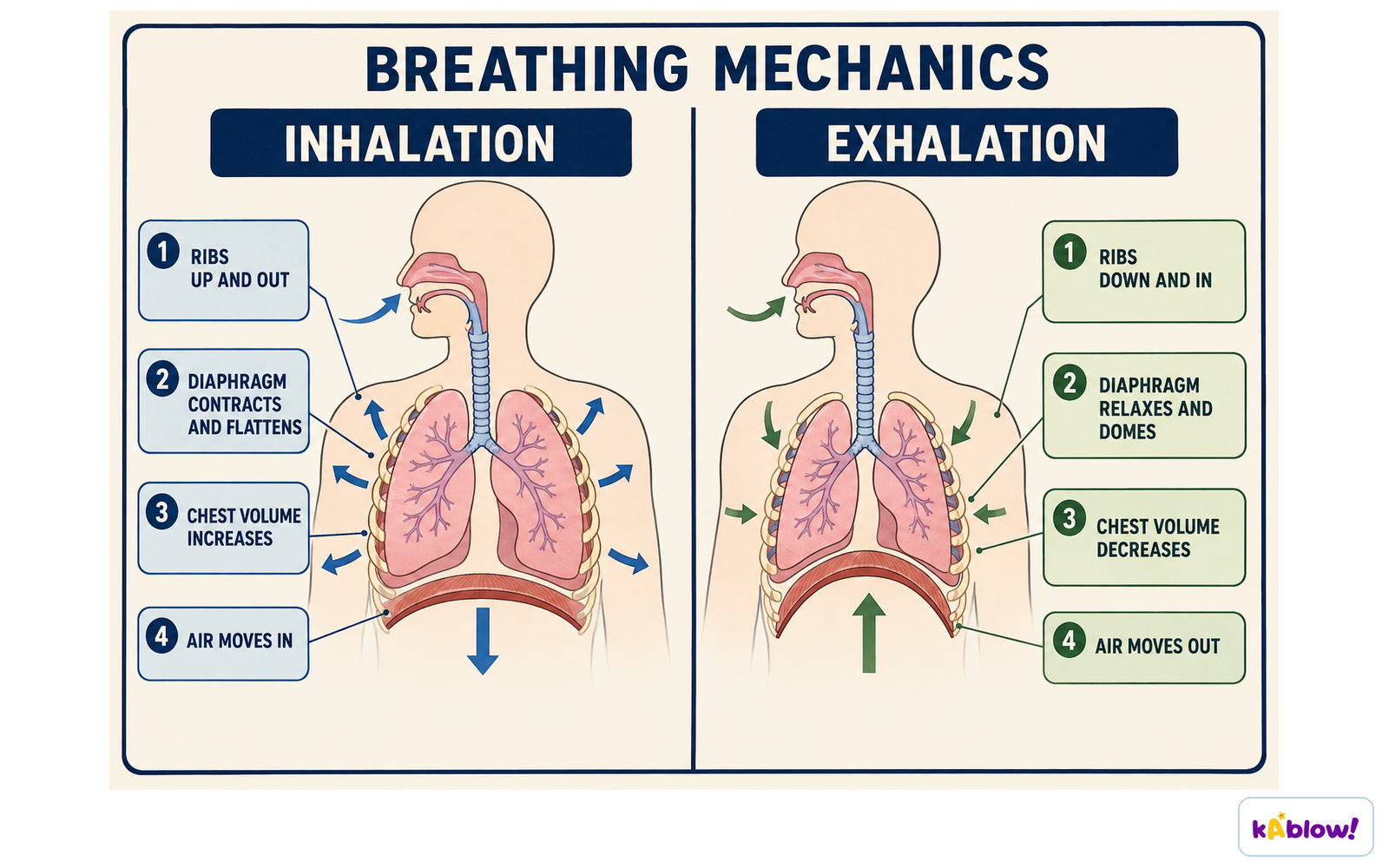
- The diaphragm contracts and moves downward, increasing chest cavity volume.
- Intercostal muscles contract, pulling the ribcage up and out.
- Increased chest volume lowers air pressure inside the lungs relative to outside.
- Air is drawn in through the nose/mouth, down the trachea and bronchi, into the alveoli.
Inhaling increases chest volume as the ribs move up and out and the diaphragm contracts. Exhaling reverses these movements.
Exhalation (Breathing Out)
- The diaphragm relaxes and moves upward, decreasing chest cavity volume.
- Intercostal muscles relax, allowing the ribcage to move down and in.
- Decreased chest volume raises air pressure inside the lungs.
- Higher pressure forces air out of the alveoli, up the bronchi and trachea, and out through the nose/mouth.
Key Points
- The lungs are an organ of the respiratory system.
- Gas exchange occurs in the alveoli.
- Inhalation: diaphragm contracts, chest volume increases, pressure decreases, air flows in.
- Exhalation: diaphragm relaxes, chest volume decreases, pressure increases, air flows out.
- The nose filters air and traps dust and particles.
スライド
練習問題
無料プレビュー — 54問中8問。すべて見るには登録を。
1.Which of the following statements about the diaphragm during inhalation is correct?
Medium- AThe diaphragm relaxes and moves upward.
- BThe diaphragm contracts and moves downward.
- CThe diaphragm relaxes and moves downward.
- DThe diaphragm contracts and moves upward.
2.Which of the following is NOT part of the respiratory system?
Easy- ATrachea
- BLungs
- CDiaphragm
- DOesophagus
3.What is the main function of the nose in the respiratory system?
Easy- ATo warm and filter the air
- BTo exchange gases
- CTo produce mucus
- DTo connect the throat to the lungs
4.The trachea divides into two tubes. What are these tubes called?
Easy- ABronchioles
- BBronchi
- CAlveoli
- DCapillaries
5.During exhalation, what happens to the volume of the chest cavity?
Easy- AIt increases
- BIt decreases
- CIt stays the same
- DIt fluctuates rapidly
6.Which of the following sequences correctly describes the path of air from the trachea to the alveoli?
Medium- ATrachea → bronchioles → bronchi → alveoli
- BTrachea → bronchi → bronchioles → alveoli
- CTrachea → alveoli → bronchi → bronchioles
- DTrachea → bronchioles → alveoli → bronchi
7.Gas exchange occurs in which part of the respiratory system?
Easy- ATrachea
- BBronchi
- CAlveoli
- DDiaphragm
8.What causes air to move into the lungs during inhalation?
Medium- AHigher pressure inside the lungs than outside
- BLower pressure inside the lungs than outside
- CEqual pressure inside and outside the lungs
- DThe diaphragm relaxing
過去問
このトピックの過去問練習は近日公開。
近日公開