Pollination
遊んで学ぼう
問題に答えてエネルギーを集めたら、釣りや探検を楽しもう。アカウント不要。
教育者の方へ: Pollination(KS3 Science、Biology)向けのすぐ使えるレッスンスライド, 復習ノート — レッスンで使うか、学習者がライブゲームとして遊ぶインタラクティブなクラス活動としてトピックを実施できます。
レッスンノート
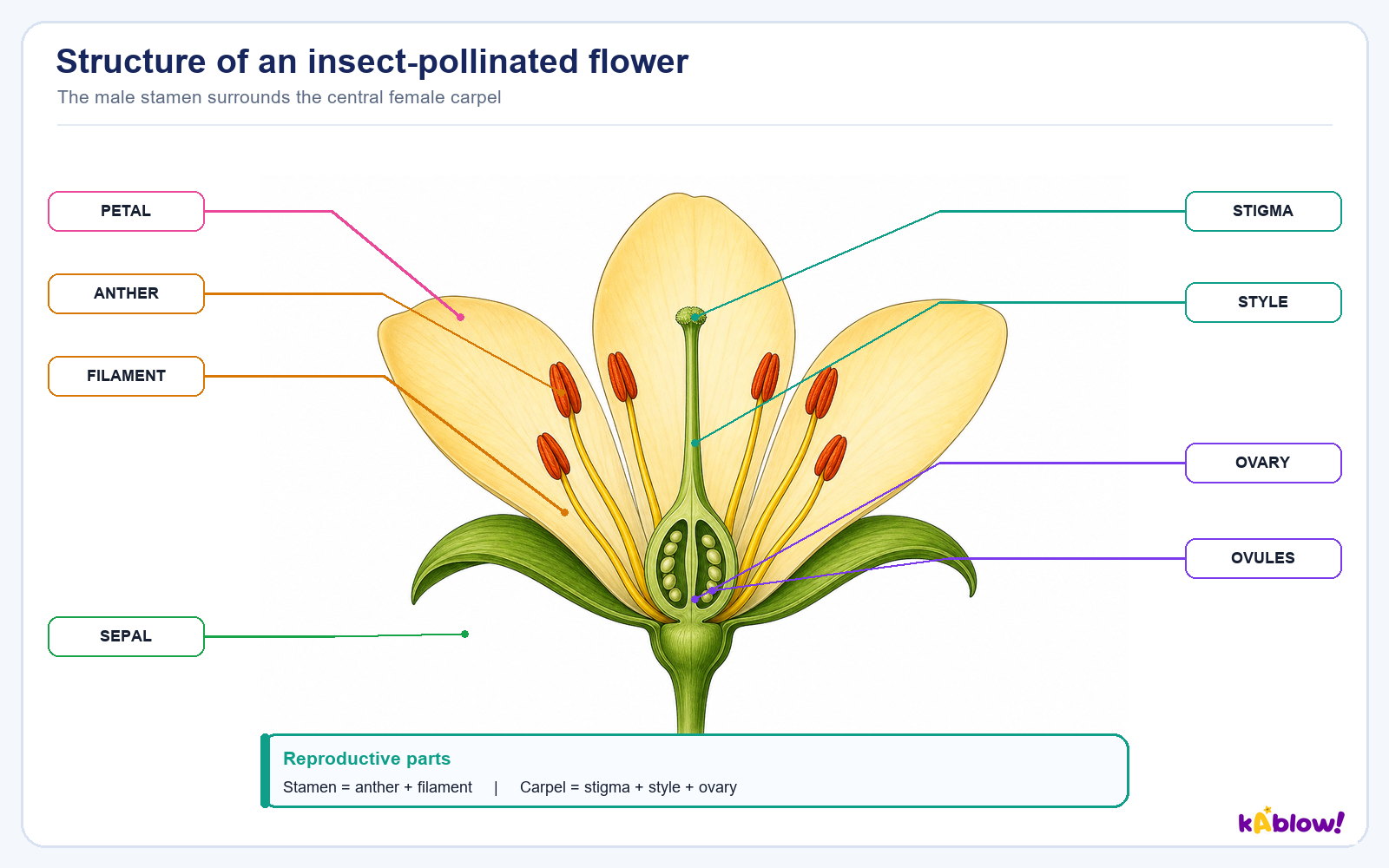
Flower Structure
- The stamen is the male reproductive part, consisting of the anther (produces pollen) and the filament (supports the anther).
- The carpel is the female reproductive part, comprising the stigma (sticky tip), style (tube), and ovary (contains ovules with female sex cells).
- Petals are often brightly coloured to attract pollinators like bees and butterflies.
- Sepals are green, leaf-like structures that protect the flower bud before it opens.
The parts of a flower, the reproductive organ of a plant.
What is Pollination?
- Pollination is the transfer of pollen from the stamen (male part) to the carpel (female part) of a flower.
- It allows plants to reproduce and produce seeds for the next generation.
- Pollen grains contain the male sex cells; they land on the stigma to enable fertilisation.
Self-Pollination
- Pollen from the anther lands on the stigma of the same flower or another flower on the same plant.
- It can occur without external pollinators.
- Leads to less genetic variation in offspring.
Cross-Pollination
- Pollen is transferred from the anther of one flower to the stigma of a flower on a different plant of the same species.
- Often requires pollinators such as insects (bees, butterflies) or wind.
- Increases genetic variation, which can improve survival.
Pollinators
- Common insect pollinators include bees and butterflies.
- Wind can also carry pollen between flowers.
- Brightly coloured petals and scent attract insect pollinators.
スライド
練習問題
無料プレビュー — 55問中8問。すべて見るには登録を。
1.Which part of the flower produces pollen grains?
Easy- AAnther
- BFilament
- CStigma
- DOvary
2.What is the function of the stigma?
Easy- ATo produce pollen
- BTo capture pollen
- CTo support the anther
- DTo produce ovules
3.Which of the following is the male reproductive part of a flower?
Easy- ACarpel
- BStamen
- CSepal
- DPetal
4.What is the difference between self-pollination and cross-pollination?
Medium- ASelf-pollination uses wind; cross-pollination uses insects
- BSelf-pollination transfers pollen within the same plant; cross-pollination transfers pollen to a different plant
- CSelf-pollination requires pollinators; cross-pollination does not
- DSelf-pollination produces seeds; cross-pollination does not
5.Which of the following is NOT a pollinator?
Easy- ABee
- BButterfly
- CWind
- DAnther
6.After pollination, where does the pollen grain land?
Easy- AAnther
- BFilament
- CStigma
- DOvary
7.What is the function of the filament?
Easy- ATo produce pollen
- BTo capture pollen
- CTo support the anther
- DTo connect stigma to ovary
8.Which of the following statements about pollination is correct?
Medium- APollination is the transfer of pollen from carpel to stamen
- BPollination allows fertilisation to occur
- CPollination occurs after seed formation
- DPollination only occurs in insect-pollinated plants
過去問
このトピックの過去問練習は近日公開。
近日公開