Exothermic and endothermic reactions
遊んで学ぼう
問題に答えてエネルギーを集めたら、釣りや探検を楽しもう。アカウント不要。
教育者の方へ: Exothermic and endothermic reactions(KS3 Science、Chemistry)向けのすぐ使えるレッスンスライド, 復習ノート, 図解 — レッスンで使うか、学習者がライブゲームとして遊ぶインタラクティブなクラス活動としてトピックを実施できます。
レッスンノート
Exothermic Reactions
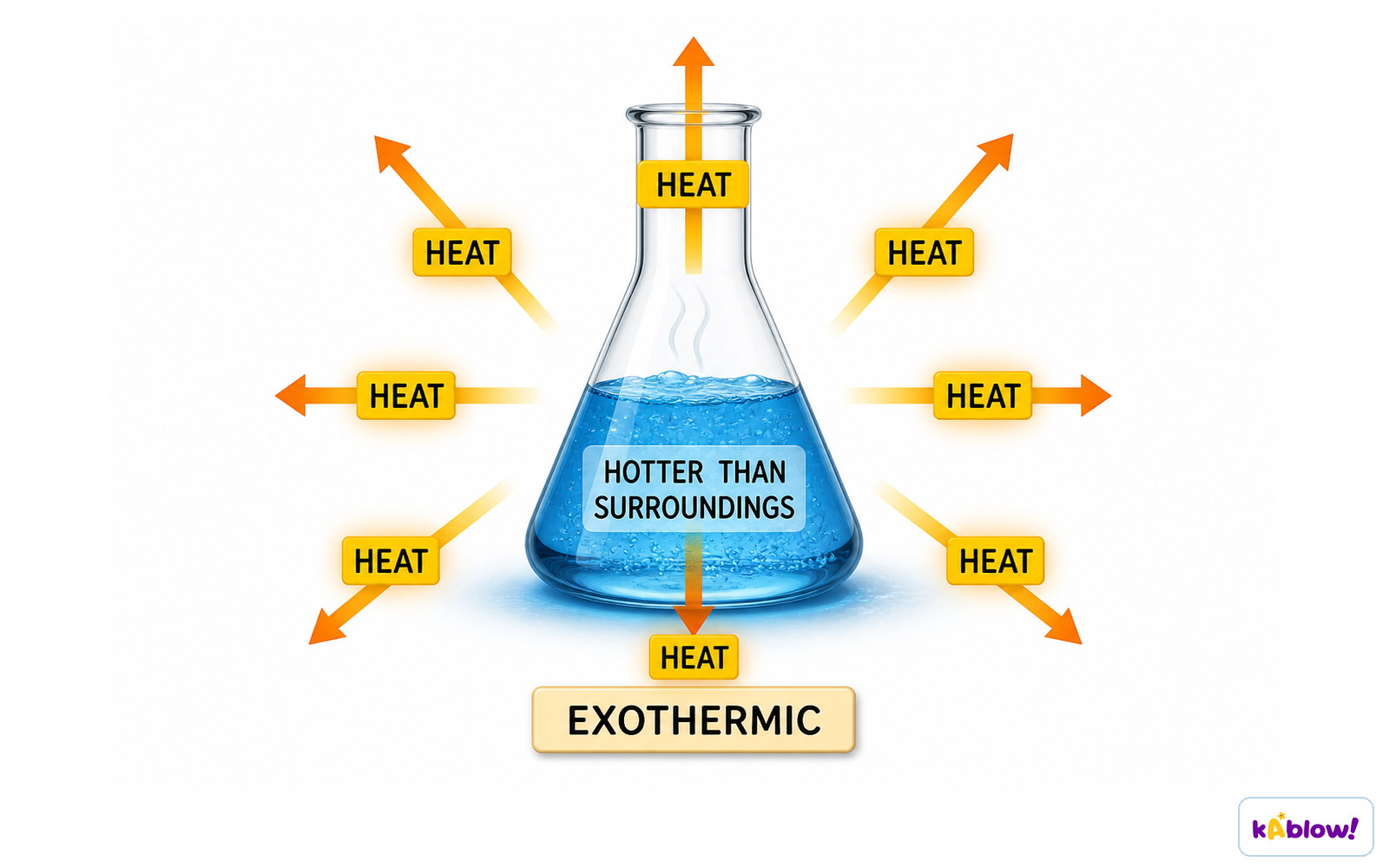
- Exothermic reactions transfer energy to the surroundings, usually as heat, causing a temperature rise.
- Combustion is a key example: fuel + oxygen → carbon dioxide + water.
- Neutralisation reactions (acid + metal oxide/hydroxide/carbonate → salt + water) are exothermic.
- Oxidation reactions (metal + oxygen → metal oxide) are also exothermic.
- Everyday uses include hand warmers and self-heating cans.
Diagram showing the transfer of heat energy outwards from an exothermic reaction
Endothermic Reactions
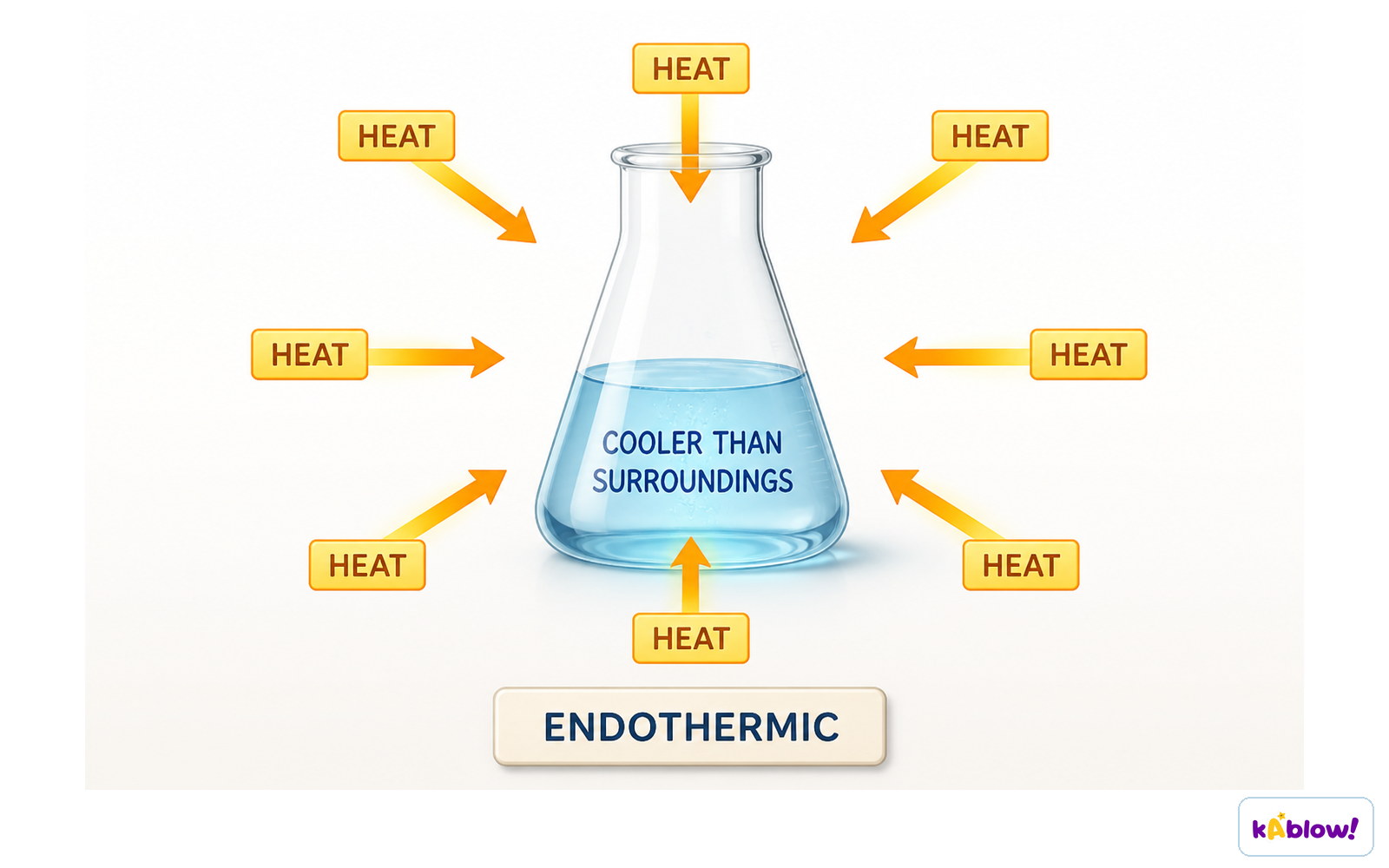
- Endothermic reactions take in energy from the surroundings, causing a temperature fall.
- Thermal decomposition is a key example: a compound breaks down when heated.
- Instant cold packs use an endothermic reaction: water combines with another compound, absorbing heat.
- These packs are used to treat sports injuries.
Diagram showing the transfer of heat energy from the surroundings into an endothermic reaction
Comparing Exothermic and Endothermic
- Exothermic: energy transferred to surroundings → temperature rises.
- Endothermic: energy taken from surroundings → temperature falls.
- Examples of exothermic: combustion, neutralisation, oxidation.
- Examples of endothermic: thermal decomposition.
General Word Equations
- Combustion: fuel + oxygen → carbon dioxide + water.
- Neutralisation (acid + metal oxide): acid + metal oxide → salt + water.
- Neutralisation (acid + metal hydroxide): acid + metal hydroxide → salt + water.
- Neutralisation (acid + metal carbonate): acid + metal carbonate → salt + carbon dioxide + water.
- Oxidation: metal + oxygen → metal oxide.
Particle arrangement in solids, liquids, and gases. Exothermic reactions often involve particles moving faster (more energy), while endothermic reactions involve particles slowing down (less energy).
スライド
練習問題
無料プレビュー — 58問中8問。すべて見るには登録を。
1.What is an exothermic reaction?
Easy- AA reaction that transfers energy to the surroundings
- BA reaction that takes in energy from the surroundings
- CA reaction that does not involve energy change
- DA reaction that only occurs when heated
2.Which of the following is an example of an exothermic reaction?
Easy- ACombustion
- BThermal decomposition
- CPhotosynthesis
- DMelting ice
3.What is an endothermic reaction?
Easy- AA reaction that takes in energy from the surroundings
- BA reaction that transfers energy to the surroundings
- CA reaction that produces a temperature increase
- DA reaction that always requires a catalyst
4.Which of the following is an example of an endothermic reaction?
Easy- AThermal decomposition
- BBurning wood
- CNeutralisation
- DOxidation of iron
5.State whether the following statement is true or false: 'Oxidation is an example of an endothermic reaction.'
Easy- AFalse
- BTrue
- CCannot be determined
- DIt depends on the substance
6.State whether the following statement is true or false: 'Thermal decomposition is an example of an endothermic reaction.'
Easy- ATrue
- BFalse
- COnly if the compound is a carbonate
- DOnly if it produces a gas
7.State whether the following statement is true or false: 'Neutralisation is an example of an exothermic reaction.'
Easy- ATrue
- BFalse
- COnly for acid-metal hydroxide reactions
- DOnly if a gas is produced
8.Complete the word equation: acid + metal hydroxide → ?
Easy- Asalt + water
- Bsalt + hydrogen
- Csalt + carbon dioxide + water
- Dmetal oxide + water
過去問
このトピックの過去問練習は近日公開。
近日公開