Reactivity series and displacement reactions
遊んで学ぼう
問題に答えてエネルギーを集めたら、釣りや探検を楽しもう。アカウント不要。
教育者の方へ: Reactivity series and displacement reactions(KS3 Science、Chemistry)向けのすぐ使えるレッスンスライド, 復習ノート, 図解 — レッスンで使うか、学習者がライブゲームとして遊ぶインタラクティブなクラス活動としてトピックを実施できます。
レッスンノート
Reactivity of Metals
- Metals differ in how strongly they react with water or acid; this is due to differences in reactivity.
- More reactive metals produce more bubbles of hydrogen when placed in acid.
- The reactivity series lists metals in order of reactivity, from most to least reactive.
- Carbon and hydrogen are included in the series even though they are not metals, to help predict reactions.
Testing Reactivity
- Place metals in hydrochloric acid; the rate of bubble production shows reactivity.
- Magnesium reacts vigorously, copper shows no reaction.
- Reactions with water also indicate reactivity; more reactive metals react more vigorously.
Displacement Reactions
- A displacement reaction occurs when a more reactive element replaces a less reactive element in a compound.
- Example: iron displaces copper from copper sulfate: iron + copper sulfate → iron sulfate + copper.
- No reaction occurs if the displacing element is less reactive (e.g., gold with copper sulfate).
- Another example: aluminium displaces iron from iron oxide: aluminium + iron oxide → aluminium oxide + iron.
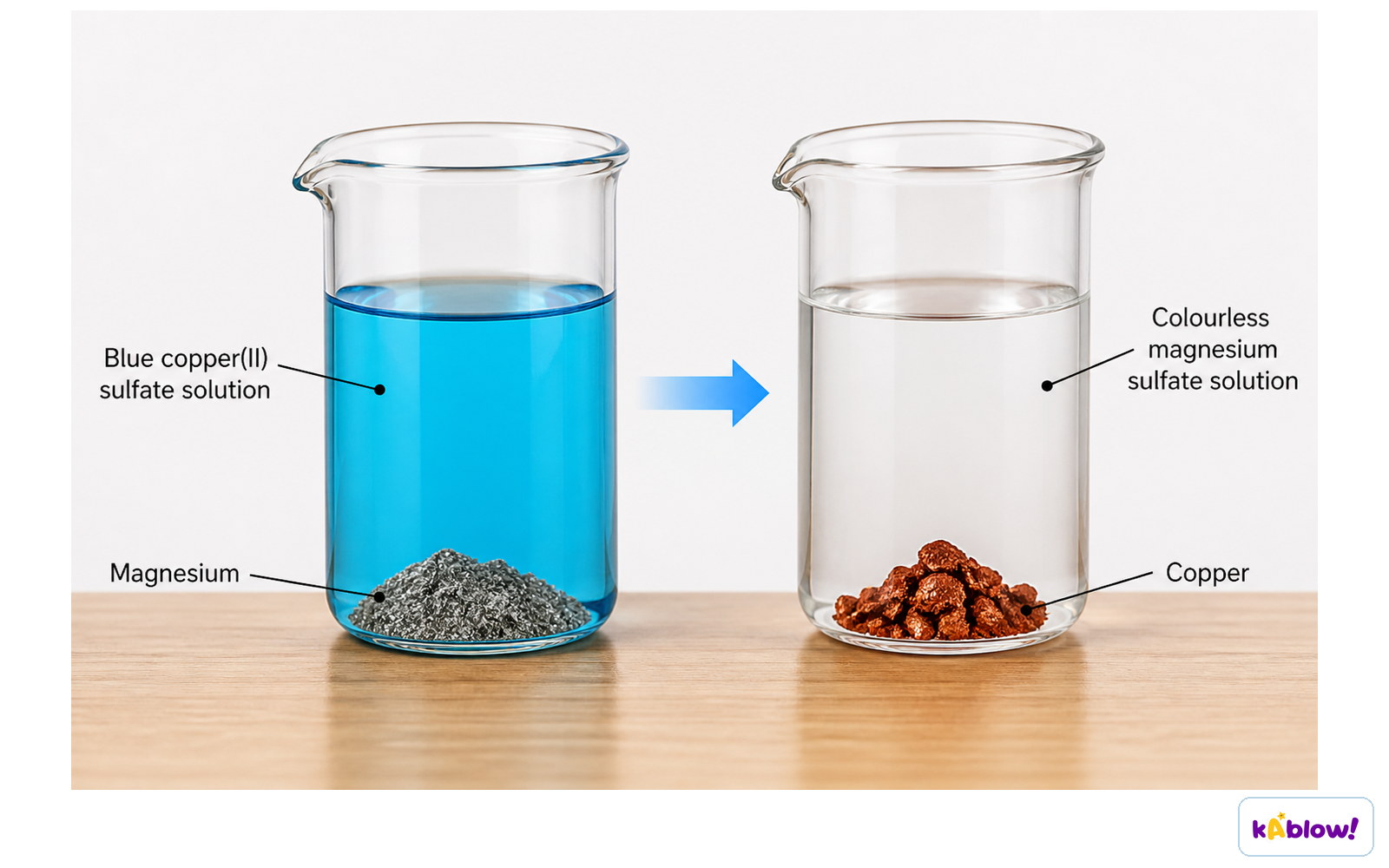
Diagram showing the colour change when magnesium displaces copper from copper(II) sulfate solution.
Signs of a Chemical Reaction
- Gas release (bubbles) indicates a reaction.
- Colour change is another sign; e.g., blue copper sulfate turns green when iron displaces copper.
- In the magnesium–copper sulfate reaction, the blue colour fades to colourless.
Using the Reactivity Series
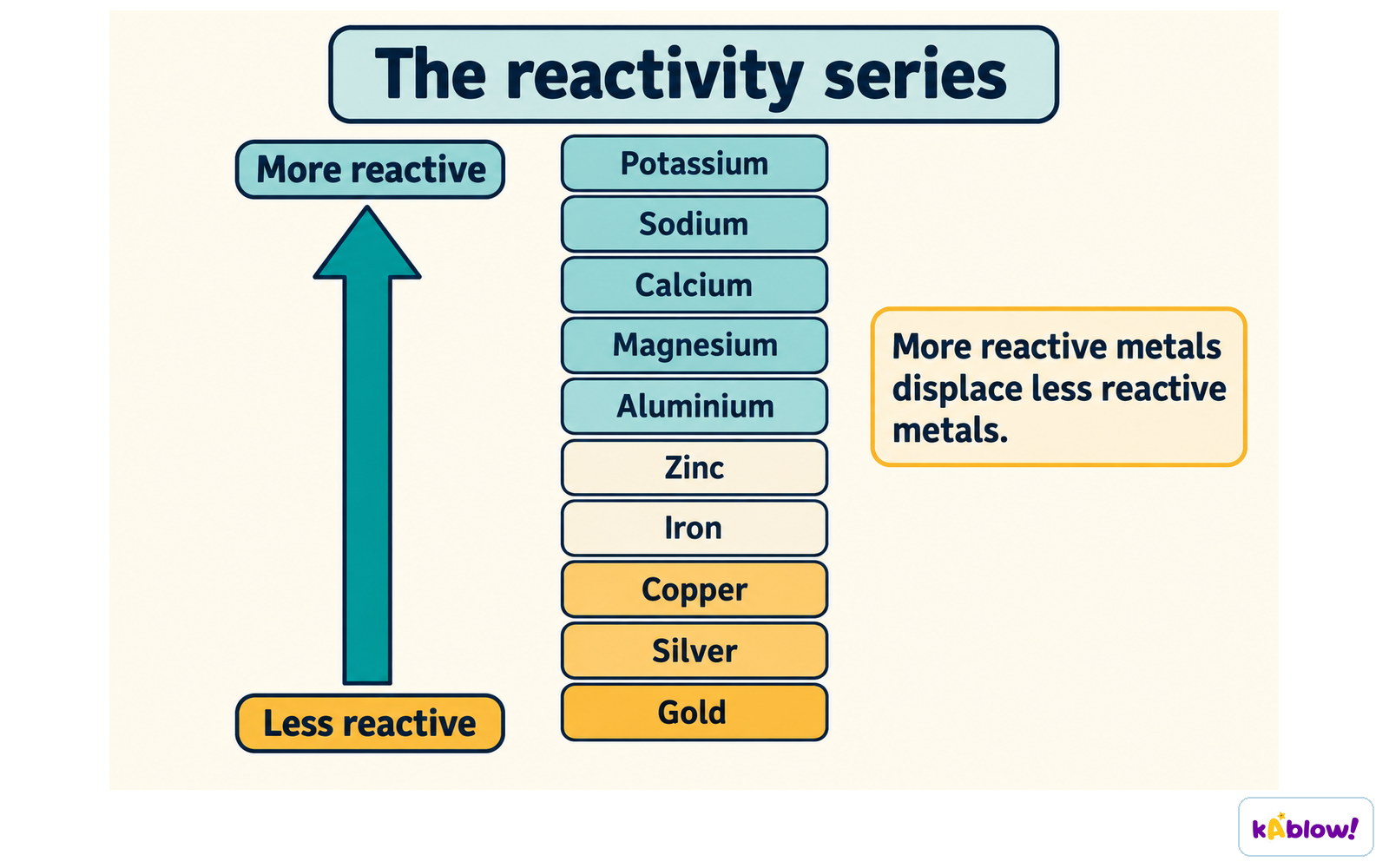
- A metal can only displace another metal if it is higher in the reactivity series.
- For example, magnesium displaces lead from lead nitrate because magnesium is more reactive.
- Calcium cannot displace sodium from sodium carbonate because calcium is less reactive than sodium.
Selected metals in reactivity order: a more reactive metal can displace a less reactive metal from its compound. Carbon and hydrogen are omitted from this comparison.
Example Word Equations
- Aluminium + iron oxide → aluminium oxide + iron
- Magnesium + copper chloride → magnesium chloride + copper
- Zinc + iron sulfate → zinc sulfate + iron
Particle arrangement in solids, liquids, and gases. Reactivity relates to how easily atoms can lose electrons.
スライド
練習問題
無料プレビュー — 62問中8問。すべて見るには登録を。
1.Which of the following is the correct order of reactivity, from most reactive to least reactive?
Easy- AMagnesium > Copper > Iron
- BCopper > Iron > Magnesium
- CMagnesium > Iron > Copper
- DIron > Magnesium > Copper
2.What is the sign of a chemical reaction when a metal is placed in acid?
Easy- AA colour change
- BBubbles of gas
- CA solid precipitate
- DA temperature decrease
3.In the reaction: iron + copper sulfate → iron sulfate + copper, which metal is displaced?
Medium- AIron
- BCopper
- CSulfate
- DBoth iron and copper
4.Which of the following is NOT a sign of a chemical reaction?
Easy- AA colour change
- BA gas being released
- CA change of state
- DThe mixture becoming colder
5.Why is carbon often included in the reactivity series even though it is not a metal?
Medium- ABecause it reacts with metals
- BBecause it helps predict displacement reactions
- CBecause it is the most reactive element
- DBecause it is a metal
6.What colour is copper sulfate solution?
Easy- AGreen
- BBlue
- CColourless
- DRed
7.Which statement about the reaction between gold and copper sulfate is correct?
Medium- AGold displaces copper because gold is more reactive
- BCopper displaces gold because copper is more reactive
- CNo reaction occurs because gold is less reactive than copper
- DNo reaction occurs because both are unreactive
8.In a displacement reaction, a more reactive element replaces a less reactive element in a compound. True or false?
Easy- ATrue
- BFalse
- COnly if both are metals
- DOnly if the compound is an oxide
過去問
このトピックの過去問練習は近日公開。
近日公開