Cells and cell theory
遊んで学ぼう
問題に答えてエネルギーを集めたら、釣りや探検を楽しもう。アカウント不要。
教育者の方へ: Cells and cell theory(NGSS Middle School Science、Biology)向けのすぐ使えるレッスンスライド, 復習ノート, 図解 — レッスンで使うか、学習者がライブゲームとして遊ぶインタラクティブなクラス活動としてトピックを実施できます。
レッスンノート
What are cells?
- Cells are the smallest structural and functional units of all living organisms.
- All living things, including plants, animals, bacteria, and fungi, are made up of cells.
- Cells are microscopic – they can only be seen with a microscope.
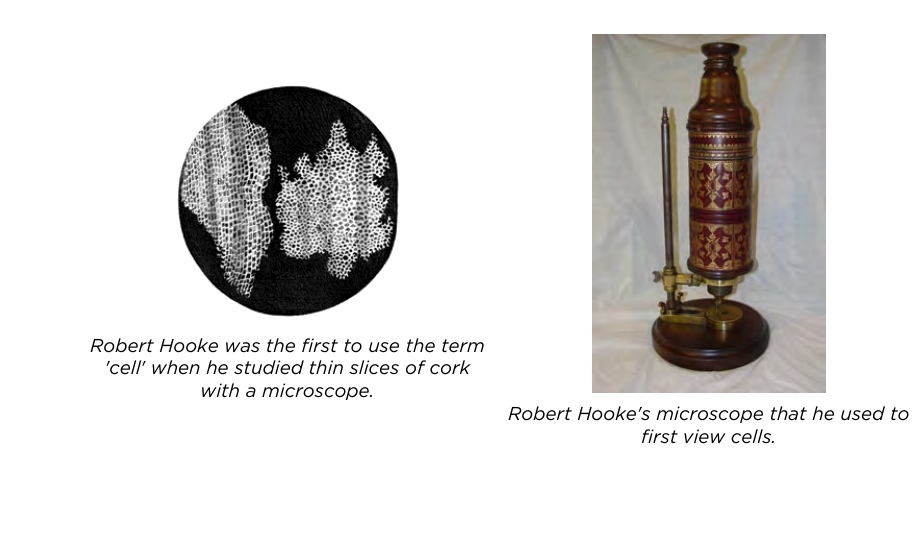
- Robert Hooke first observed and named cells in 1665 using a microscope on cork.
- Cells can differ in shape and size; different shapes usually mean they do different jobs.
Robert Hooke's microscope and his observation of cork cells.
Cell Theory
- Cell theory states that all organisms are composed of cells.
- Cells are alive and are the basic living units of organization in all organisms.
- All cells come from other cells (Rudolf Virchow, 1858).
- Many experiments support cell theory, and no evidence contradicts it.
Eukaryotic vs Prokaryotic Cells
- The main difference is the presence of a nucleus: eukaryotic cells have a nucleus, prokaryotic cells do not.
- Eukaryotic cells include plant and animal cells; prokaryotic cells include bacteria.
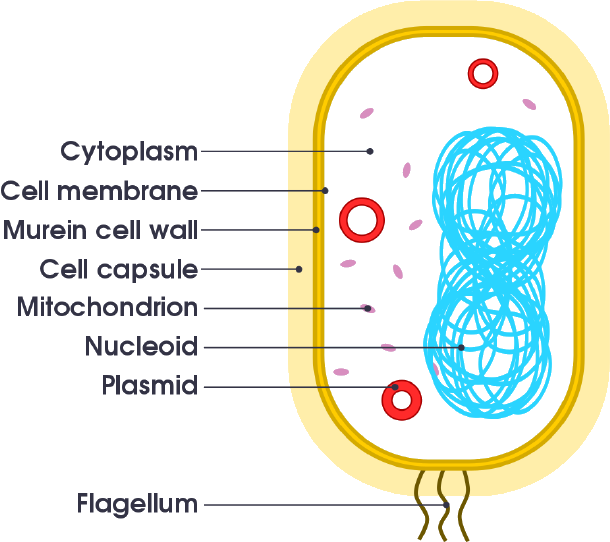
- In prokaryotes, DNA floats in the cytoplasm without a membrane.
- Eukaryotic cells have membrane-bound organelles, while prokaryotes generally do not.
Diagram of a prokaryotic cell with labeled parts.
Common Cell Structures
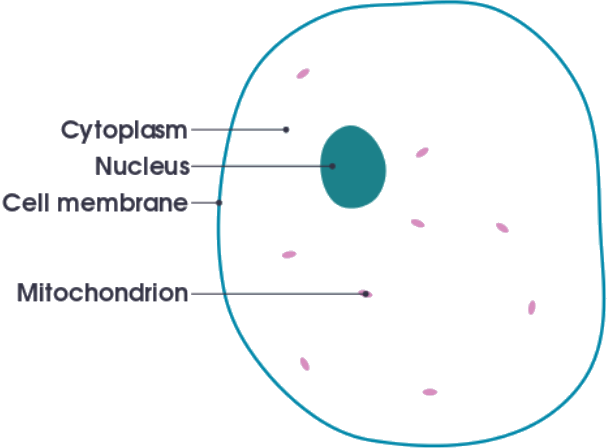
- All cells have a cell membrane, cytoplasm, and (in most eukaryotes) a nucleus.
- The cell membrane is a thin layer that encloses the cell and separates it from its environment.
- The cell membrane is selectively permeable – it controls what enters and leaves the cell.
- Cytoplasm includes all living parts of the cell within the membrane, excluding the nucleus.
- Cytoplasm consists of cytosol (watery, jelly-like medium) and organelles.
Diagram of a cell with common structures labeled
Nucleus and DNA
- The nucleus controls all processes and chemical reactions in the cell.
- It contains the cell's genetic material organized into DNA molecules.
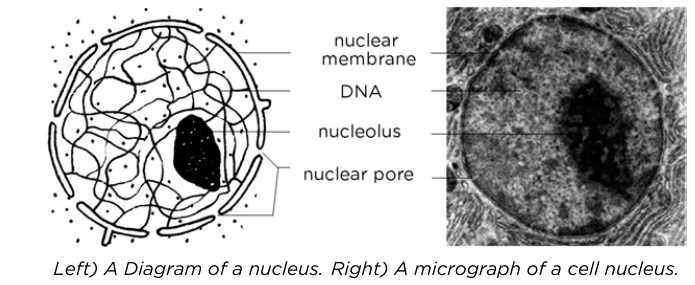
- The nucleus is enclosed by a nuclear membrane with pores.
- DNA contains information about inherited characteristics (hereditary traits).
- Differences in DNA between individuals are called variation.
Diagram and micrograph of a cell nucleus.
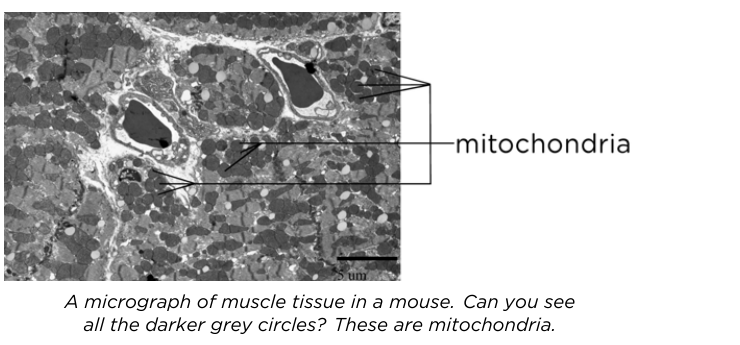
Mitochondria
- Mitochondria are organelles enclosed by a double membrane.
- They are the site of cellular respiration, where food molecules are combined with oxygen to release energy.
- Carbon dioxide, water, and waste are by-products of respiration.
- Active cells (e.g., muscle cells) have more mitochondria than less active cells.
- Mitochondria have their own DNA, different from nuclear DNA.
A micrograph of muscle tissue in a mouse showing mitochondria.
Specialized Cells
- In multicellular organisms, cells are specialized to perform specific functions.
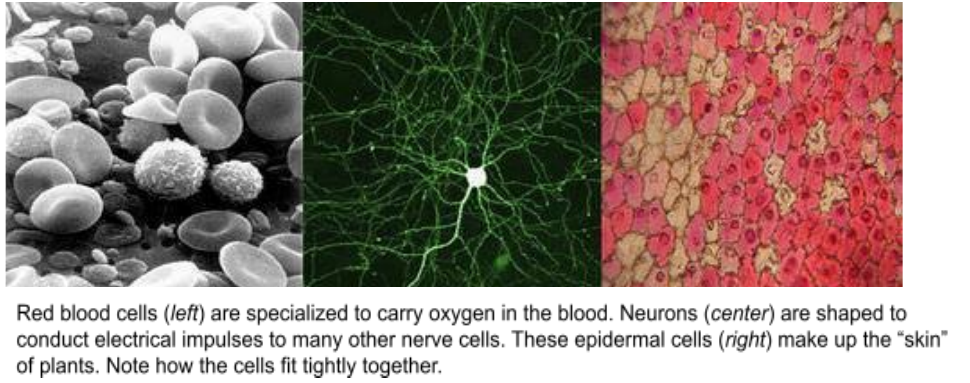
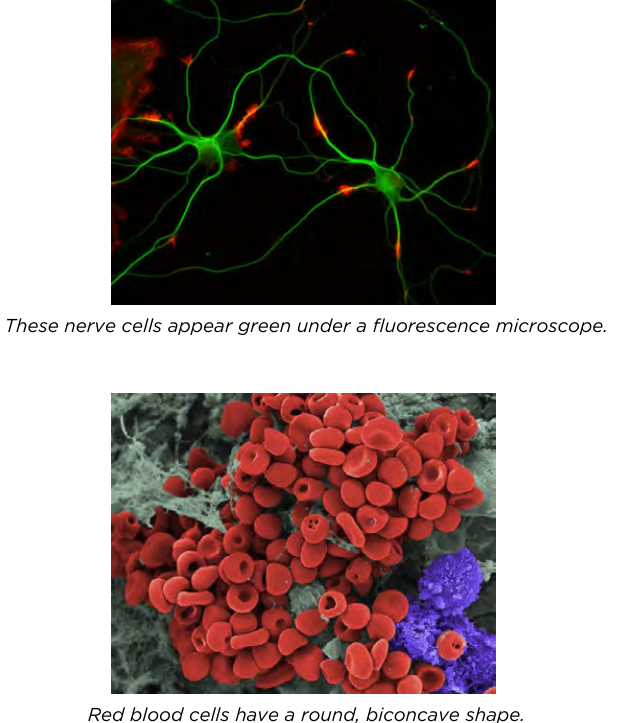
- Red blood cells have a biconcave shape to trap oxygen and have a large surface area for oxygen transfer.
- Nerve cells are long and stringy to form communication lines and send signals quickly.
- Skin cells are flat and fit tightly together to protect the body.
- A cell's function is partly based on its structure.
Red blood cells, neurons, and epidermal (skin) cells.
Unicellular vs Multicellular Organisms
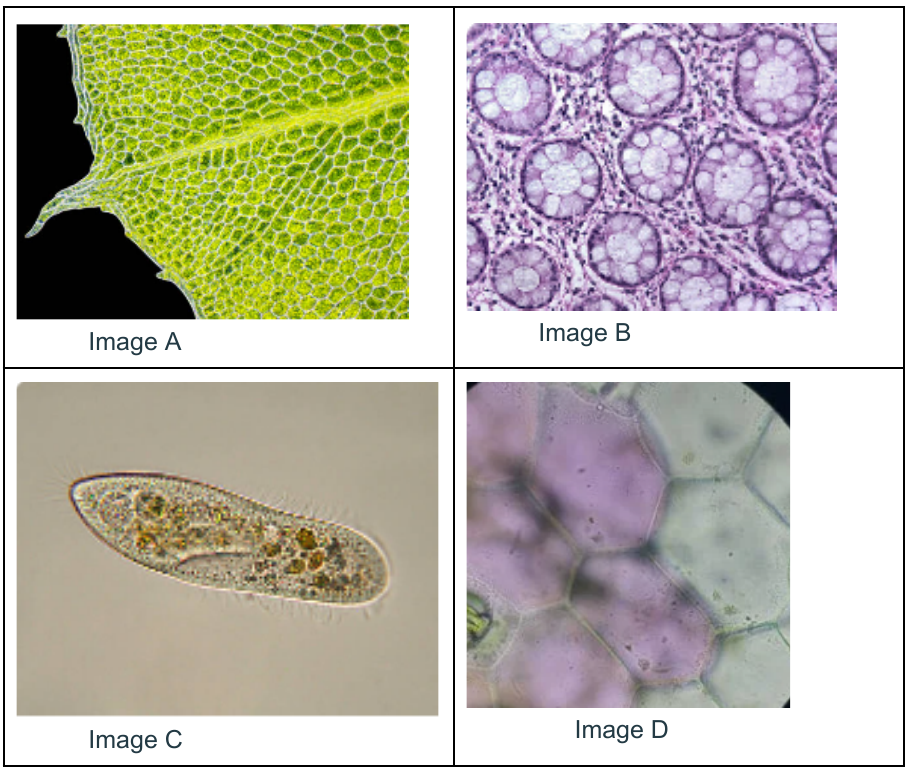
- Unicellular organisms (e.g., bacteria) consist of one cell that performs all life functions.
- Multicellular organisms are made of many cells, often trillions, that work together.
- Unicellular cells must perform metabolism, homeostasis, and reproduction on their own.
- Multicellular cells may collaborate with other cells to perform functions.
- Examples of multicellular organisms include protists (some), fungi, plants, and animals.
Unicellular and multicellular organisms under the microscope.
Plant vs Animal Cells
- Plant and animal cells are similar but have key differences.
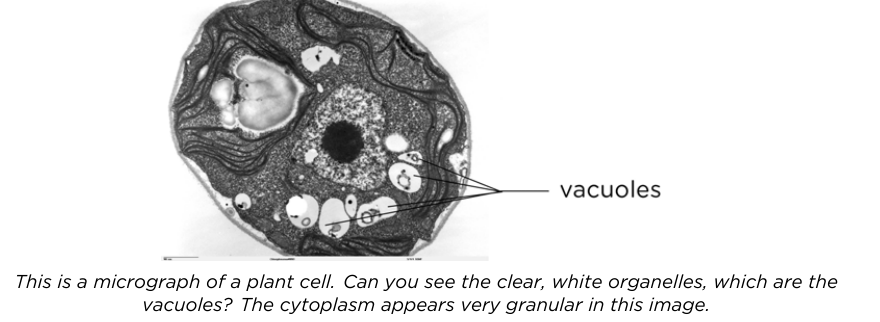
- Plant cells have vacuoles that are often large and central; animal cells have smaller vacuoles.
- Plant cells have chloroplasts for photosynthesis; animal cells do not.
- Plant cells have a cell wall outside the cell membrane; animal cells do not.
- Both have a nucleus, cytoplasm, cell membrane, and mitochondria.
A micrograph of a plant cell.
Levels of Organization
- In multicellular organisms, specialized cells group together to form tissues.
- Tissues work together to form organs.
- Organs work together in organ systems.
- Example: smooth muscle tissue contracts and enables movement; nerve cells send messages; red blood cells carry oxygen.
スライド
練習問題
無料プレビュー — 42問中8問。すべて見るには登録を。
1.What is the smallest structural and functional unit of an organism?
Easy- ACell
- BTissue
- COrgan
- DOrganism
2.Which scientist first observed cells in 1665 using a basic light microscope?
Easy- ARobert Hooke
- BRudolf Virchow
- CAntonie van Leeuwenhoek
- DCharles Darwin
3.Which of the following is a key component of the cell theory?
Easy- AAll cells come from non-living matter.
- BAll organisms are composed of cells.
- CCells can arise spontaneously.
- DOnly multicellular organisms are made of cells.
4.The cell membrane is selectively permeable, meaning it controls which substances enter and leave the cell.
EasyTrue or false?
5.Which structure in a cell contains the genetic material (DNA) and controls the cell's processes?
Easy- AMitochondrion
- BNucleus
- CVacuole
- DCytoplasm
6.Which of the following are components common to all cells? (Select all that apply)
Easy- ACell membrane
- BNucleus
- CCytoplasm
- DMitochondria
- EChloroplasts
7.Arrange the following in order from smallest to largest level of organization in a multicellular organism.
Easy- Cell
- Tissue
- Organ
- Organ system
8.Which type of cell would likely have more mitochondria?
Medium- AMuscle cell
- BSkin cell
- CBone cell
- DRed blood cell
過去問
このトピックの過去問練習は近日公開。
近日公開