Common atmospheric pollutants and their sources
플레이하며 배우기
이 문제들을 풀어 에너지를 얻은 뒤 낚시하고 탐험하세요. 계정이 필요 없어요.
교육자를 위해: Common atmospheric pollutants and their sources(Science, Chemistry)을(를) 위한 바로 쓸 수 있는 수업 슬라이드, 복습 노트 — 수업에 사용하거나, 학습자들이 실시간 게임으로 즐기는 인터랙티브 클래스 활동으로 진행하세요.
수업 노트
Fossil Fuels and Combustion
- Fossil fuels include coal, oil, natural gas, oil shales and tar sands.
- They are mainly hydrocarbons, containing carbon and hydrogen, and often small amounts of sulfur.
- Burning fossil fuels releases energy but also produces pollutants that harm the environment and health.
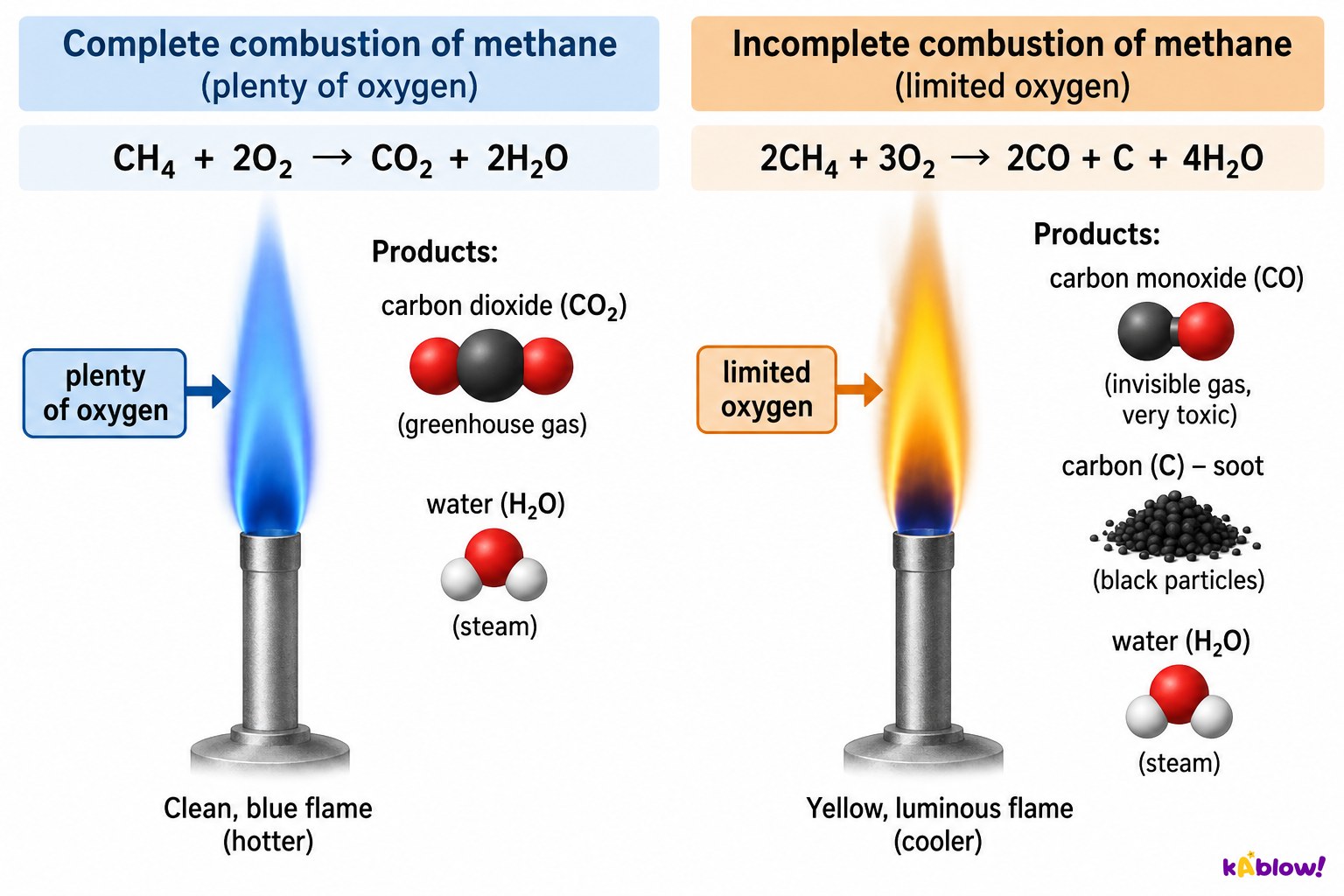
- Complete combustion occurs with plenty of oxygen: hydrocarbon + oxygen → carbon dioxide + water.
- Incomplete combustion occurs when oxygen is limited: hydrocarbon + oxygen → carbon monoxide + water.
- Incomplete combustion is common in engines and poorly ventilated stoves, especially with diesel or limited airflow.
Gases Released by Burning Fuels
- Carbon dioxide (CO₂) and water vapour (H₂O) are produced during complete combustion.
- Carbon monoxide (CO) is produced during incomplete combustion when oxygen is limited.
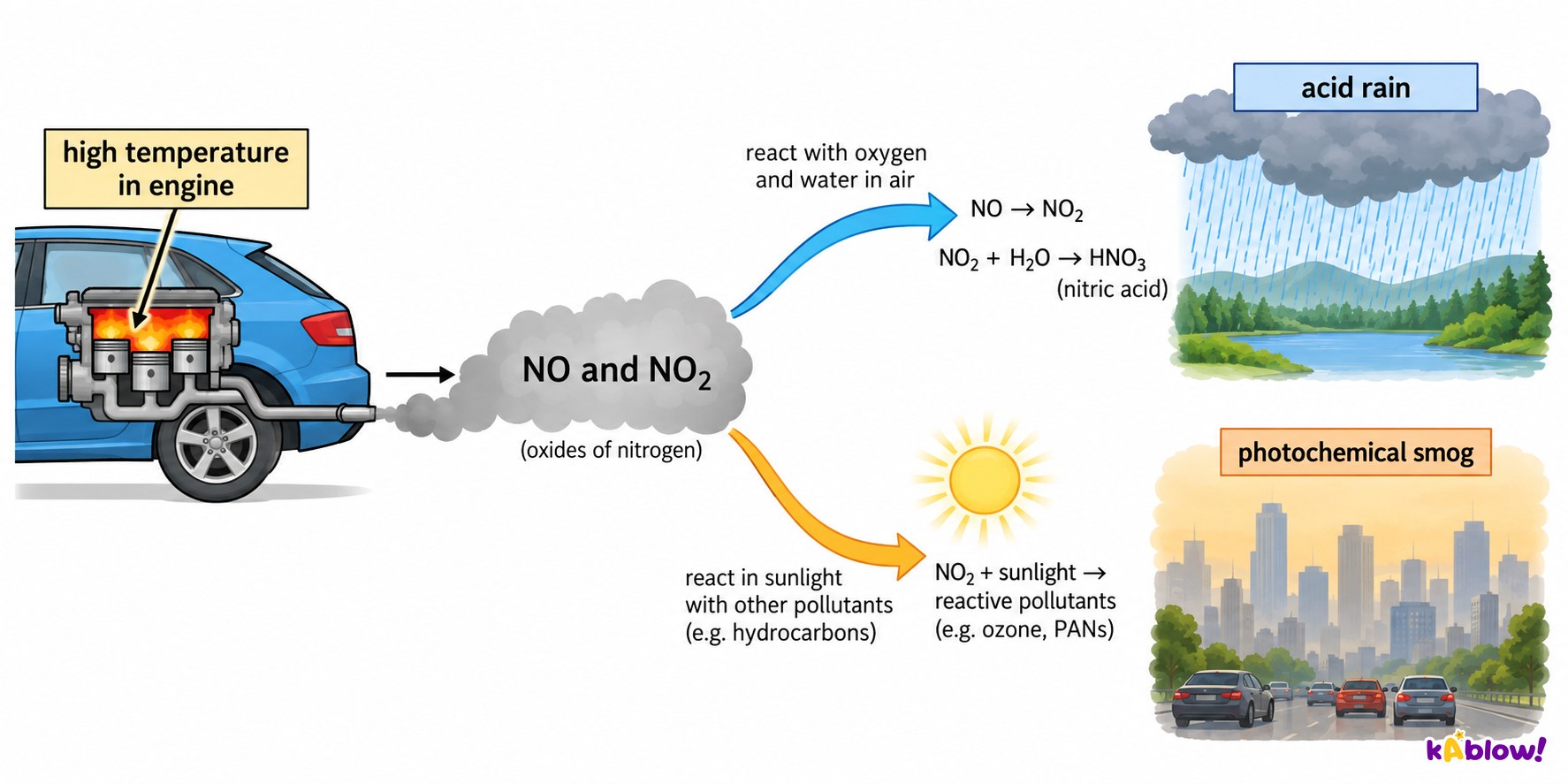
- Oxides of nitrogen (NO and NO₂) form from nitrogen and oxygen in the air at high temperatures in engines.
- Sulfur dioxide (SO₂) is produced from sulfur impurities in the fuel.
- Solid particles and unburned hydrocarbons can also be released, forming soot and contributing to particulate pollution.
Formation of Carbon Monoxide and Soot
- Carbon monoxide forms when fuels burn with limited oxygen; carbon is only partially oxidised.
- Example: 2CH₄ + 3O₂ → 2CO + 4H₂O.
- Soot (carbon particles) forms when there is very little oxygen, causing hydrocarbons to break down without fully combusting.
- Soot appears as tiny solid carbon particles, often seen as black smoke.
- Soot is common in diesel engines and open flames.
- Example: C₈H₁₈ + 8½O₂ → 8C (soot) + 9H₂O.
Combustion Comparison
Formation of Sulfur Dioxide and Oxides of Nitrogen
- Sulfur dioxide forms when sulfur impurities in fuel react with oxygen during combustion.
- Example: S + O₂ → SO₂.
- Oxides of nitrogen form when nitrogen and oxygen from the air react at high temperatures, such as in car engines and power stations.
- These reactions do not happen during normal combustion but occur due to the extreme heat.
- Example: N₂ + O₂ → 2NO, then 2NO + O₂ → 2NO₂.
Nitrogen Oxides
Properties and Effects of Carbon Monoxide
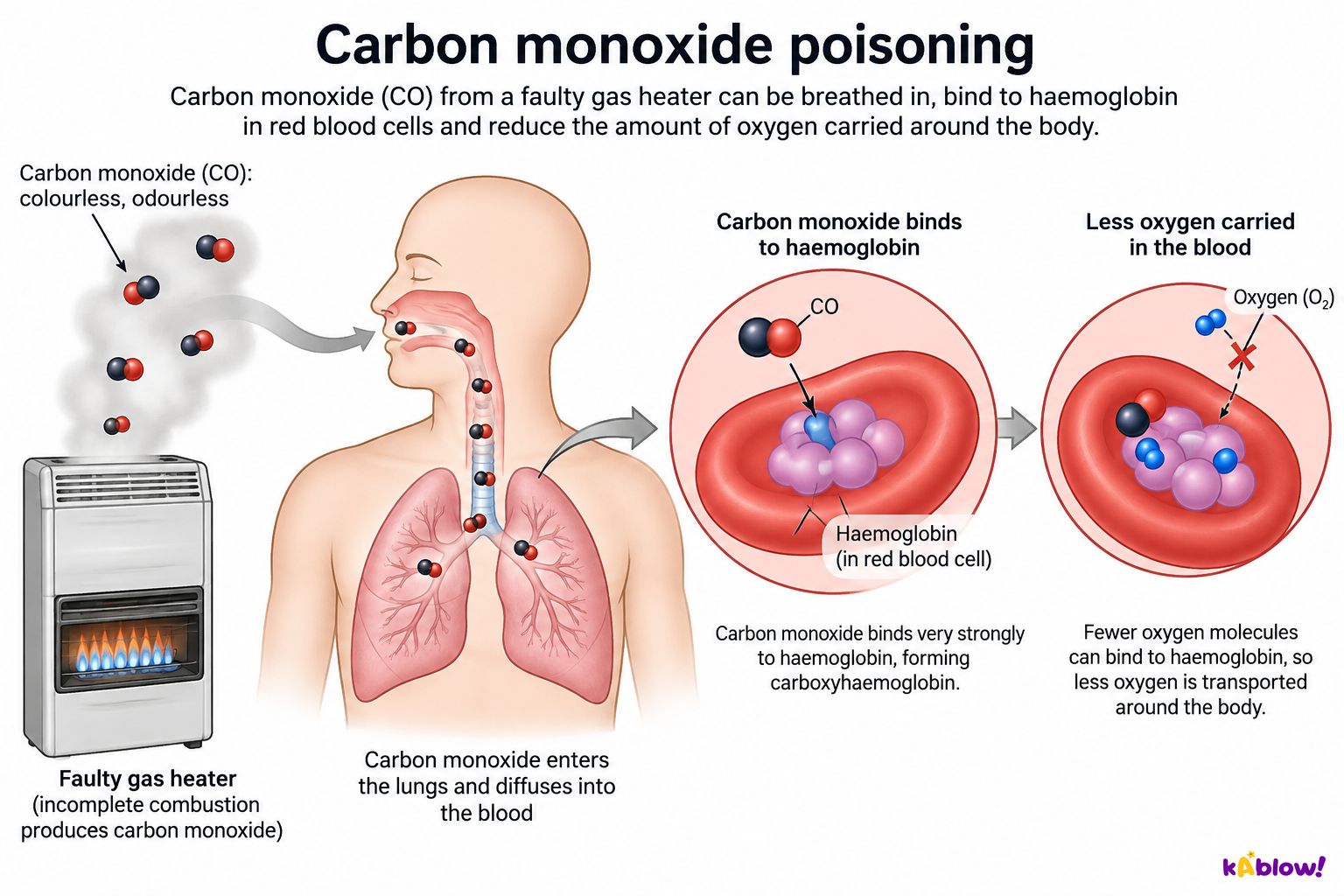
- Carbon monoxide is an extremely poisonous gas.
- It combines with haemoglobin in blood and prevents it from carrying oxygen.
- It is particularly dangerous because it is colourless and odourless, making it difficult to detect.
- A lack of oxygen supply to the brain can lead to fainting, coma or death.
- Carbon monoxide detectors are needed in homes to detect this gas.
Carbon Monoxide
Properties and Effects of Particulates
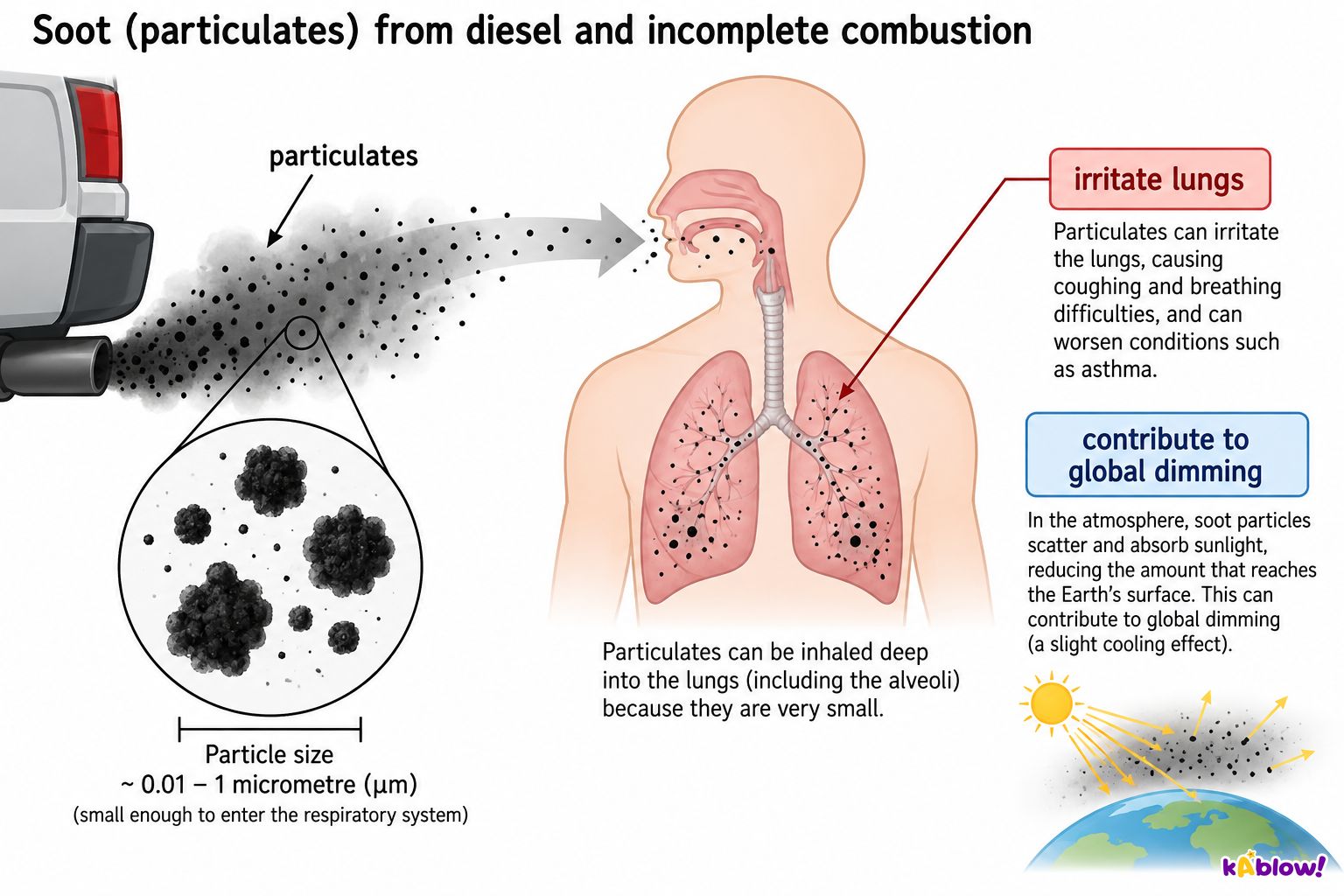
- Solid carbon particles (particulates) released from incomplete combustion clump together to form soot which gradually falls back to the ground.
- If inhaled, particulates can damage the lungs and cause respiratory problems.
- They can cover buildings and statues, making them look unclean and accelerating corrosion.
- They can reflect sunlight back into space, reducing the amount of light reaching the Earth; this is called global dimming.
- Statues and monuments in very polluted areas become blackened over time from soot.
Particulates
Properties and Effects of Sulfur Dioxide
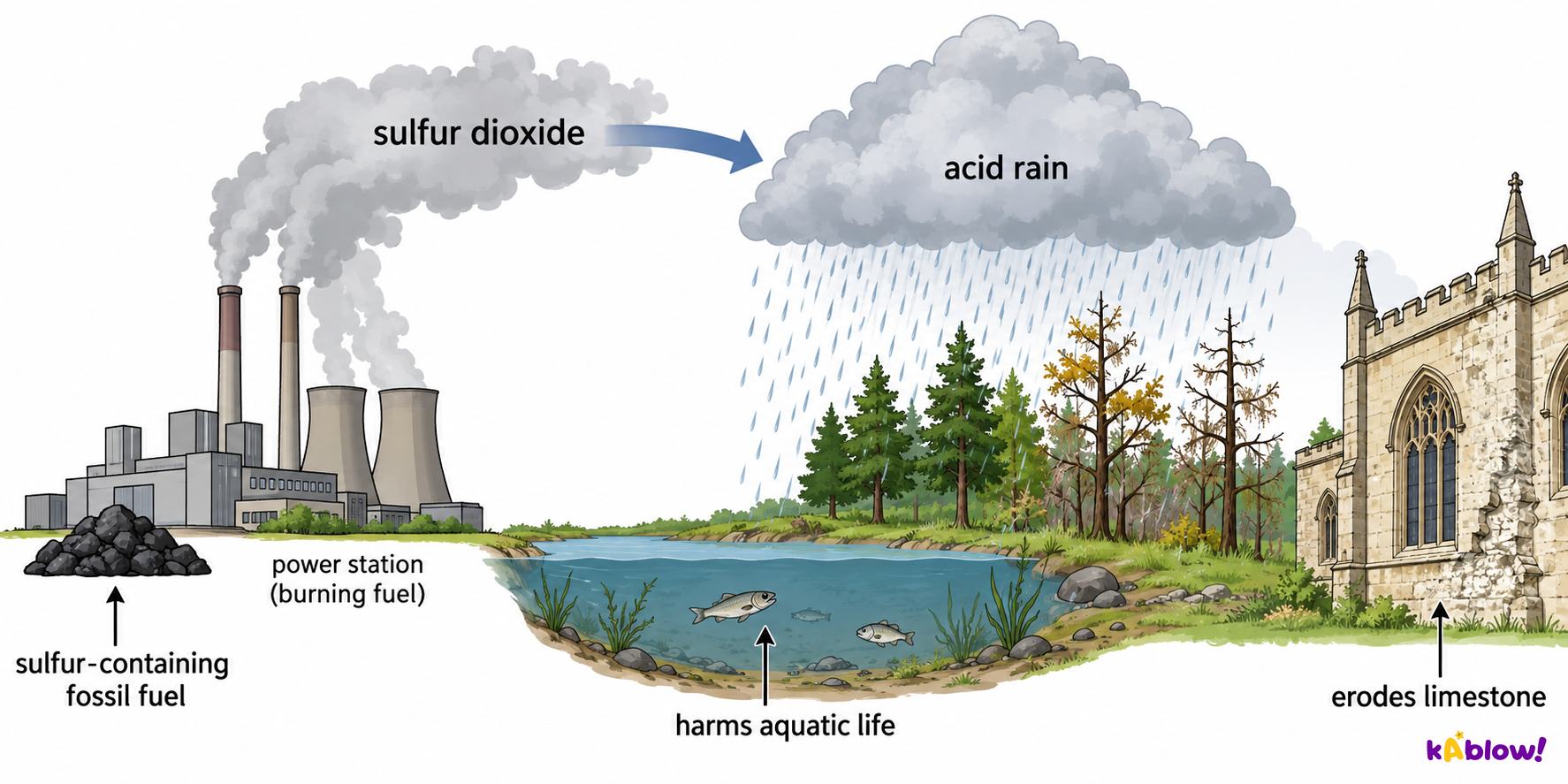
- Sulfur dioxide is a colourless, pungent smelling gas that is a major air pollutant responsible for acid rain.
- It mixes with clouds and readily dissolves in rainwater.
- SO₂ is a non-metal oxide, so it forms an acidic solution in water, forming acid rain (H₂SO₄).
- Acid rain causes corrosion to metal structures, buildings and statues made of carbonate rocks.
- It causes damage to aquatic organisms, pollutes crops and water supplies, and irritates lungs, throats and eyes.
Sulfur Dioxide
Properties and Effects of Oxides of Nitrogen
- Oxides of nitrogen come largely from vehicle exhausts and also contribute to acid rain.
- They are produced when nitrogen and oxygen react at high temperatures reached in a vehicle engine.
- Aside from acid rain, oxides of nitrogen produce photochemical smog.
- They cause breathing difficulties, in particular for people suffering from asthma.
Nitrogen Oxides
Distinguishing Pollutants and Their Effects
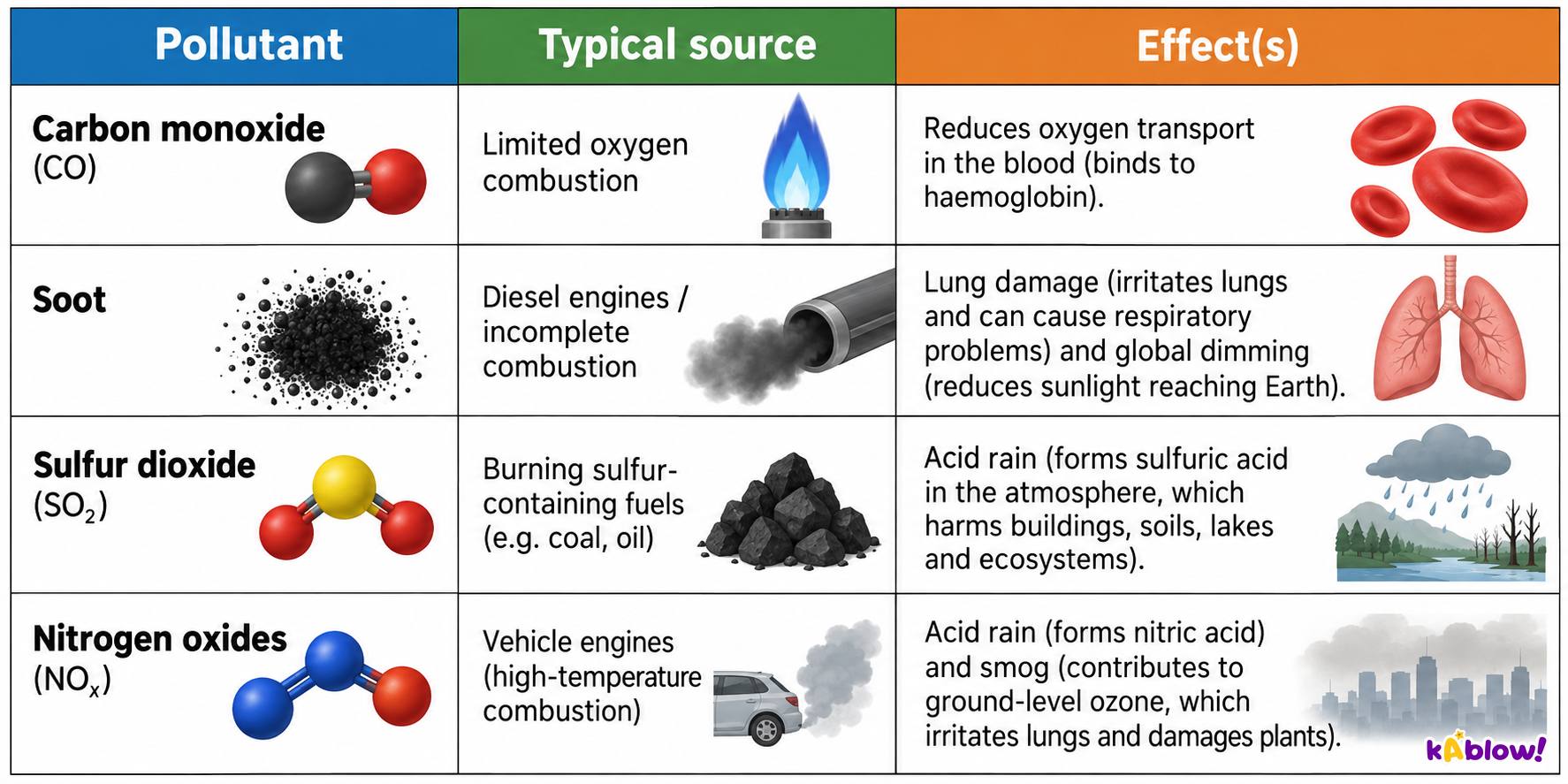
- Greenhouse gases and atmospheric pollutants are not the same thing.
- A greenhouse gas causes global warming, whereas a pollutant is something not found in clean air and causes problems close to the ground such as smog and breathing difficulties.
- Carbon dioxide is linked to global warming.
- Sulfur dioxide and oxides of nitrogen cause acid rain and respiratory problems.
- Particulates cause global dimming and health problems.
- Carbon monoxide is toxic.
Summary
슬라이드
연습 문제
무료 미리 보기 — 59개 중 8개 문제. 가입하면 전부 볼 수 있어요.
1.Which gas is produced during the complete combustion of a hydrocarbon fuel?
Easy- ACarbon monoxide
- BCarbon dioxide
- CSulfur dioxide
- DOxides of nitrogen
2.Which gas is produced during the incomplete combustion of a hydrocarbon fuel?
Medium- ACarbon dioxide
- BCarbon monoxide
- CSulfur dioxide
- DNitrogen
3.Which pollutant is formed when nitrogen and oxygen from the air react at the high temperatures inside a car engine?
Medium- ASulfur dioxide
- BCarbon monoxide
- COxides of nitrogen
- DCarbon dioxide
4.Sulfur dioxide is produced when a fossil fuel is burned. Where does the sulfur in this pollutant come from?
Medium- AFrom nitrogen in the air
- BFrom sulfur impurities in the fuel
- CFrom oxygen in the air
- DFrom water vapour in the air
5.Which property of carbon monoxide makes it difficult to detect in a home?
Medium- AIt is acidic
- BIt is colourless and odourless
- CIt is alkaline
- DIt is a particulate
6.Which pollutant causes global dimming by reflecting sunlight back into space?
Medium- ACarbon monoxide
- BSulfur dioxide
- CParticulates
- DOxides of nitrogen
7.Which gas dissolves in rainwater to form sulfuric acid, a major cause of acid rain?
Medium- ACarbon dioxide
- BCarbon monoxide
- CSulfur dioxide
- DMethane
8.Which of the following is the correct effect of carbon monoxide on health?
Medium- AIt causes global warming
- BIt combines with haemoglobin and prevents blood carrying oxygen
- CIt causes acid rain
- DIt causes global dimming
기출 문제
이 주제의 기출 문제 연습이 곧 나와요.
곧 출시