Identification of common gases
플레이하며 배우기
이 문제들을 풀어 에너지를 얻은 뒤 낚시하고 탐험하세요. 계정이 필요 없어요.
교육자를 위해: Identification of common gases(Science, Chemistry)을(를) 위한 바로 쓸 수 있는 수업 슬라이드, 복습 노트 — 수업에 사용하거나, 학습자들이 실시간 게임으로 즐기는 인터랙티브 클래스 활동으로 진행하세요.
수업 노트
Introduction to Gas Tests
- Each common gas has a specific test with a positive result that identifies it.
- You need to know the tests for hydrogen, oxygen, carbon dioxide, and chlorine.
- The tests rely on characteristic properties: burning, relighting, cloudiness, or bleaching.
- Always use the correct splint or reagent as described for each gas.
Testing for hydrogen gas
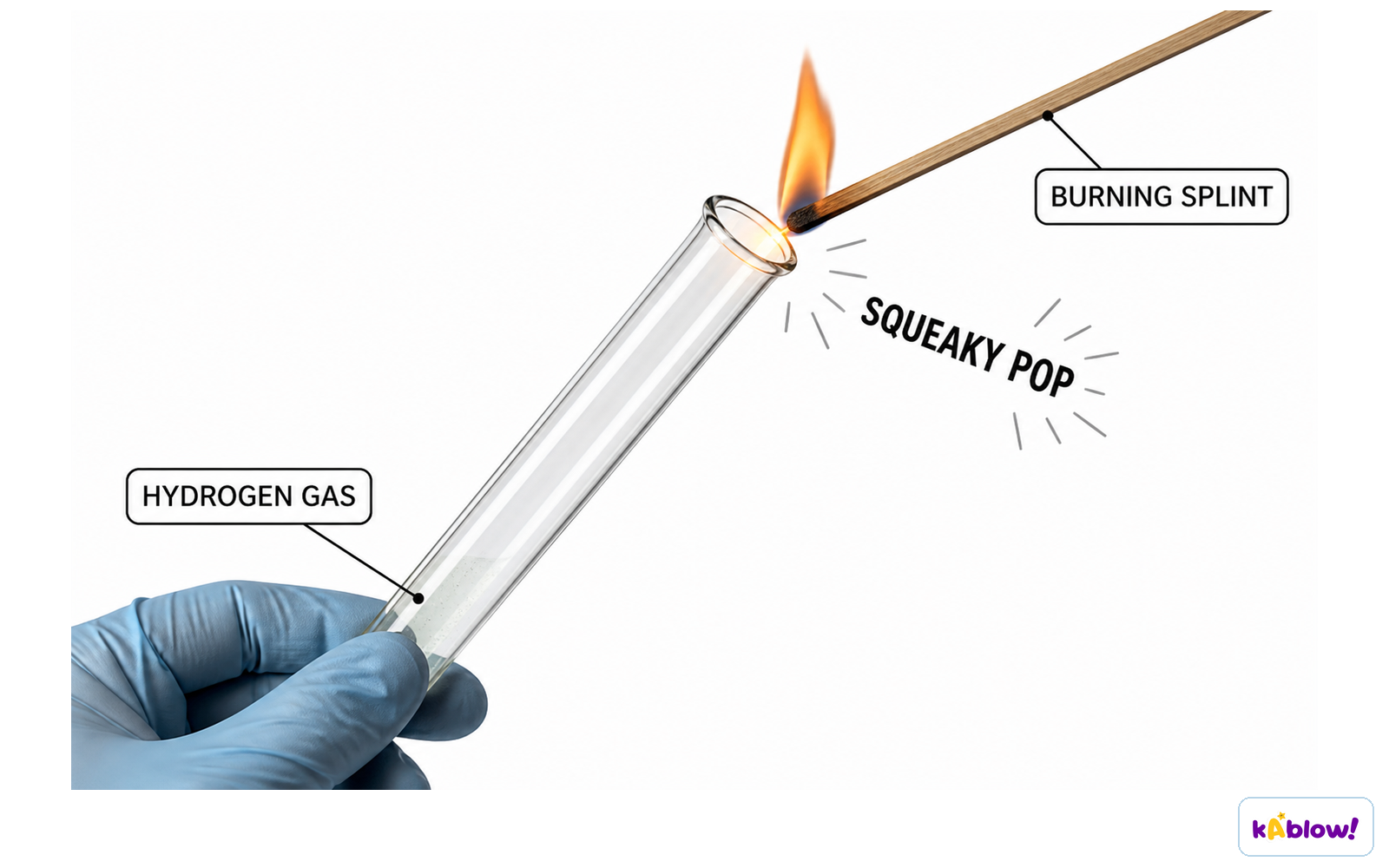
Test for Hydrogen
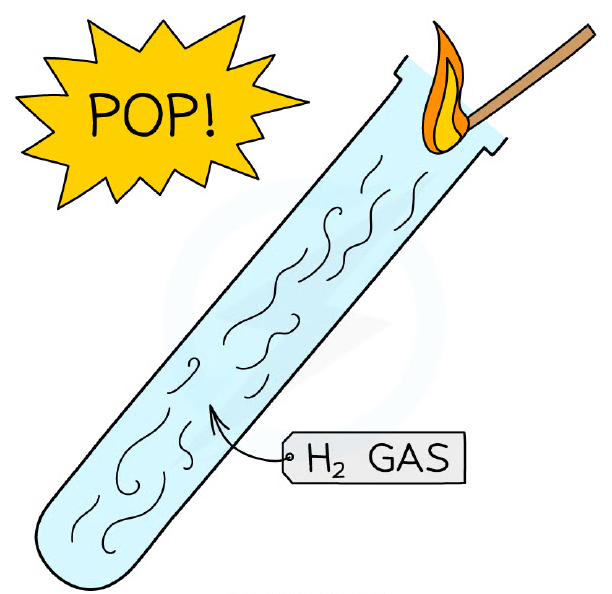
- Use a burning splint held at the open end of a test tube containing the gas.
- If hydrogen is present, a squeaky pop sound is heard.
- The pop is caused by the rapid combustion of hydrogen with oxygen to produce water.
- Do not insert the splint into the tube; hold it at the mouth so air can mix with the gas.
Testing for hydrogen gas
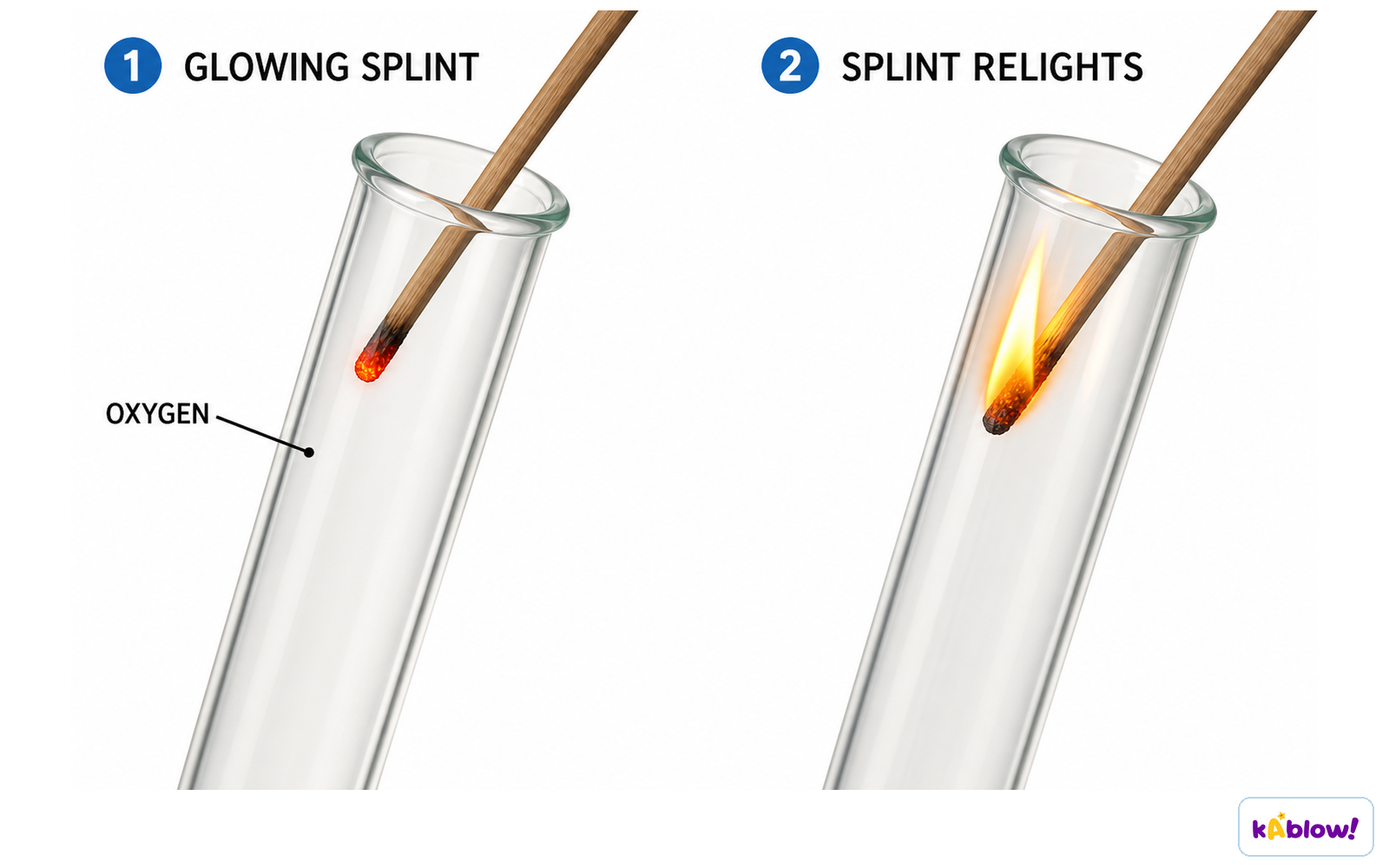
Test for Oxygen
- Use a glowing splint and place it inside a test tube of the gas.
- If oxygen is present, the splint relights.
- Sometimes the splint may not relight but glows very brightly; this is also a positive result.
- In exams, state that the glowing splint relights.
Testing for oxygen gas
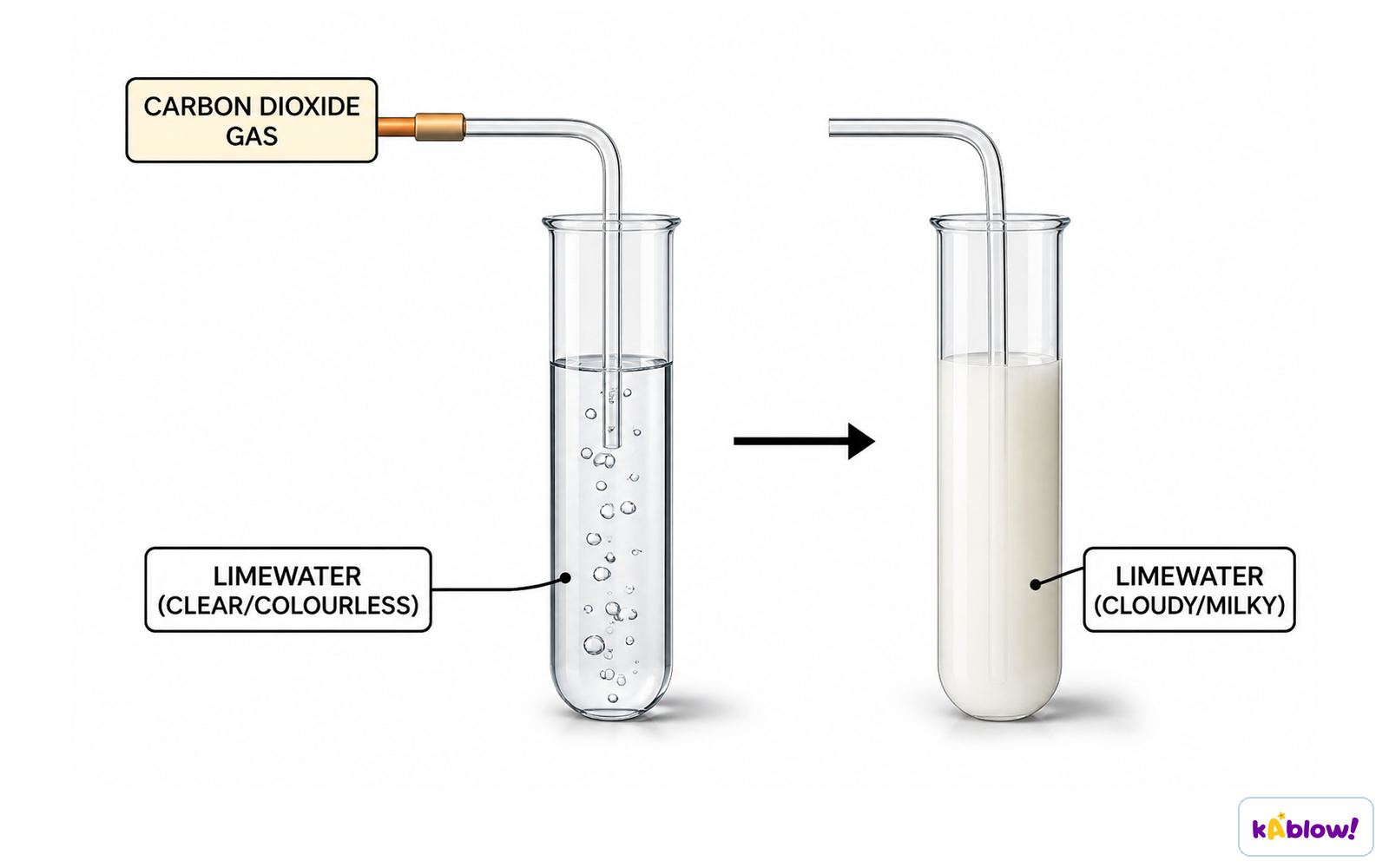
Test for Carbon Dioxide
- Bubble the gas through limewater (an aqueous solution of calcium hydroxide).
- If carbon dioxide is present, the limewater turns milky or cloudy.
- Do not say the limewater turns white; use 'milky' or 'cloudy'.
- Extinguishing a burning splint is not a definitive test for carbon dioxide because other gases can also do this.
Testing for carbon dioxide gas
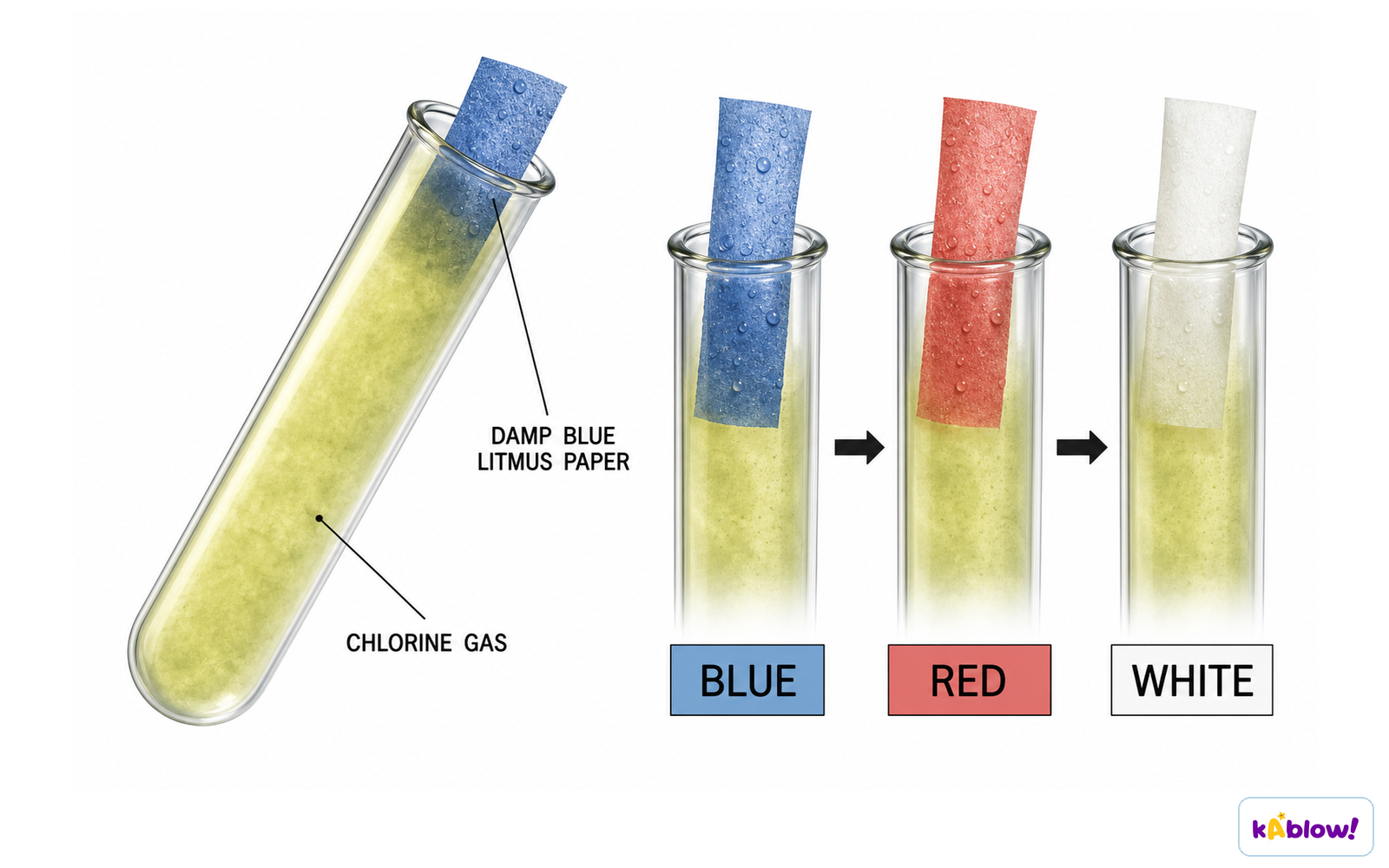
Test for Chlorine
- Use damp blue litmus paper.
- If chlorine is present, the litmus paper turns red then is bleached white.
- The red colour is due to acids produced when chlorine reacts with water.
- Chlorine has a sharp, choking smell, but smell is not a valid test.
- Always handle chlorine in a fume cupboard due to its toxicity.
Testing for chlorine gas
Distinguishing Between Tests
- Remember: ligHted splint for Hydrogen, glOwing splint for Oxygen.
- Limewater is only for carbon dioxide; it turns milky.
- Chlorine bleaches damp litmus paper; it does not just turn it red.
- The litmus paper must be damp, not dry, for the chlorine test.
Common Mistakes to Avoid
- Confusing the tests for hydrogen and oxygen.
- Saying limewater turns cloudy for any gas; it is specific to carbon dioxide.
- Forgetting that chlorine bleaches the litmus paper white after turning it red.
- Using dry litmus paper instead of damp for the chlorine test.
- Describing limewater as turning white instead of milky or cloudy.
Exam Tips
- Learn the exact observations: squeaky pop, relights, milky, bleached white.
- When describing a test, include both the method and the positive result.
- For chlorine, mention that damp litmus paper is bleached.
- For carbon dioxide, state that limewater turns milky or cloudy.
- For hydrogen, specify a burning splint and a squeaky pop.
- For oxygen, specify a glowing splint and that it relights.
슬라이드
연습 문제
무료 미리 보기 — 59개 중 8개 문제. 가입하면 전부 볼 수 있어요.
1.Which gas relights a glowing splint?
Easy- AOxygen
- BHydrogen
- CCarbon dioxide
- DChlorine
2.Which test is used to identify carbon dioxide gas?
Easy- ABubble the gas through limewater and see if it turns milky.
- BHold a burning splint at the mouth of the test tube and listen for a pop.
- CInsert a glowing splint into the gas and see if it relights.
- DHold damp blue litmus paper in the gas and see if it is bleached.
3.A burning splint held at the open end of a test tube of hydrogen gas produces a loud 'squeaky pop'.
EasyTrue or false?
4.Damp blue litmus paper turns red and then is bleached white in chlorine gas.
EasyTrue or false?
5.Which observation is the positive result for the test for chlorine gas?
Medium- ADamp blue litmus paper is bleached white.
- BA glowing splint relights.
- CA burning splint gives a squeaky pop.
- DLimewater turns cloudy.
6.Which statement is a property of carbon dioxide rather than a definitive test for it?
Medium- AIt extinguishes a burning splint.
- BIt turns limewater milky.
- CIt bleaches damp litmus paper.
- DIt relights a glowing splint.
7.Which of the following are correct tests and positive results for gases? (select all that apply)
Medium- AHydrogen: burning splint gives a squeaky pop.
- BOxygen: glowing splint relights.
- CCarbon dioxide: limewater turns milky.
- DChlorine: burning splint gives a squeaky pop.
- EOxygen: burning splint gives a squeaky pop.
8.Place the steps for testing an unknown gas with damp litmus paper in the correct order.
Medium- Hold the damp litmus paper in the gas.
- Observe any colour change.
- State whether the litmus is bleached white.
기출 문제
이 주제의 기출 문제 연습이 곧 나와요.
곧 출시