Exothermic and endothermic reactions
플레이하며 배우기
이 문제들을 풀어 에너지를 얻은 뒤 낚시하고 탐험하세요. 계정이 필요 없어요.
교육자를 위해: Exothermic and endothermic reactions(MYP Chemistry, Year 2)을(를) 위한 바로 쓸 수 있는 수업 슬라이드, 복습 노트 — 수업에 사용하거나, 학습자들이 실시간 게임으로 즐기는 인터랙티브 클래스 활동으로 진행하세요.
수업 노트
Big idea: energy in chemical reactions
- Big idea (key concept): Change. Every chemical reaction changes the substances and also changes where energy is stored. Chemists measure these energy changes to decide which reactions are useful.
- Related concept: Energy. Energy cannot be made or destroyed. In a reaction it is transferred between the chemicals and their surroundings.
- Global context: Globalization and sustainability. The fuels that power the world, from petrol to wood, release energy through reactions. Understanding them helps us choose energy sources wisely.
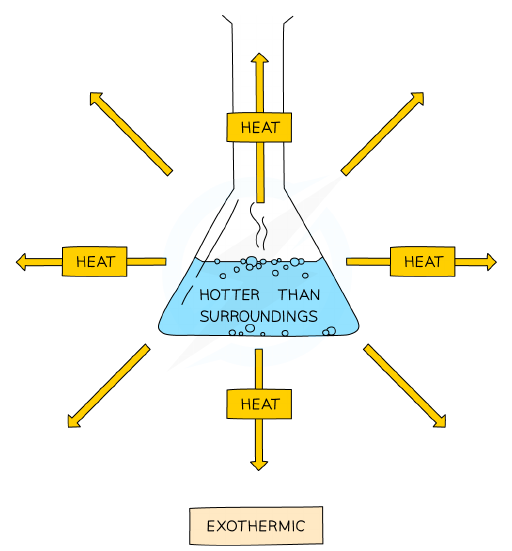
- In an exothermic reaction energy is transferred out to the surroundings. The surroundings get warmer, so a thermometer shows a temperature rise.
- Examples of exothermic reactions: burning fuels (combustion), neutralisation of an acid by an alkali, respiration in your cells, and metals such as magnesium reacting with acid.
- Word equation: methane + oxygen → carbon dioxide + water. Symbol equation: CH₄ + 2O₂ → CO₂ + 2H₂O. This reaction gives out a lot of heat, which is why it is used for cooking and heating.
Heat leaving a flask in an exothermic reaction
Endothermic reactions: energy in
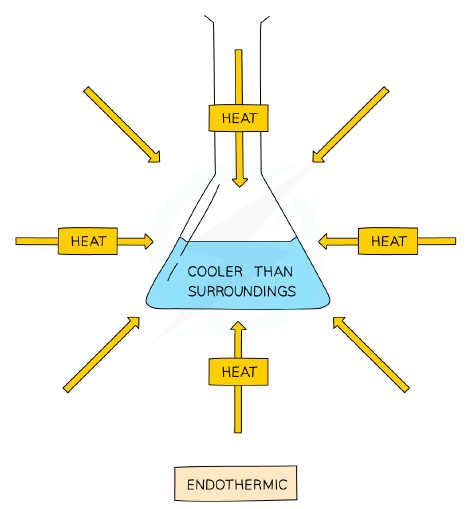
- In an endothermic reaction energy is taken in from the surroundings. The surroundings get colder, so a thermometer shows a temperature fall.
- Examples: thermal decomposition (heat breaking a compound down), photosynthesis (plants take in light energy), and citric acid reacting with sodium hydrogencarbonate, which makes the mixture cold.
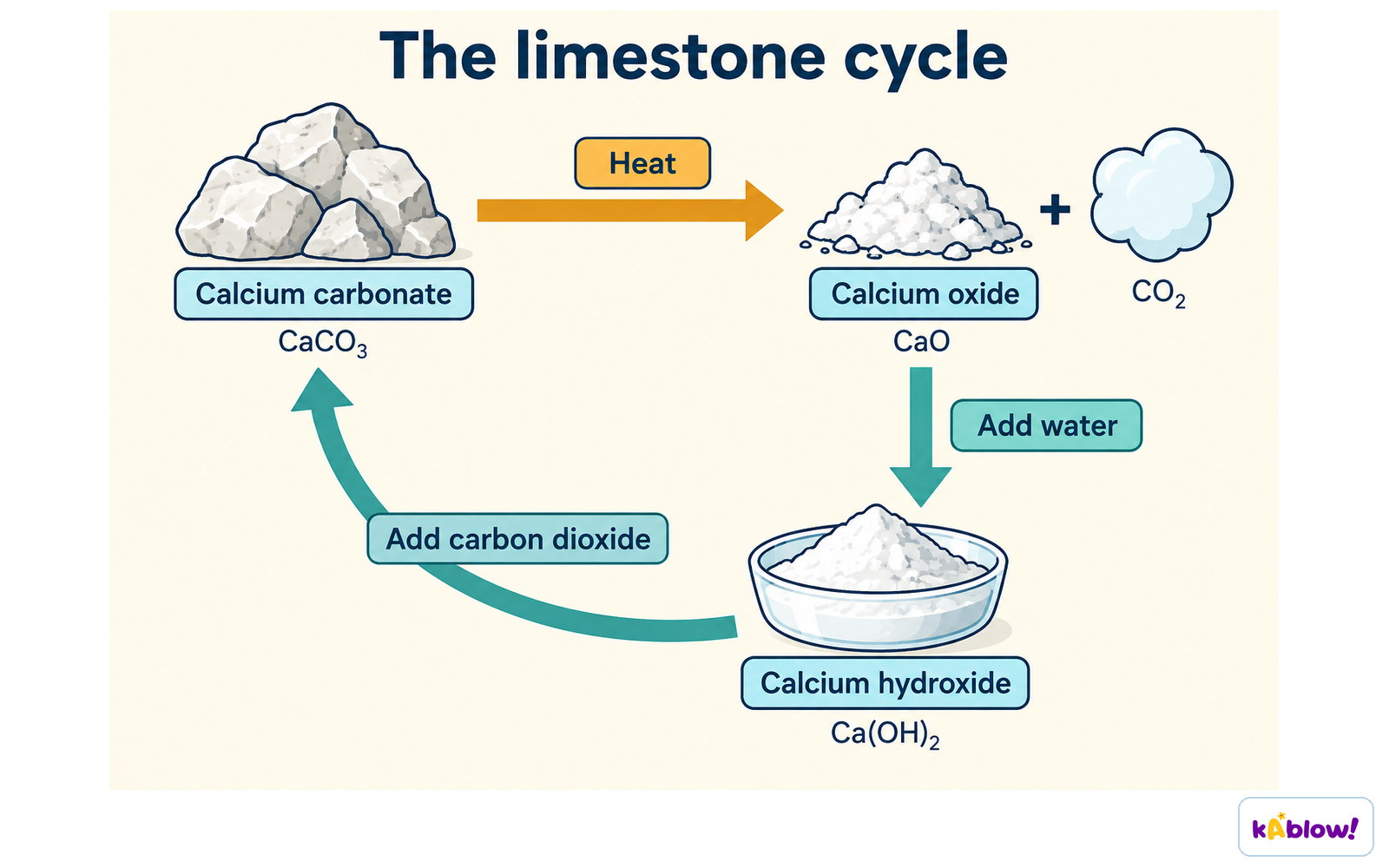
- Word equation: calcium carbonate → calcium oxide + carbon dioxide. Symbol equation: CaCO₃ → CaO + CO₂. The reaction only keeps going while heating continues.
- A flask in which an endothermic reaction is happening feels cold because energy flows from your warm hand into the flask. Your hand has not become colder by itself; it has lost energy.
- Remember: exo means out (like the exit sign) and endo means in. The words describe where the energy goes, not whether the reaction is fast or slow.
- Temperature change = end temperature − start temperature. A positive number is a rise (exothermic). A negative number is a fall (endothermic).
Heat entering a flask in an endothermic reaction
Energy-level diagrams
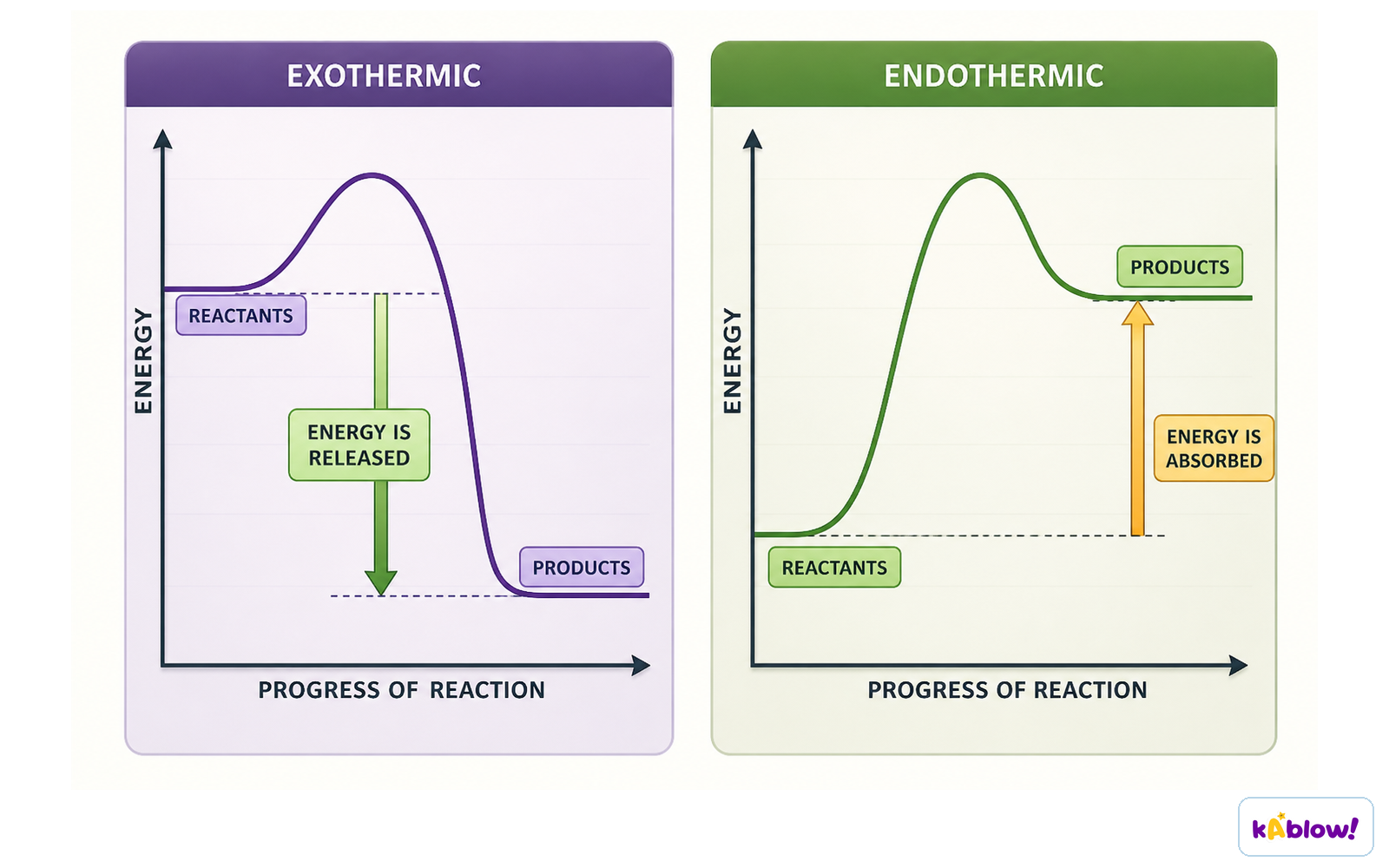
- An energy-level diagram shows the energy of the reactants and the products. The vertical axis is energy and the horizontal axis is the progress of the reaction.
- In an exothermic reaction the products are lower than the reactants. The difference in energy is given out to the surroundings.
- In an endothermic reaction the products are higher than the reactants. The difference in energy is taken in from the surroundings.
- Both kinds of diagram show a hump between reactants and products. The hump is the energy needed to get the reaction started, called the activation energy.
- That is why a gas fire, which is exothermic, still needs a spark. The spark supplies the energy to start, and the reaction then gives out more than it took in.
- Energy is conserved. The energy lost by the chemicals in an exothermic reaction is the energy gained by the surroundings.
Energy-level diagrams for the two kinds of reaction
Why? Breaking and making bonds
- Atoms in molecules are held together by chemical bonds. In a reaction the bonds in the reactants are broken and new bonds form in the products.
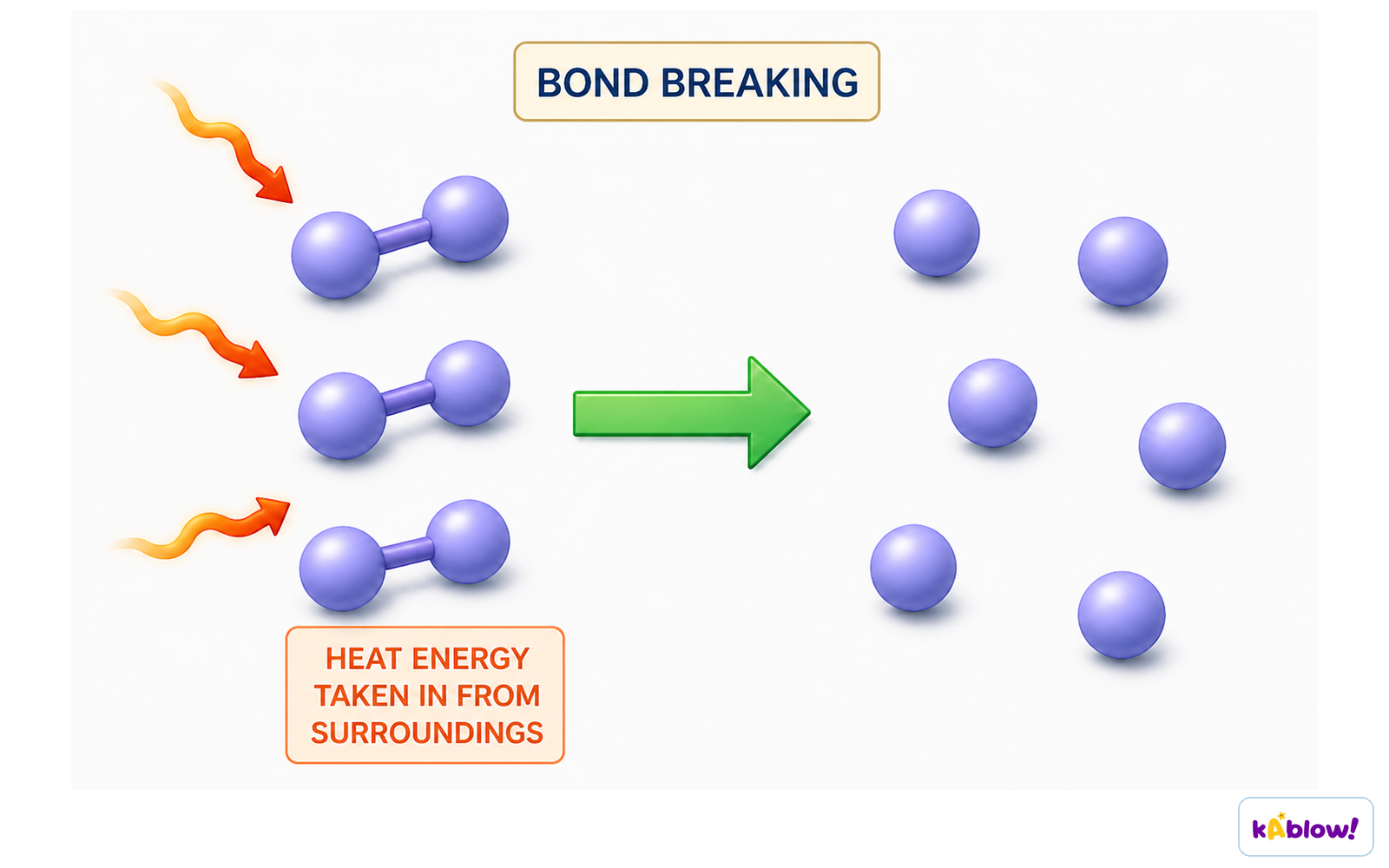
- Breaking bonds takes in energy. The atoms have to be pulled apart, and the energy comes from the surroundings.
- Making bonds gives out energy. When atoms join, energy is released to the surroundings as heat.
- If more energy is released making bonds than is taken in breaking them, the reaction is exothermic.
- If more energy is taken in breaking bonds than is released making new ones, the reaction is endothermic.
- Made-up example: breaking bonds takes in 1000 kJ and making bonds gives out 1300 kJ. The difference is 1300 − 1000 = 300 kJ released, so the reaction is exothermic.
Molecules splitting into atoms by taking in heat
Examples you meet every day
- Combustion is exothermic. Fuel + oxygen → carbon dioxide + water, giving out heat and light. Teachers run these demonstrations with safety equipment.
- Neutralisation is exothermic: hydrochloric acid + sodium hydroxide → sodium chloride + water. HCl + NaOH → NaCl + H₂O. The mixture warms up a little.
- Disposable hand warmers contain iron powder. When the packet is opened, iron reacts with oxygen from the air: iron + oxygen → iron oxide, and energy is given out.
- Thermal decomposition is endothermic. Heating limestone (calcium carbonate) makes quicklime (calcium oxide) and carbon dioxide. It needs a lot of heat, which is why lime kilns burn fuel.
- Photosynthesis is endothermic: carbon dioxide + water → glucose + oxygen, using light energy. 6CO₂ + 6H₂O → C₆H₁₂O₆ + 6O₂.
- Stay safe: hot and cold reactions are teacher-run or follow school rules. Wear eye protection, never touch or taste a reacting mixture, and never try heating chemicals at home.
Heating limestone to make quicklime and carbon dioxide
Think like a scientist: measuring energy changes
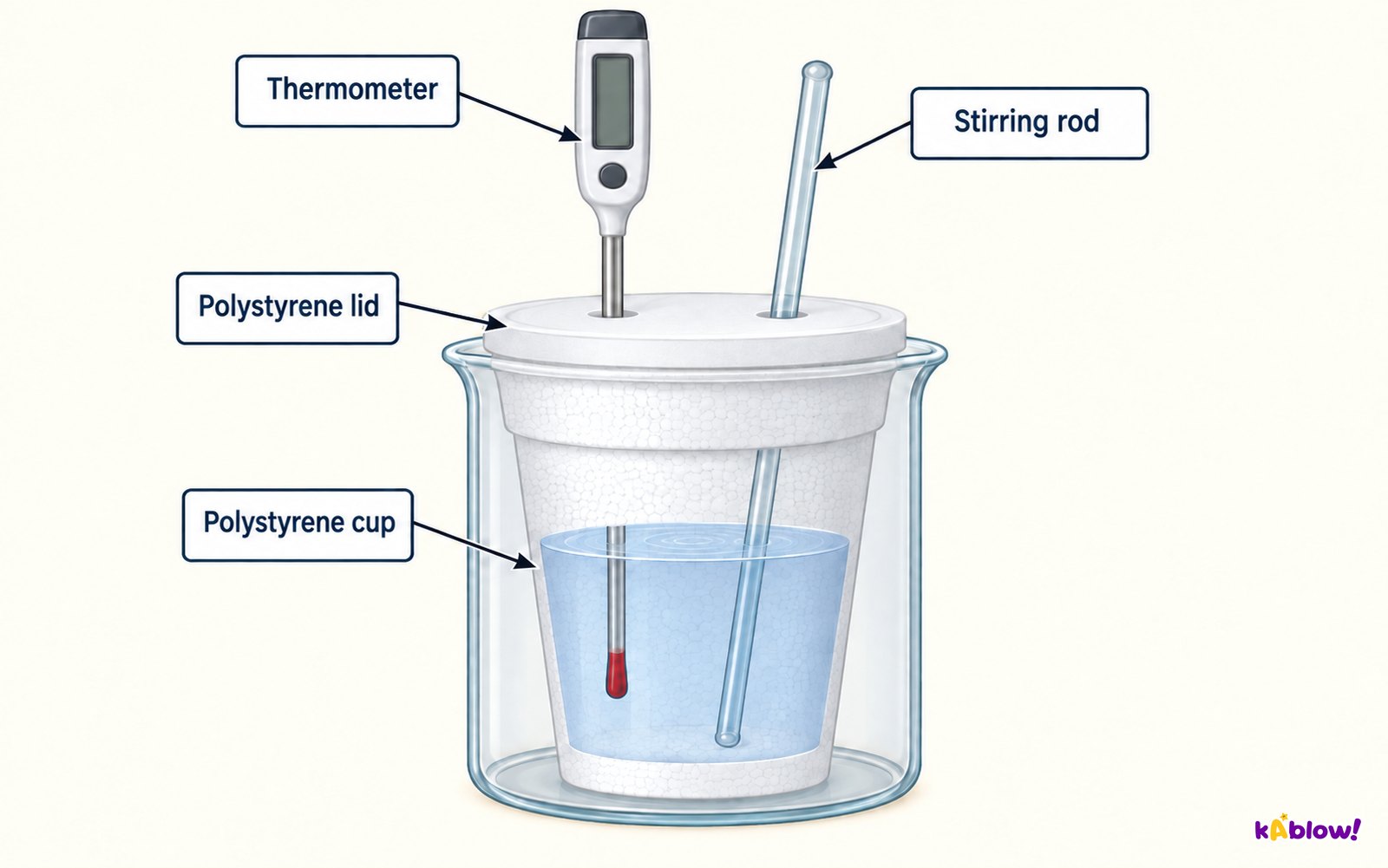
- Question: does the amount of magnesium ribbon change how much a fixed amount of acid warms up? A teacher runs the reaction in a polystyrene cup with a lid.
- The independent variable is the one you change: the length of magnesium ribbon, for example 1, 2, 3 and 4 cm.
- The dependent variable is the one you measure: the highest temperature reached. Work out the temperature rise = highest temperature − start temperature.
- For a fair test keep the same: the volume and concentration of acid, the start temperature, the cup and lid, and how you stir.
- Repeat each length three times and take a mean. This makes the results more reliable. Plot the temperature rise against the length of ribbon.
- Inquiry task: plan a fair test to compare how much three different metals warm the same acid. Say what you change, what you measure, three things you control and how you would make the results reliable. Then evaluate: list two ways energy could be lost to the surroundings and how to reduce each loss.
A polystyrene-cup calorimeter
슬라이드
연습 문제
무료 미리 보기 — 55개 중 8개 문제. 가입하면 전부 볼 수 있어요.
1.What is an exothermic reaction?
Easy- AA reaction that makes no new substances
- BA reaction that takes in energy from the surroundings
- CA reaction that gives out energy to the surroundings
- DA reaction that only happens when ice is present
2.What is an endothermic reaction?
Easy- AA reaction that takes in energy from the surroundings
- BA reaction that cannot be reversed
- CA reaction that gives out energy to the surroundings
- DA reaction that happens only at high temperatures
3.In an exothermic reaction the temperature of the surroundings goes up.
EasyTrue or false?
4.An endothermic reaction gives out energy to its surroundings.
EasyTrue or false?
5.Which of these is an exothermic reaction?
Easy- AIce melting
- BPhotosynthesis in a leaf
- CHeating limestone strongly to break it down
- DA candle burning
6.A disposable hand warmer gets warm when the packet is opened and air reaches the iron powder. What type of reaction is this?
Easy- AEndothermic
- BExothermic
- CNeither, because nothing is made
- DA physical change only
7.Complete the sentence.
EasyA reaction that takes in energy from its surroundings is called ____.
8.Complete the sentence.
EasyA reaction that gives out energy to its surroundings is called ____.
기출 문제
이 주제의 기출 문제 연습이 곧 나와요.
곧 출시