Diversity Of Organisms
플레이하며 배우기
이 문제들을 풀어 에너지를 얻은 뒤 낚시하고 탐험하세요. 계정이 필요 없어요.
수업 노트
Variation Between Organisms
- Variation refers to the differences that exist between organisms.
- Variation can be seen in visual appearance (e.g. fur colour), behaviour (e.g. mating rituals), and biochemistry (e.g. antibiotic resistance).
- Variation arises from a combination of genetic and environmental factors.
- Genetic variation is generated by mutation and by the combination of alleles during sexual reproduction.
- The environment can affect gene expression, e.g. through temperature, nutrient availability, and oxygen concentration.
- Variation exists both between species and within a species; no two individuals are identical when all characteristics are compared.
- Variation can be discontinuous (distinct categories, e.g. blood type) or continuous (measured on a scale, e.g. height).
Species Classification and the Binomial System
- Classification is the process of putting organisms into groups; the science of classification is taxonomy.
- The smallest taxonomic group is the species.
- Historically, species were classified by morphology (observable characteristics) – the morphological species concept.
- Carl Linnaeus developed the binomial naming system, giving species two-part Latin names (genus + species), e.g.×Canis lupus×.
- In binomial names, the genus starts with a capital letter and the species with a lower-case letter; names are italicised when typed or underlined when handwritten.
- After first use, the genus name can be abbreviated, e.g.×T. aestivum×for×Triticum aestivum×.
- Classification based on morphology alone can be misleading because species with similar appearance are not always closely related.
The taxonomic hierarchy
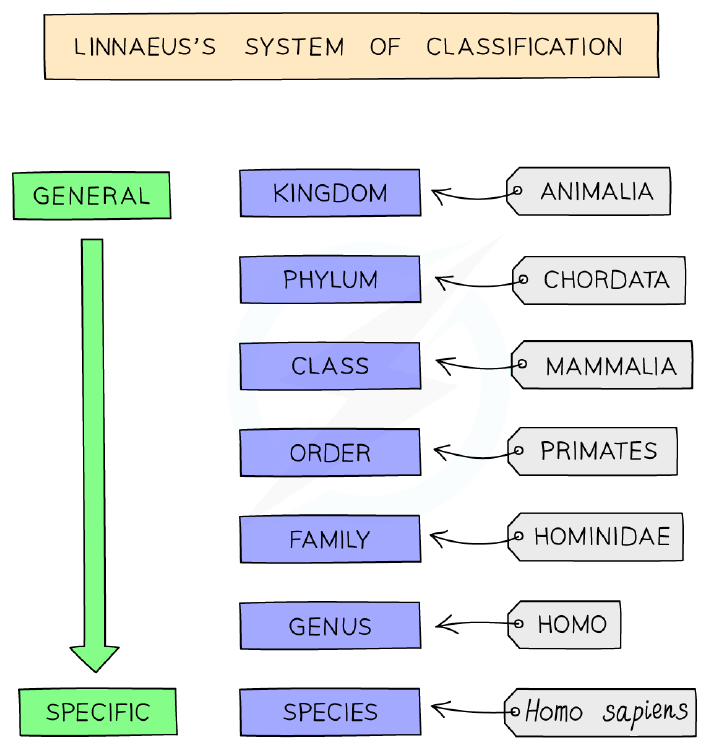
Biological Species Concept
- The biological species concept defines a species as a group of organisms that can interbreed to produce fertile offspring.
- This concept relies on reproductive isolation mechanisms: compatible mating rituals, compatible sex organs, gamete fusion, and matching haploid chromosome numbers.
- Limitations include organisms that reproduce asexually (e.g. bacteria), fertile hybrids (e.g. wholphin), and extinct species that cannot be tested.
- When the biological species concept cannot be applied, other evidence is used: morphology, DNA sequences, biochemistry, ecology, and evolutionary lineage.
- The characteristics used for classification differ by organism; e.g. bacteria may be classified by biochemistry or ecology, while extinct species may be classified by evolutionary lineage.
Speciation and Distinguishing Populations from Species
- Speciation is the process by which one species gives rise to two or more new species.
- Speciation can occur when populations become isolated (e.g. geographically), preventing gene flow between them.
- Different environmental conditions can lead to different natural selection pressures, and genetic drift can also contribute to speciation.
- Once speciation has occurred, the two species are reproductively isolated and can no longer produce fertile offspring.
- The point at which two populations become separate species is often subjective, as differences accumulate gradually over long time periods.
- Example: killer whales (×Orcinus orca×) show variation between populations and are currently divided into ecotypes, but some scientists believe there may be more than one species.
Chromosome Number
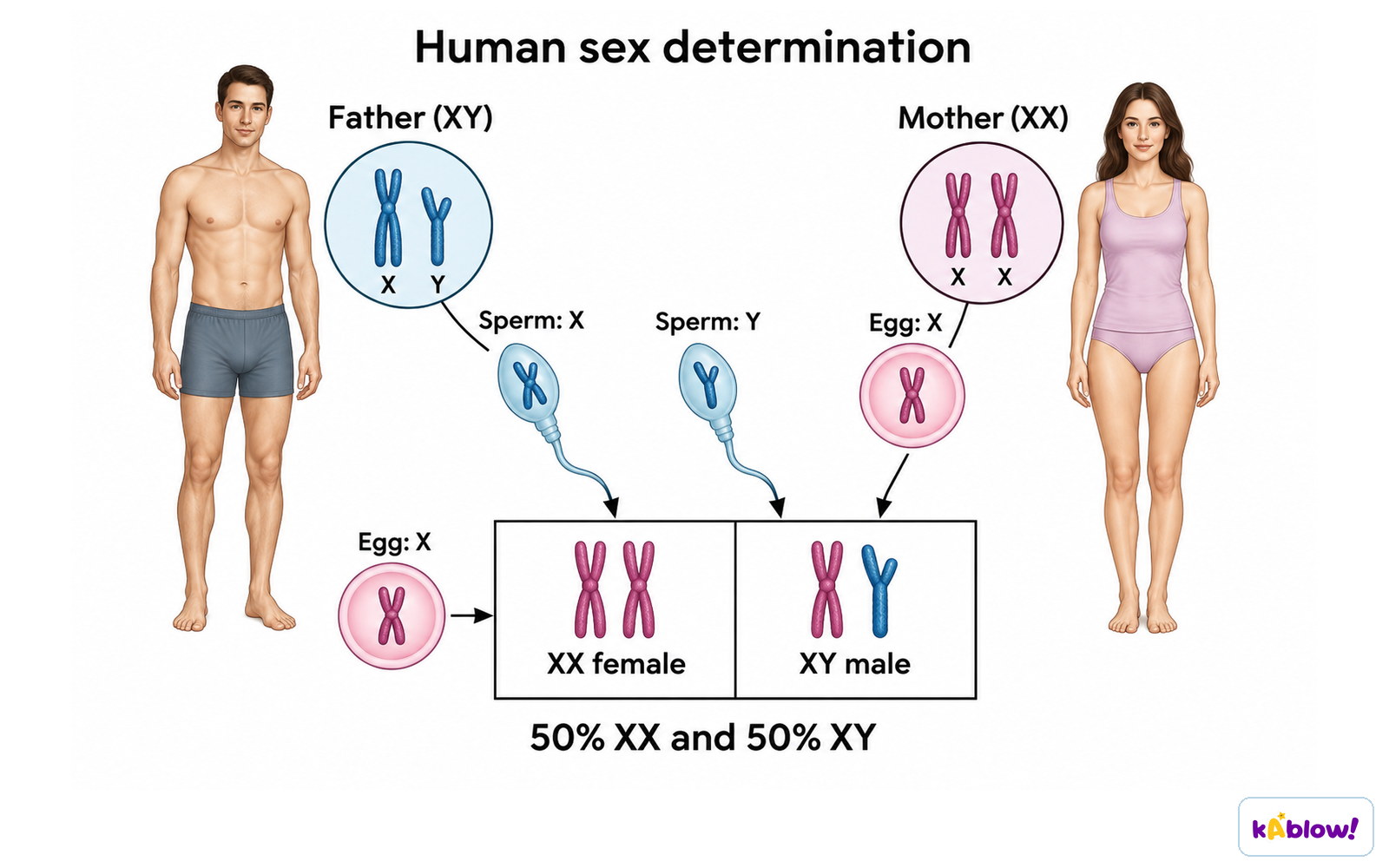
- A diploid cell contains two complete sets of chromosomes (2n); a haploid cell contains one complete set (n).
- Gametes are haploid cells involved in sexual reproduction; during fertilisation, haploid gametes fuse to form a diploid zygote.
- Both gametes must contain the same number of chromosomes for the zygote to be viable.
- Each individual in a species always has the same number of chromosomes, with rare exceptions due to mutation.
- The diploid number is always even because it must be divisible by two to produce a whole haploid number.
- Humans have 46 chromosomes (23 pairs); chimpanzees have 48 chromosomes (24 pairs).
- Differences in chromosome number between species is one reason why they cannot breed successfully.
Karyograms: Skills
- A karyogram is an image showing all chromosomes in a cell arranged by size, shape, and banding pattern, placed in homologous pairs.
- A karyotype is the appearance of a complete set of an individual's chromosomes, including number, size, shape, and banding.
- To make a karyogram, cells are stained and viewed under a light microscope; photographs are taken during metaphase of cell division, then chromosomes are arranged.
- Chromosomes with a central centromere are metacentric; those with a near-terminal centromere are acrocentric.
- Chromosome pair 23 (sex chromosomes) often does not fit the size-order pattern because the X chromosome is very large.
- Karyograms can be used to evaluate evidence for chromosome fusion in human evolution: chimpanzee chromosomes 12 and 13 may have fused to form human chromosome 2.
- Evidence for this hypothesis includes matching banding patterns, matching centromere location, and the presence of satellite DNA and telomeric DNA in the middle of human chromosome 2.
Genomes and Genome Size
- The genome is all of the genetic information in an organism, including coding genes and non-coding DNA.
- In eukaryotes, the genome includes mitochondrial DNA and chloroplast DNA; in prokaryotes, it includes plasmid DNA.
- Humans share around 99.9% of their DNA with other humans and around 99% with chimpanzees.
- Differences between individuals involve single nucleotide polymorphisms (SNPs) – single base changes in DNA.
- Genome size is measured in million base pairs (Mb) or picograms (pg); 1 pg = 978 Mb.
- Viruses and bacteria have small genomes; prokaryotes generally have smaller genomes than eukaryotes; plant genome sizes vary widely.
- Genome size is not proportional to organism complexity; e.g. humans (3,100 Mb) have a smaller genome than the hagfish (4,200 Mb) and common wheat (17,000 Mb).
- Factors affecting genome size include the amount of non-coding DNA and polyploidy in plants.
Uses of Genome Sequencing
- DNA sequencing determines the base sequence of an organism's genome; methods are continuously advancing to become faster and cheaper.
- Next-generation sequencing (NGS) techniques are automated and allow rapid sequencing of many species.
- Sequence data can be used to determine evolutionary relationships (phylogenetics) by comparing DNA, mRNA, or amino acid sequences.
- The more similar the sequences, the more closely related the species; multiple regions of the genome give a more accurate estimate.
- Cytochrome c is often used for comparison because it is present in many organisms and shows sufficient variation.
- Genome sequencing is used in personalised medicine to design drugs targeting specific proteins, assess disease risk, and select treatments based on genotype.
- The Human Genome Project sequenced the entire human genome, and the data is stored in databases for analysis.
Dichotomous Keys: Skills
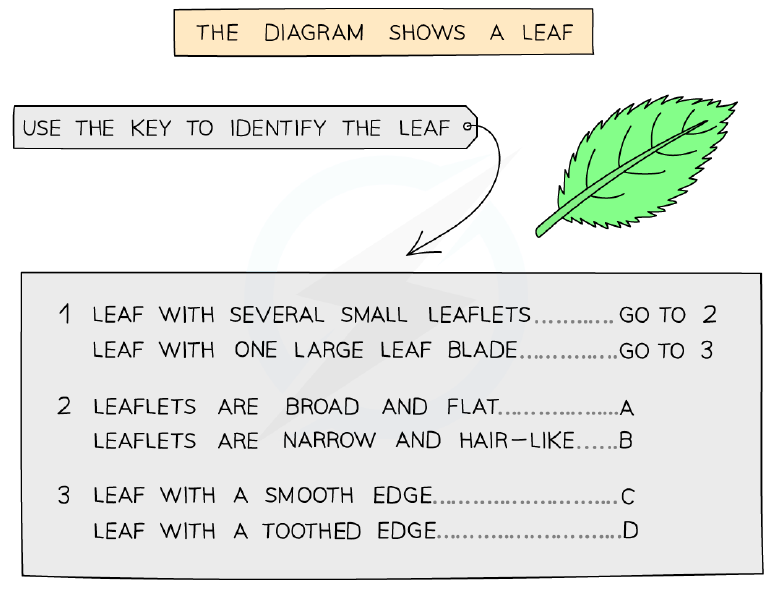
- A dichotomous key contains a series of paired statements used to identify an unknown species.
- To use a key, start with the first pair of statements; one statement will be false and the other true, leading to the next pair.
- Continue until a statement names the species.
- When constructing a key, statements should be clearly identifiable, objective (e.g. number of legs, not size), and yes/no in style.
- Each pair of statements should divide the organisms into two distinct groups, narrowing down the options.
- Keys can also be represented as branched diagrams, though these are limited in the number of organisms they can include.
Using a dichotomous key
Environmental DNA & Barcodes
- A DNA barcode is a short DNA sequence (a few hundred base pairs) used to quickly identify a species.
- Barcodes are often taken from mitochondrial DNA in eukaryotes and ribosomal RNA in prokaryotes.
- Environmental DNA (eDNA) sampling involves extracting DNA from environmental samples (e.g. water, soil) to identify species present.
- The eDNA method: collect samples, amplify DNA using PCR, sequence the DNA, and compare the barcode to a database of known sequences (e.g. BOLD).
- A strong match indicates the species is present; a weak match may require further sampling.
- eDNA can be quicker than manual identification, especially for plants not in flower, similar-looking larvae, or species that are difficult to capture.
- eDNA sampling is less invasive than methods like electrofishing and can be more accurate for detecting species richness.
슬라이드
연습 문제
무료 미리 보기 — 61개 중 8개 문제. 가입하면 전부 볼 수 있어요.
1.Which is the correct definition for a species according to the biological species concept?
Easy- AA group of organisms which can interbreed to produce fertile offspring
- BA group of organisms which look similar
- CA group of organisms with similar characteristics
- DA group of living things
2.Which of the following statements about genomes is not correct?
Easy- AHumans have the most genes of any organism
- BHumans have around 20 000 genes
- CSpecies vary in the number of genes they have
- DThe number of genes of an organism is not proportional to genome size
3.The image shows a karyogram. Which of the statements about the karyogram is correct?
Easy- AThe source of DNA for the karyogram was a human cell.
- BThe source of DNA for the karyogram was a haploid cell.
- CAll 23 pairs of chromosomes are arranged in descending order of size.
- DChromosome banding is visible.
4.What is an appropriate unit for comparing the length of genomes?
Easy- AMillion base pairs
- BMicrometers
- CNanometers
- DPicometer
5.What is the most efficient way to compare the genome sizes of different species?
Medium- AExtract information from an online database.
- BRead scientific articles and extract relevant information.
- CCompare the chromosome number of the different species.
- DCompare the proteome size of the different species.
6.Which of the following series of statements about genome sequencing is correct?
Medium- AScientists can now look for correlations between changes in a gene and particular human traits; the genomes of many species have now been sequenced; advancing computer technology means that the rate at which a genome can be sequenced continues to increase.
- BScientists now know the location and role of every human gene; the genomes of humans are the only genomes to be sequenced in their entirety; advancing computer technology means that the rate at which a genome can be sequenced continues to increase.
- CScientists can now look for correlations between changes in a gene and particular human traits; the genomes of many species have now been sequenced; genome sequencing technology is now so advanced that further developments are not expected.
- DScientists can now look for correlations between changes in a gene and particular human traits; the genomes of humans are the only genomes to be sequenced in their entirety; genome sequencing technology is now so advanced that further developments are not expected.
7.Dichotomous keys can be used to identify species from their observable features. To which order of insects does the insect below belong? Note that the insect is shown at rest and not in flight.
Medium- ALepidoptera
- BOdonata
- CColeoptera
- DHemiptera
8.Which of the following presents a difficulty when applying the biological species concept?
Medium- AHorizontal gene transfer
- BSexual reproduction
- CGamete incompatibility
- DLinnaean classification