Drugs In Medicine
플레이하며 배우기
이 문제들을 풀어 에너지를 얻은 뒤 낚시하고 탐험하세요. 계정이 필요 없어요.
교육자를 위해: Drugs In Medicine(Biology, CIE)을(를) 위한 바로 쓸 수 있는 수업 슬라이드, 복습 노트 — 수업에 사용하거나, 학습자들이 실시간 게임으로 즐기는 인터랙티브 클래스 활동으로 진행하세요.
수업 노트
What is a drug?
- A drug is any substance taken into the body that modifies or affects chemical reactions in the body.
- Medicinal drugs are used to treat the symptoms or causes of a disease (e.g., antibiotics).
- The liver is the primary site of drug metabolism.
Antibiotics
- Antibiotics are chemical substances made by certain fungi or bacteria.
- They affect bacterial cells by disrupting their structure/function or preventing reproduction.
- Antibiotics are effective against bacteria but not against viruses.
- They target processes/structures specific to prokaryotic cells, so they generally do not harm animal cells.
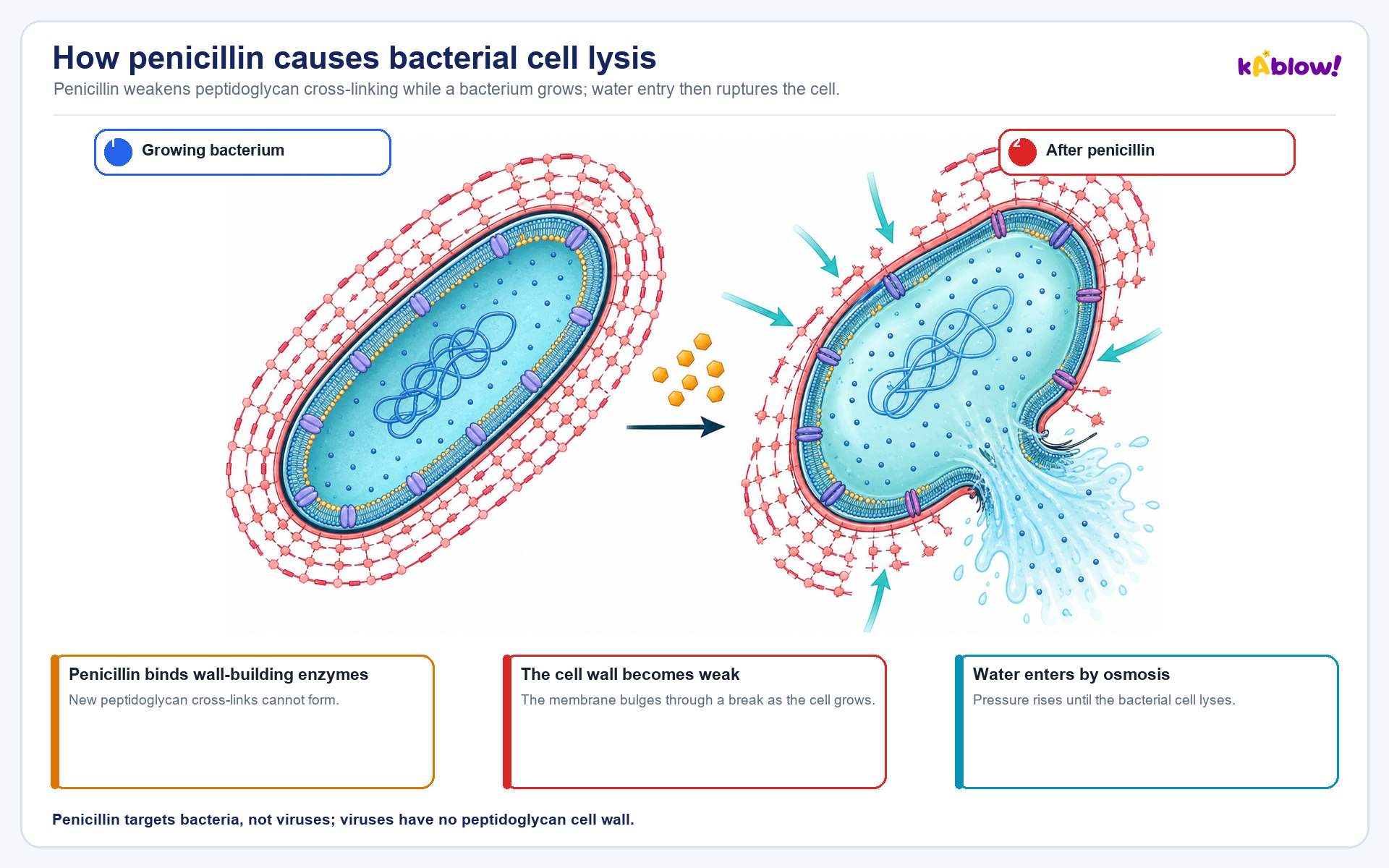
How antibiotics work: penicillin interferes with bacterial cell wall formation
Antibiotic resistance
- Overuse and unnecessary prescribing of antibiotics reduce their effectiveness.
- Patients failing to complete the full prescribed course contributes to resistance.
- Large-scale use in farming (even when animals are not sick) increases resistance.
- Resistant bacteria are called superbugs (e.g., MRSA).
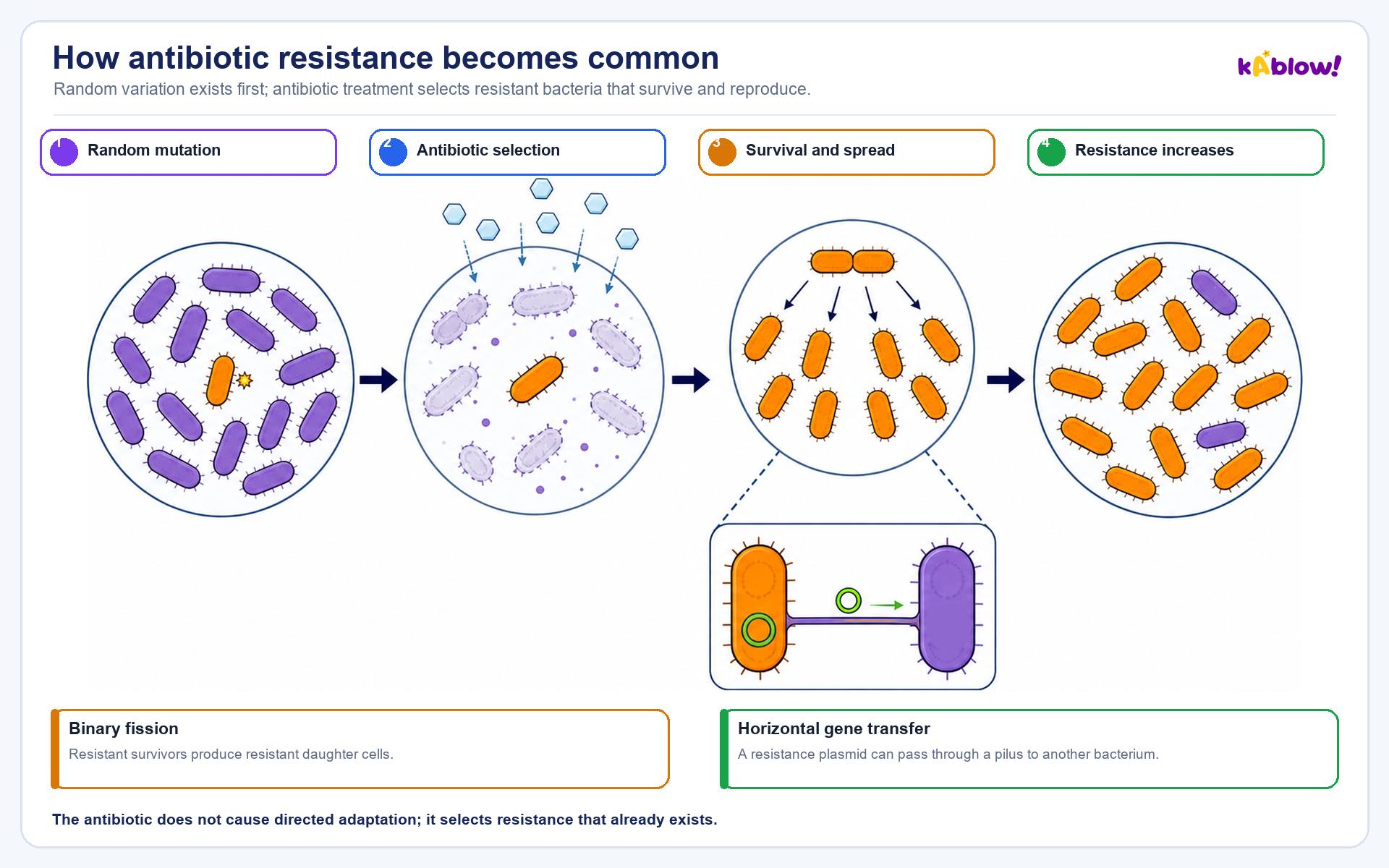
Mechanism of antibiotic resistance
Preventing antibiotic resistance
- Only take antibiotics when absolutely essential.
- Always complete the entire prescribed course, even if you feel better.
- Doctors should not prescribe antibiotics for viral infections.
슬라이드
연습 문제
무료 미리 보기 — 42개 중 8개 문제. 가입하면 전부 볼 수 있어요.
1.Which of the following gives the most accurate definition of a drug?
Easy- AAn addictive or harmful substance.
- BA substance taken into the body that modifies or affects chemical reactions.
- CA plant extract that kills bacteria.
- DA substance that produces side effects as well as therapeutic effects.
2.Which organ is the primary site of drug metabolism?
Easy- AKidney
- BLiver
- CHeart
- DLungs
3.Which group of drugs is used to treat the symptoms or causes of a disease?
Easy- AAntibiotics
- BMedicinal drugs
- CPainkillers
- DVaccines
4.Which class of drugs is used to treat bacterial infections?
Easy- AAntibiotics
- BAntivirals
- CPainkillers
- DVaccines
5.Antibiotics are effective against bacteria but not against viruses because
Medium- Aviruses have cell walls that are different from bacterial cell walls
- Bviruses do not have the cellular structures that antibiotics target
- Cviruses are too small for antibiotics to affect
- Dviruses produce enzymes that break down antibiotics
6.A patient feels better after taking only part of a prescribed course of antibiotics. Why is it important to complete the full course?
Easy- ATo ensure all bacteria are killed and reduce the chance of resistance developing
- BTo prevent side effects from stopping early
- CTo make the antibiotics work faster
- DTo avoid the infection becoming viral
7.Which of the following is NOT a reason why antibiotics are becoming less effective?
Easy- AOveruse of antibiotics in farming
- BPatients failing to complete the full course
- CAntibiotics 'wearing out' through overuse
- DBacteria evolving defence mechanisms
8.What is the name of the small circular loop of DNA that can be passed between bacterial cells and can carry antibiotic resistance genes?
Easy- AChromosome
- BPlasmid
- CRibosome
- DNucleoid
기출 문제
이 주제의 기출 문제 연습이 곧 나와요.
곧 출시