Human Impact: Biodiversity, Pollution & Conservation
플레이하며 배우기
이 문제들을 풀어 에너지를 얻은 뒤 낚시하고 탐험하세요. 계정이 필요 없어요.
교육자를 위해: Human Impact: Biodiversity, Pollution & Conservation(Biology, CIE)을(를) 위한 바로 쓸 수 있는 수업 슬라이드, 복습 노트, 다이어그램 — 수업에 사용하거나, 학습자들이 실시간 게임으로 즐기는 인터랙티브 클래스 활동으로 진행하세요.
수업 노트
Ensuring Food Supply
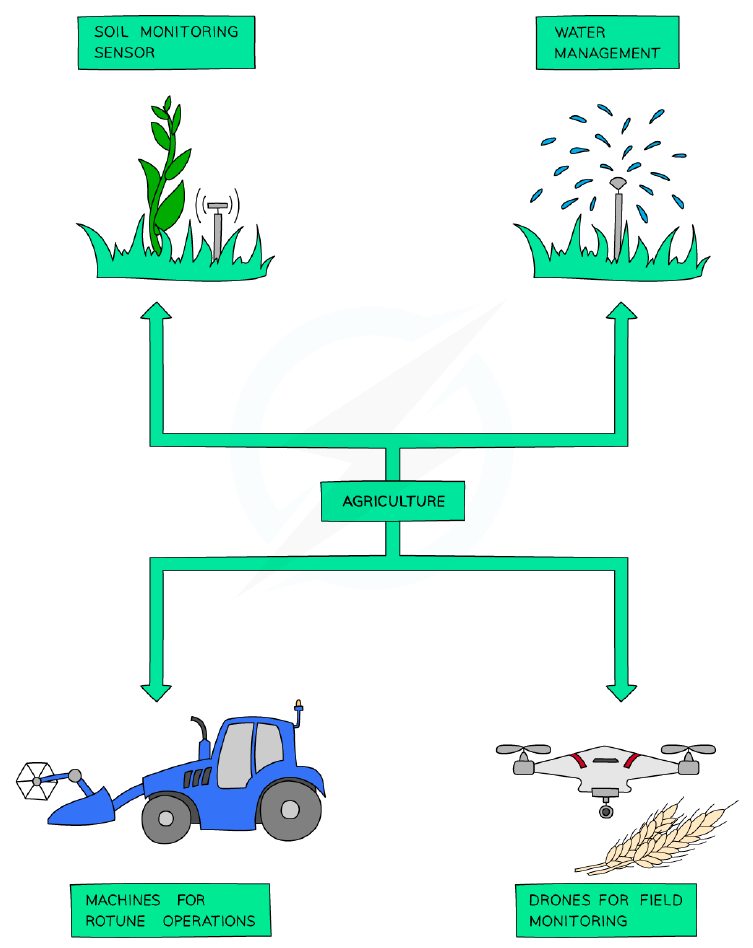
- Intensive food production uses modern technology to produce food more efficiently on finite land.
- Agricultural machinery enables farming of larger areas, replacing human labour.
- Chemical fertilisers increase soil nutrient availability, boosting plant growth and yield.
- Insecticides kill pests that damage crops; herbicides remove competing weeds.
- Selective breeding produces high-yielding crop varieties and livestock breeds.
- Intensive livestock farming reduces energy loss by keeping animals in small spaces, feeding high-energy food, using antibiotics, and maintaining warm temperatures.
- Advantages: less land needed, year-round production, lower costs. Disadvantages: ethical concerns, habitat destruction, reduced biodiversity, methane emissions, water pollution from waste.
Modern intensive agricultural technology
Monocultures
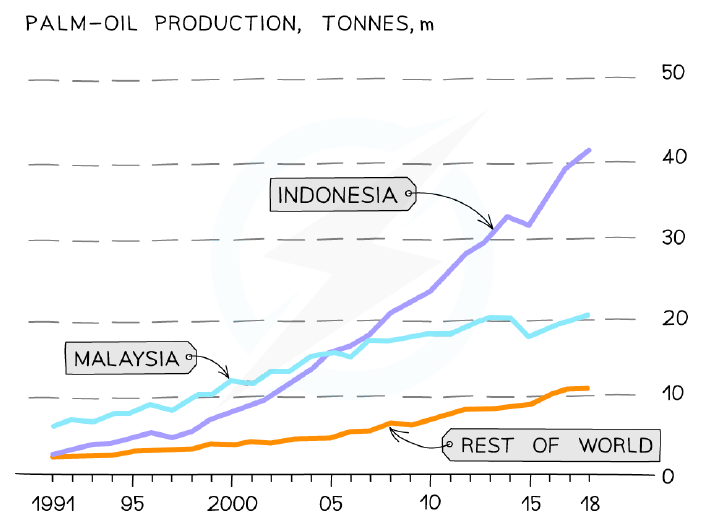
- Monoculture is growing only one crop species over a large area (e.g., palm oil plantations).
- Advantages: specialised machinery, optimised conditions, higher yields.
- Disadvantages: reduces biodiversity – few herbivore species can feed, so few predators survive.
- Pest populations increase due to abundant food; repeated insecticide use leads to pesticide resistance and kills non-target insects.
Palm oil production as a monoculture
The Importance of Biodiversity
- Biodiversity is the number of different species in an area; high biodiversity is needed for stable ecosystems.
- Human activities, especially habitat destruction, reduce biodiversity.
- Habitat destruction is driven by the increasing human population needing space for agriculture, housing, and industry.
- Destruction of habitats interrupts food chains and webs, causing further species loss.
Deforestation
- Deforestation is large-scale clearing of trees, often for cattle grazing, monocultures, or building.
- If trees are replanted, it can be sustainable; otherwise, it causes severe environmental harm.
- Undesirable effects: extinction of species, loss of soil (erosion), flooding, and increased CO₂ in the atmosphere.
Water Pollution
- Water pollutants include untreated sewage, excess fertilisers, and industrial/agricultural chemicals.
- Untreated sewage increases bacteria, which deplete oxygen, killing aquatic life (eutrophication).
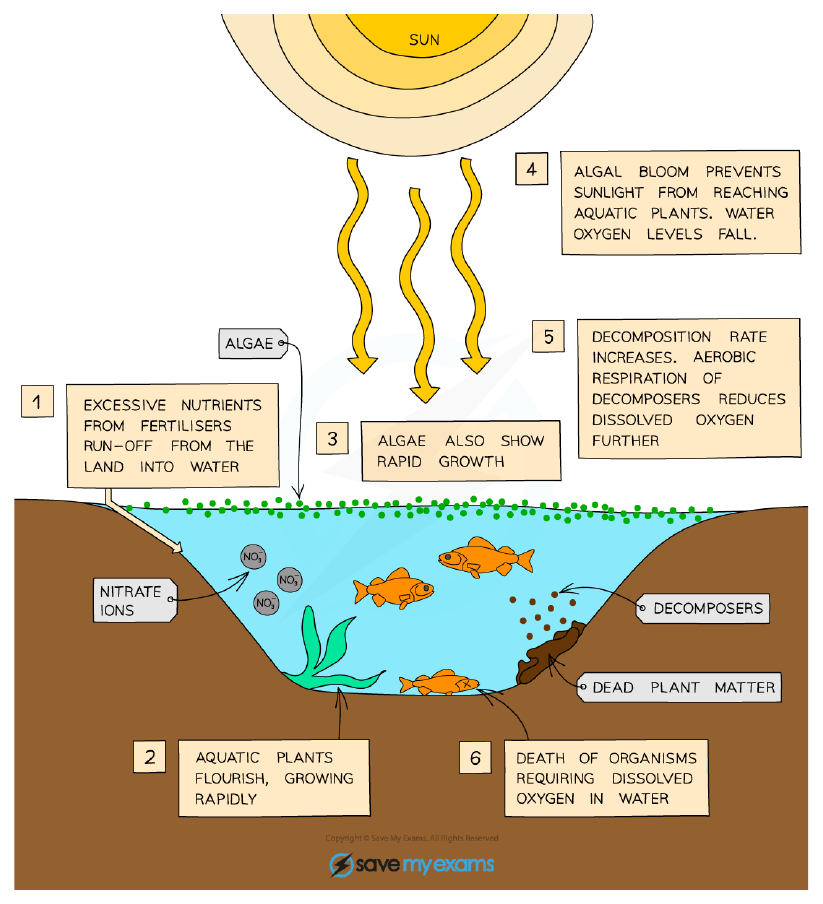
- Excess fertiliser runoff causes algal blooms that block sunlight; plants die, decomposers use up oxygen, leading to fish kills.
- Other sources: oil spills, toxic chemicals from industry, and plastic waste.
Sequence of events causing eutrophication
Other Pollution
- Plastic pollution: non-biodegradable; animals ingest or become entangled; toxins enter food chains; on land, landfills release toxins into soil.
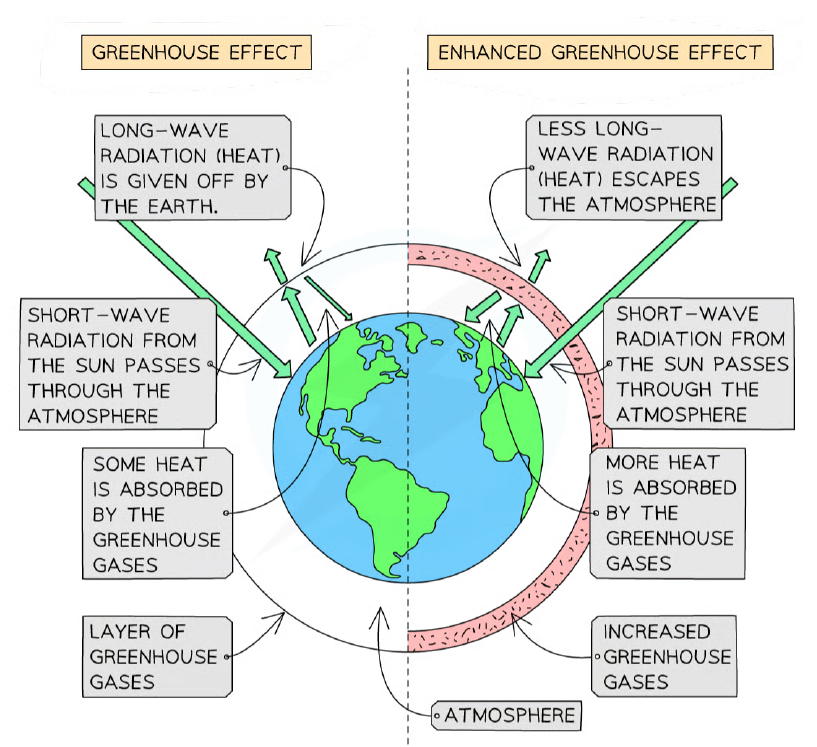
- Air pollution: methane (from cattle, rice paddies, landfills) and carbon dioxide (from burning fossil fuels/deforestation) are greenhouse gases.
- Increased greenhouse gases cause global warming and climate change; melting permafrost releases more methane.
The greenhouse effect and enhanced greenhouse effect
Sustainability
- A sustainable resource is produced as fast as it is used, so it does not run out.
- Fossil fuels are non-renewable; we must reduce use and find alternatives.
- Recycling paper, plastic, glass, and metal reduces waste and raw material demand.
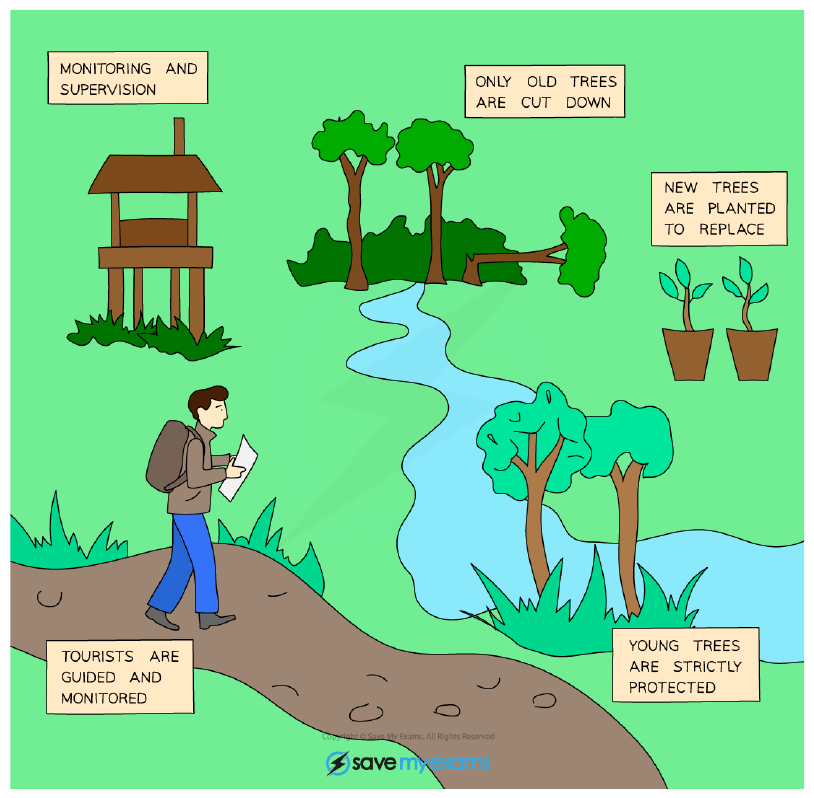
- Sustainable forestry: replant trees, use certification schemes (e.g., Forestry Stewardship Council), educate consumers.
- Sustainable fishing: quotas, size limits, seasonal bans, restocking, and consumer education.
Sustainable forest management
Endangered Species & Conservation
- An endangered species is at risk of extinction due to hunting, climate change, pollution, habitat loss, or invasive species.
- Conservation measures: education programmes, captive breeding, legal protection of species and habitats, seed banks for plants.
- Captive breeding can use artificial insemination (AI) to transport sperm between zoos, and in vitro fertilisation (IVF) to maintain genetic diversity.
- Low genetic variation makes a species more vulnerable to environmental change and extinction.
Reasons for Conservation
- Conservation maintains biodiversity for stable ecosystems, reduces extinction, and protects vulnerable habitats.
- It maintains ecosystem functions like nutrient cycling (e.g., carbon cycle).
- Provides resources: food, drugs (plant-based remedies), fuel, and genes for wide gene pools.
- Moral, cultural, and scientific reasons: preserving species for future generations and potential discoveries.
슬라이드
연습 문제
무료 미리 보기 — 65개 중 8개 문제. 가입하면 전부 볼 수 있어요.
1.Which of the following is a greenhouse gas released by cattle farming?
Easy- AMethane
- BOxygen
- CNitrogen
- DHydrogen
2.What is the definition of biodiversity?
Easy- AThe number of different species in a particular area
- BThe total number of organisms in an ecosystem
- CThe variety of genes within a population
- DThe range of different habitats in a region
3.Which of the following is an undesirable effect of deforestation?
Easy- AIncrease in carbon dioxide in the atmosphere
- BDecrease in soil erosion
- CIncrease in biodiversity
- DDecrease in flooding
4.Which method is used to conserve endangered plant species by storing seeds?
Easy- ASeed banks
- BCaptive breeding
- CArtificial insemination
- DIn vitro fertilisation
5.In eutrophication, what causes the decrease in dissolved oxygen in water?
Medium- ADecomposing bacteria respiring aerobically
- BAlgae producing oxygen during photosynthesis
- CFish consuming oxygen
- DFertilisers directly reacting with water
6.Which of the following is a sustainable resource?
Easy- AWood from replanted forests
- BCoal
- COil
- DNatural gas
7.Which of the following is a reason for conserving biodiversity?
Easy- ATo maintain nutrient cycles
- BTo increase the rate of extinction
- CTo reduce the number of species
- DTo decrease ecosystem stability
8.Why does a monoculture increase pest populations?
Medium- AIt provides a continuous food supply for the pest
- BIt reduces the number of predators
- CIt increases genetic diversity of the crop
- DIt eliminates all other plant species
기출 문제
이 주제의 기출 문제 연습이 곧 나와요.
곧 출시