Inheritance, Genes & Cell Division
플레이하며 배우기
이 문제들을 풀어 에너지를 얻은 뒤 낚시하고 탐험하세요. 계정이 필요 없어요.
수업 노트
Chromosomes, Genes & Proteins
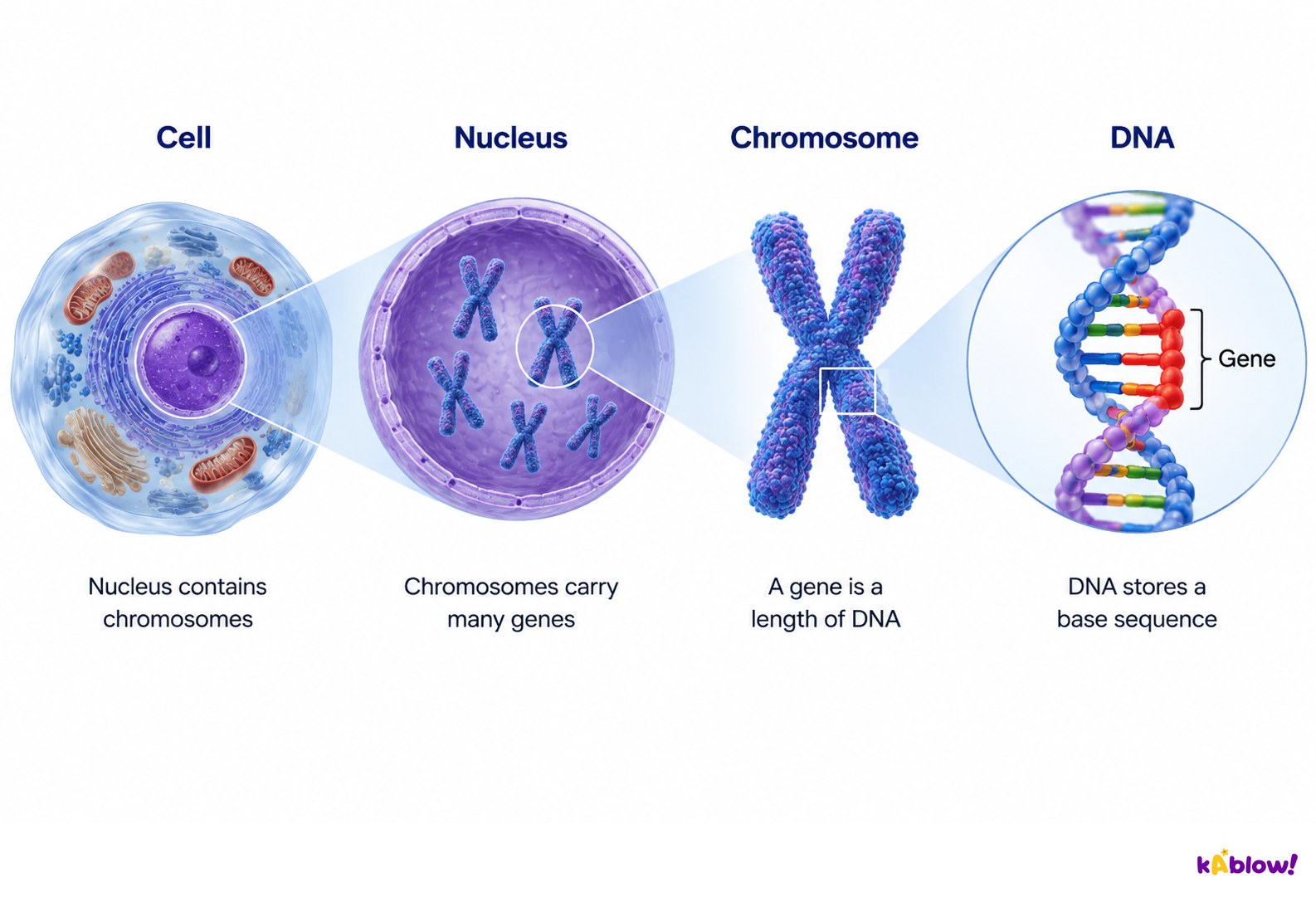
- Inheritance is the transmission of genetic information from generation to generation.
- Chromosomes are thread-like structures of DNA in the nucleus, carrying genes.
- A gene is a short length of DNA on a chromosome that codes for a specific protein.
- Alleles are different versions of the same gene; individuals inherit two alleles (one from each parent).
- The sequence of bases in a gene determines the sequence of amino acids in a protein.
Zooming from cell to gene
The Inheritance of Sex
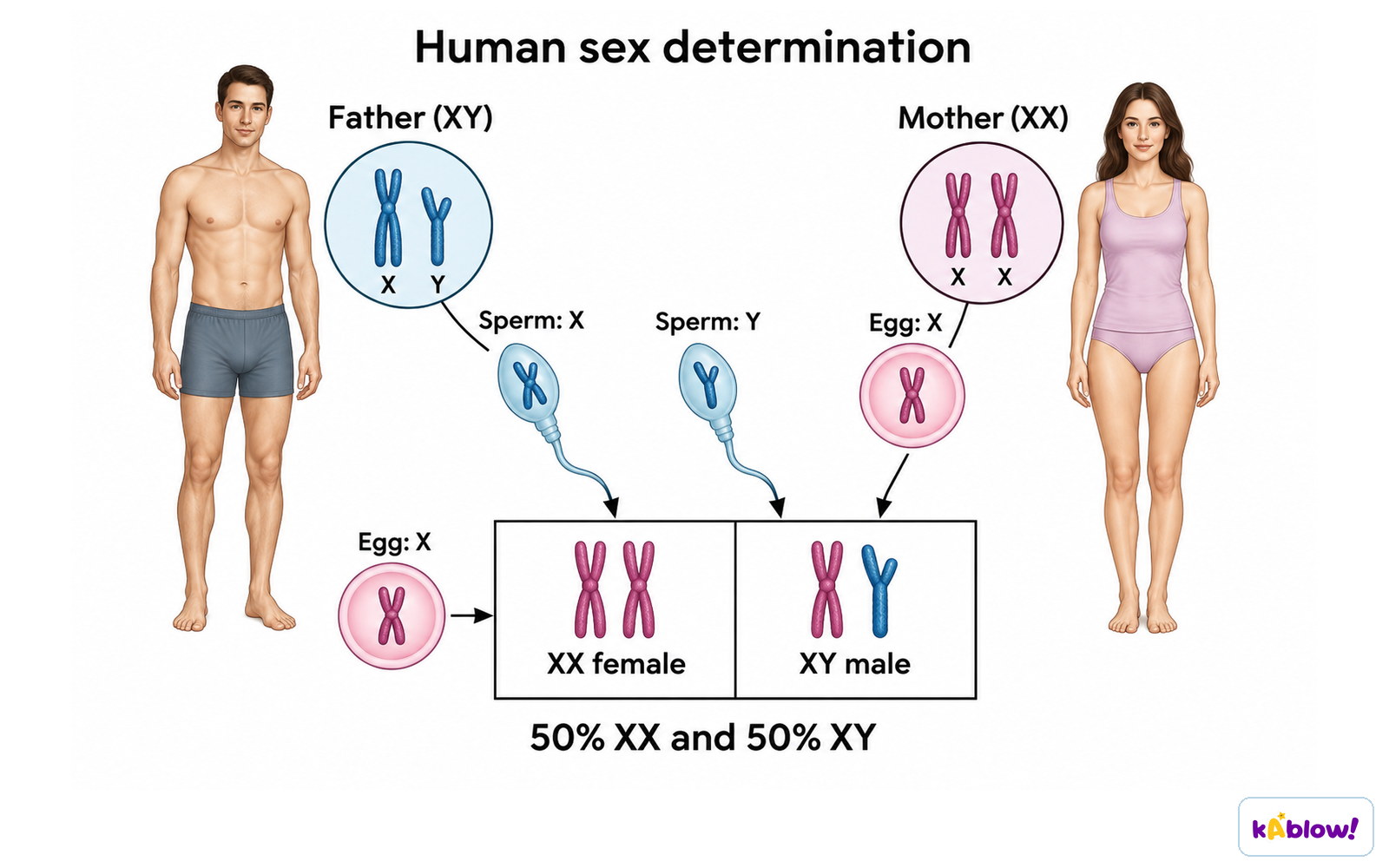
- Sex is determined by the sex chromosomes: XX = female, XY = male.
- The father determines the sex of offspring because he can pass on either an X or a Y chromosome.
- Half of sperm carry X, half carry Y; if an X sperm fertilises the egg, the baby is female (XX); if a Y sperm, male (XY).
- A Punnett square with X and Y chromosomes shows a 1:1 ratio of male:female offspring.
Protein Synthesis (Extended)
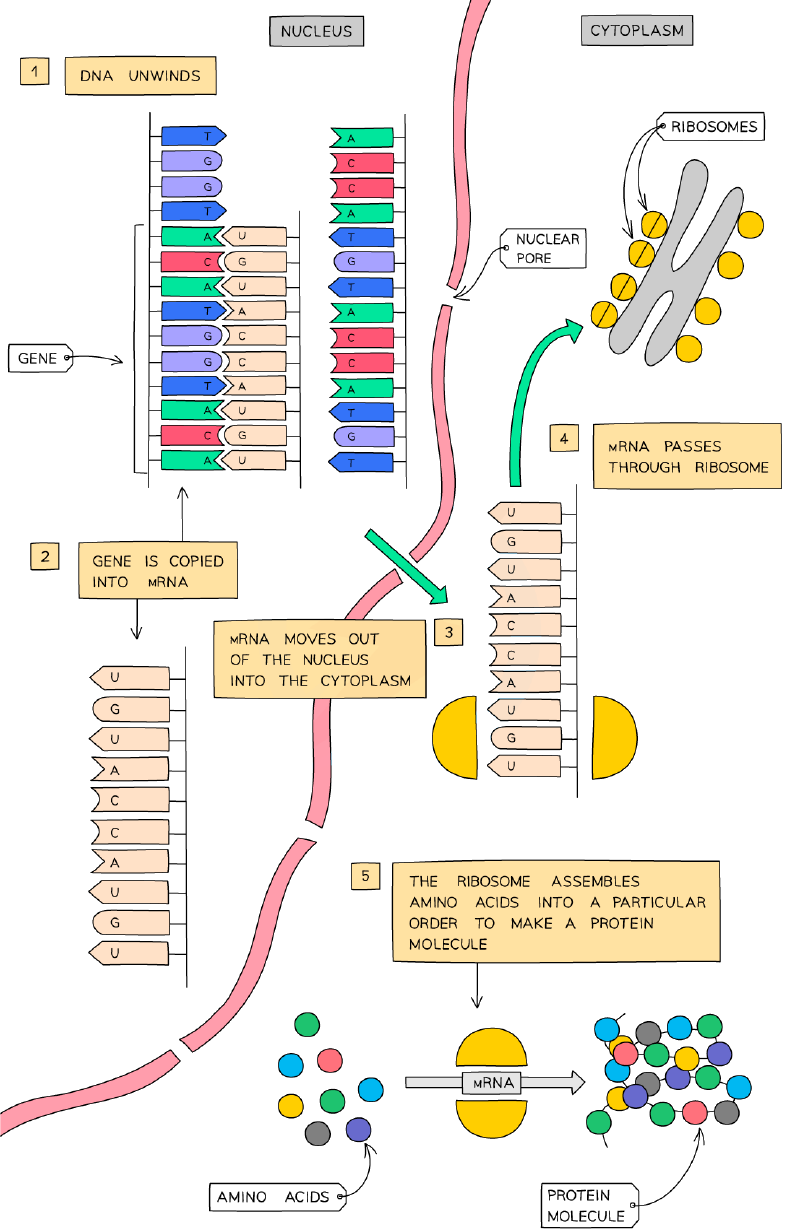
- Transcription: DNA base code is copied onto mRNA in the nucleus.
- Translation: mRNA attaches to a ribosome; the ribosome reads codons (triplets) and assembles amino acids.
- tRNA brings specific amino acids to the ribosome, matching anticodons to mRNA codons.
- The amino acid chain folds to form a functional protein (e.g., enzyme, antibody).
Protein synthesis
Which Proteins are Synthesised? (Extended)
- Gene expression controls whether a gene is transcribed/translated in a cell.
- Most genes are 'switched off' to save energy; only essential genes are expressed.
- All body cells contain the same genes, but different cells express different genes.
- DNA controls cell function by directing protein production.
Mitosis
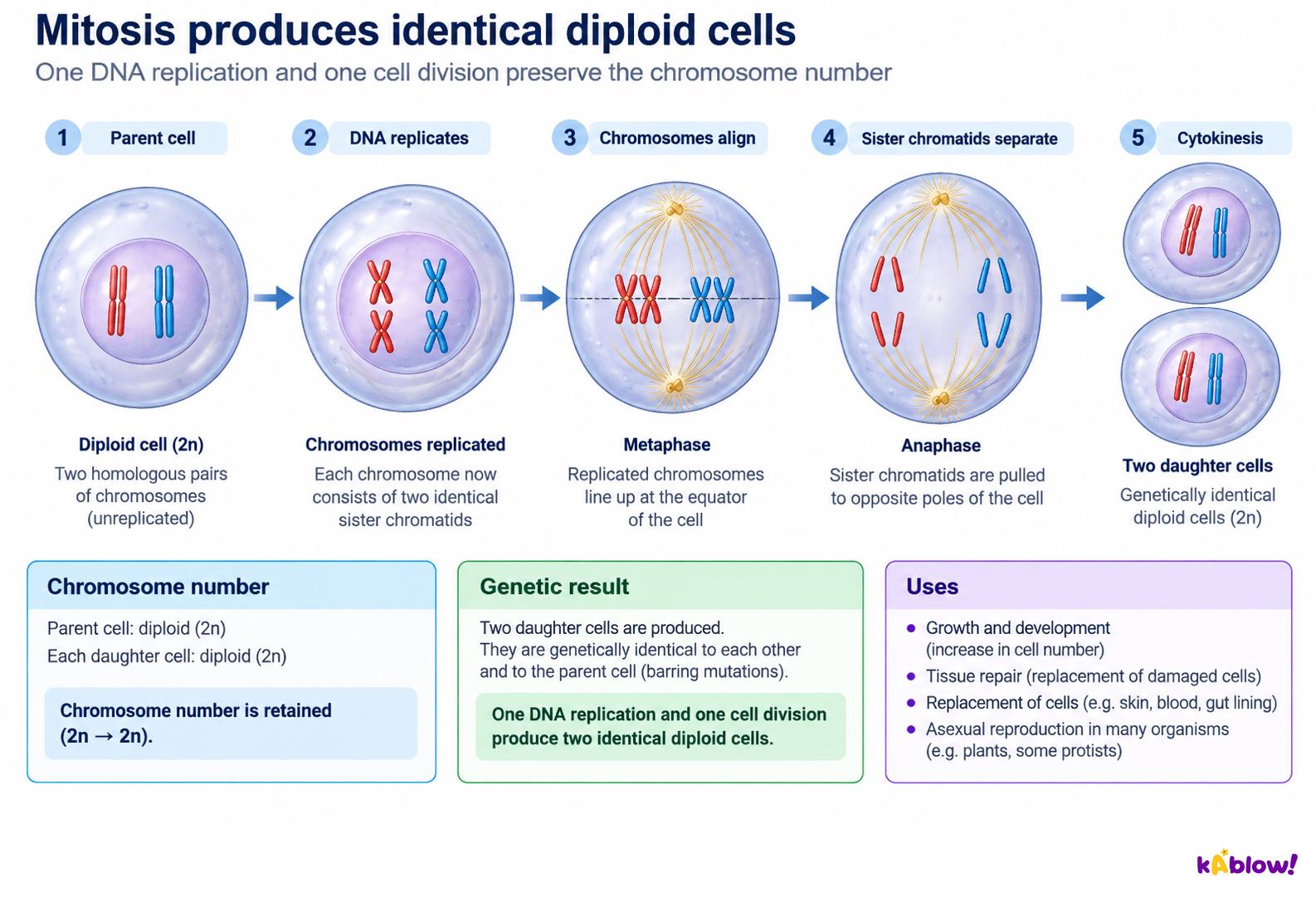
- Mitosis is nuclear division producing two genetically identical daughter cells.
- Chromosomes duplicate before division, then line up and are pulled apart.
- Used for growth, repair, replacement of cells, and asexual reproduction.
- Daughter cells are diploid (same chromosome number as parent).
Mitosis
Meiosis (Extended)
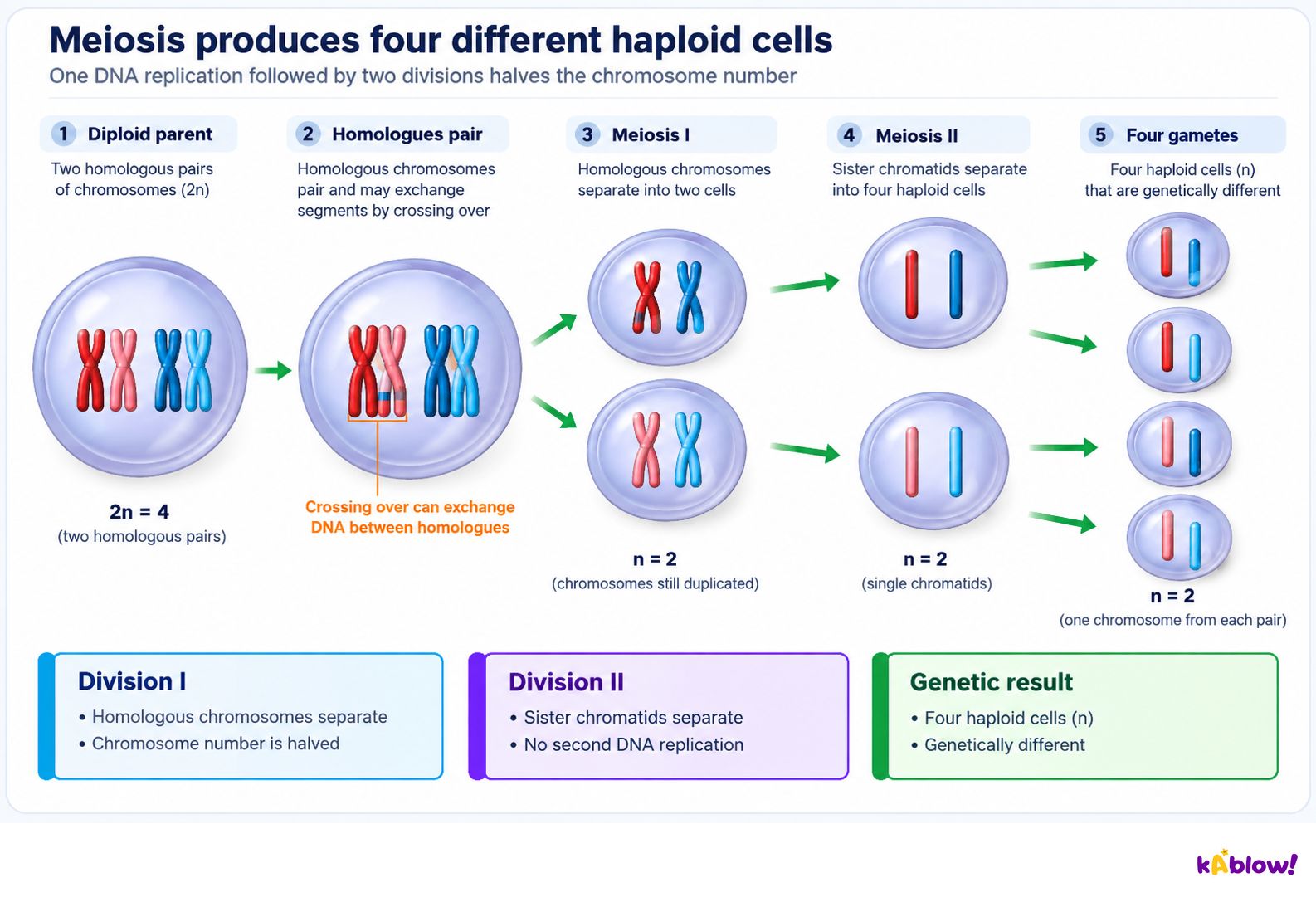
- Meiosis is a reduction division producing four haploid gametes (genetically different).
- Chromosomes duplicate, then the cell divides twice; homologous chromosomes separate in the first division.
- Produces genetic variation via recombination and independent assortment.
- Gametes (sperm, egg) have half the chromosome number of body cells.
Meiosis
Monohybrid Inheritance
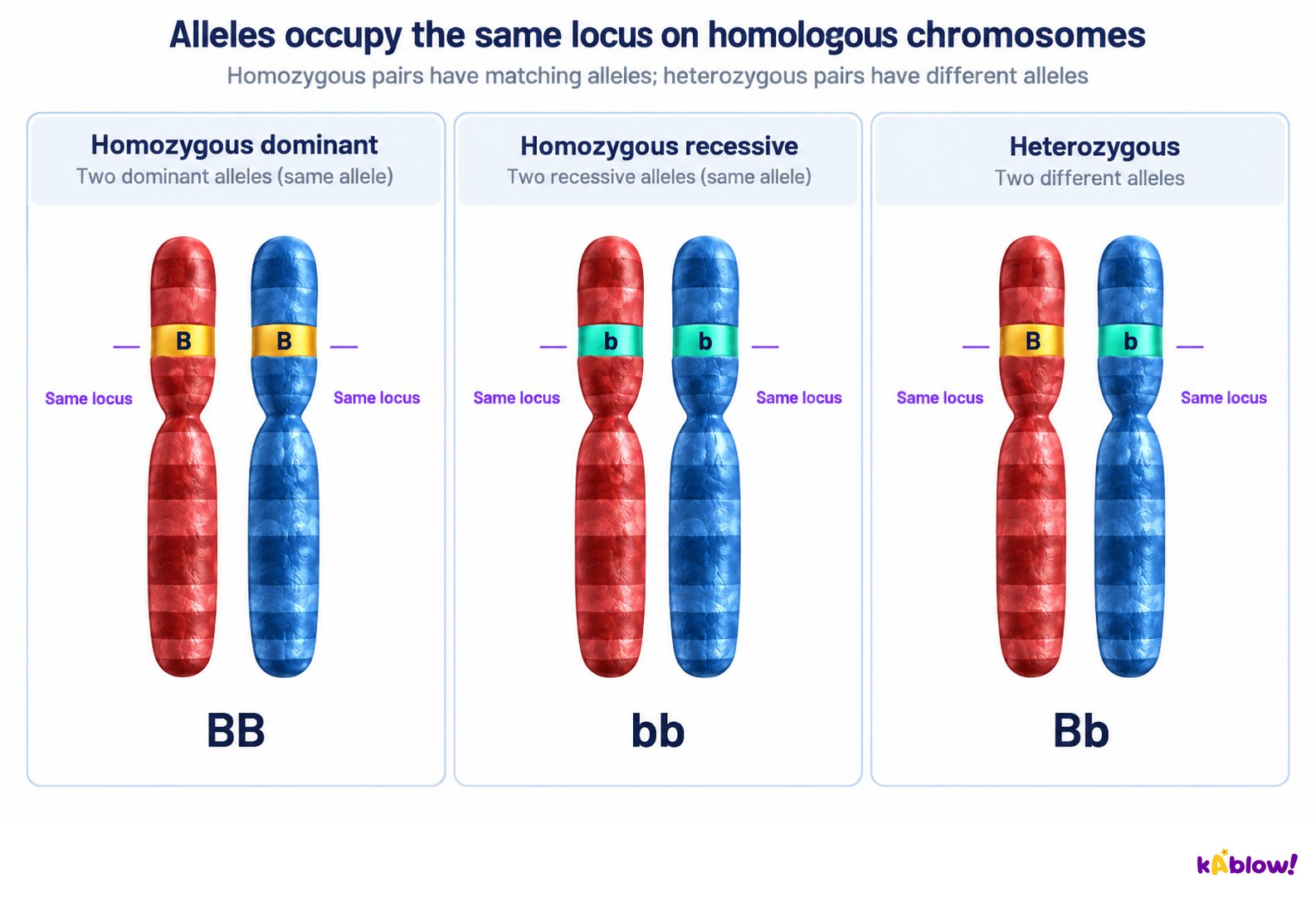
- Monohybrid inheritance involves a single gene with two alleles (dominant/recessive).
- Genotype = allele combination; phenotype = observable characteristic.
- Homozygous = two identical alleles; heterozygous = two different alleles.
- A Punnett square predicts offspring genotypes and phenotypes; e.g., Tt × tt gives 1:1 tall:short.
- Test cross (cross with recessive homozygote) reveals if a dominant phenotype is homozygous or heterozygous.
Codominance & Sex-Linked Characteristics (Extended)
- Codominance: both alleles contribute to phenotype (e.g., ABO blood groups: IA and IB are codominant).
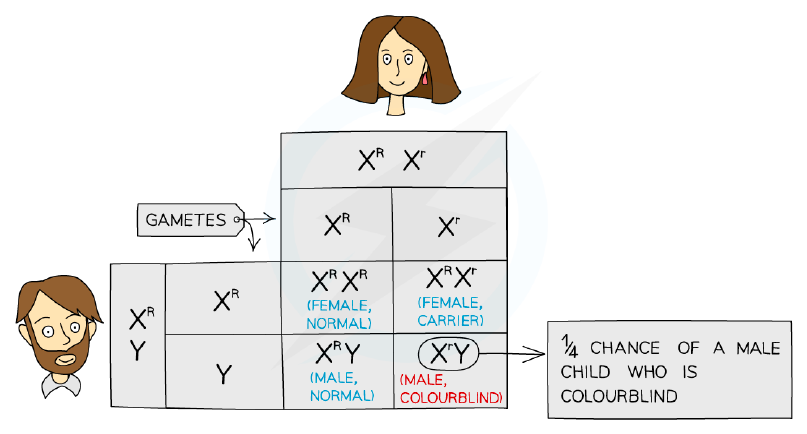
- Sex-linked genes are on the X chromosome; males (XY) are more likely to show recessive conditions (e.g., colour blindness).
- Females can be carriers (heterozygous) and pass the allele to sons.
- Punnett squares for sex-linked traits use X and Y chromosomes with alleles as superscripts.
Punnett square for a sex-linked condition
슬라이드
연습 문제
무료 미리 보기 — 52개 중 8개 문제. 가입하면 전부 볼 수 있어요.
1.What does the term haploid mean?
Easy- AA nucleus containing two sets of chromosomes.
- BA nucleus containing a single set of chromosomes.
- CA person with only one X chromosome.
- DA person with XXY chromosomes.
2.When a somatic (body) cell undergoes cell division, two daughter cells are produced with the same chromosome number as the parent cell. Which type of division has taken place?
Easy- AMeiosis producing genetically different cells.
- BMitosis producing genetically identical cells.
- CMeiosis producing genetically identical cells.
- DMitosis producing genetically different cells.
3.Which shows the correct size order of structures, starting with the smallest?
Easy- Agene → DNA strand → chromosomes → nucleus
- BDNA strand → chromosomes → gene → nucleus
- Cchromosomes → gene → DNA strand → nucleus
- Dnucleus → chromosomes → DNA strand → gene
4.Males and females have a unique set of chromosomes. What is the correct combination of male and female chromosomes?
Easy- AMale XY, Female YY
- BMale YX, Female XY
- CMale XY, Female XX
- DMale XX, Female XY
5.Albinism is a condition caused by a recessive allele. If both parents have albinism, what are the chances of the offspring being an albino child?
Easy- A0%
- B25%
- C75%
- D100%
6.Which of the following structures in plant cells carry out protein synthesis under the control of the nucleus?
Easy- ARibosomes
- BChloroplasts
- CMitochondria
- DCell walls
7.A woman who is a carrier for a recessive sex-linked condition has a child with a man who is unaffected. What is the percentage chance that their daughter will show the condition?
Medium- A0%
- B25%
- C50%
- D75%
- 8.Medium
Which row in the table shows a comparison between meiosis and mitosis?
Process Number of daughter cells Genetic variation Chromosome number in daughter cells Number of cell divisions Mitosis 2 Identical Diploid 1 Meiosis 4 Different Haploid 2 - Amitosis produces 4 daughter cells; meiosis produces 2 daughter cells
- Bmitosis produces genetically identical cells; meiosis produces cloned cells
- Cmitosis daughter cells are diploid; meiosis daughter cells are haploid
- Dmitosis involves two cell divisions; meiosis involves four cell divisions