Variation & Natural Selection
플레이하며 배우기
이 문제들을 풀어 에너지를 얻은 뒤 낚시하고 탐험하세요. 계정이 필요 없어요.
교육자를 위해: Variation & Natural Selection(Biology, CIE)을(를) 위한 바로 쓸 수 있는 수업 슬라이드, 복습 노트, 다이어그램 — 수업에 사용하거나, 학습자들이 실시간 게임으로 즐기는 인터랙티브 클래스 활동으로 진행하세요.
수업 노트
Variation in Biology
- Variation = differences between individuals of the same species.
- Phenotypic variation = differences in features; caused by genes (genetic variation) and/or environment.
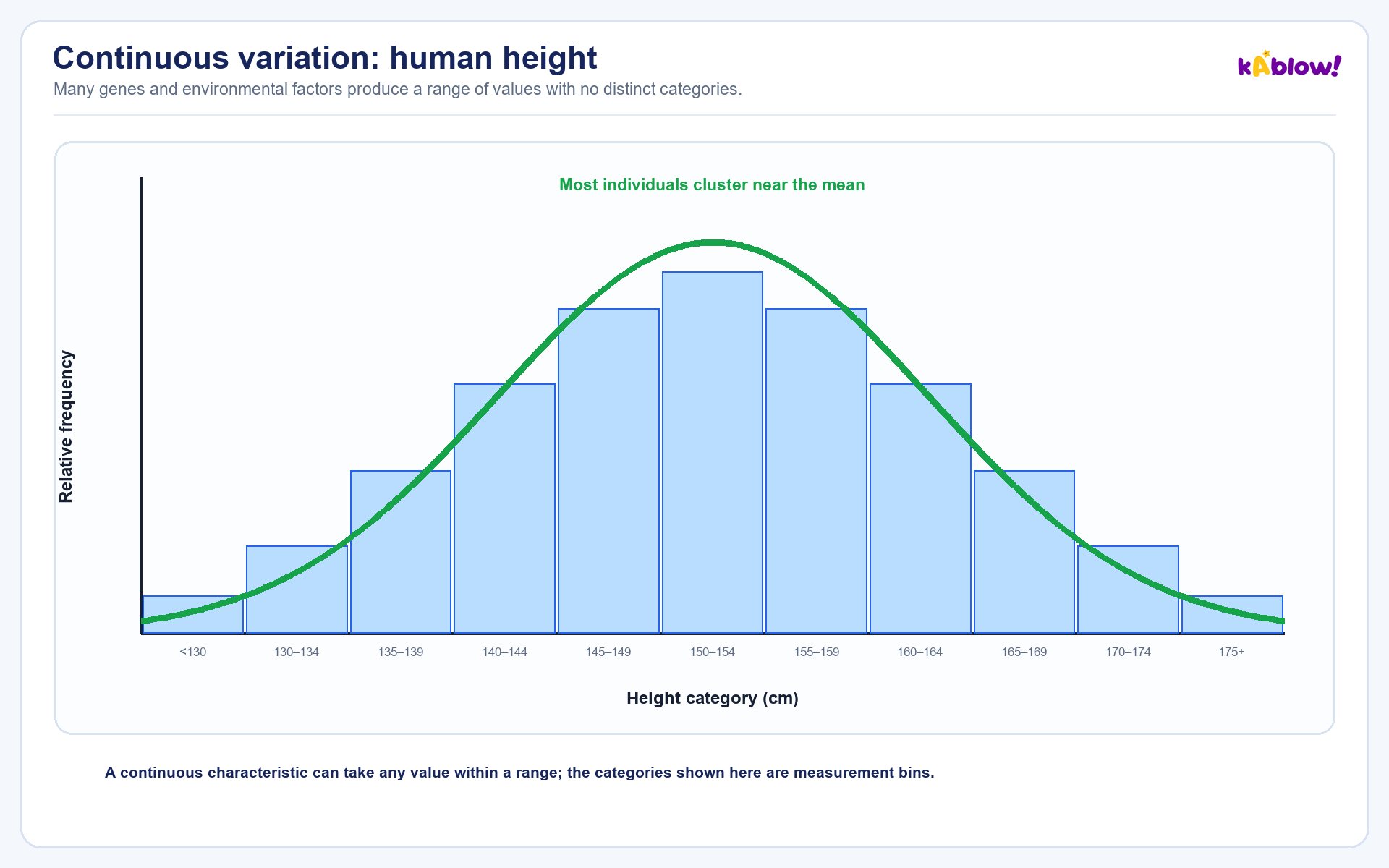
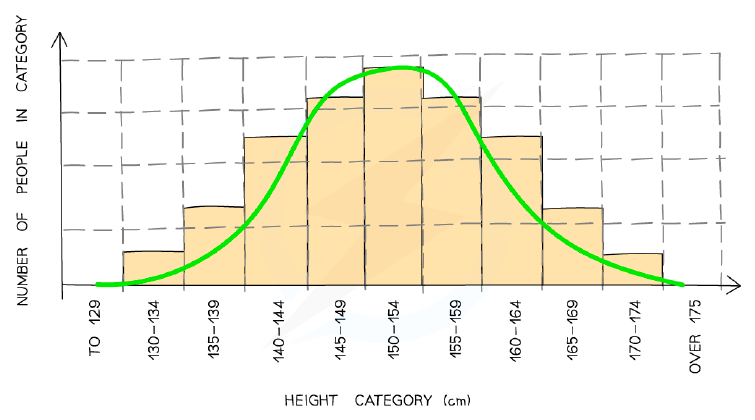
- Continuous variation = many small degrees of difference, measured on a scale (e.g. height, mass). Graph gives a smooth bell curve.
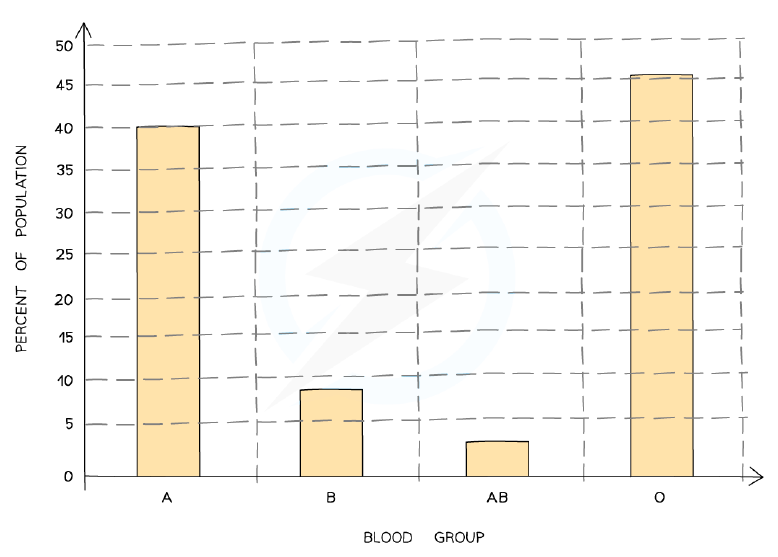
- Discontinuous variation = distinct categories with no intermediates (e.g. blood group, tongue rolling). Graph is step-shaped.
- Discontinuous variation is usually caused by genetic variation alone.
- Continuous variation often results from both genetic and environmental factors (e.g. height: genes + diet).
- Mutation = a change in a gene (DNA base sequence). Most have no effect; rarely give a survival advantage or cause harm (e.g. sickle cell anaemia).
- Mutation rate increased by ionising radiation (gamma, X-rays), UV light, and certain chemicals (e.g. tar).
Distribution of height showing continuous variation
Adaptive Features
- Adaptive features = inherited characteristics that help an organism survive and reproduce in its environment.
- Organisms with better adaptations are more likely to survive and pass on their alleles.
- Hydrophytes (e.g. water lily) are adapted to wet conditions: large air spaces for flotation, small roots, stomata on upper epidermis, stomata open all the time.
- Xerophytes (e.g. cactus) are adapted to dry conditions: thick waxy cuticle, sunken stomata, rolled leaves with hairs, small leaves, extensive shallow roots, water-storage tissues.
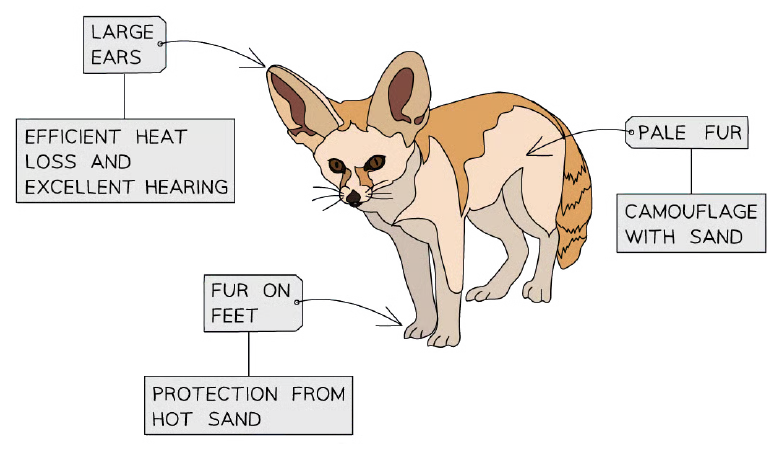
- Adaptations can be identified from images or data (e.g. gerbils produce very concentrated urine to conserve water in deserts).
Adaptive features of a fennec fox
Natural Selection
- Natural selection (Darwin's theory) = individuals with the best adaptive features survive and reproduce more.
- Steps: (1) Variation exists in a population. (2) Overproduction of offspring leads to competition. (3) Individuals with advantageous traits survive ('survival of the fittest'). (4) They reproduce and pass on beneficial alleles. (5) Over generations, the advantageous trait becomes more common.
- Example: Snail shell colour – a mutation for white shell gives better camouflage, so white snails survive longer, reproduce more, and the white allele spreads.
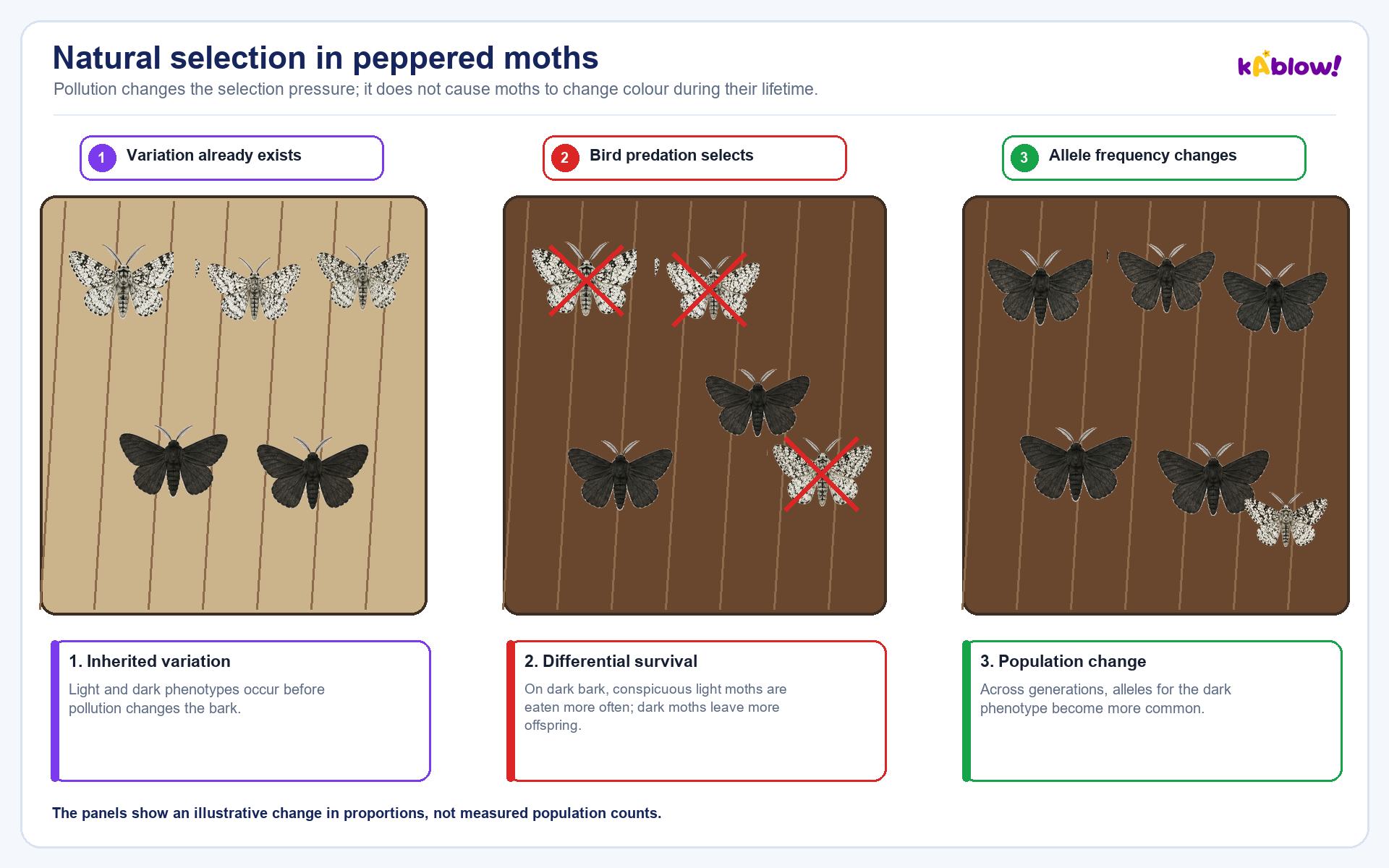
- Another example: Peppered moths – industrial melanism; dark moths became more common in polluted areas.
- Evolution = change in adaptive features of a population over time due to natural selection.
- If the environment changes, different traits may be favoured, leading to evolution.
- Antibiotic resistance in bacteria is a key example: resistant bacteria survive antibiotic treatment, reproduce, and the resistant strain becomes dominant.
Natural selection in peppered moths
Artificial Selection
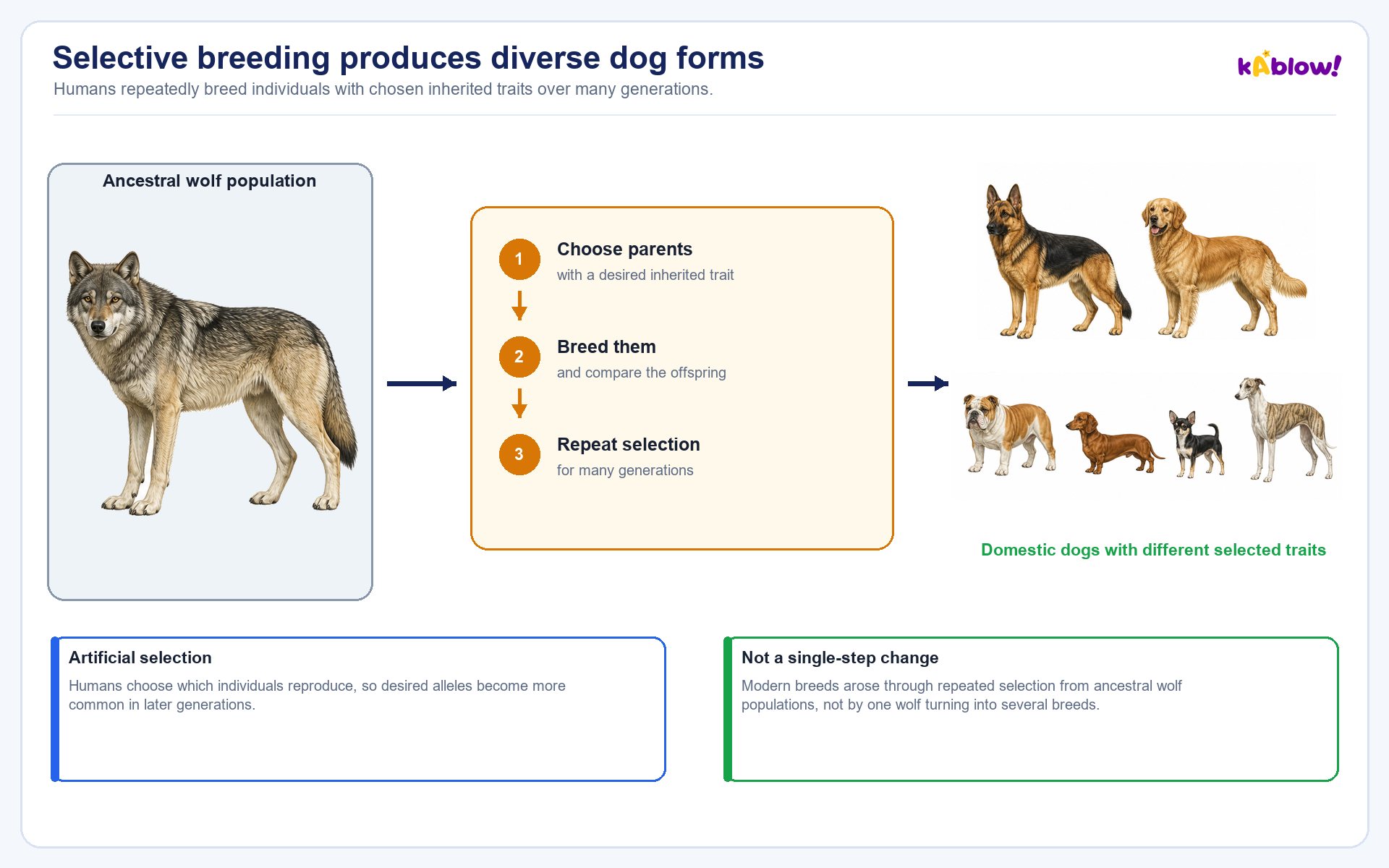
- Artificial selection (selective breeding) = humans select individuals with desirable characteristics and breed them together.
- Process repeated over many generations until the desired trait is reliably inherited.
- Examples: dog breeds (coat colour), crop plants (disease resistance, high yield, drought tolerance, better taste).
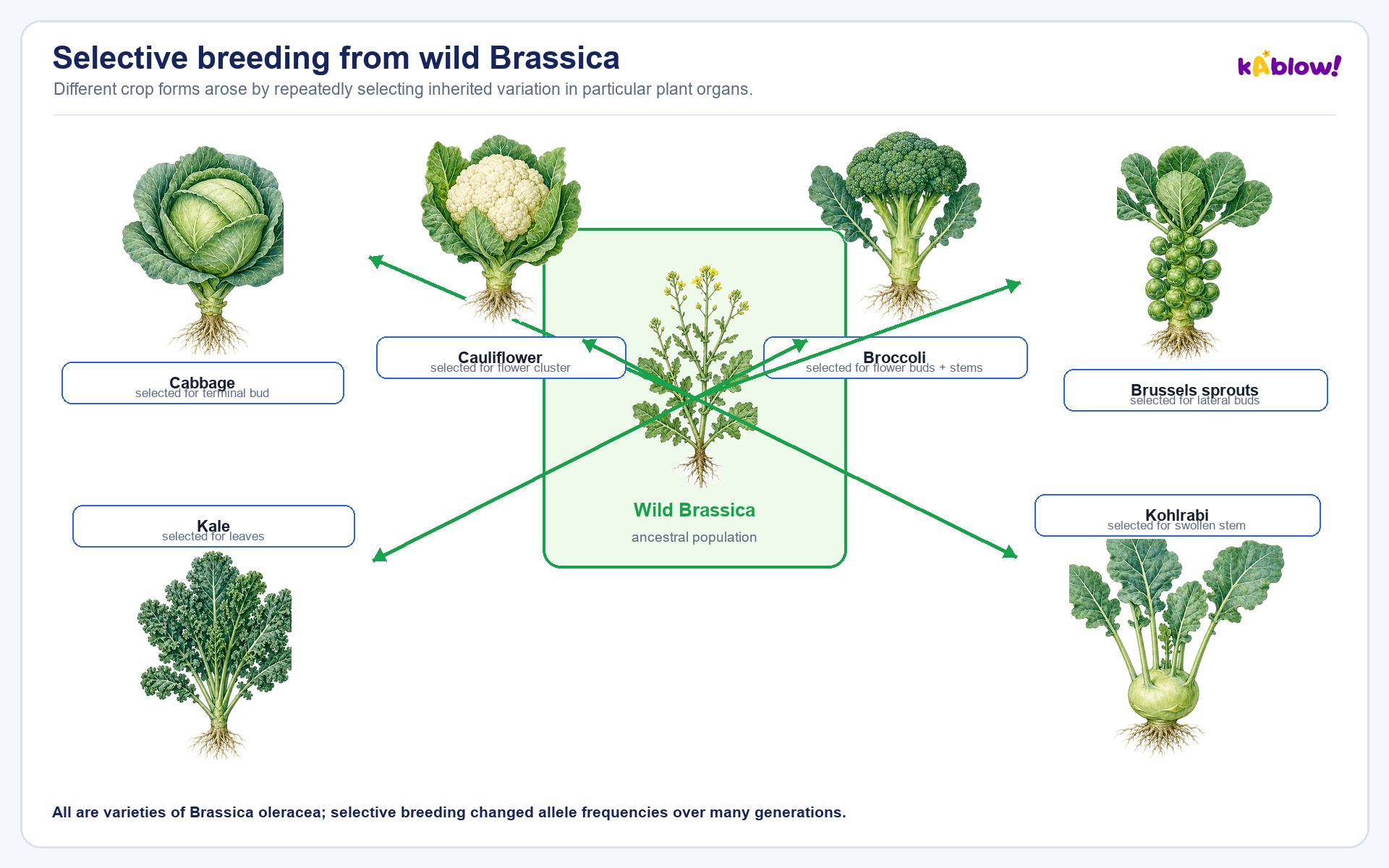
- Wild brassica has been selectively bred to produce cauliflower, cabbage, broccoli, Brussels sprouts, kale, and kohlrabi.
- Unlike natural selection, artificial selection is driven by human choice, not environmental pressures.
Selective breeding of dog breeds from wolves
슬라이드
연습 문제
무료 미리 보기 — 57개 중 8개 문제. 가입하면 전부 볼 수 있어요.
1.What is a mutation?
Easy- AA change in a gene
- BA type of continuous variation
- CA process used in genetic engineering
- DA condition caused by a dominant allele
2.Which of the following characteristics shows discontinuous variation?
Easy- ATongue rolling
- BHeight
- CWeight
- DLength of foot
3.Which of these is not a feature of a hydrophyte?
Medium- ALeaves rolled up and covered with hairs
- BRoots and xylem reduced
- CLarge air spaces in the tissues
- DLeaves with stomata on the upper surface
4.Which of the following is not a feature of natural selection?
Easy- ASelection by humans
- BProduction of many offspring
- CCompetition for resources
- DVariation in the population
5.Which of these phenotypes is affected by both environmental and genetic factors?
Medium- AWeight
- BTongue rolling
- CBlood group
- DGender
6.Over the last 30 years some antibiotics have become less effective in treating bacterial infections. What is the reason for this?
Medium- ANatural selection
- BArtificial selection
- CAsexual reproduction
- DMore effective new antibiotics
7.Which statement about selective breeding is correct?
Easy- AIt involves parents that possess desirable features
- BIt does not involve humans
- CIt involves a struggle for survival
- DIt always involves only one parent
8.Which adaptation is shown in the leaves of hydrophytes?
Medium- AContain large air spaces
- BHairs present on the upper and lower surfaces
- CStomata present on the lower surface only
- DThick cuticle present on the upper and lower surfaces
기출 문제
이 주제의 기출 문제 연습이 곧 나와요.
곧 출시