Water & Water Pollution
플레이하며 배우기
이 문제들을 풀어 에너지를 얻은 뒤 낚시하고 탐험하세요. 계정이 필요 없어요.
교육자를 위해: Water & Water Pollution(Chemistry, CIE)을(를) 위한 바로 쓸 수 있는 수업 슬라이드, 복습 노트 — 수업에 사용하거나, 학습자들이 실시간 게임으로 즐기는 인터랙티브 클래스 활동으로 진행하세요.
수업 노트
Chemical Tests for Water
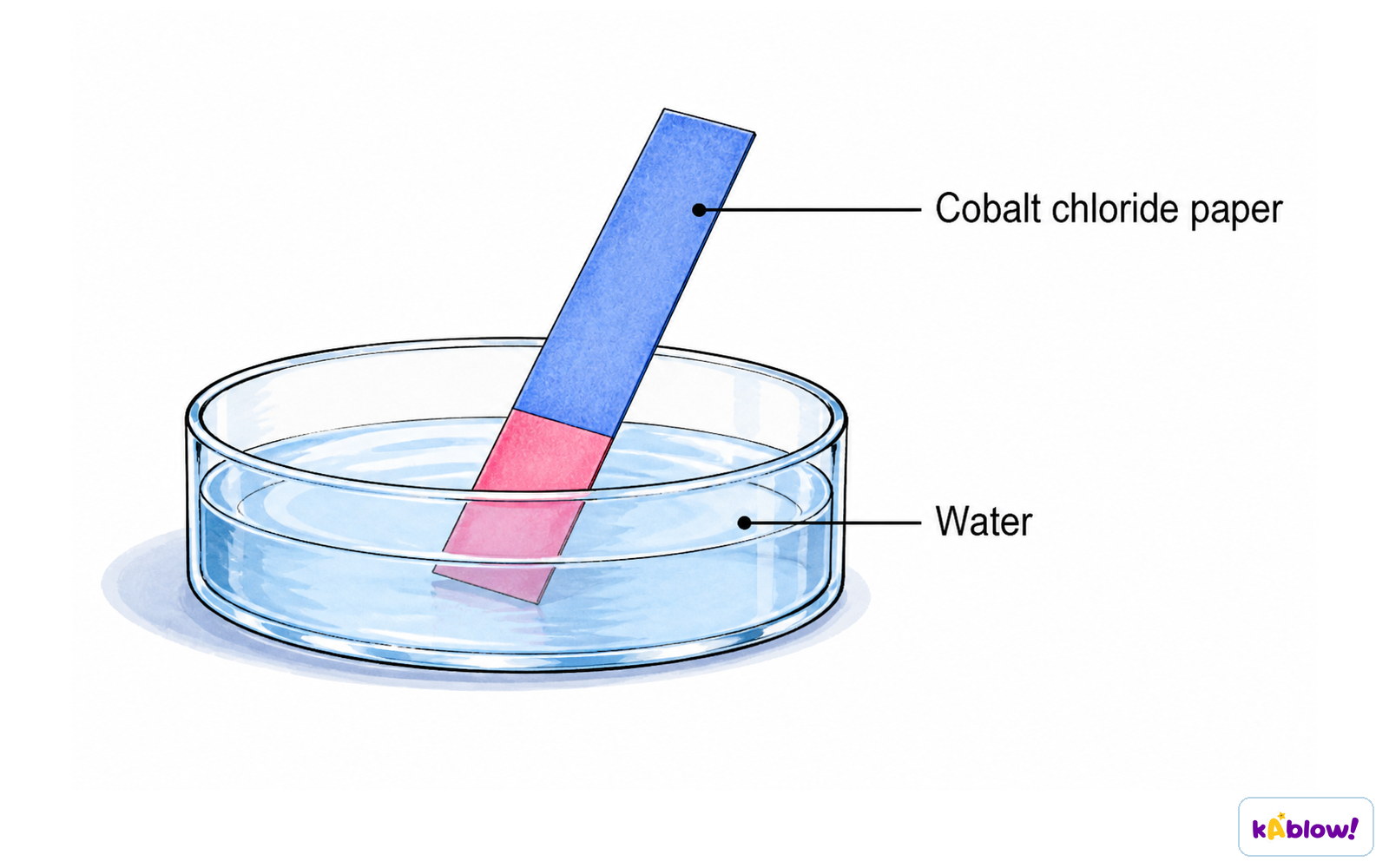
- Anhydrous cobalt(II) chloride (blue) turns pink in the presence of water, forming hydrated cobalt(II) chloride.
- Cobalt chloride paper is commonly used: blue → pink indicates water.
- Anhydrous copper(II) sulfate (white) turns blue in the presence of water, forming hydrated copper(II) sulfate.
- Both tests are reversible: hydration on adding water, dehydration on heating.
Cobalt chloride paper changes from blue to pink in the presence of water
Purity of Water
- Pure water has a sharp boiling point of 100 °C and melting point of 0 °C.
- Impurities raise the boiling point and lower the melting point, giving a range.
- Distilled water is produced by boiling water and condensing the steam, removing most dissolved impurities.
- Distilled water is used in chemistry to avoid interference from dissolved ions in tap water.
Substances in Natural Water Sources
- Natural water comes from lakes, rivers, and groundwater stored in aquifers.
- Beneficial substances: dissolved oxygen (essential for aquatic life) and metal compounds (e.g., Ca²⁺, Mg²⁺ provide essential minerals).
- Harmful substances: toxic metals (e.g., lead, aluminium), plastics, sewage (harmful microbes), and nitrates/phosphates from fertilisers.
- Nitrates and phosphates can cause eutrophication – excessive plant growth leading to deoxygenation of water.
Water Treatment
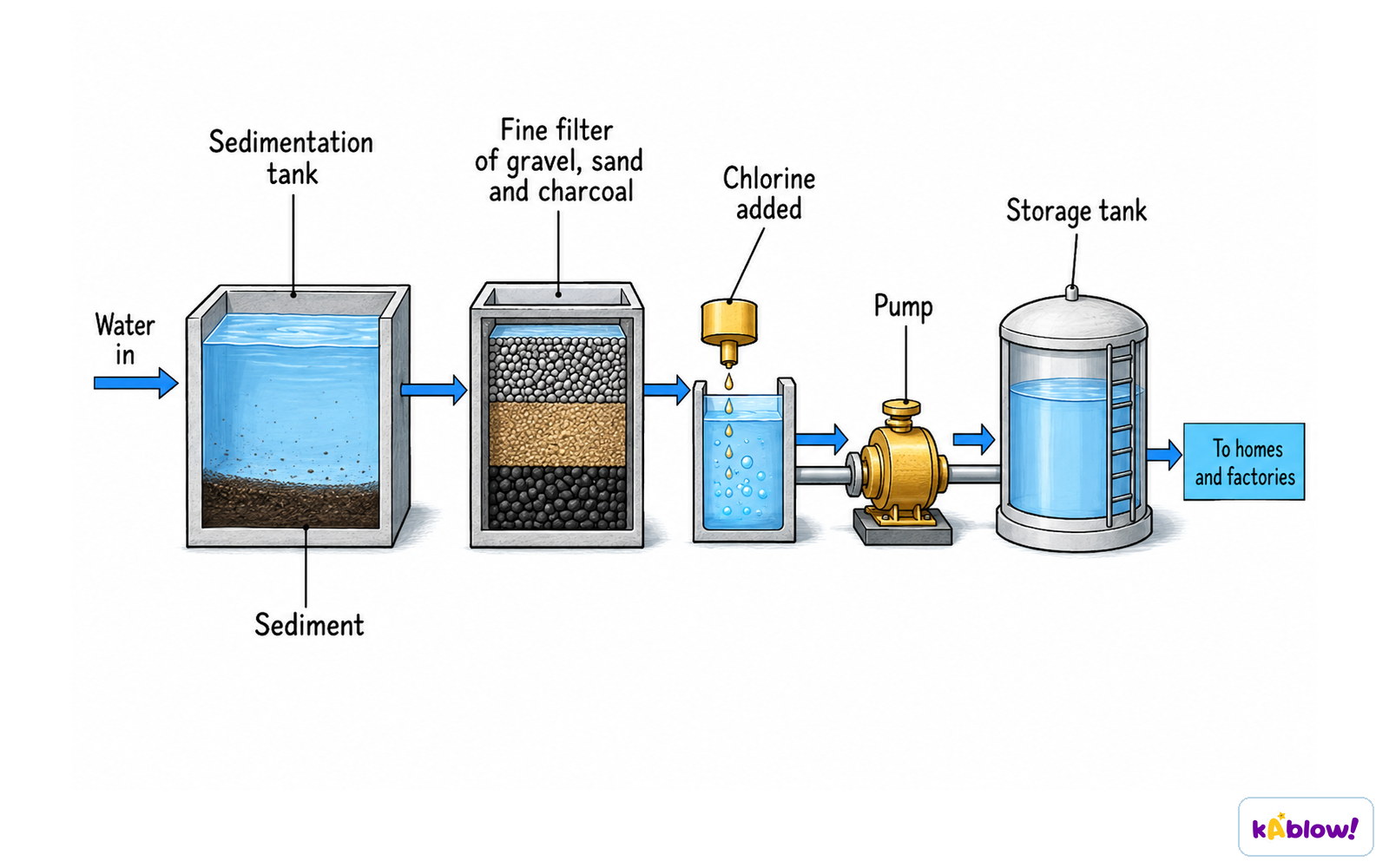
- Untreated water contains insoluble (soil, plant matter) and soluble (dissolved ions) impurities.
- Step 1 – Sedimentation: Water stands in tanks; heavy particles settle by gravity.
- Step 1 – Filtration: Water passes through sand and gravel to remove smaller particles.
- Step 2 – Carbon filtration: Removes unpleasant tastes and odours.
- Step 3 – Chlorination: Chlorine is added to kill bacteria and microbes (prevents diseases like cholera and typhoid).
The stages of treating water are sedimentation, filtration with carbon and chlorination
Fertilisers
- NPK fertilisers supply nitrogen (N), phosphorus (P), and potassium (K) for healthy plant growth.
- Nitrogen promotes leaves (chlorophyll and protein); phosphorus promotes roots; potassium promotes fruit and flowers.
- Water-soluble ions: ammonium (NH₄⁺) and nitrate (NO₃⁻) for nitrogen; phosphate (PO₄³⁻) for phosphorus; potassium (K⁺) from soluble potassium compounds.
- Common fertiliser compounds: ammonium nitrate (NH₄NO₃), ammonium phosphate ((NH₄)₃PO₄), potassium nitrate (KNO₃).
- Fertilisers must be water-soluble so plants can absorb ions through their roots.
슬라이드
연습 문제
무료 미리 보기 — 48개 중 8개 문제. 가입하면 전부 볼 수 있어요.
1.Which colour change indicates the presence of water when using anhydrous cobalt(II) chloride?
Easy- Ablue to pink
- Bpink to blue
- Cwhite to blue
- Dblue to white
2.Which colour change indicates the presence of water when using anhydrous copper(II) sulfate?
Easy- Awhite to blue
- Bblue to white
- Cpink to blue
- Dwhite to pink
3.What is the term for a rock that stores water?
Easy- Aaquifer
- Breservoir
- Csediment
- Daqueduct
4.Which of the following is a beneficial substance that can be found in natural water sources?
Easy- Adissolved oxygen
- Blead compounds
- Csewage
- Dnitrates from fertilisers
5.What is the main purpose of chlorination in water treatment?
Easy- Ato kill bacteria and other microbes
- Bto remove insoluble particles
- Cto remove unpleasant tastes and odours
- Dto add essential minerals
6.A sample of water boils at 101 °C at standard pressure. What does this indicate about the water?
Easy- Ait is pure water
- Bit contains dissolved impurities
- Cit is distilled water
- Dit has a lower boiling point than pure water
7.Which of the following is NOT a stage in the treatment of water for domestic supply?
Easy- Asedimentation
- Bfiltration through carbon
- Cdistillation
- Dchlorination
8.Fertilisers contain soluble ions. Which ion provides phosphorus for plant growth?
Easy- Aphosphate, PO₄³⁻
- Bnitrate, NO₃⁻
- Cammonium, NH₄⁺
- Dpotassium, K⁺
기출 문제
이 주제의 기출 문제 연습이 곧 나와요.
곧 출시