Coordination Response And Homeostasis
플레이하며 배우기
이 문제들을 풀어 에너지를 얻은 뒤 낚시하고 탐험하세요. 계정이 필요 없어요.
교육자를 위해: Coordination Response And Homeostasis(Co-ordinated Sciences (Double Award) [CIE], Biology)을(를) 위한 바로 쓸 수 있는 수업 슬라이드, 복습 노트 — 수업에 사용하거나, 학습자들이 실시간 게임으로 즐기는 인터랙티브 클래스 활동으로 진행하세요.
수업 노트
Mammalian Nervous System
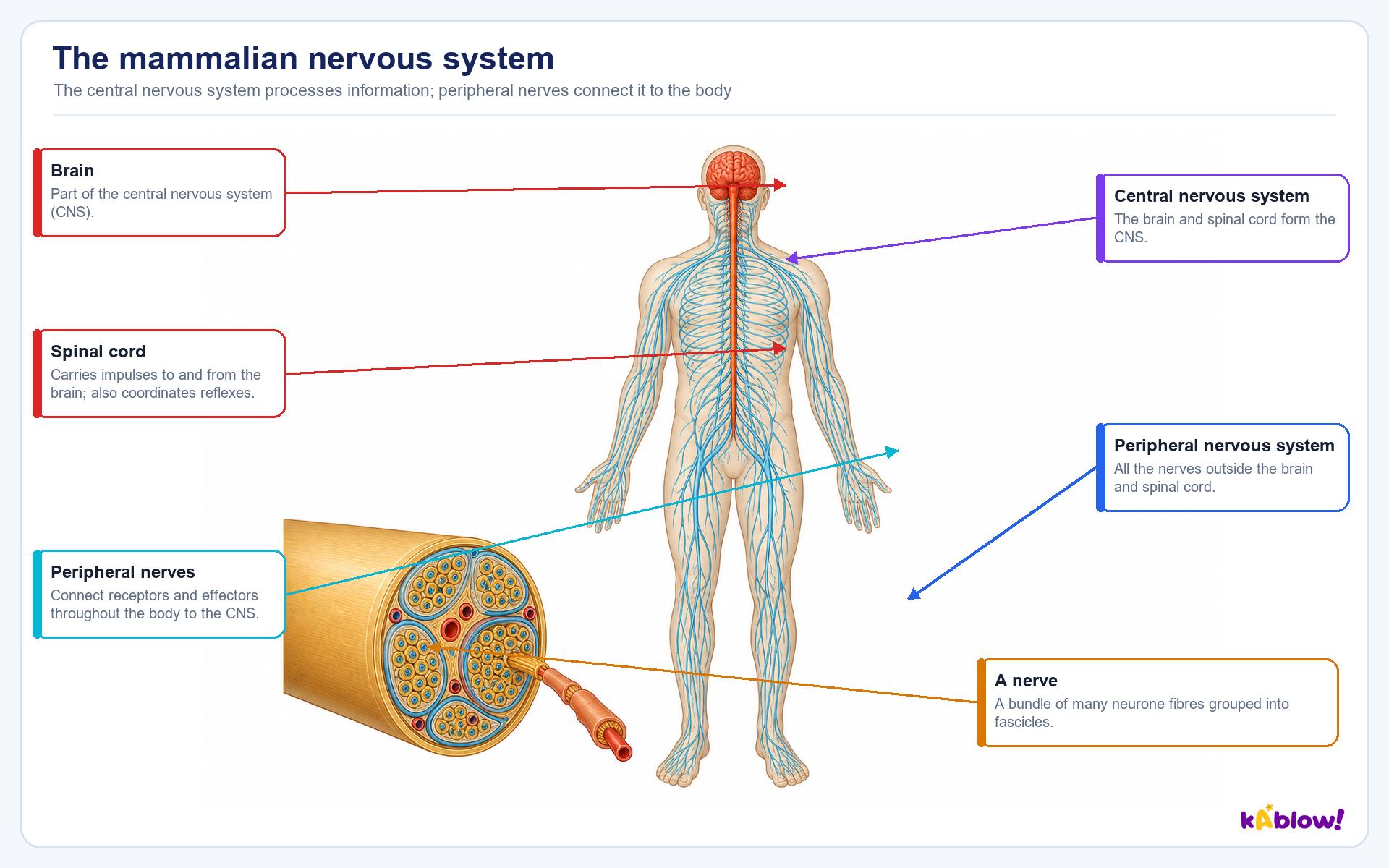
- The nervous system consists of the central nervous system (CNS) (brain and spinal cord) and the peripheral nervous system (PNS) (all nerves).
- It allows us to sense and respond to the environment and coordinate body functions.
- Information is transmitted as nerve impulses (electrical signals) along neurones; a bundle of neurones is a nerve.
The mammalian nervous system
Types of Neurones
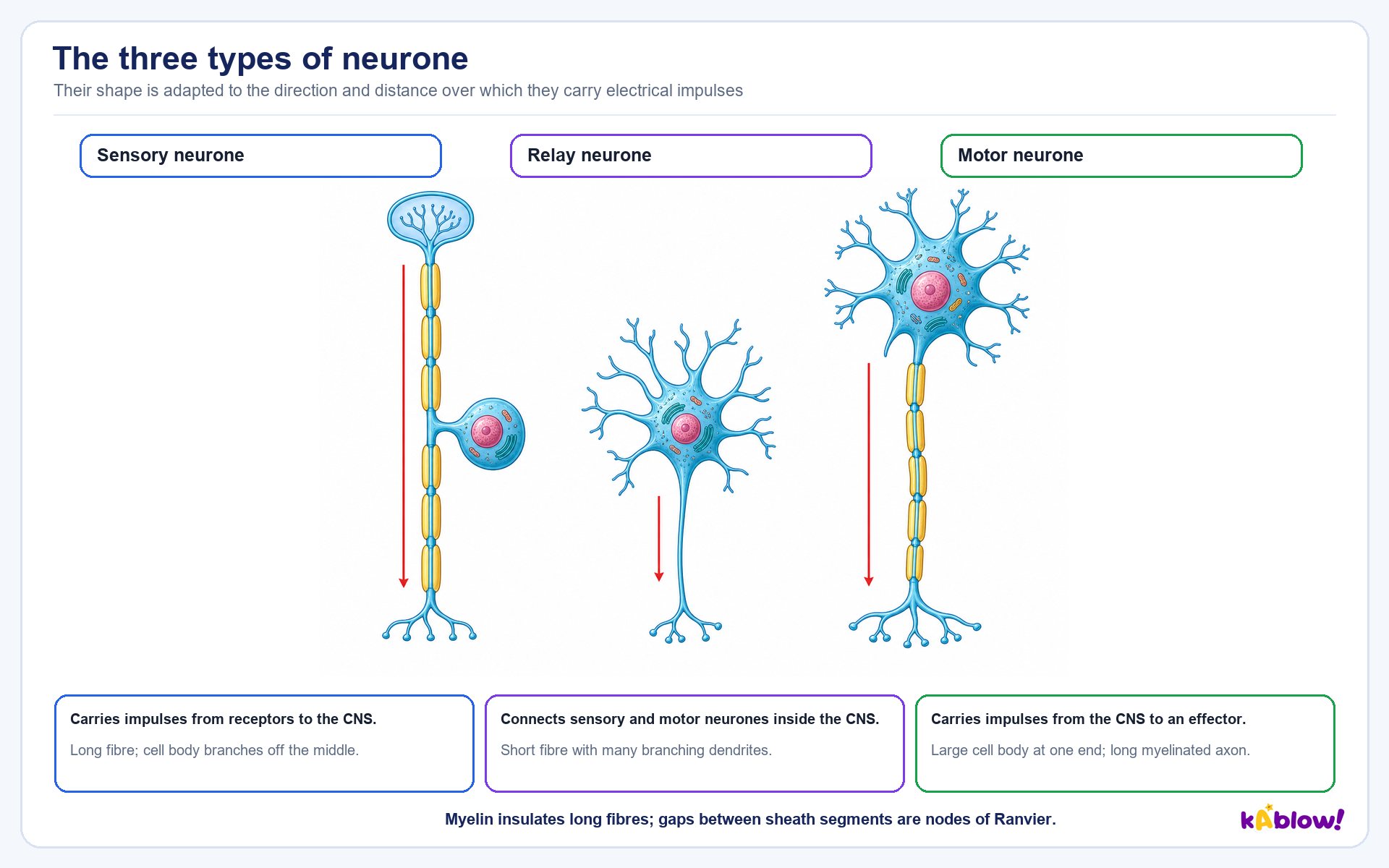
- Sensory neurones carry impulses from sense organs to the CNS.
- Relay neurones (in the CNS) connect sensory and motor neurones.
- Motor neurones carry impulses from the CNS to effectors (muscles or glands).
- Neurones have a long axon insulated by a myelin sheath with nodes of Ranvier; impulses jump between nodes for rapid transmission.
- Cell bodies have dendrites that connect to many other neurones.
The three types of neurone
The Reflex Arc
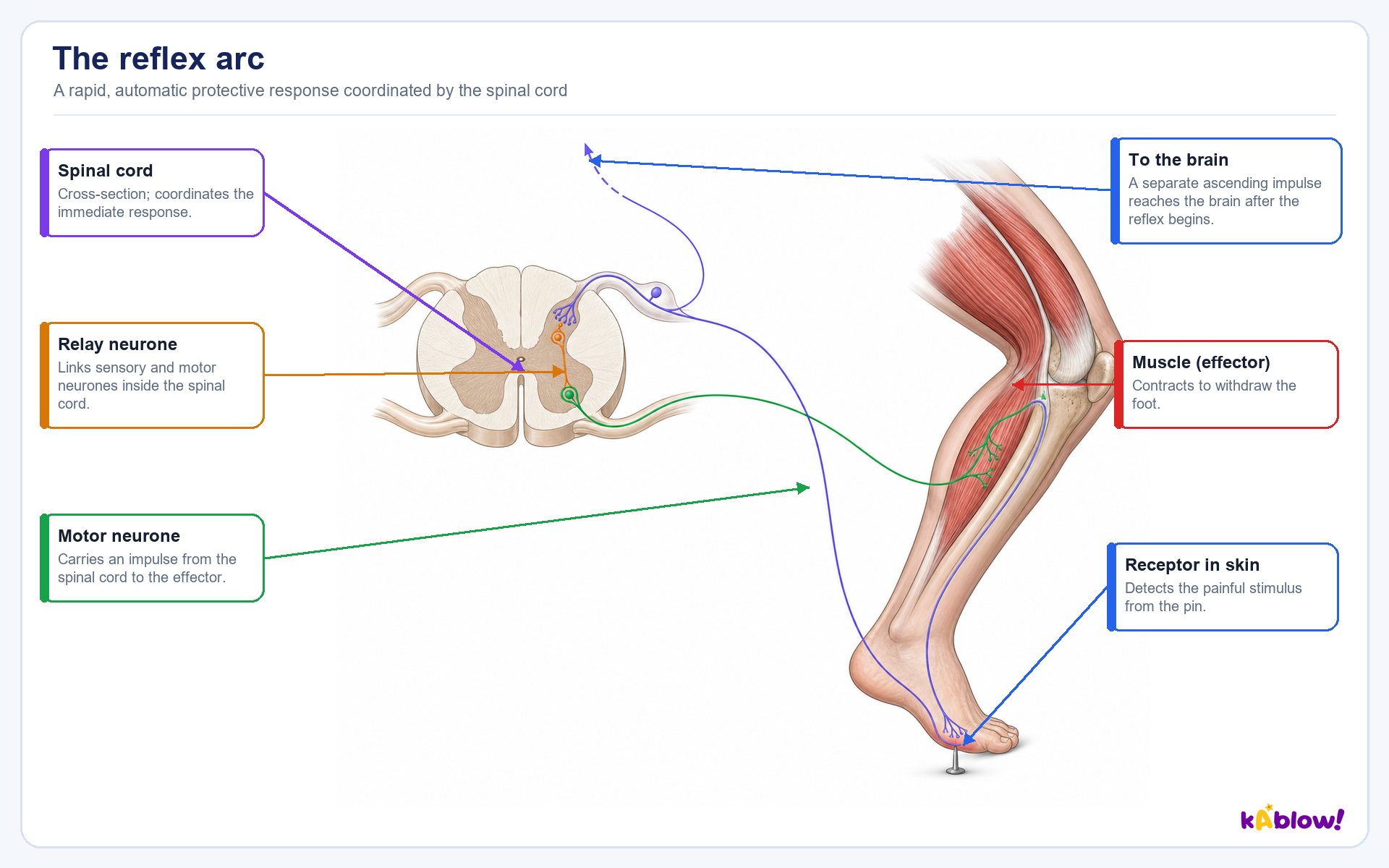
- A reflex action is an automatic, rapid, protective response that does not involve the brain.
- Pathway: stimulus → receptor → sensory neurone → relay neurone (in spinal cord) → motor neurone → effector → response.
- Example: touching a sharp object causes pain receptors to send impulses via sensory neurone to spinal cord; relay neurone passes impulse to motor neurone; muscle contracts to withdraw foot.
A reflex arc
Sense Organs
- Receptors are groups of specialised cells that detect stimuli and generate electrical impulses.
- Sense organs contain receptors that respond to specific stimuli (e.g., eyes to light, ears to sound).
- Impulses from sense organs travel via sensory neurones to the CNS, which coordinates a response via motor neurones to effectors.
Sense organs and their receptors
Hormones in Humans
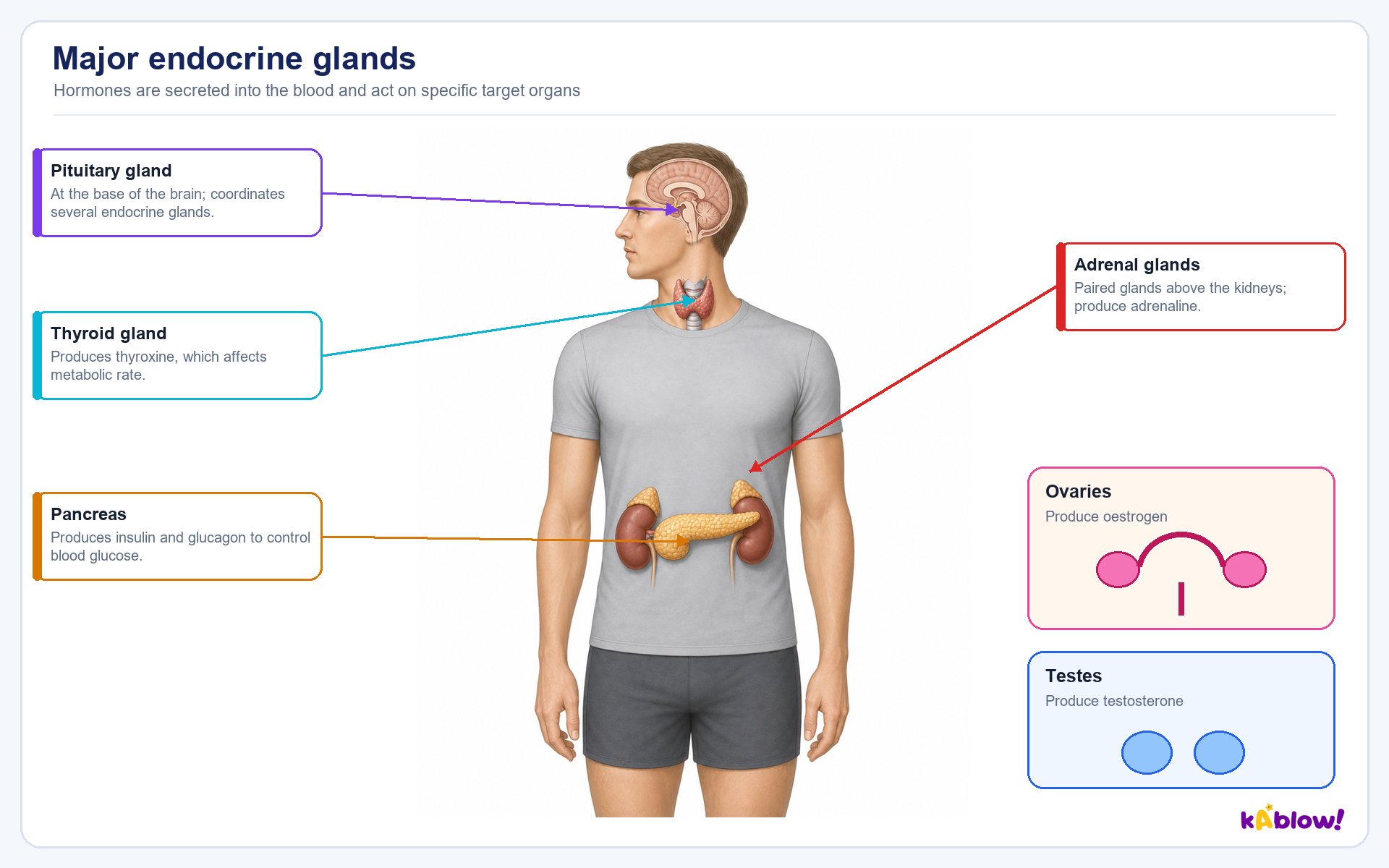
- A hormone is a chemical substance produced by a gland, carried by the blood, that alters the activity of target organs.
- The endocrine system consists of glands that secrete hormones directly into the bloodstream.
- Insulin (from pancreas) lowers blood glucose by converting glucose to glycogen in liver and muscles.
- Glucagon (from pancreas) raises blood glucose by converting glycogen to glucose.
- Adrenaline (from adrenal glands) prepares the body for 'fight or flight': increases blood glucose, heart rate, breathing rate, diverts blood to muscles, dilates pupils.
The major endocrine glands in the body
Homeostasis
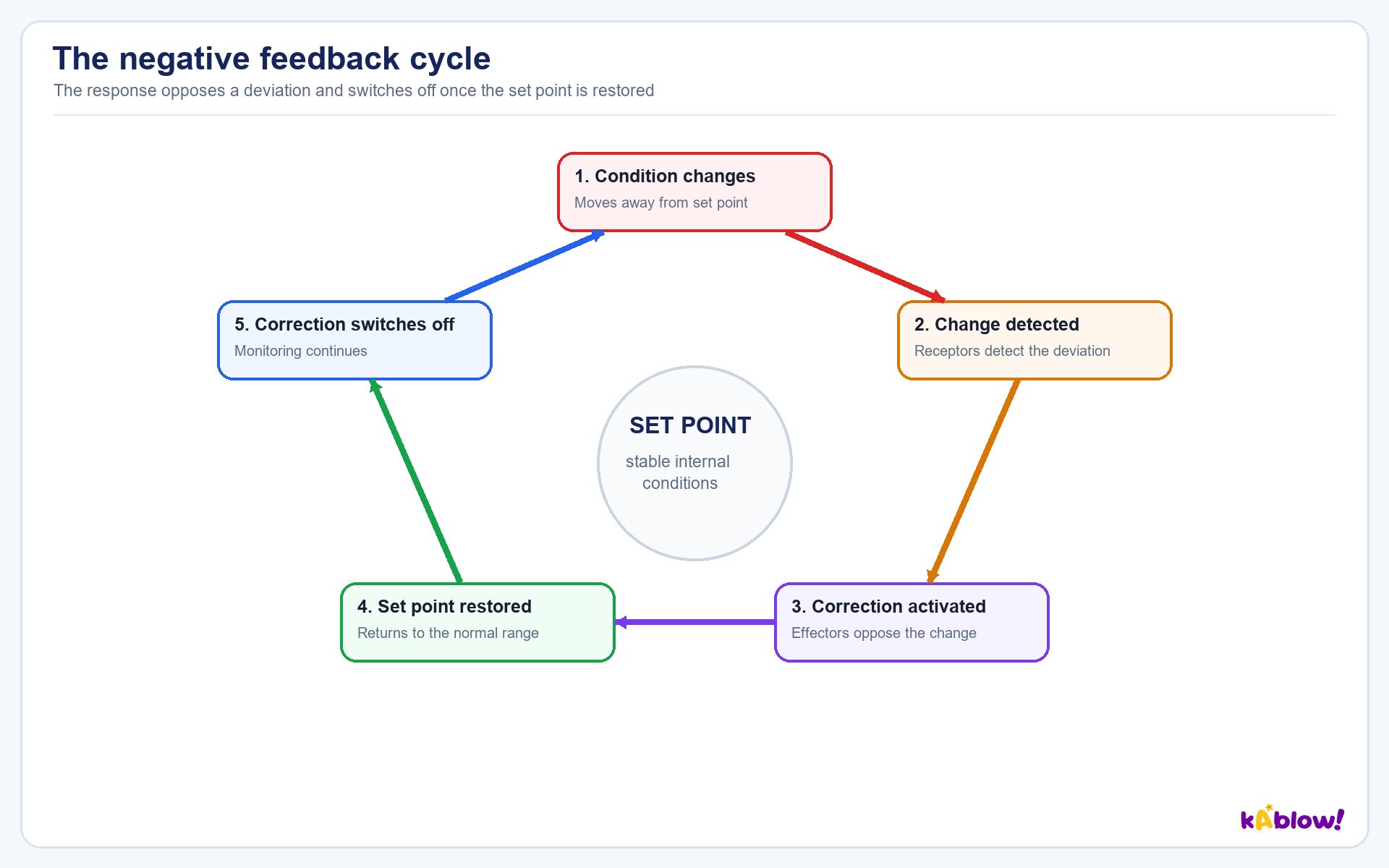
- Homeostasis is the maintenance of a constant internal environment.
- Negative feedback reverses changes from the set point: if a level rises, mechanisms reduce it; if it falls, mechanisms raise it.
- Blood glucose is controlled by negative feedback involving insulin and glucagon.
The negative feedback cycle
Homeostasis & Temperature Control
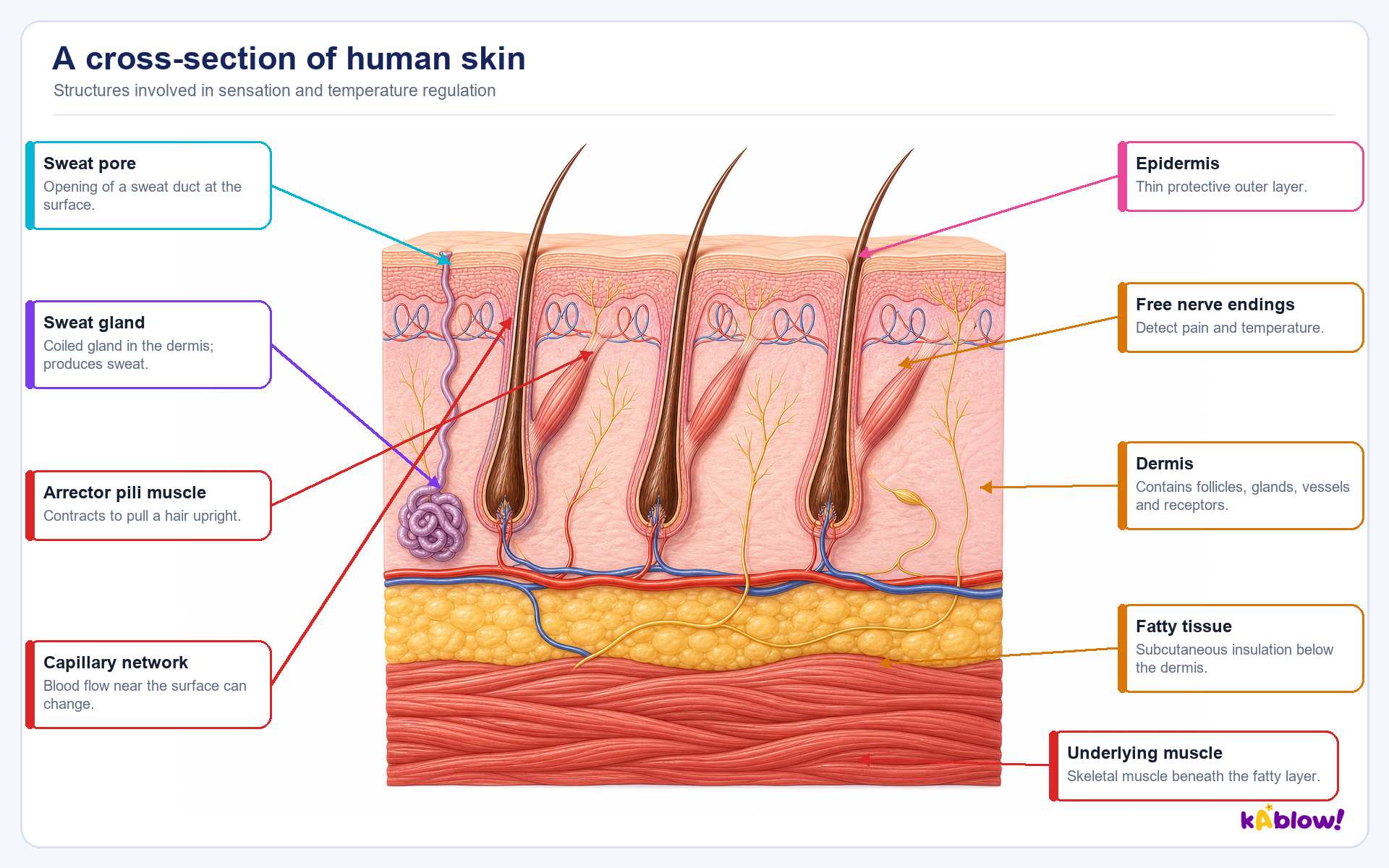
- Body temperature is maintained at about 37°C by the skin and brain.
- The brain contains receptors sensitive to blood temperature; skin has temperature receptors that send impulses to the brain.
- When hot: vasodilation of skin arterioles increases heat loss; sweating cools the body via evaporation.
- When cold: vasoconstriction reduces heat loss; shivering generates heat; erector pili muscles raise hairs (ineffective in humans).
- Fatty tissue under the dermis provides insulation.
A cross-section of human skin
슬라이드
연습 문제
무료 미리 보기 — 56개 중 8개 문제. 가입하면 전부 볼 수 있어요.
1.Complete the sentence.
EasyThe human nervous system consists of the central nervous system (CNS) and the ____ nervous system.
2.Which type of neurone carries impulses from sense organs to the central nervous system?
Easy- ASensory neurone
- BRelay neurone
- CMotor neurone
- DInterneurone
3.Name the part of a neurone that is insulated by a fatty sheath and carries electrical impulses.
Easy4.A reflex action involves the brain as the coordinator.
EasyTrue or false?
5.Place the following events in a reflex arc in the correct order.
Medium- Impulse travels along sensory neurone to spinal cord
- Stimulus detected by receptor
- Effector produces response
- Impulse passes to relay neurone then motor neurone
6.Name the hormone produced by the pancreas that lowers blood glucose concentration.
Easy7.What is the optimum temperature for human enzyme activity in degrees Celsius?
Easy- A41
- B45
- C33
- D37
8.Which of the following is NOT an effect of adrenaline?
Medium- AIncreased blood glucose concentration
- BDecreased pulse rate
- CDilated pupils
- DDiverted blood flow to muscles
기출 문제
이 주제의 기출 문제 연습이 곧 나와요.
곧 출시