Human Diet And Digestion
플레이하며 배우기
이 문제들을 풀어 에너지를 얻은 뒤 낚시하고 탐험하세요. 계정이 필요 없어요.
교육자를 위해: Human Diet And Digestion(Co-ordinated Sciences (Double Award) [CIE], Biology)을(를) 위한 바로 쓸 수 있는 수업 슬라이드, 복습 노트, 다이어그램 — 수업에 사용하거나, 학습자들이 실시간 게임으로 즐기는 인터랙티브 클래스 활동으로 진행하세요.
수업 노트
Balanced Diet
- A balanced diet contains all food groups in correct proportions.
- Essential food groups: carbohydrates, proteins, lipids, vitamins, minerals, dietary fibre, and water.
- Individual needs vary with age, gender, activity level, and pregnancy.
Vitamin Deficiencies
- Scurvy results from severe vitamin C deficiency (e.g., in sailors).
- Symptoms of scurvy: anaemia, exhaustion, bleeding, limb pain, gum ulcers, tooth loss.
- Rickets in children is caused by vitamin D deficiency, leading to soft, weak bones.
- Vitamin D is needed for calcium absorption; treatment includes supplements and sunlight.
Digestive System Overview
- The alimentary canal processes food through: ingestion, mechanical digestion, chemical digestion, absorption, assimilation, and egestion.
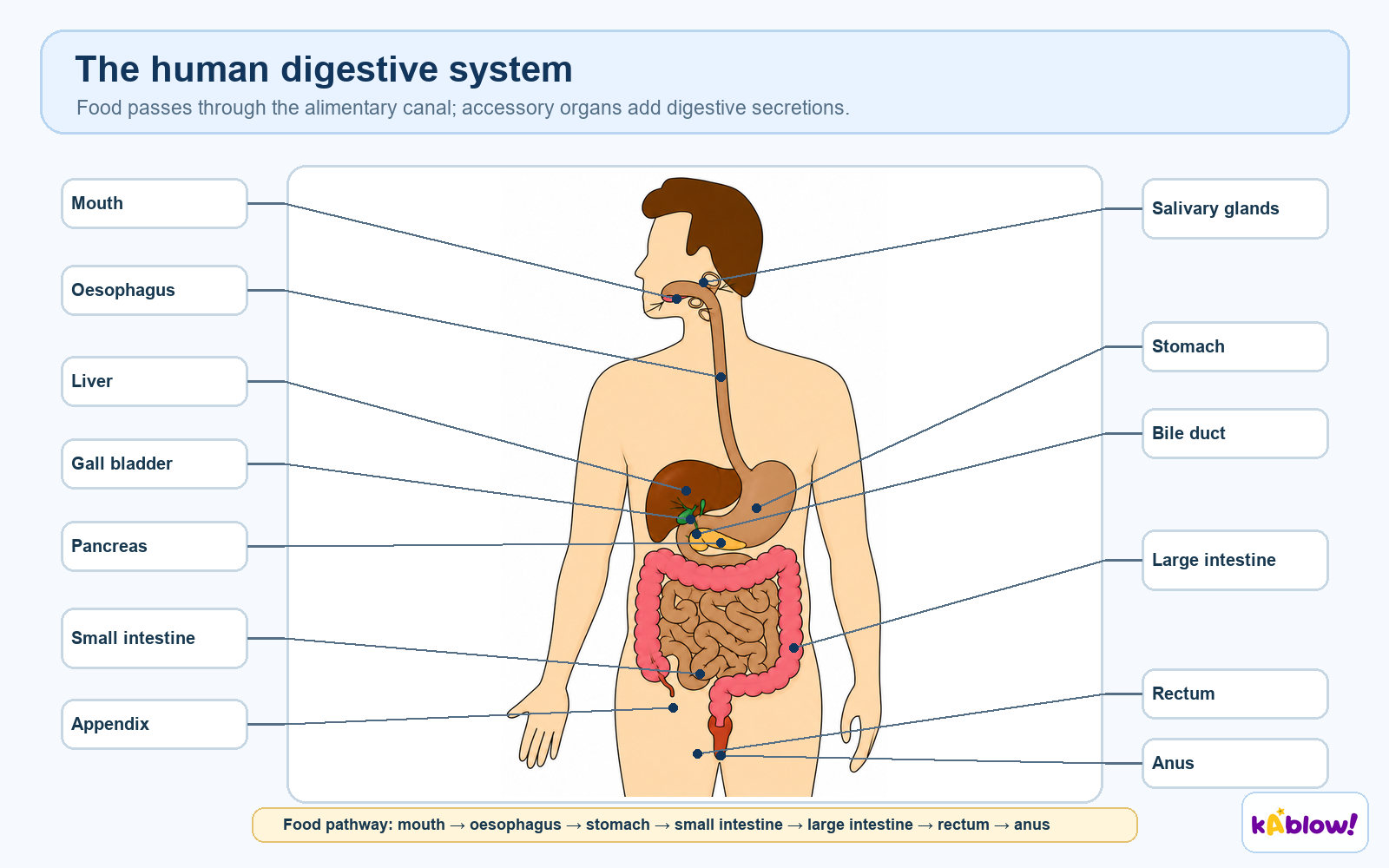
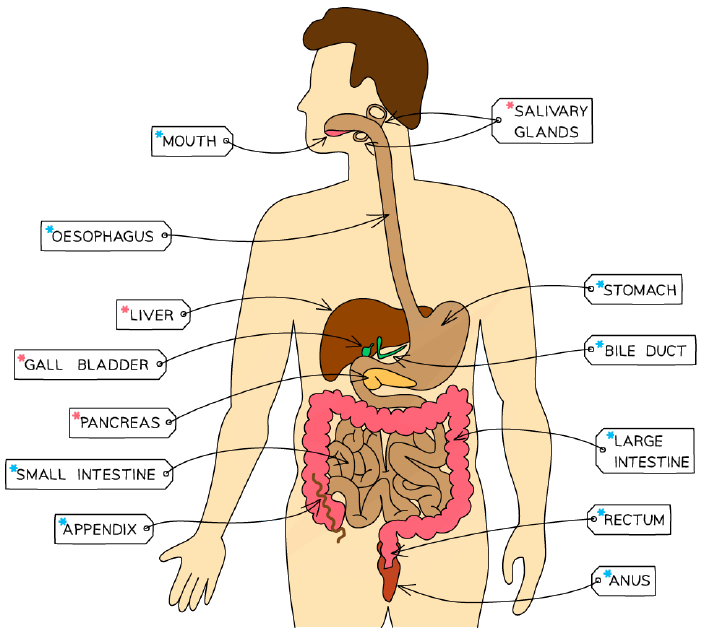
- Key organs: mouth, oesophagus, stomach, small intestine (duodenum & ileum), large intestine, rectum, anus.
- Accessory organs: salivary glands, pancreas, liver, gall bladder.
Organs of the human digestive system
Physical (Mechanical) Digestion
- Breaks food into smaller pieces without chemical change.
- Increases surface area for enzyme action.
- Includes chewing (teeth), stomach churning, and emulsification of fats by bile.
Chemical Digestion
- Breaks down large, insoluble molecules into small, soluble ones.
- Produces molecules that can be absorbed into the blood.
Digestive Enzymes
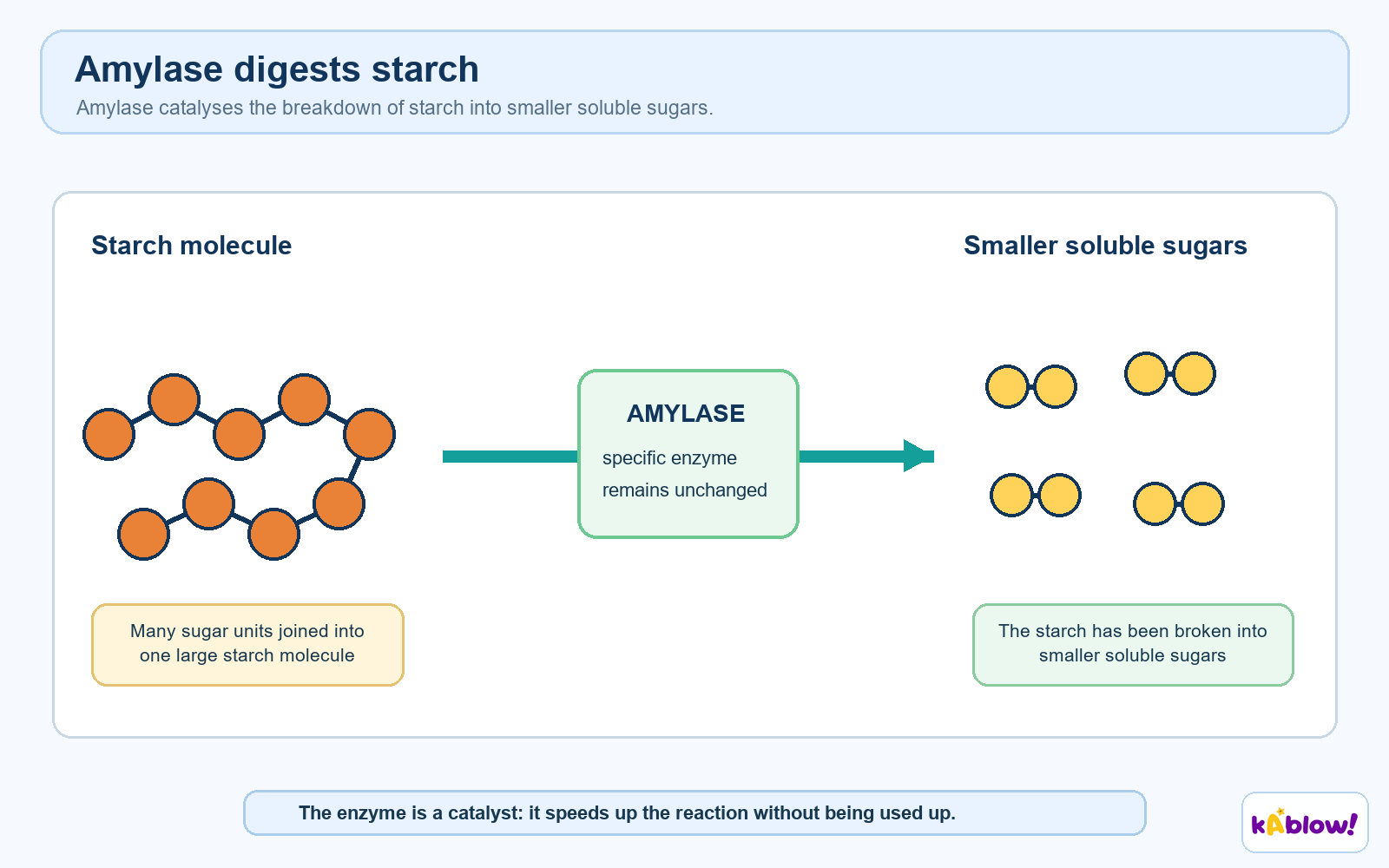
- Amylase (mouth & pancreas) digests starch → smaller sugars.
- Proteases (stomach & pancreas) digest proteins → amino acids.
- Lipase (pancreas) digests lipids → fatty acids + glycerol.
The digestion of starch by amylase
Hydrochloric Acid in Stomach
- Hydrochloric acid in gastric juice kills bacteria and provides low pH (~2).
- Low pH denatures bacterial enzymes and optimises pepsin (a protease) activity.
Bile & Emulsification
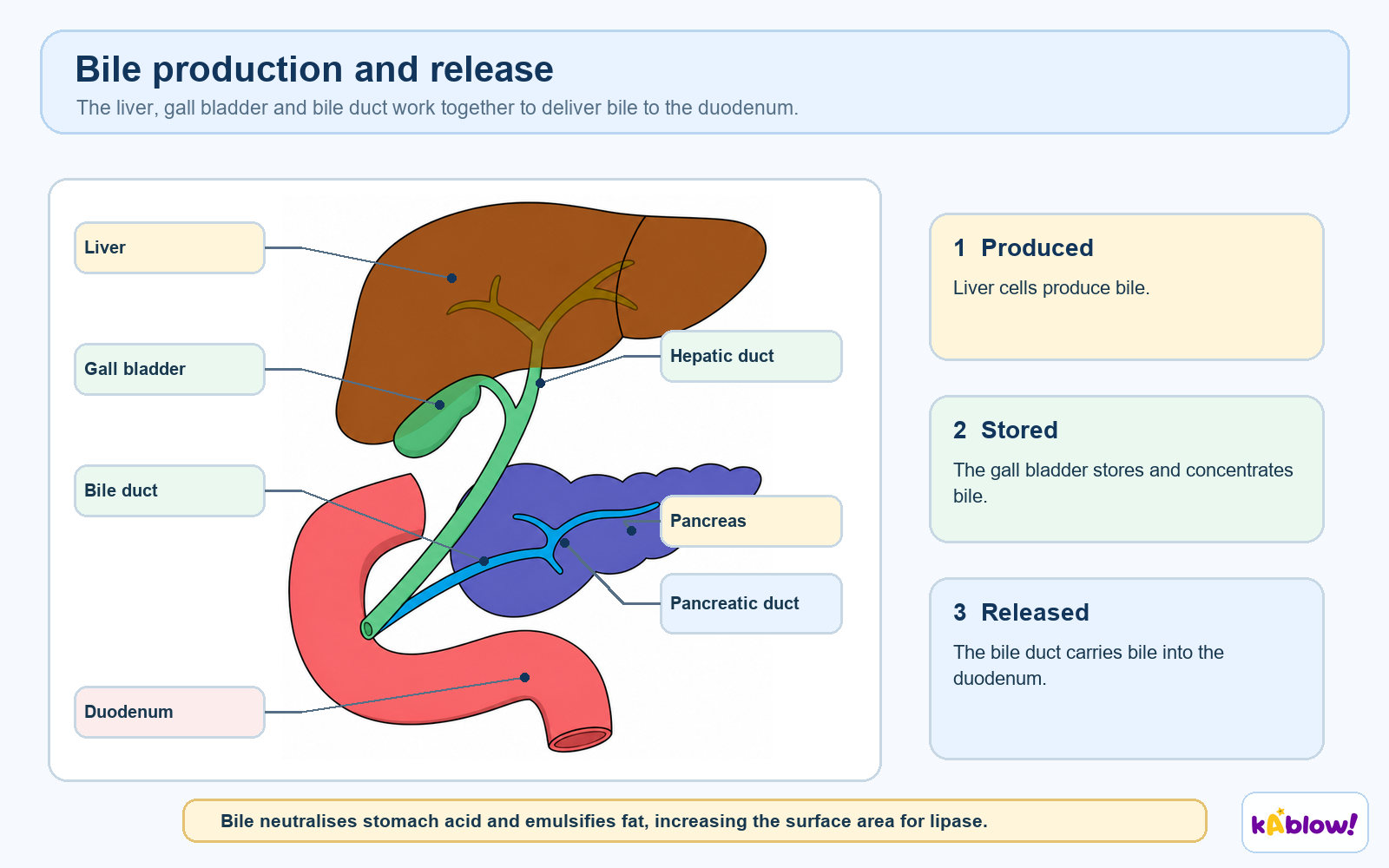
- Bile is produced by liver, stored in gall bladder, released into duodenum.
- Bile is alkaline – neutralises stomach acid for small intestine enzymes.
- Bile emulsifies fats (mechanical digestion), increasing surface area for lipase.
Bile production and secretion
슬라이드
연습 문제
무료 미리 보기 — 53개 중 8개 문제. 가입하면 전부 볼 수 있어요.
1.Which food group provides the main source of energy in a balanced diet?
Easy- ACarbohydrates
- BProteins
- CLipids
- DVitamins
2.Scurvy is caused by a deficiency of vitamin D.
EasyTrue or false?
3.Name the mineral required for the development of strong bones and teeth.
Easy4.Complete the sentence about digestion.
EasyThe breakdown of large, insoluble molecules into small, soluble molecules is called ____ digestion.
5.Match each enzyme to the type of food it digests.
Medium- Amylase
- Protease
- Lipase
- Proteins
- Lipids
- Starch
6.Arrange the following stages of food breakdown in the correct order, starting from ingestion.
Medium- Absorption
- Chemical digestion
- Egestion
- Ingestion
- Mechanical digestion
7.Which organ produces bile?
Easy- AGall bladder
- BLiver
- CPancreas
- DStomach
8.Which of the following is a role of hydrochloric acid in the stomach?
Medium- Akills bacteria
- Bmechanically breaksdown food
- Cprovides optimum pH for pepsin
- Ddetoxifies poisons
기출 문제
이 주제의 기출 문제 연습이 곧 나와요.
곧 출시