Air Quality And Climate
플레이하며 배우기
이 문제들을 풀어 에너지를 얻은 뒤 낚시하고 탐험하세요. 계정이 필요 없어요.
수업 노트
Composition of Air
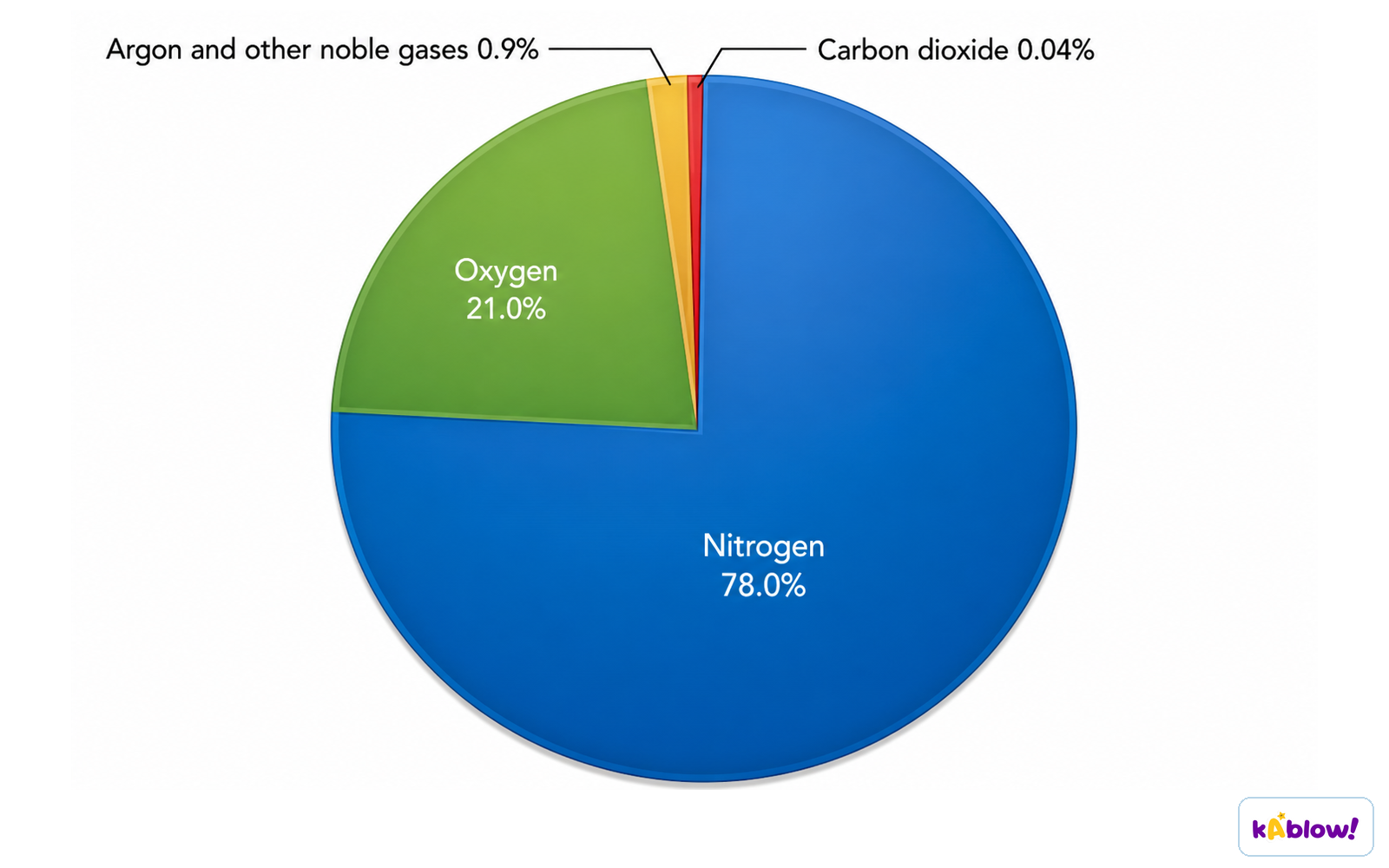
- The composition of clean, dry air is approximately 78% nitrogen and 21% oxygen.
- The remaining gases include carbon dioxide and trace quantities of noble gases (e.g., argon, neon).
- This composition has remained relatively unchanged for about 200 million years.
Pie chart of the current atmosphere
Air Pollutants and Their Sources
- Carbon dioxide (CO₂) is produced by complete combustion of carbon-containing fuels (e.g., CH₄ + 2O₂ → CO₂ + 2H₂O).
- Carbon monoxide (CO) is produced by incomplete combustion (e.g., 2C₈H₁₈ + 10O₂ → 5CO + 3CO₂ + 9H₂O) and is toxic as it binds to haemoglobin, preventing oxygen transport.
- Particulates (soot, C) are also from incomplete combustion (e.g., CH₄ + O₂ → C + 2H₂O) and cause respiratory problems and cancer.
- Methane (CH₄) comes from digestive processes of animals, decomposition of vegetation, and bacterial action in swamps, rice paddies, and landfill sites.
- Oxides of nitrogen (NOₓ) form when N₂ and O₂ react at high temperatures (e.g., in car engines, furnaces, lightning) and cause acid rain and photochemical smog.
- Sulfur dioxide (SO₂) is produced by burning fossil fuels containing sulfur (e.g., S + O₂ → SO₂) and causes acid rain.
Effects of Air Pollutants
- CO₂ and methane are greenhouse gases that contribute to global warming and climate change.
- CO is poisonous – it combines with haemoglobin, reducing oxygen carriage in the blood.
- Particulates cause respiratory problems and cancer.
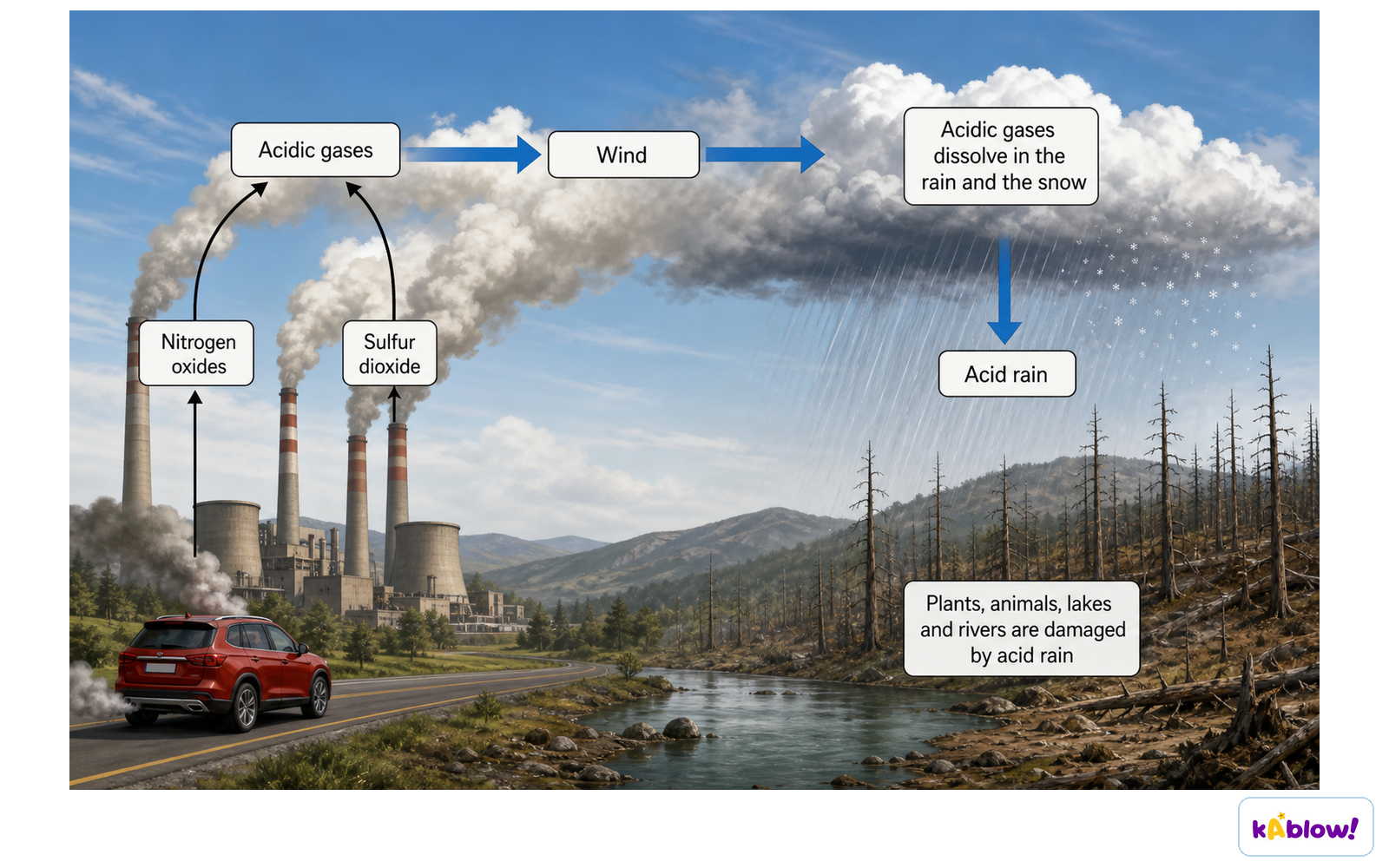
- NOₓ and SO₂ dissolve in rainwater to form acid rain, which corrodes metal structures, damages carbonate rocks/buildings, harms aquatic life, and pollutes crops/water.
- NOₓ also irritates lungs, throats, and eyes, and contributes to photochemical smog.
How acid rain is produced
The Greenhouse Effect and Global Warming
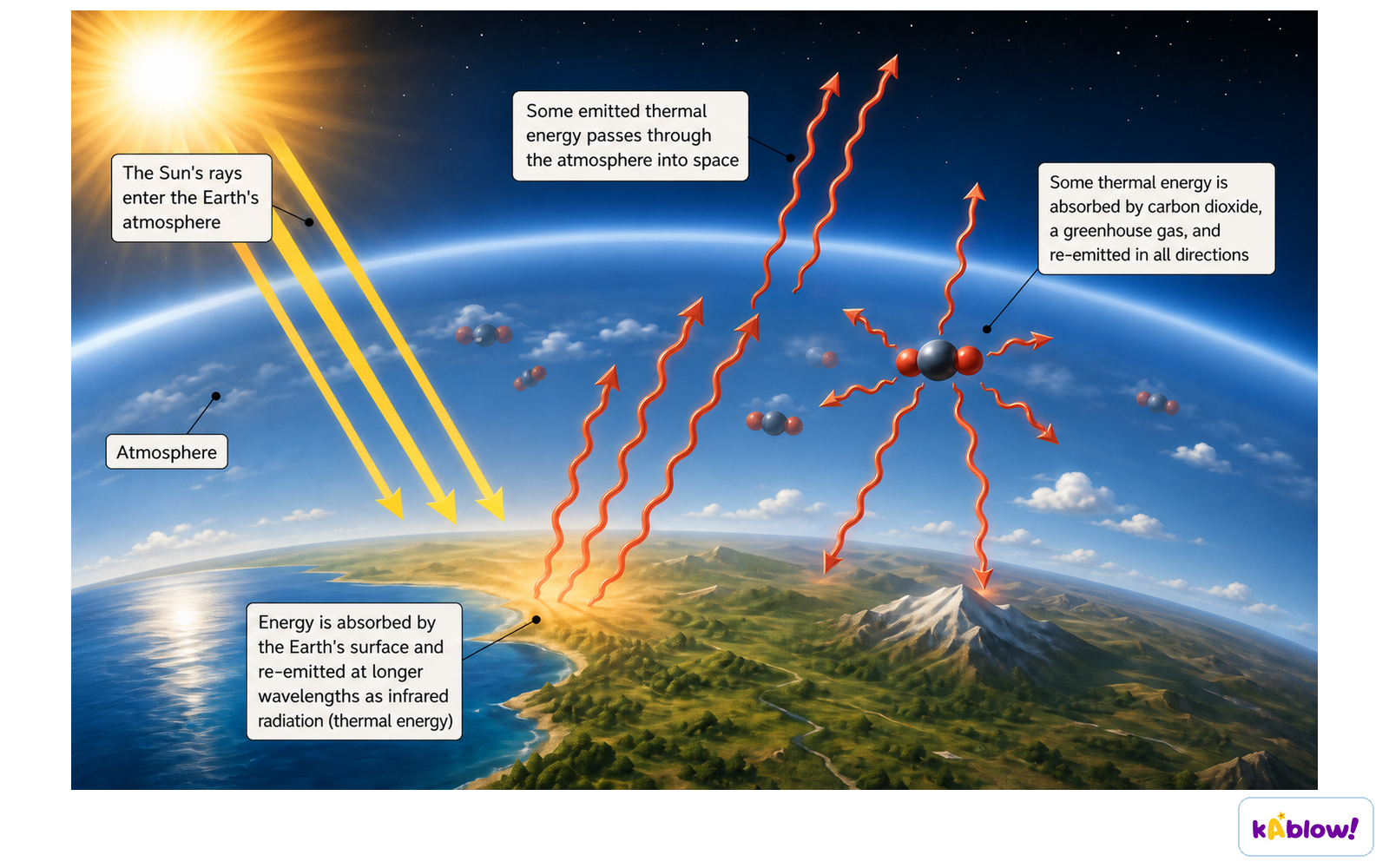
- The greenhouse effect is a natural process: the Sun's radiation warms Earth, and greenhouse gases (CO₂, CH₄) trap some infrared radiation emitted from the surface, keeping the planet warm.
- Enhanced greenhouse effect occurs when increased concentrations of greenhouse gases trap more thermal energy, leading to global warming.
- Consequences of global warming include rising sea levels (from melting glaciers), extreme weather, habitat loss, species extinction, migration of species, and spread of diseases.
Diagram showing how the greenhouse effect occurs
Reducing Climate Change
- Reduce CO₂ emissions by using renewable energy (solar, wind, hydrogen), fuel-efficient vehicles (electric/hybrid), public transport, recycling, and reducing household energy use.
- Planting trees (reforestation) removes CO₂ via photosynthesis.
- Reduce methane emissions by decreasing livestock farming (methane from digestion).
Reducing Acid Rain
- Use low-sulfur fuels to reduce SO₂ emissions.
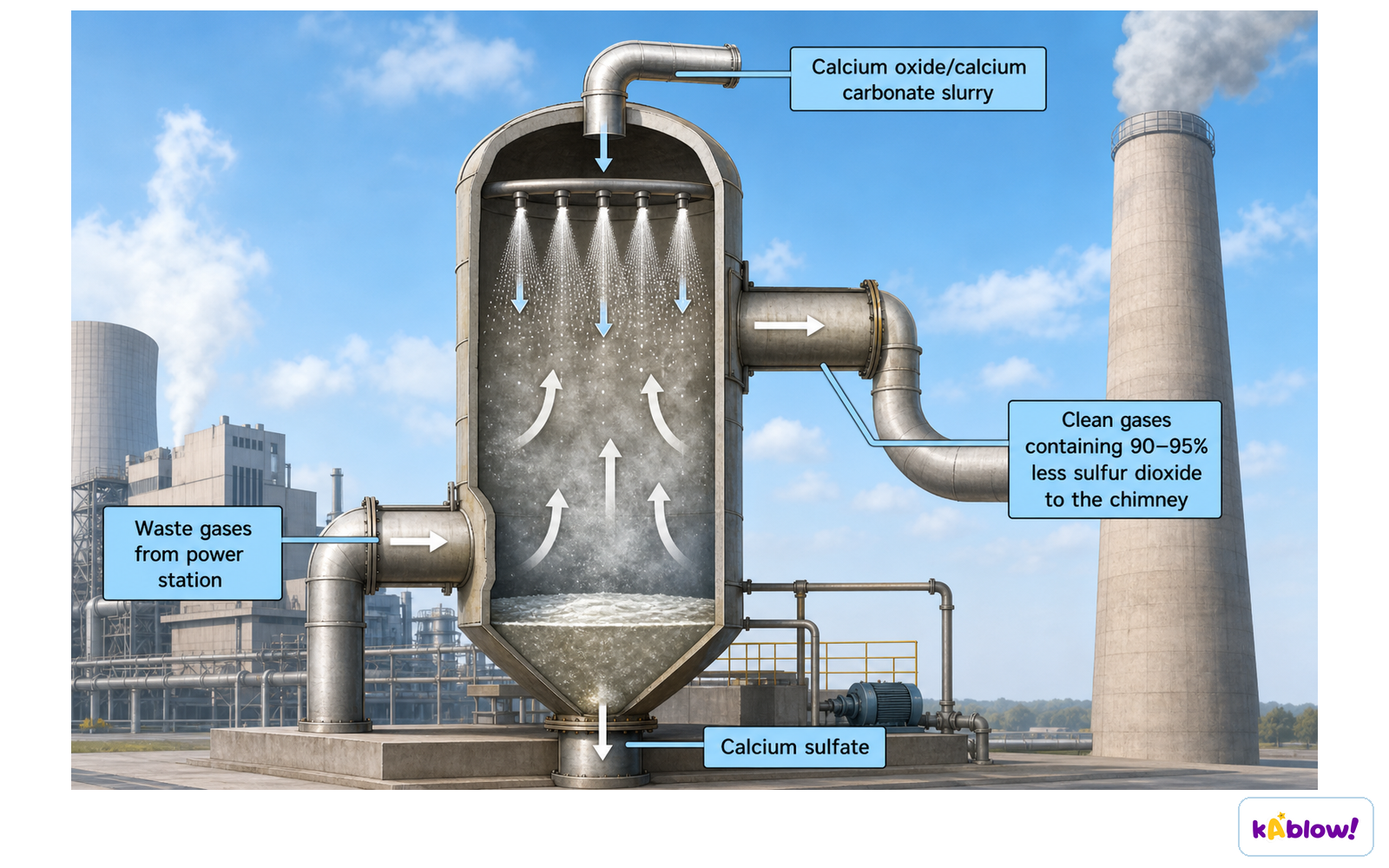
- Flue gas desulfurisation (FGD) in power stations: waste gases are sprayed with a lime slurry (calcium oxide/carbonate) which reacts with SO₂ to form calcium sulfate, removing 90–95% of SO₂.
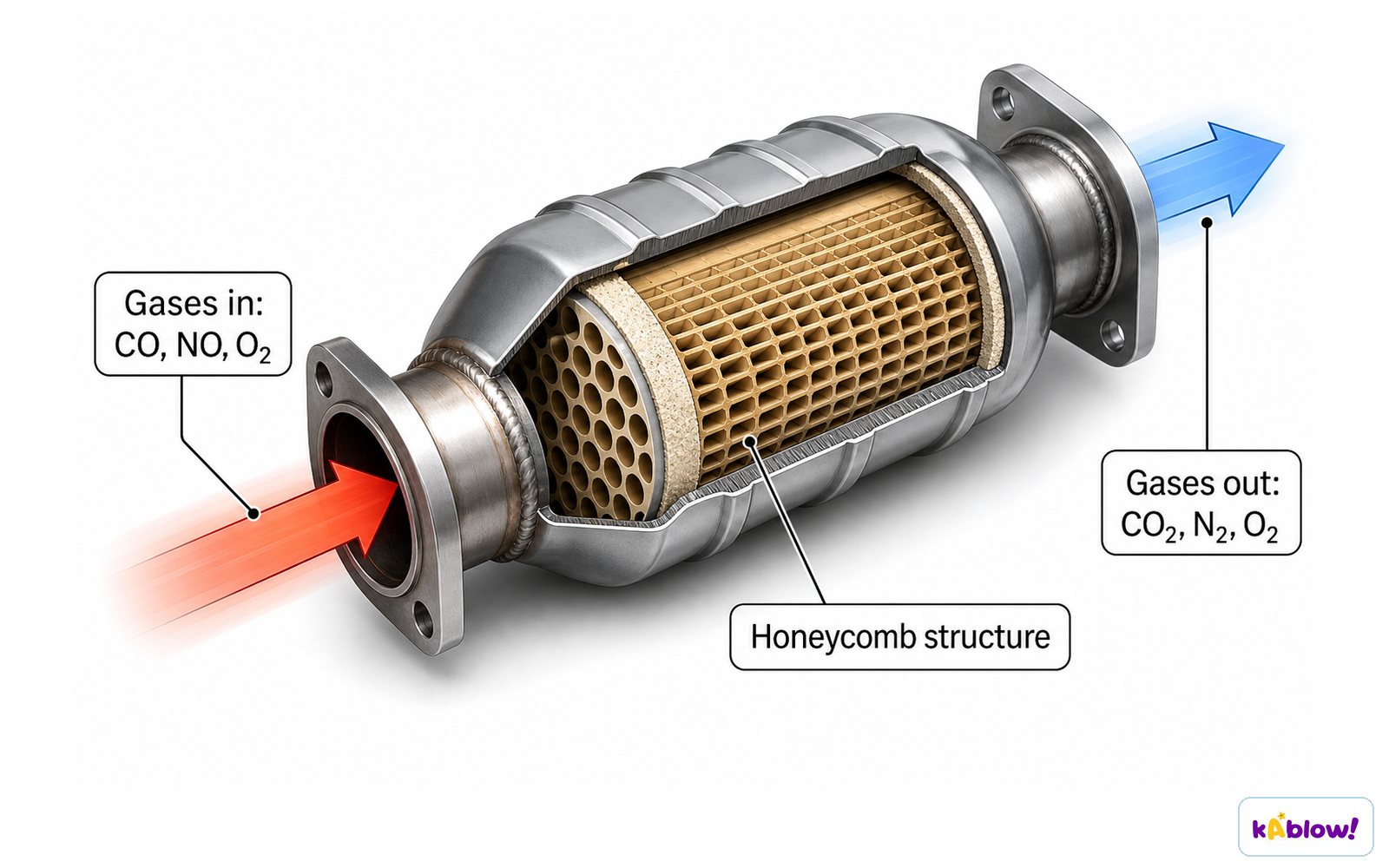
- Catalytic converters in vehicles remove oxides of nitrogen by redox reactions: 2NO + 2CO → N₂ + 2CO₂.
Sulfur dioxide scrubber
Catalytic Converters (Extended Tier Only)
- Catalytic converters contain platinum and rhodium catalysts on a honeycomb structure to increase surface area.
- They convert CO to CO₂ (2CO + O₂ → 2CO₂), NOₓ to N₂ (2NO → N₂ + O₂), and unburned hydrocarbons to CO₂ and H₂O (e.g., C₈H₁₈ + 12½O₂ → 8CO₂ + 9H₂O).
Catalytic converter
슬라이드
연습 문제
무료 미리 보기 — 58개 중 8개 문제. 가입하면 전부 볼 수 있어요.
1.What is the approximate percentage of nitrogen in clean, dry air?
Easy- A21%
- B78%
- C1%
- D0.04%
2.Which gas is produced by the complete combustion of carbon-containing fuels?
Easy- Acarbon monoxide
- Bcarbon dioxide
- Cmethane
- Dsulfur dioxide
3.Carbon monoxide is toxic because it combines with haemoglobin in the blood and prevents it from carrying oxygen.
EasyTrue or false?
4.State one adverse effect of particulates (soot) on human health.
Easy5.Complete the sentence about the greenhouse effect.
EasyGreenhouse gases such as ____ and ____ absorb thermal energy and re-emit it, trapping heat in the atmosphere.
6.Match each pollutant to its primary source.
Medium- Sulfur dioxide
- Oxides of nitrogen
- Methane
- Combustion of fossil fuels containing sulfur
- High temperature reactions in car engines
- Digestive processes of animals
7.The complete combustion of methane produces carbon dioxide and water. How many moles of oxygen are required to completely combust 2 moles of methane? (Equation: CH4 + 2O2 → CO2 + 2H2O)
Medium- A4
- B3
- C6
- D5
8.Name one strategy to reduce carbon dioxide emissions from vehicles.
Easy