Properties Uses And Alloys Of Metals
플레이하며 배우기
이 문제들을 풀어 에너지를 얻은 뒤 낚시하고 탐험하세요. 계정이 필요 없어요.
교육자를 위해: Properties Uses And Alloys Of Metals(Co-ordinated Sciences (Double Award) [CIE], Chemistry)을(를) 위한 바로 쓸 수 있는 수업 슬라이드, 복습 노트 — 수업에 사용하거나, 학습자들이 실시간 게임으로 즐기는 인터랙티브 클래스 활동으로 진행하세요.
수업 노트
Physical Properties of Metals
- Metals conduct heat and electricity due to delocalised electrons that move through the structure.
- They are malleable (can be hammered into shapes) and ductile (can be drawn into wires) because layers of positive ions can slide over each other.
- Metals generally have high melting and boiling points because of strong electrostatic attraction (metallic bonds) between positive ions and delocalised electrons.
Metallic bonding in aluminium
Chemical Properties of Metals
- Metals react with water (cold or steam) to produce a metal hydroxide or oxide plus hydrogen gas.
- Example with cold water: Ca + 2H₂O → Ca(OH)₂ + H₂.
- Example with steam: Zn + H₂O → ZnO + H₂.
- Metals react with acids to produce a salt and hydrogen: metal + acid → salt + hydrogen.
- Example: Fe + 2HCl → FeCl₂ + H₂.
Uses of Aluminium
- Aluminium has low density and is resistant to corrosion due to a protective oxide layer.
- Used in aeroplane bodies because of high strength-to-weight ratio.
- Used in overhead power cables because it is a good electrical conductor and has low density.
- Used in food cans because it is non-toxic and resistant to corrosion and acidic foods.
Uses of Copper
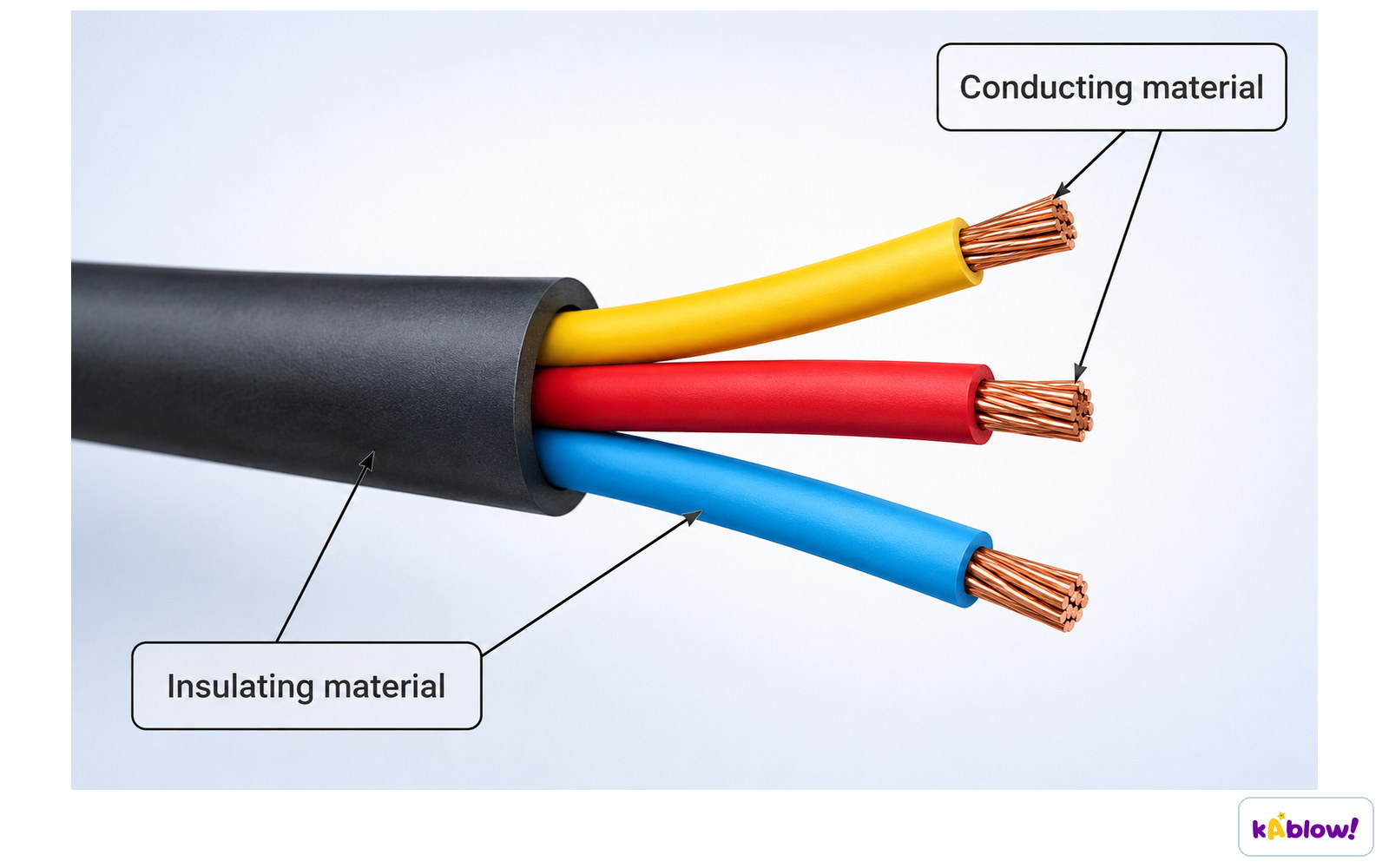
- Copper is a very good electrical conductor and is ductile.
- Used in electrical wiring due to high conductivity and ductility.
- Used in pots and pans because it is a good heat conductor, unreactive, and malleable.
- Used in water pipes because it is non-toxic, unreactive with water, and malleable.
Structure of an electrical cable
Alloys – Composition and Properties
- An alloy is a mixture of a metal with other elements (often other metals, sometimes non-metals).
- Brass (copper + zinc) is much stronger than either metal; used in musical instruments, ornaments, door knobs.
- Stainless steel (iron + chromium, nickel, carbon) is hard and resistant to corrosion/rusting; used in cutlery.
- Other alloys: iron with tungsten (extremely hard, heat resistant); aluminium with copper, manganese, silicon (strong, low density for aircraft).
- Alloys are not compounds – they are mixtures, not chemically combined.
Structure of Alloys (Extended Tier)
- Pure metals have a regular arrangement of positive ions in layers.
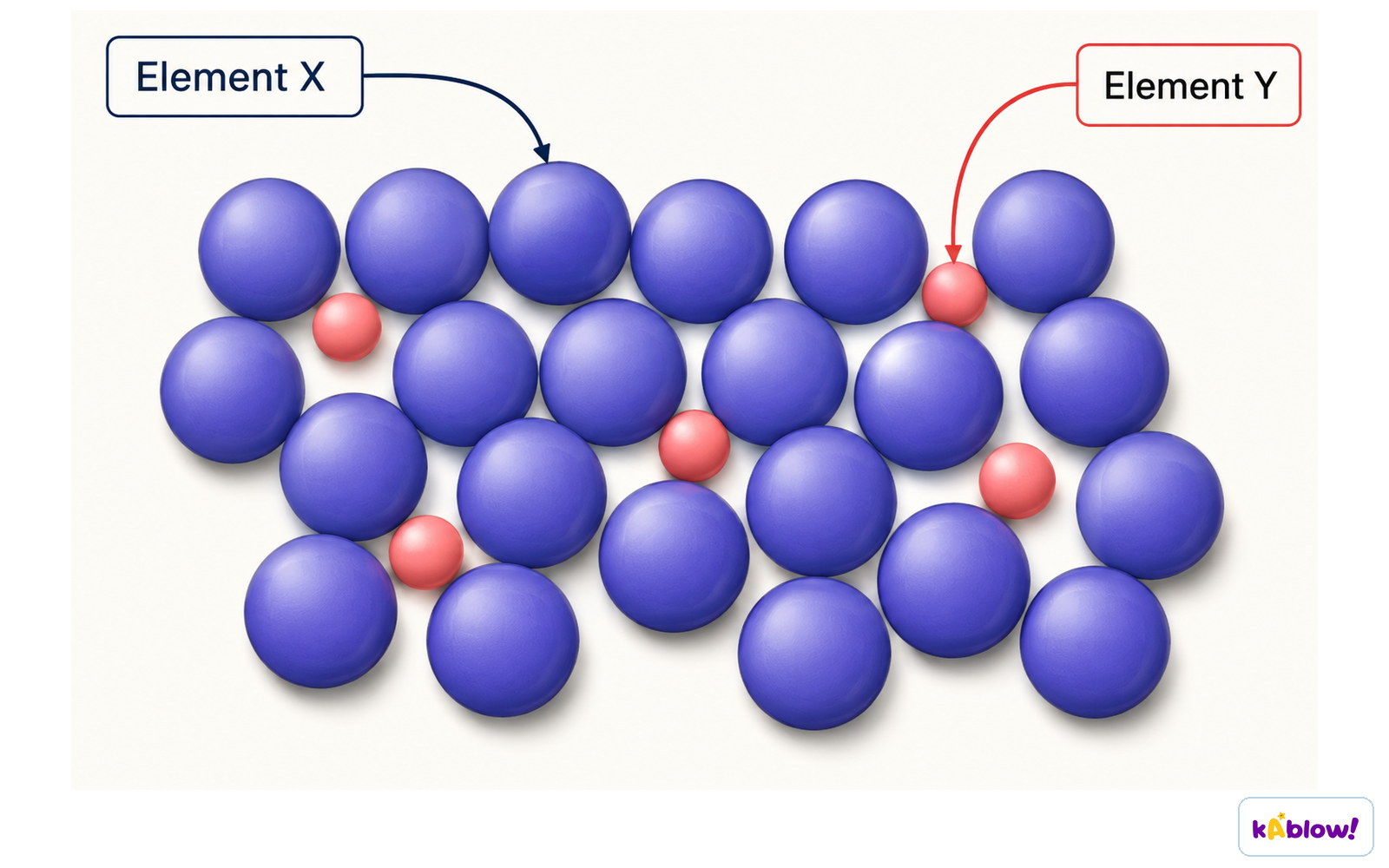
- Alloys contain atoms of different sizes, which distort the regular lattice.
- The distortion makes it harder for layers to slide over each other, so alloys are usually harder/stronger than pure metals.
Structure of an alloy
슬라이드
연습 문제
무료 미리 보기 — 56개 중 8개 문제. 가입하면 전부 볼 수 있어요.
1.State two physical properties of metals.
Easy2.State two uses of aluminium.
Easy3.State two uses of copper.
Easy4.What is an alloy?
Easy5.State two examples of alloys and their uses.
Easy6.Explain why alloys are usually harder than pure metals.
Medium7.Which property makes aluminium suitable for making aeroplane bodies?
Easy- Ahigh density
- Blow density
- Chigh reactivity
- Dpoor conductor of electricity
8.Which of the following is an alloy?
Easy- Apure copper
- Bpure iron
- Cbrass
- Daluminium
기출 문제
이 주제의 기출 문제 연습이 곧 나와요.
곧 출시