Motion
플레이하며 배우기
이 문제들을 풀어 에너지를 얻은 뒤 낚시하고 탐험하세요. 계정이 필요 없어요.
교육자를 위해: Motion(Co-ordinated Sciences (Double Award) [CIE], Physics)을(를) 위한 바로 쓸 수 있는 수업 슬라이드, 복습 노트, 다이어그램 — 수업에 사용하거나, 학습자들이 실시간 게임으로 즐기는 인터랙티브 클래스 활동으로 진행하세요.
수업 노트
Speed & Velocity
- Speed = distance travelled per unit time; a scalar quantity (magnitude only).
- Equation: v = \frac{s}{t} where v in m/s, s in m, t in s.
- Average speed = total distance / total time; used when speed varies.
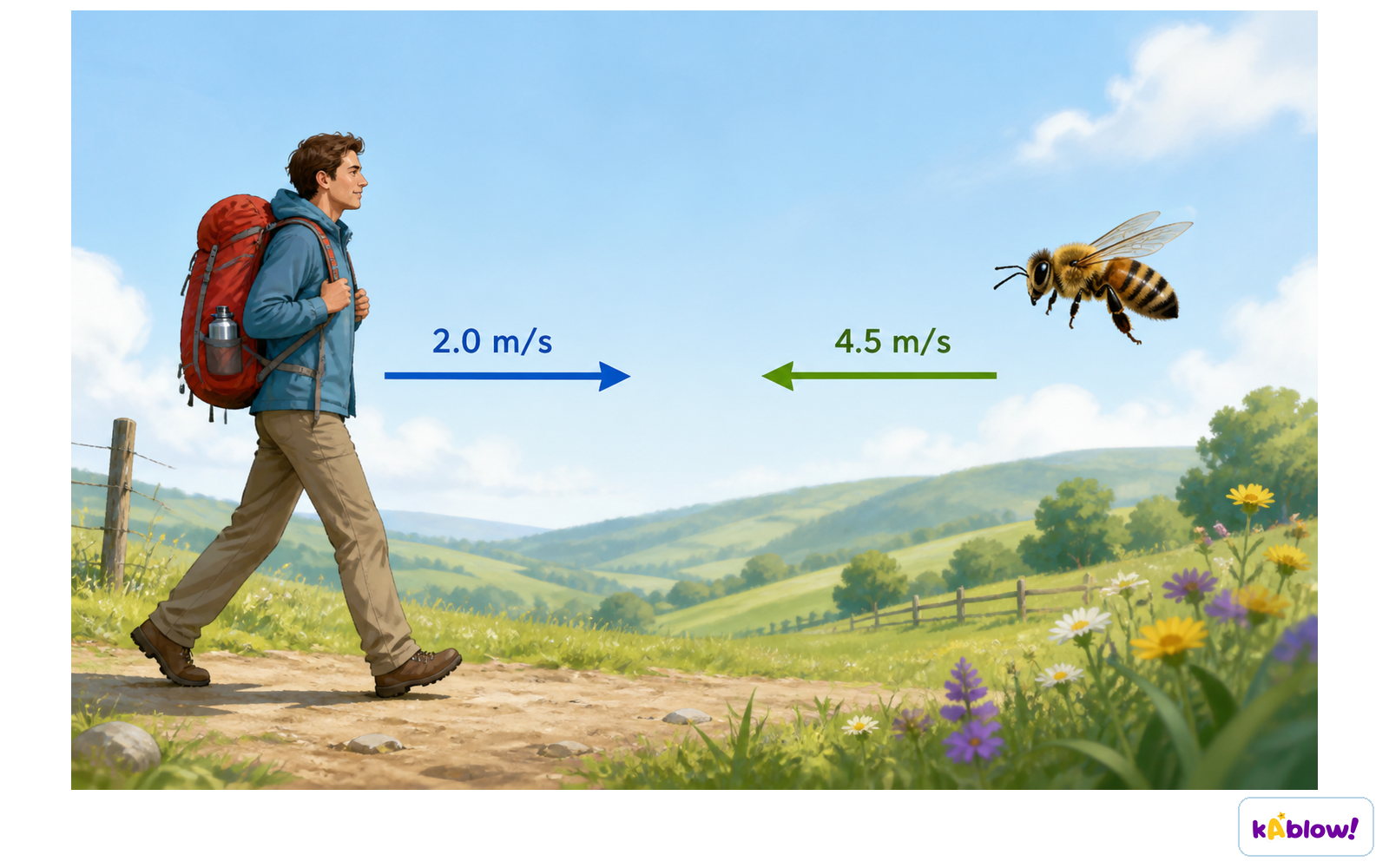
- Velocity = speed in a given direction; a vector quantity.
- Velocity uses displacement (vector) instead of distance.
- Positive/negative signs indicate direction (e.g., +20 m/s east, −20 m/s west).
A hiker and a bee
Acceleration
- Acceleration = rate of change of velocity; unit m/s².
- Equation: a = \frac{\Delta v}{\Delta t} where \Delta v = v - u.
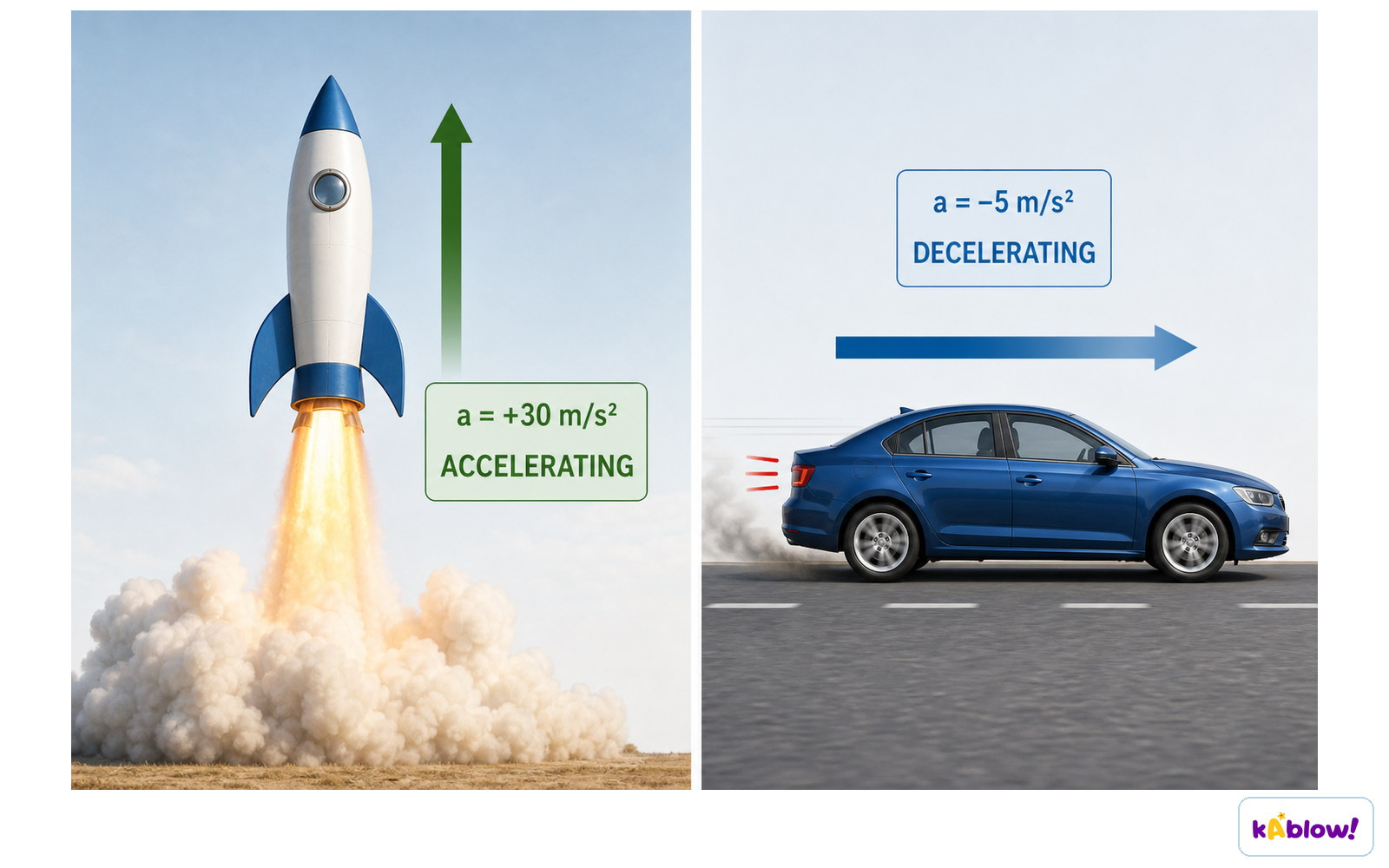
- Positive acceleration = speeding up; negative acceleration = deceleration (slowing down).
- Average acceleration useful when acceleration changes.
Positive and negative acceleration
Distance-Time Graphs
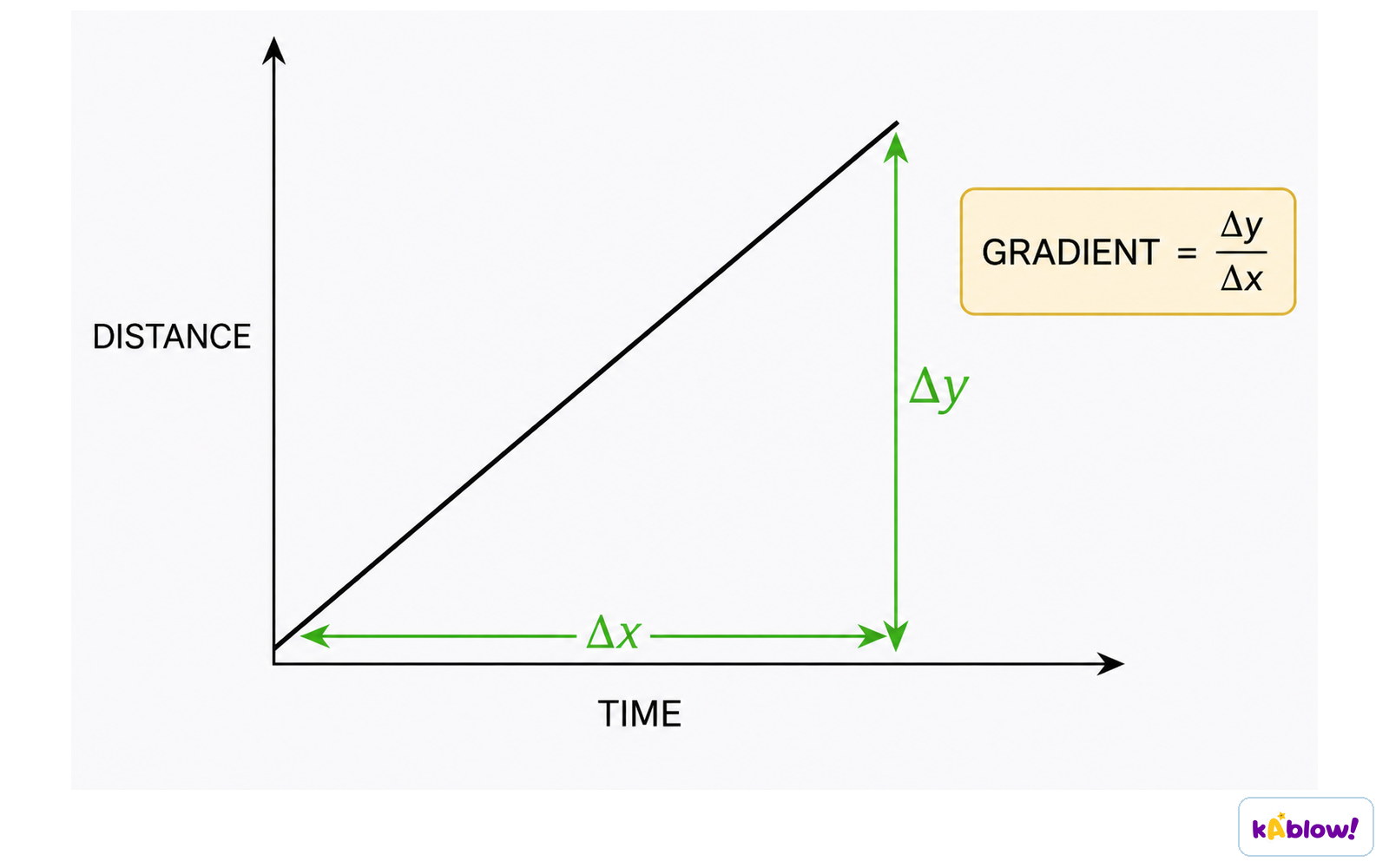
- Gradient of a distance–time graph = speed.
- Straight line = constant speed; horizontal line = stationary.
- Steeper gradient = faster speed; curved line = changing speed (acceleration/deceleration).
- To calculate speed: draw a large gradient triangle, find \frac{\Delta y}{\Delta x}.
Gradient of a distance-time graph
Speed-Time Graphs
- Gradient of a speed–time graph = acceleration.
- Straight line = constant acceleration; horizontal line = constant speed (zero acceleration).
- Positive gradient = acceleration; negative gradient = deceleration.
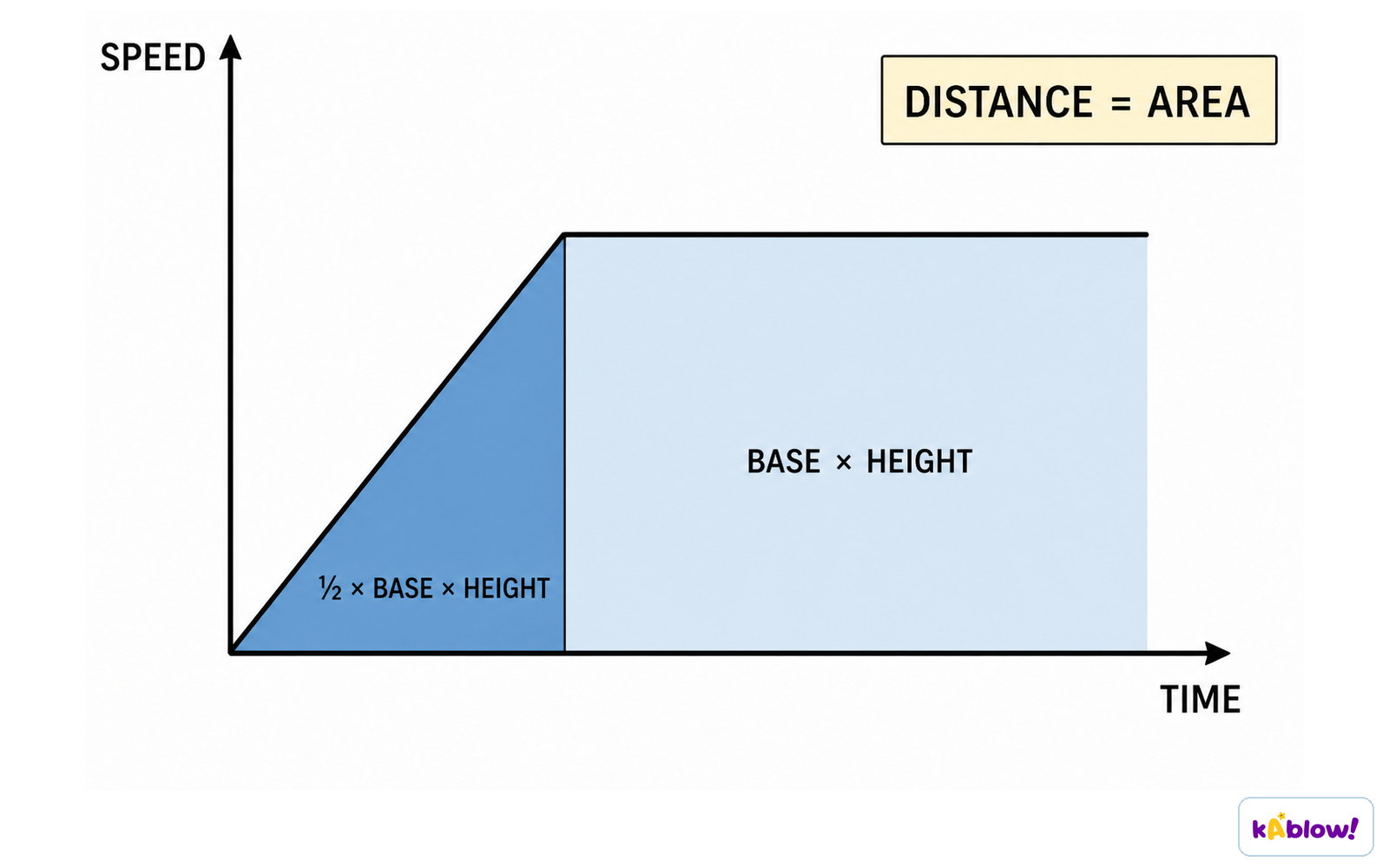
- Area under a speed–time graph = distance travelled.
- Calculate area by splitting into triangles and rectangles: A = \frac{1}{2}bh (triangle) or A = bh (rectangle).
Area under a speed-time graph
Calculating Acceleration from Speed-Time Graphs
- For constant acceleration: gradient = \frac{\Delta v}{\Delta t}.
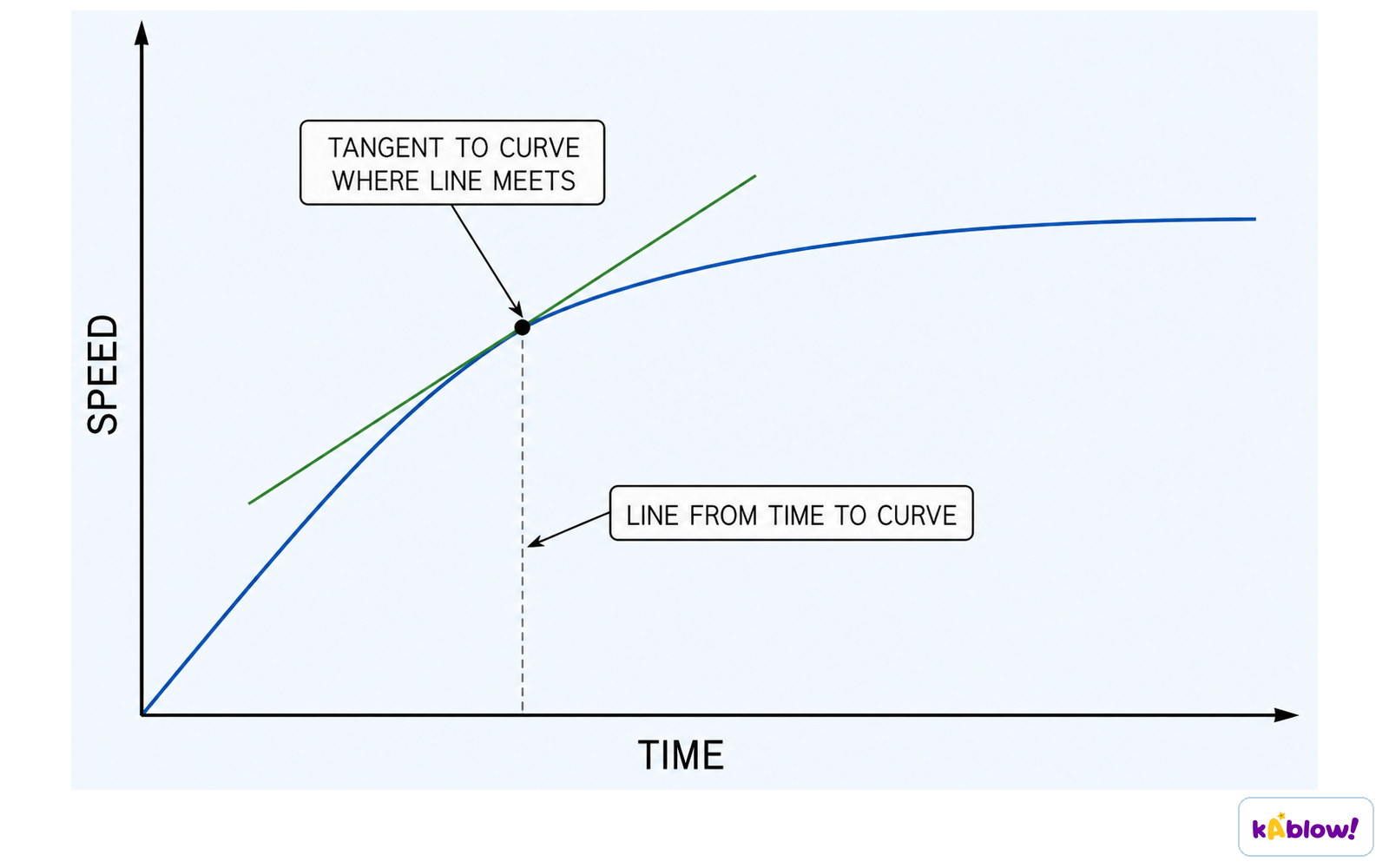
- For changing acceleration: draw a tangent at the point; gradient of tangent = instantaneous acceleration.
- Use a large gradient triangle for accuracy.
Tangent to a speed-time graph curve
Freefall
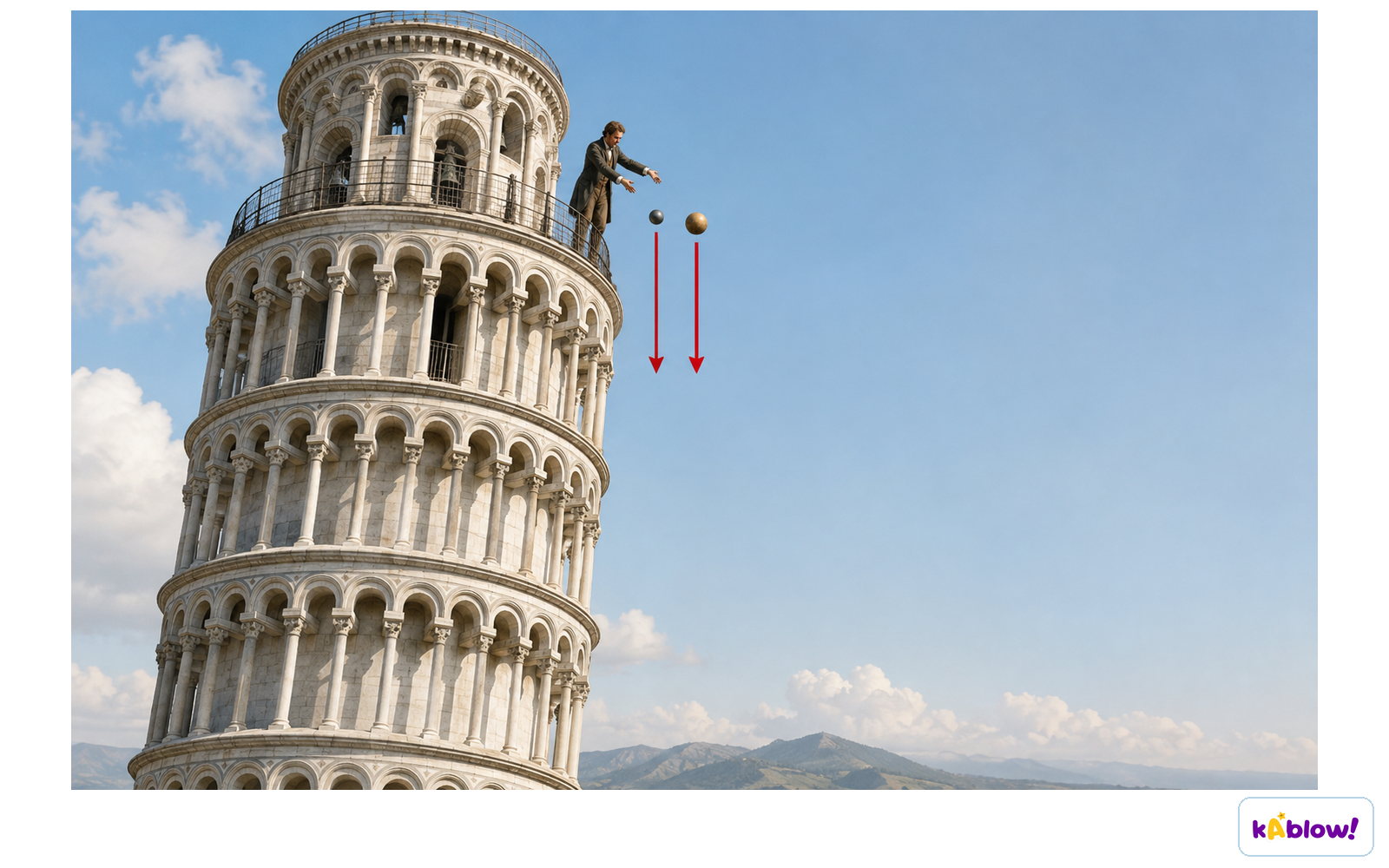
- In absence of air resistance, all objects fall with same acceleration of freefall g = 9.8\,\text{m/s}2.
- Velocity increases by 9.8 m/s each second.
- Weight W = mg where g is also gravitational field strength (N/kg).
Freefall demonstration
슬라이드
연습 문제
무료 미리 보기 — 55개 중 8개 문제. 가입하면 전부 볼 수 있어요.
1.Which of the following is a scalar quantity?
Easy- Avelocity
- Bdisplacement
- Cspeed
- Dacceleration
2.Define speed.
Easy3.A car travels 150 m in 10 s at constant speed. Calculate the speed.
Easy- A17
- B15
- C16
- D14
4.Velocity is a vector quantity.
EasyTrue or false?
5.Complete the sentence.
EasyThe gradient of a distance-time graph represents the ____ of the object.
6.Match each graph shape to the motion it represents.
Medium- Horizontal line on distance-time graph
- Straight line with positive gradient on speed-time graph
- Curved line on speed-time graph with increasing gradient
- Stationary object
- Constant positive acceleration
- Increasing acceleration
7.Arrange the following speeds in order from slowest to fastest: 10 m/s, 5 m/s, 20 m/s, 15 m/s.
Easy- 5 m/s
- 10 m/s
- 15 m/s
- 20 m/s
8.A train decelerates from 50 m/s to 42 m/s in 30 s. Calculate the deceleration (in m/s²).
Medium- A-1.27
- B0.73
- C1.73
- D-0.27
기출 문제
이 주제의 기출 문제 연습이 곧 나와요.
곧 출시