Physical Quantities And Measurement Techniques
플레이하며 배우기
이 문제들을 풀어 에너지를 얻은 뒤 낚시하고 탐험하세요. 계정이 필요 없어요.
교육자를 위해: Physical Quantities And Measurement Techniques(Co-ordinated Sciences (Double Award) [CIE], Physics)을(를) 위한 바로 쓸 수 있는 수업 슬라이드, 복습 노트, 다이어그램 — 수업에 사용하거나, 학습자들이 실시간 게임으로 즐기는 인터랙티브 클래스 활동으로 진행하세요.
수업 노트
Measurement of Length
- Rulers measure small distances (cm) to the nearest millimetre.
- Tape measures measure lengths of tens of centimetres.
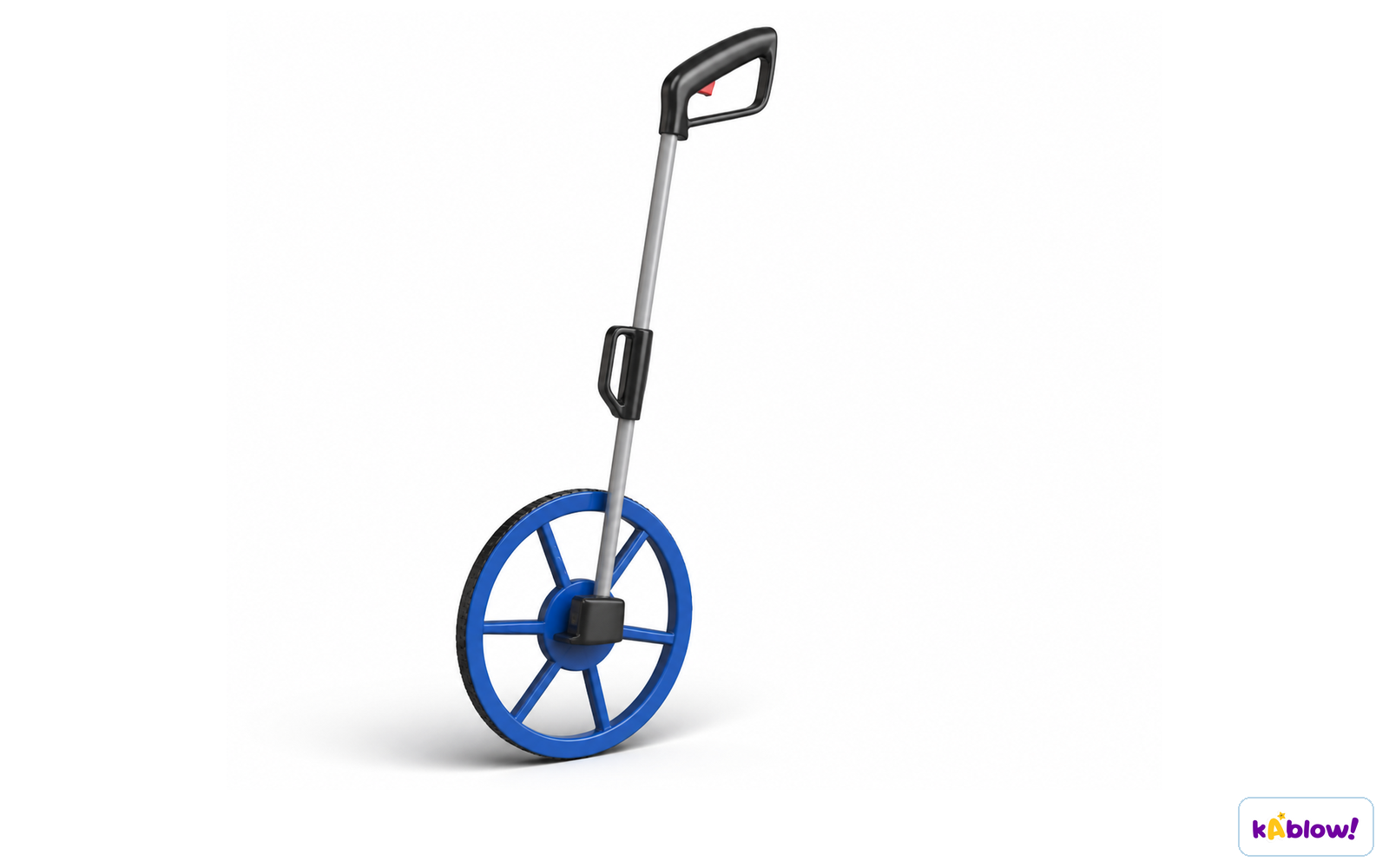
- Trundle wheels measure lengths of tens of metres.
- For small objects, measure multiple (e.g., 4 ball-bearings) and divide by the number to find one dimension.
Trundle wheel
Measurement of Volume
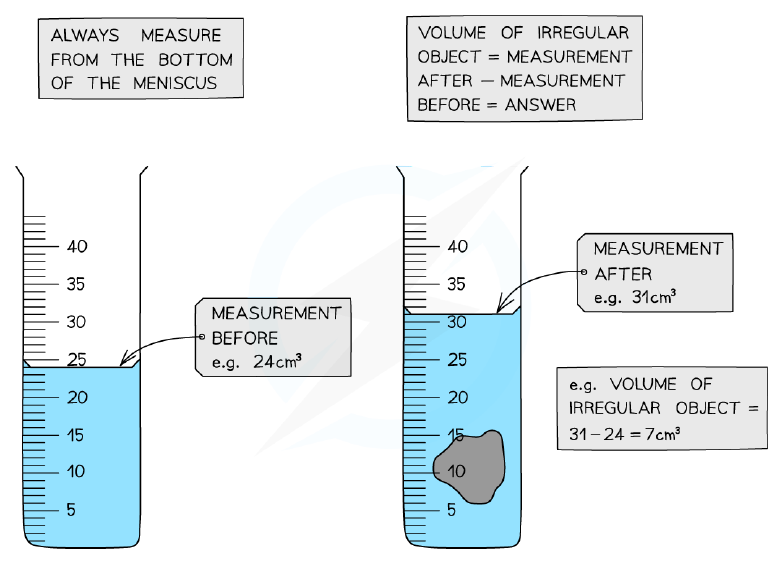
- Measuring cylinders measure the volume of liquids directly.
- The volume of an irregular solid is found by the displacement method: measure the change in liquid volume.
- Read the bottom of the meniscus at eye level for accuracy.
Measuring cylinders showing before and after readings
Measurement of Time
- Stop-clocks and stopwatches measure time intervals.
- Human reaction time (≈0.25 s) can cause significant error for short intervals.
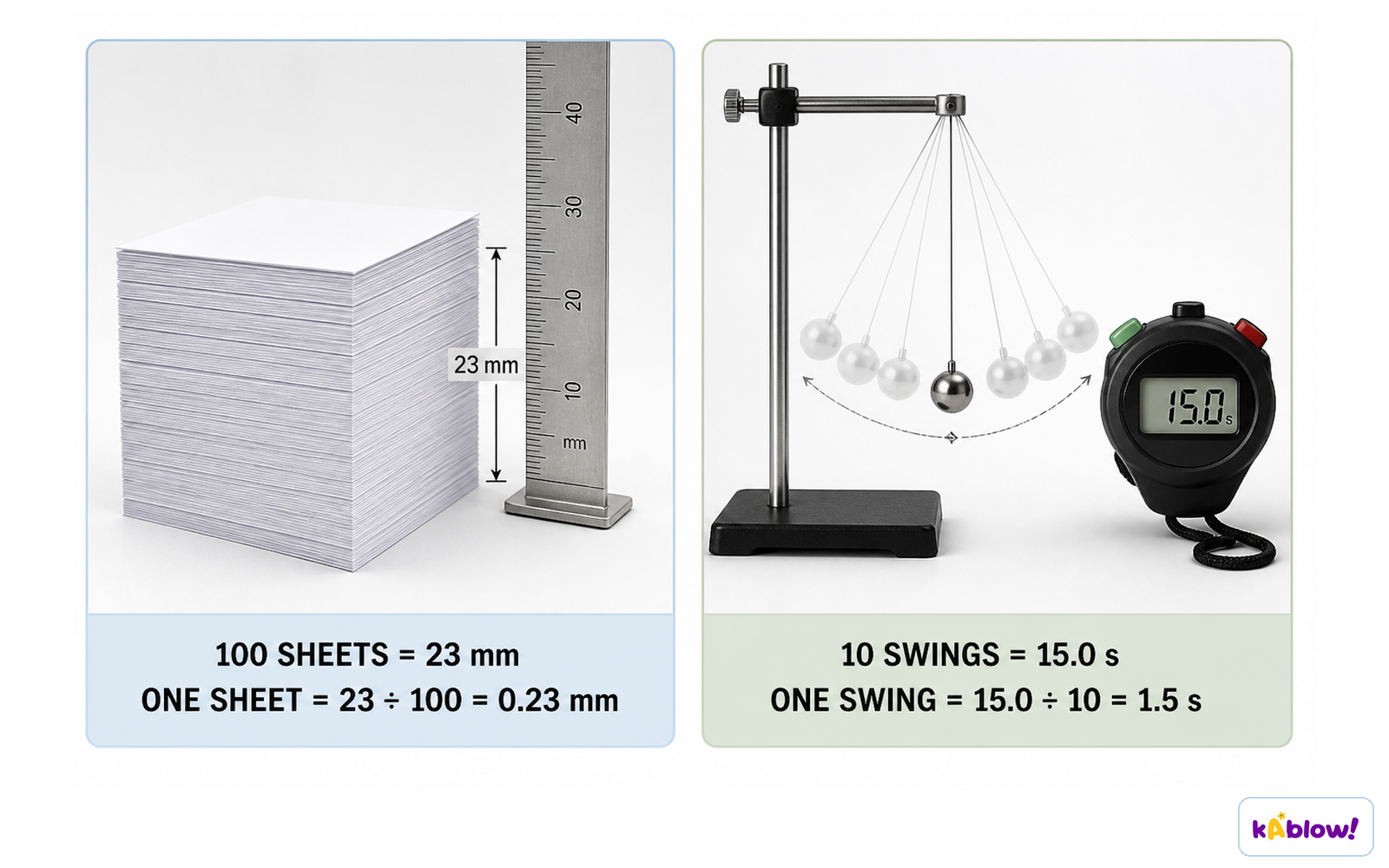
- To reduce uncertainty, measure the time for multiple oscillations (e.g., 10 swings) and divide by the number.
- Use a fiducial marker (e.g., a line at equilibrium) to improve timing accuracy.
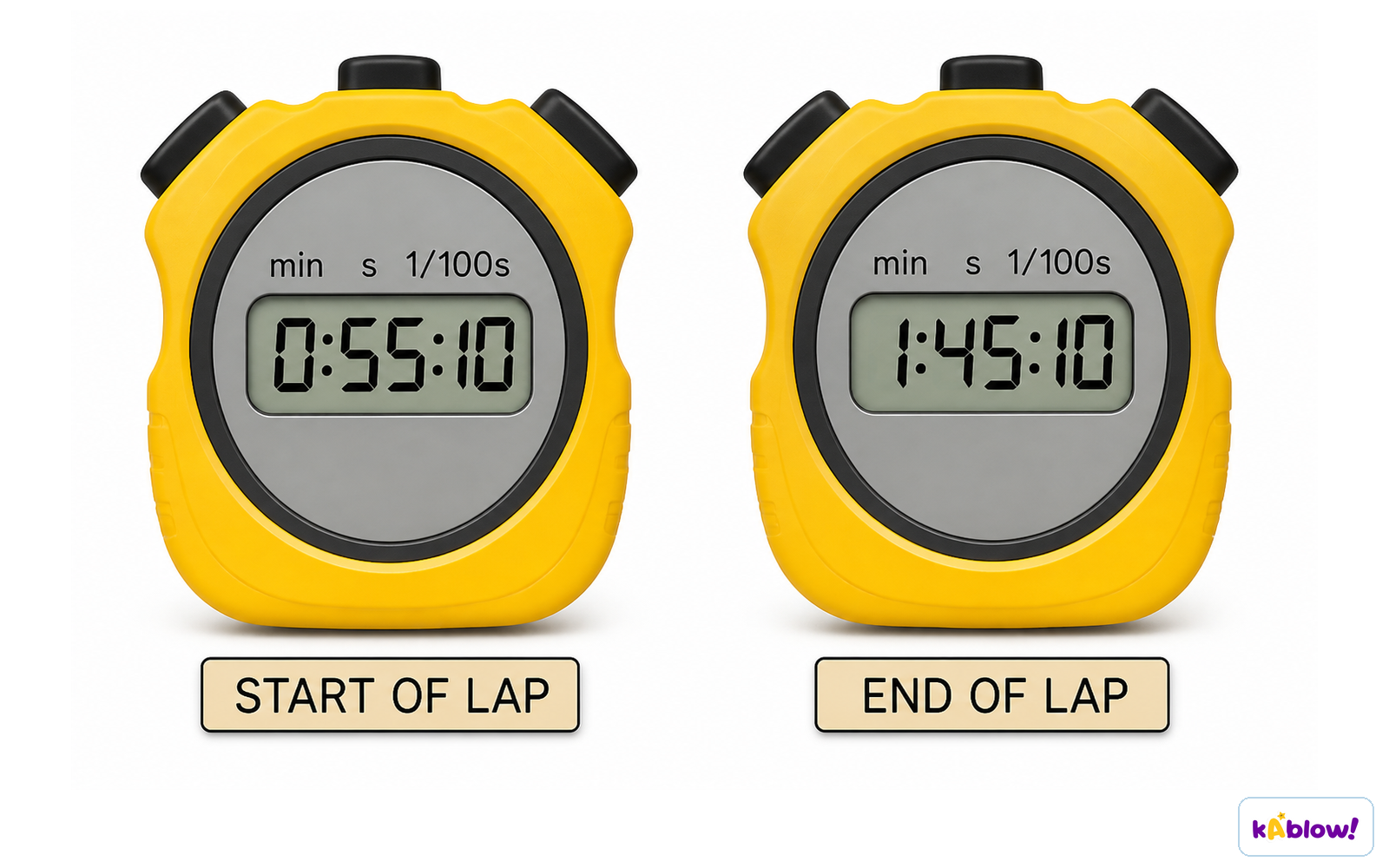
Two stopwatches showing the start and end of a lap
Multiple Readings & Accuracy
- Taking multiple readings reduces the impact of random errors.
- Example: measure thickness of 100 sheets of paper, then divide by 100 for average thickness of one sheet.
- Two measurements are considered equal within experimental accuracy if they differ by less than 10%.
Taking multiple readings to improve accuracy
Scalars & Vectors
- Scalar quantities have magnitude only (e.g., mass, distance, speed, energy).
- Vector quantities have both magnitude and direction (e.g., weight, displacement, velocity, force).
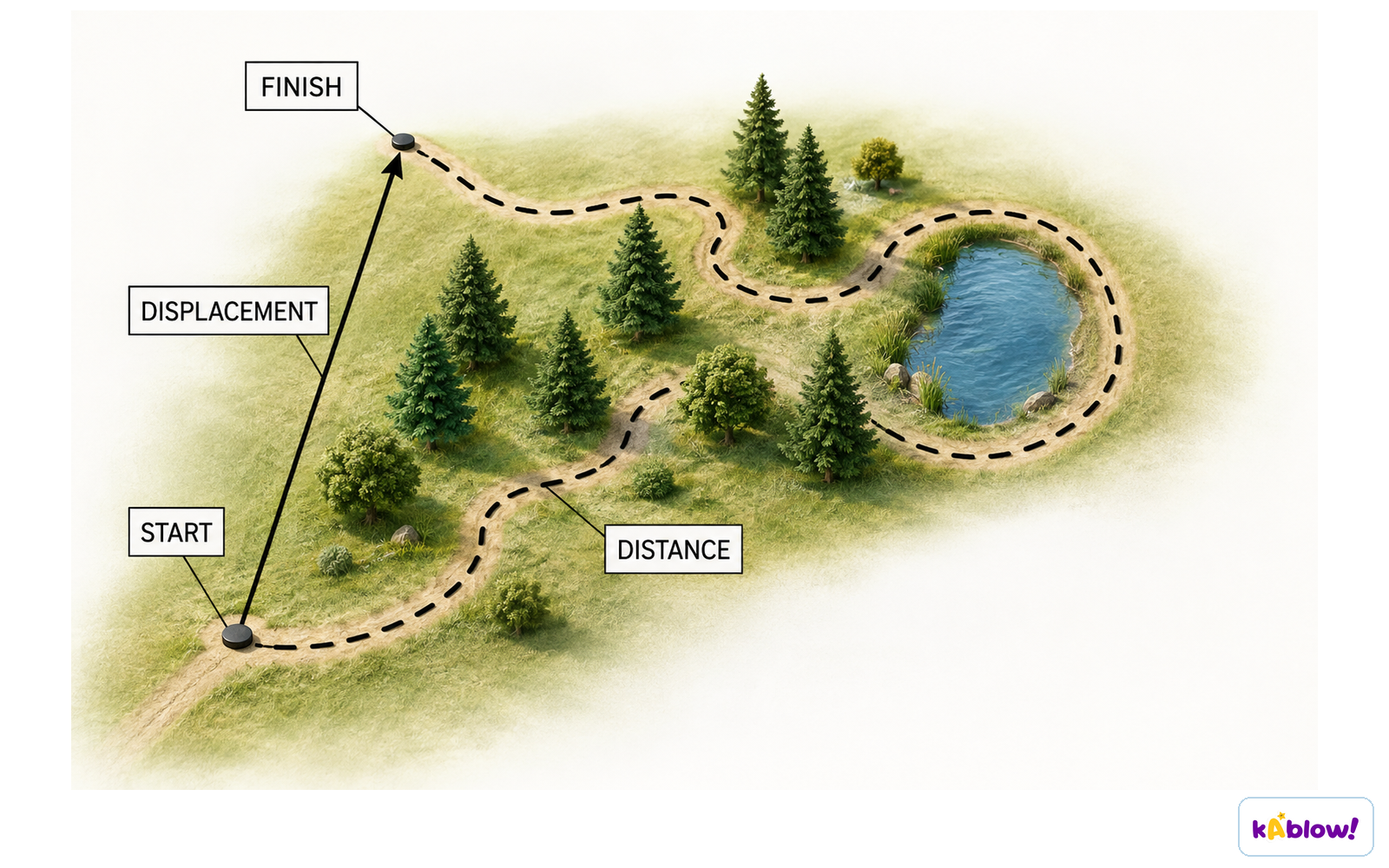
- Distance is the total path length (scalar); displacement is the straight‑line distance from start to finish (vector).
- Speed is distance per unit time (scalar); velocity is displacement per unit time (vector).
- An object can have constant speed but changing velocity if it changes direction.
Distance vs displacement
Examples of Scalars & Vectors
- Scalars: distance, speed, mass, energy, volume, density, temperature, power.
- Vectors: displacement, velocity, weight, force, acceleration, momentum.
- Mass is a scalar; weight is a vector (force due to gravity).
- Mass does not change with location; weight depends on gravitational field strength.
Examples of scalar and vector quantities
슬라이드
연습 문제
무료 미리 보기 — 34개 중 8개 문제. 가입하면 전부 볼 수 있어요.
1.The diagram shows four identical ball-bearings placed between two blocks on a steel ruler. The total length of the four ball-bearings is 8 cm. Calculate the diameter of one ball-bearing in cm.
Easy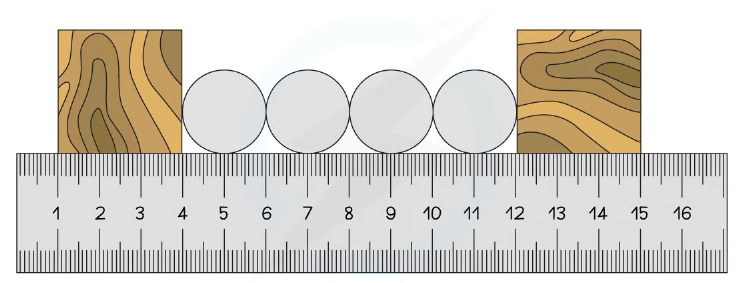
- A1
- B2
- C3
- D4
2.A stopwatch reads 0:55:10 at the start of a lap and 1:45:10 at the end. Calculate the time taken for the lap in seconds.
Easy- A45
- B55
- C50
- D60
3.State the typical human reaction time for an alert person.
Easy4.What is a scalar quantity?
Easy5.What is a vector quantity?
Easy6.Distance is a scalar quantity.
EasyTrue or false?
7.Displacement is a scalar quantity.
EasyTrue or false?
8.Match each quantity to its type (scalar or vector).
Easy- distance
- displacement
- speed
- velocity
- scalar
- vector
기출 문제
이 주제의 기출 문제 연습이 곧 나와요.
곧 출시