Stars And The Universe
플레이하며 배우기
이 문제들을 풀어 에너지를 얻은 뒤 낚시하고 탐험하세요. 계정이 필요 없어요.
교육자를 위해: Stars And The Universe(Co-ordinated Sciences (Double Award) [CIE], Physics)을(를) 위한 바로 쓸 수 있는 수업 슬라이드, 복습 노트, 다이어그램 — 수업에 사용하거나, 학습자들이 실시간 게임으로 즐기는 인터랙티브 클래스 활동으로 진행하세요.
수업 노트
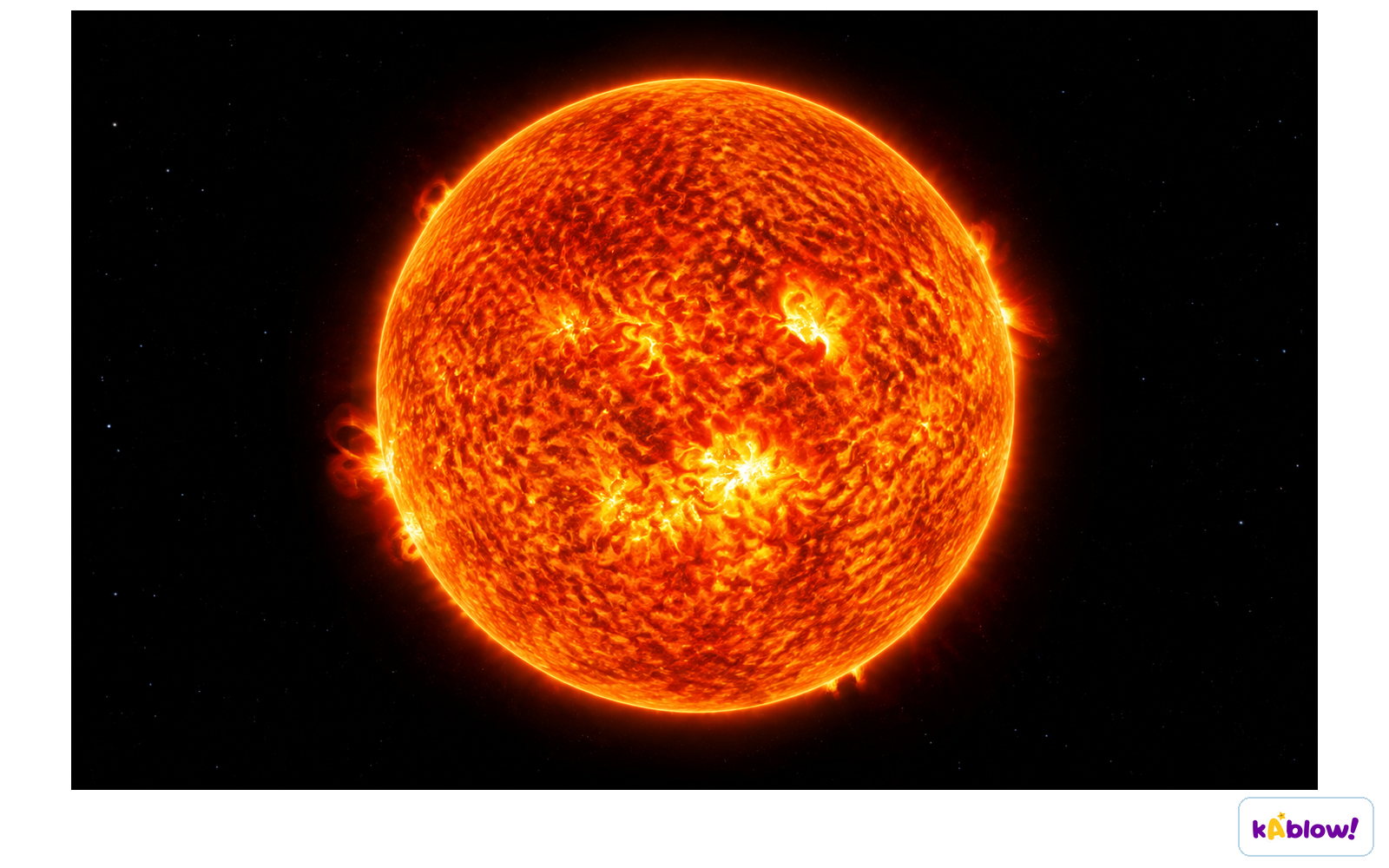
The Sun as a Star
- The Sun is a medium-sized star at the centre of the Solar System, composed mostly of hydrogen and helium.
- It radiates energy mainly in the infrared, visible, and ultraviolet regions of the electromagnetic spectrum.
- In the core, nuclear fusion converts hydrogen into helium, releasing huge amounts of energy.
- Example fusion reaction: ²H + ³H → ⁴He + n (deuterium + tritium → helium + neutron).
The Sun
The Scale of the Universe
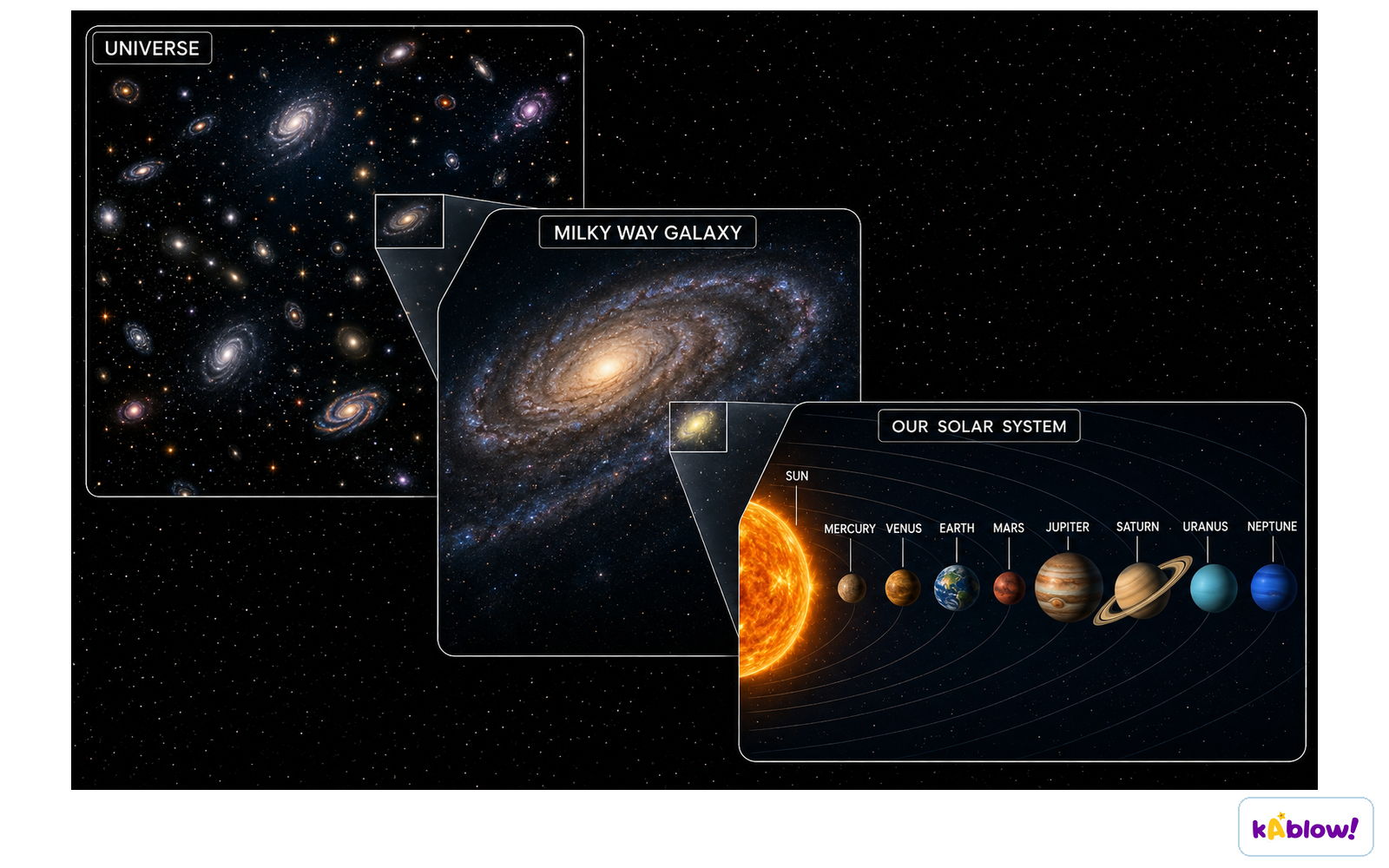
- The Universe is a large collection of billions of galaxies; a galaxy is a large collection of billions of stars.
- The Milky Way is one of many billions of galaxies; the Sun is one of many billions of stars in the Milky Way.
- Distances between stars and galaxies are measured in light-years – the distance light travels in one year.
- The Milky Way's diameter is about 100 000 light-years; light takes 100 000 years to cross it.
Hierarchy of the Universe
Star Formation
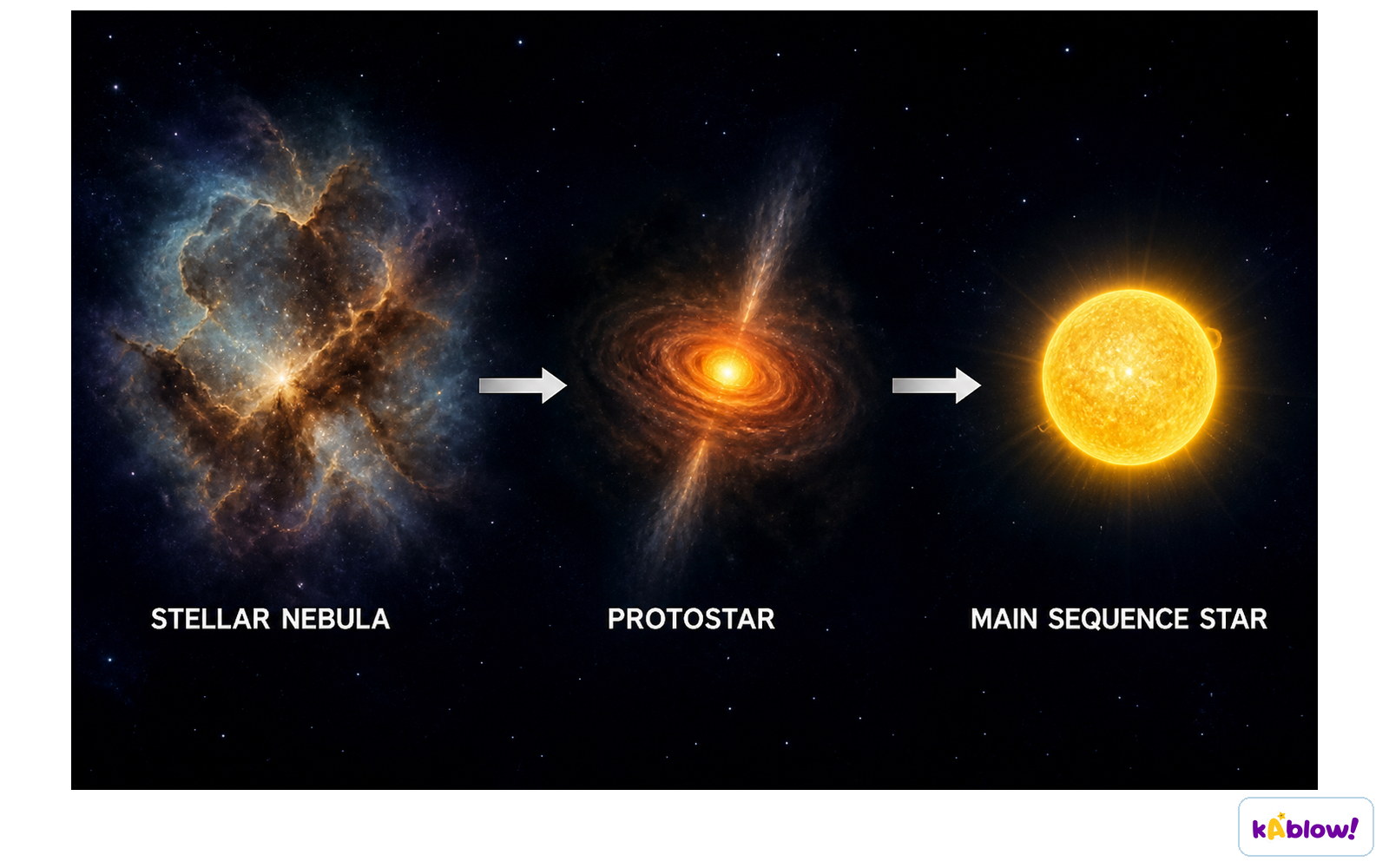
- Stars form from a giant cloud of gas and dust called a nebula.
- Gravitational attraction pulls particles together, forming a hot ball of gas – a protostar.
- When the protostar becomes hot enough and forces balance, it becomes a stable star.
- The final stages of a star's life depend on its mass (similar to the Sun or much larger).
Star formation stages
Life Cycle of a Small Mass Star (like the Sun)
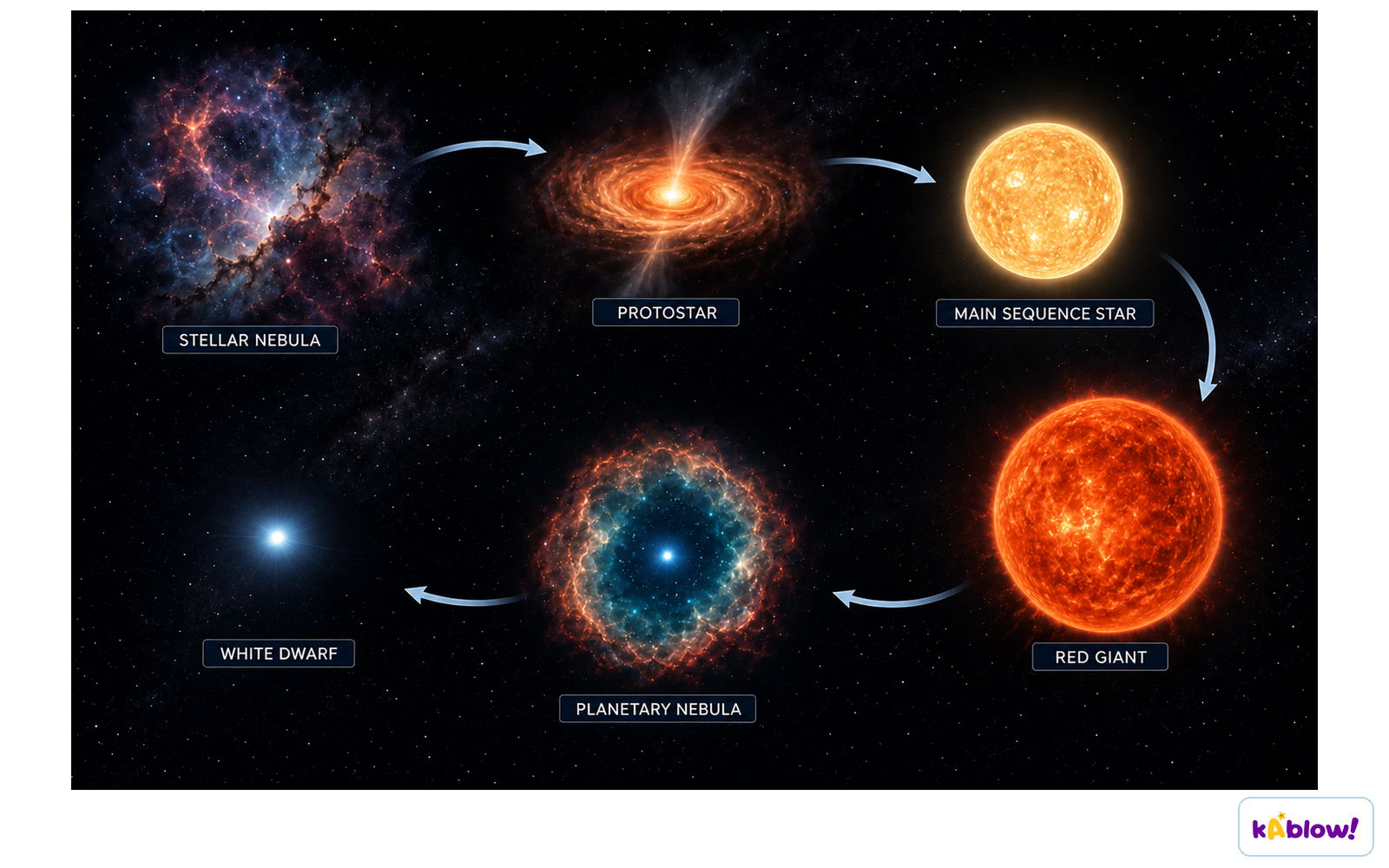
- After the stable stage, a small mass star becomes a red giant – outer layers expand and cool.
- The outer layers are pushed away, forming a planetary nebula.
- The core collapses to form a white dwarf at the centre of the nebula.
Life cycle of a small mass star
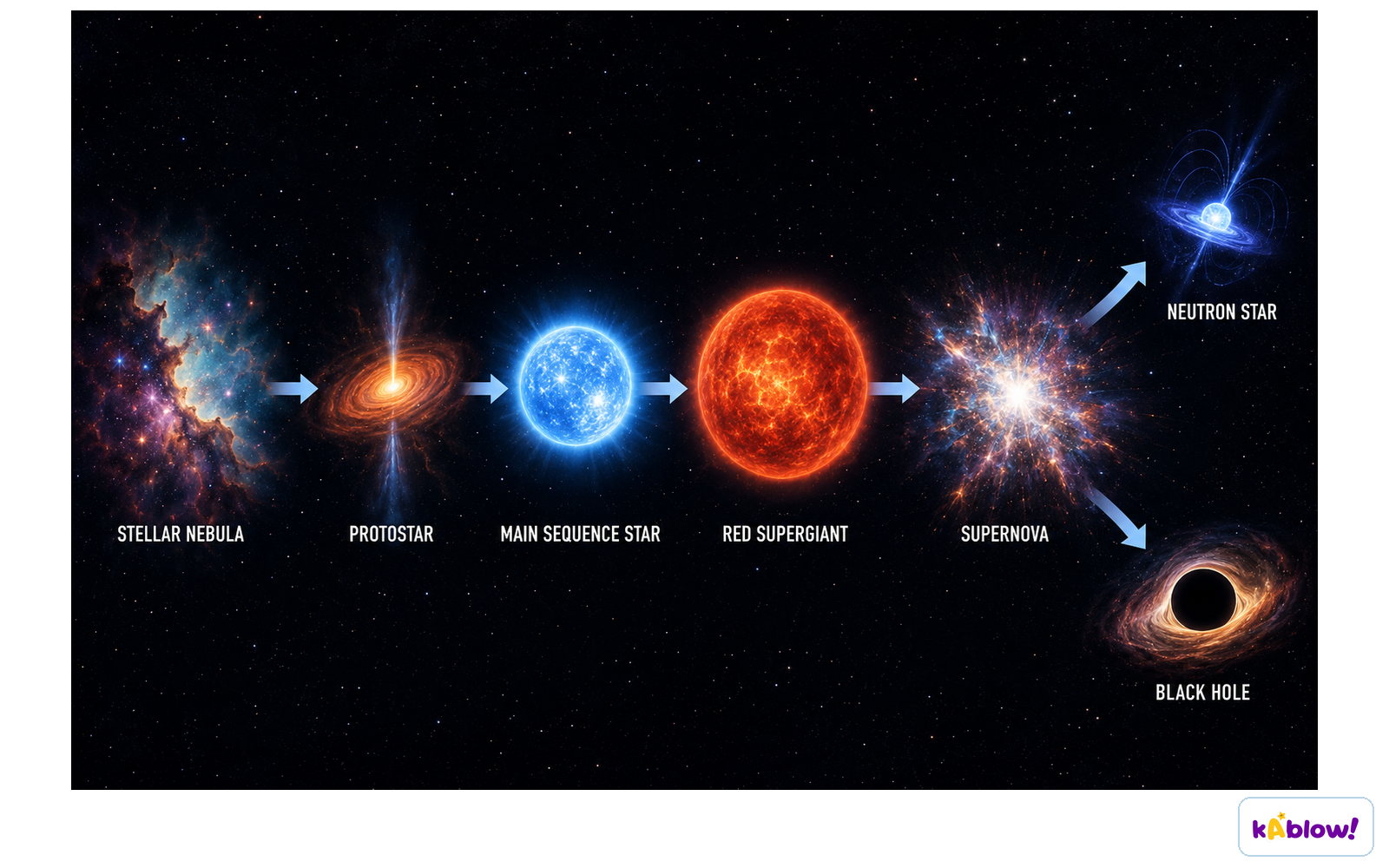
Life Cycle of a Large Mass Star
- A large mass star becomes a red supergiant at the end of its life.
- It explodes as a supernova, ejecting heavy elements (heavier than iron) into space.
- The core of a large star collapses to form a neutron star; a very large star's core collapses to form a black hole.
- The nebula from a supernova may form new stars and planets.
Life cycle of a large mass star
The Big Bang Theory
- Around 13.8 billion years ago, the Universe began from a single point of high density and temperature.
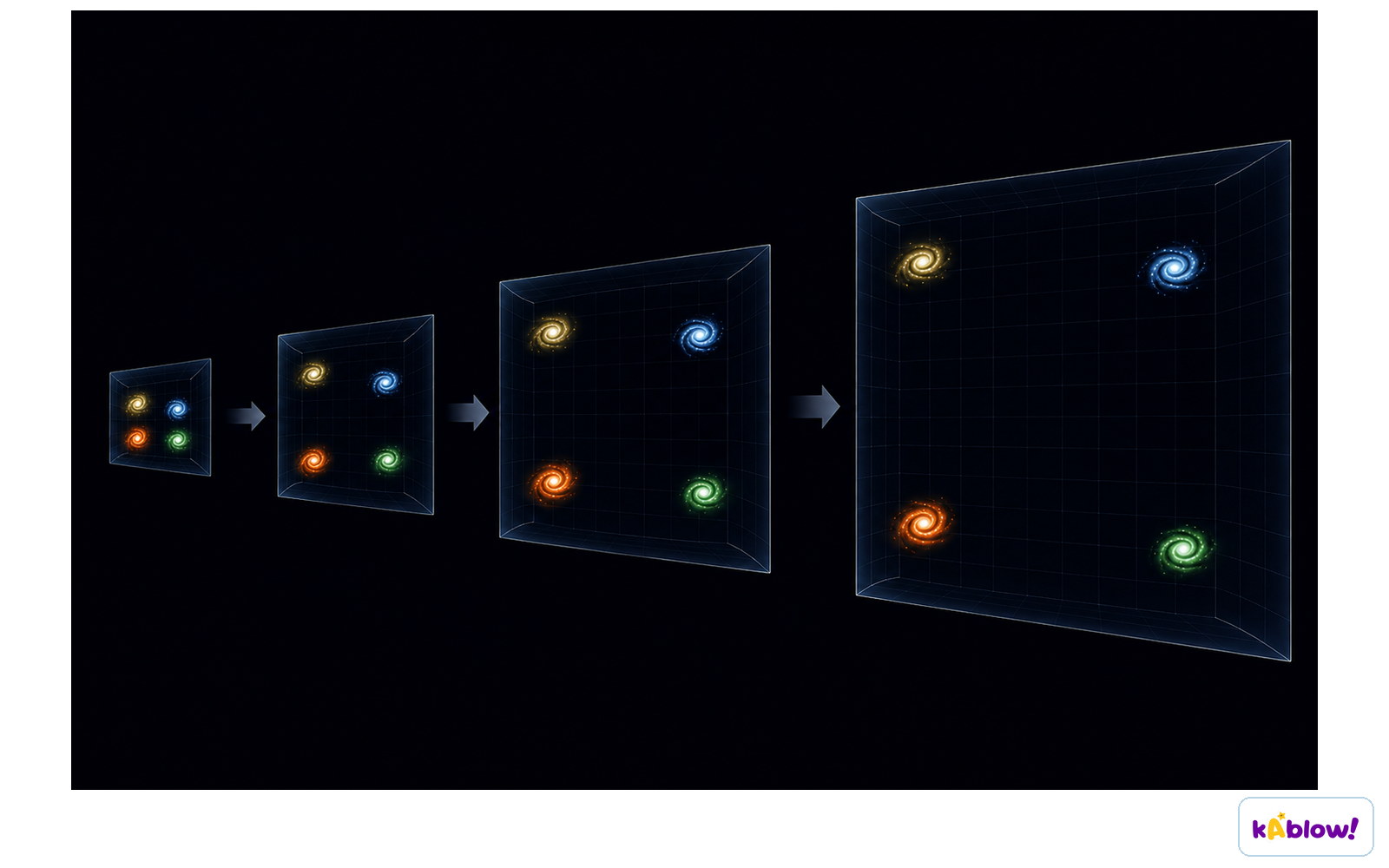
- A giant explosion, the Big Bang, caused the Universe to expand and cool.
- Observations show distant galaxies are moving away from us, supporting that the Universe is expanding.
- The expansion is like a balloon with dots – as space expands, galaxies move apart.
The Big Bang and expansion of the Universe
슬라이드
연습 문제
무료 미리 보기 — 55개 중 8개 문제. 가입하면 전부 볼 수 있어요.
1.What is the Sun mostly made of?
Easy- Ahydrogen and helium
- Boxygen and carbon
- Cnitrogen and iron
- Dhelium and oxygen
2.State the name of the galaxy that contains the Sun.
Easy3.How many light-years is the diameter of the Milky Way?
Easy- A120000
- B110000
- C90000
- D100000
4.A light-year is a unit of time.
EasyTrue or false?
5.Arrange the following stages in the correct order for the life cycle of a star like the Sun.
Medium- white dwarf
- protostar
- red giant
- nebula
- stable star
- planetary nebula
6.Which of the following is the final stage of a very large mass star?
Easy- Awhite dwarf
- Bneutron star
- Cblack hole
- Dplanetary nebula
7.Name the process that releases energy in the core of a star.
Easy8.Complete the sentence.
EasyA ____ is a large collection of billions of stars.
기출 문제
이 주제의 기출 문제 연습이 곧 나와요.
곧 출시