Transfer Of Thermal Energy
플레이하며 배우기
이 문제들을 풀어 에너지를 얻은 뒤 낚시하고 탐험하세요. 계정이 필요 없어요.
수업 노트
Thermal Conduction
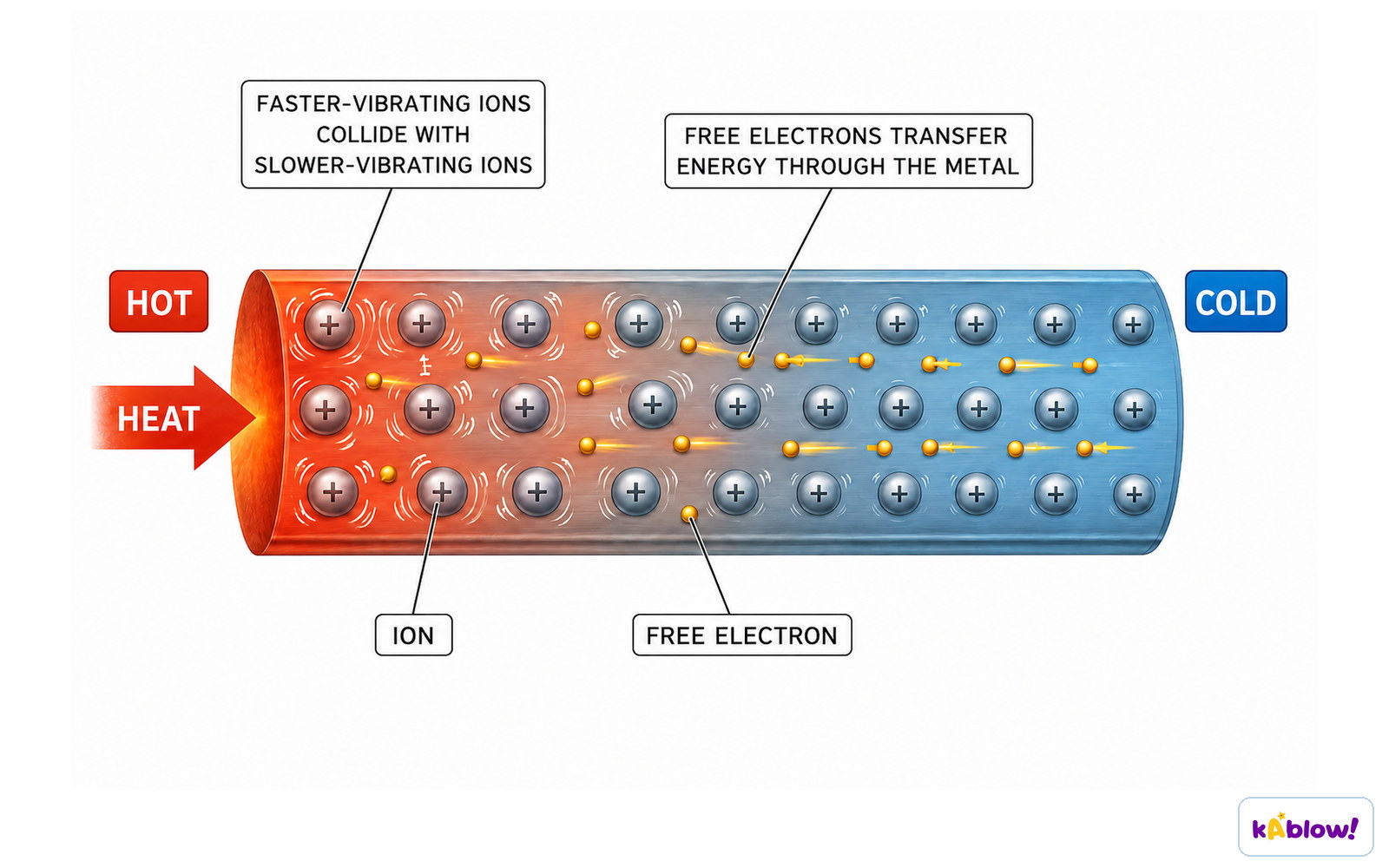
- Conduction is the transfer of thermal energy through a solid via particle vibrations and the movement of free electrons.
- Metals are good conductors because they have many free electrons that transfer energy through collisions.
- Non-metals and organic materials are poor conductors (insulators) because they lack free electrons.
- In conduction, atoms at the hotter end vibrate more and collide with neighbours, transferring energy until thermal equilibrium is reached.
Conduction: the atoms in a solid vibrate and collide, transferring energy
Convection
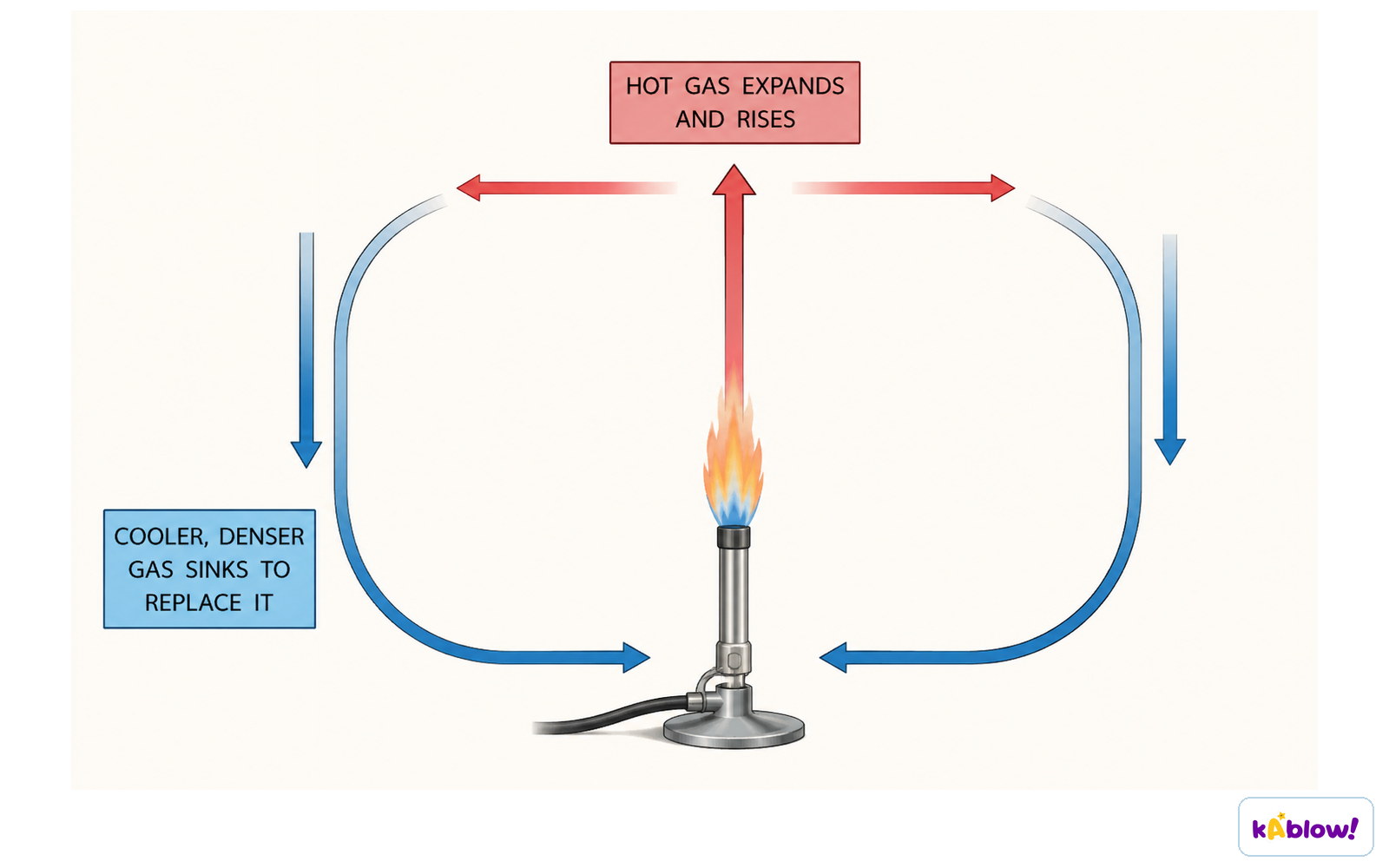
- Convection is the main method of thermal energy transfer in fluids (liquids and gases).
- When a fluid is heated, it expands, becomes less dense, and rises; cooler, denser fluid sinks to replace it, creating a convection current.
- Convection cannot occur in solids because particles are fixed in position.
- Common examples: radiators heating a room, steam rising from hot coffee.
When a liquid or gas is heated, it becomes less dense and rises
Thermal Radiation
- Thermal radiation is the transfer of energy by infrared waves; it does not require a medium and can travel through a vacuum.
- All objects emit thermal radiation; hotter objects emit more radiation.
- Black, dull surfaces are good absorbers and good emitters of radiation.
- White, shiny surfaces are poor absorbers and poor emitters (they reflect radiation).
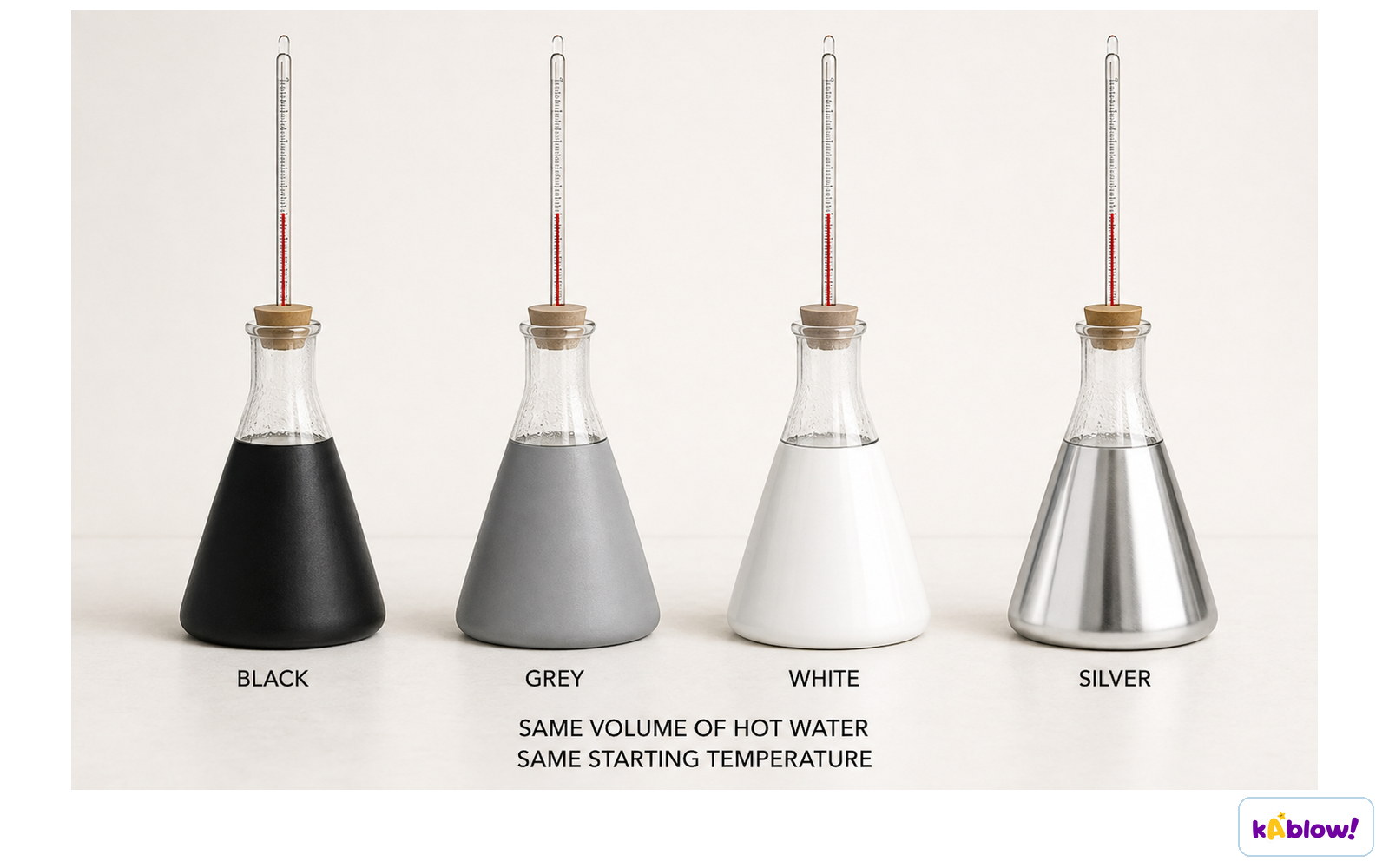
Effect of surface colour and texture on thermal radiation
Investigating Thermal Radiation
- Experiment: fill identical flasks painted black, grey, white, and silver with hot water at the same initial temperature.
- Measure temperature at regular intervals (e.g., every 30 s for 10 min) to compare cooling rates.
- The black flask cools fastest (best emitter), the silver flask cools slowest (poorest emitter).
- Control variables: same amount of water, same starting temperature, same time interval.
Different coloured flasks for investigating infrared radiation
The Greenhouse Effect
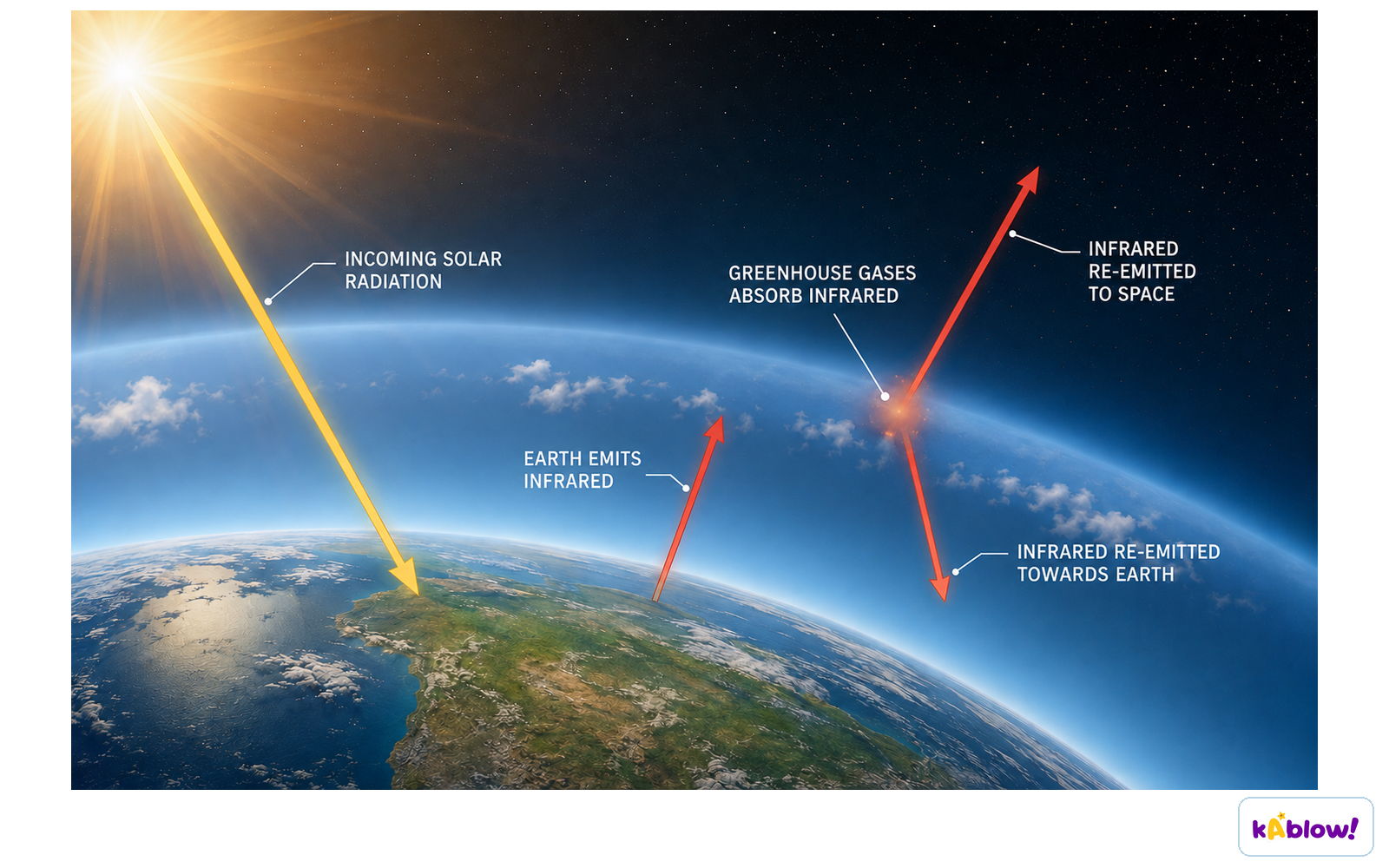
- The Earth absorbs radiation from the Sun and emits its own thermal radiation.
- Greenhouse gases (e.g., CO₂, water vapour) absorb and re-emit some of Earth's radiation, trapping heat and warming the surface.
- Without greenhouse gases, Earth's surface would be extremely cold.
- Excess greenhouse gases increase the amount of radiation reflected back, leading to global warming.
The greenhouse effect: radiation from the Sun and Earth
Consequences of Thermal Energy Transfer
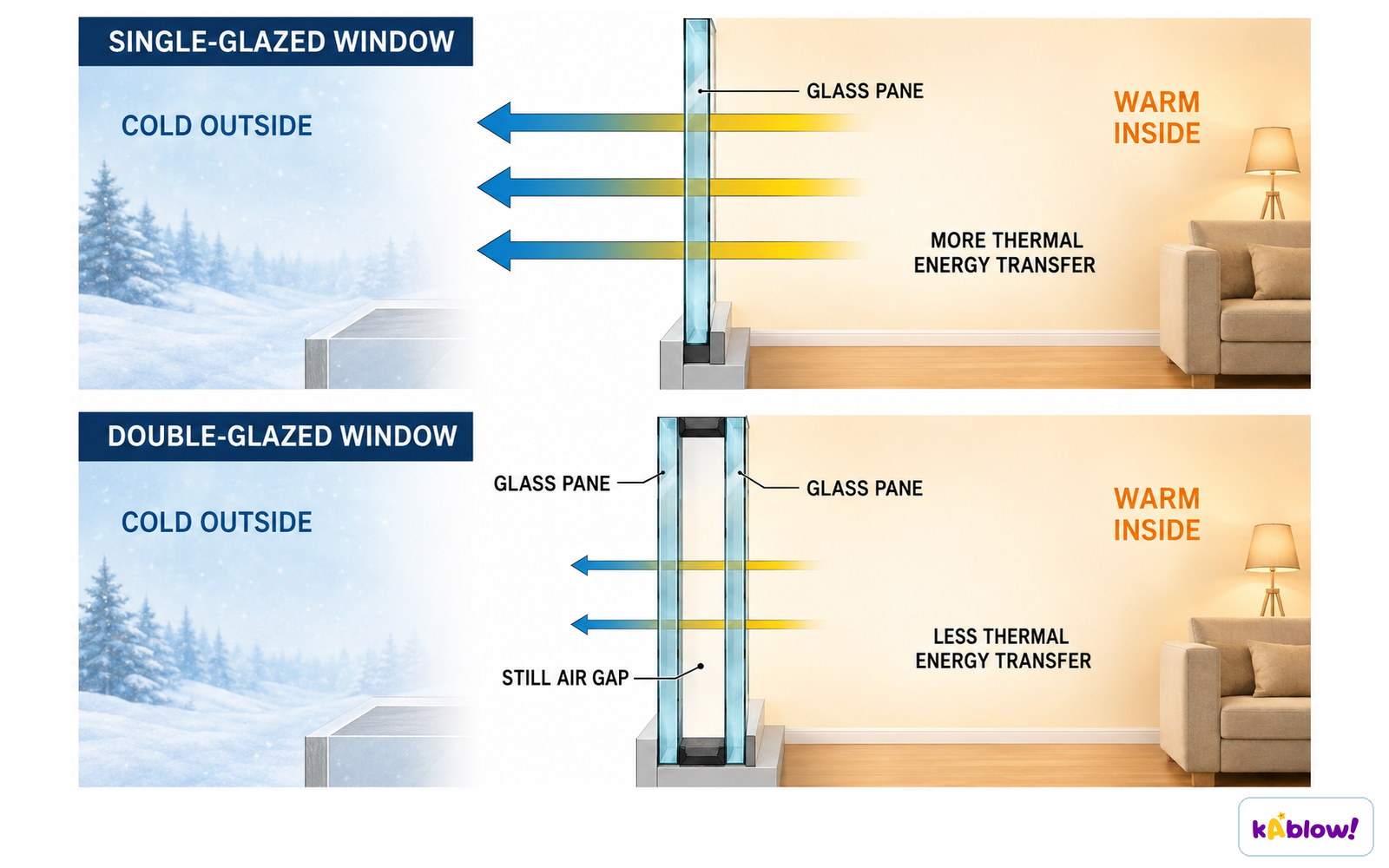
- Conduction applications: metal pans for quick heating; plastic handles and double-glazed windows as insulators.
- Convection applications: radiators use convection currents to heat rooms; steam rising cools hot liquids.
- Radiation applications: black car bodies absorb sunlight and become hot; fire radiates heat to surroundings.
Double-glazed windows use a layer of air to reduce heat loss
슬라이드
연습 문제
무료 미리 보기 — 51개 중 8개 문제. 가입하면 전부 볼 수 있어요.
1.Which method of thermal energy transfer does not require a medium?
Easy- AConduction
- BConvection
- CRadiation
- DEvaporation
2.Convection can occur in solids.
EasyTrue or false?
3.State one factor that affects the rate of thermal radiation emitted by a surface.
Easy4.Complete the sentence about conduction in metals.
EasyIn metals, thermal energy is transferred by ____ and by the movement of ____.
5.A black surface and a white surface are placed in sunlight. The black surface absorbs 90% of incident radiation and the white surface absorbs 20%. How many times more radiation does the black surface absorb compared to the white surface?
Medium- A6.5
- B4.5
- C5.5
- D3.5
6.In a convection current, a fluid expands and becomes less dense when it is heated. What happens next?
Easy- AIt sinks
- BIt rises
- CIt stays in place
- DIt condenses
7.Arrange the following steps in the correct order to describe how a radiator heats a room by convection.
Easy- Hot air rises
- Cooler air moves in to replace it
- Air near the radiator is heated
- Hot air cools and sinks
8.Match each surface type to its property regarding thermal radiation.
Easy- Black, dull surface
- White, shiny surface
- Silver, polished surface
- Good absorber and good emitter
- Poor absorber and poor emitter
- Very poor absorber and very poor emitter