The Nuclear Model Of The Atom
플레이하며 배우기
이 문제들을 풀어 에너지를 얻은 뒤 낚시하고 탐험하세요. 계정이 필요 없어요.
수업 노트
Atomic Structure
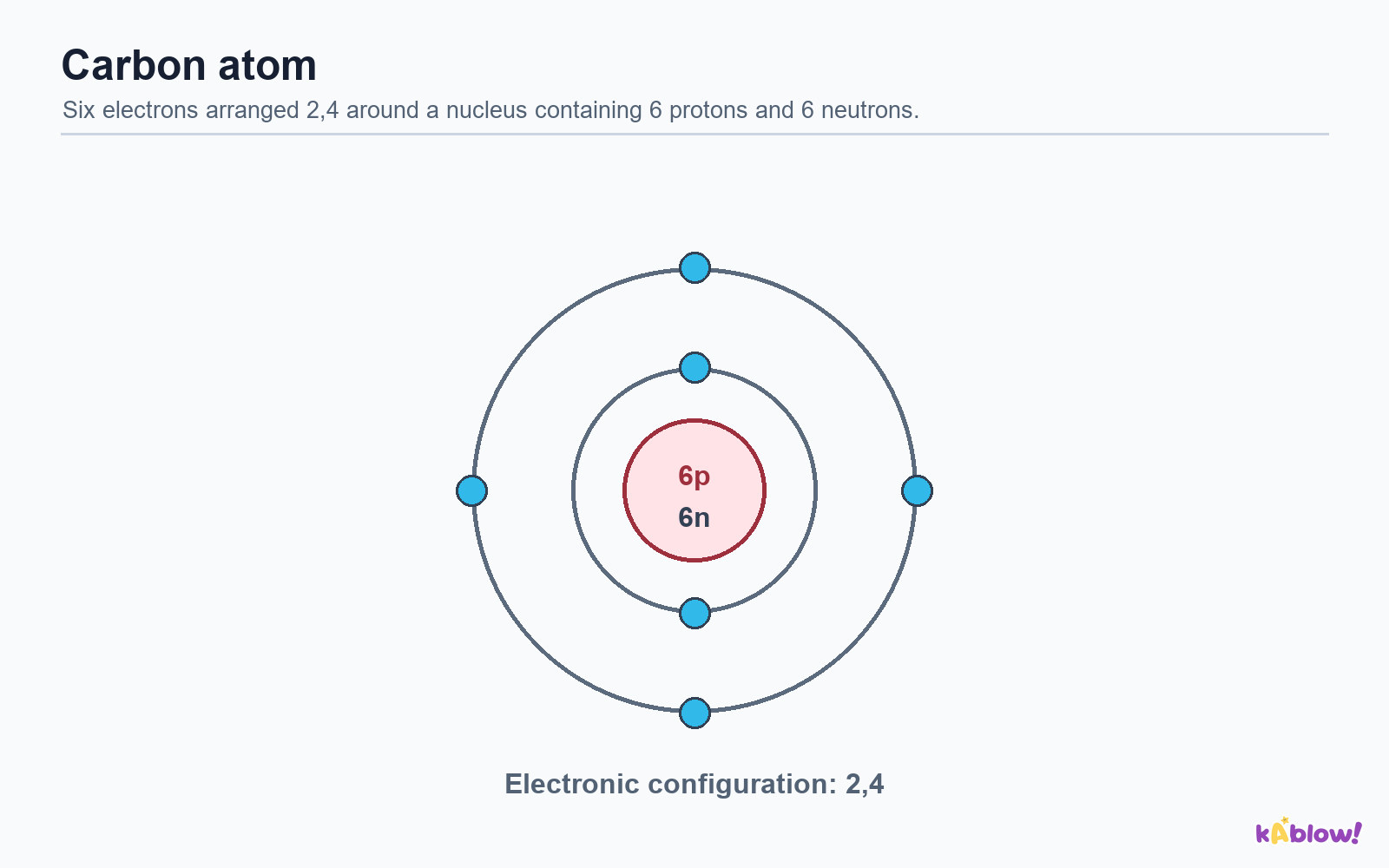
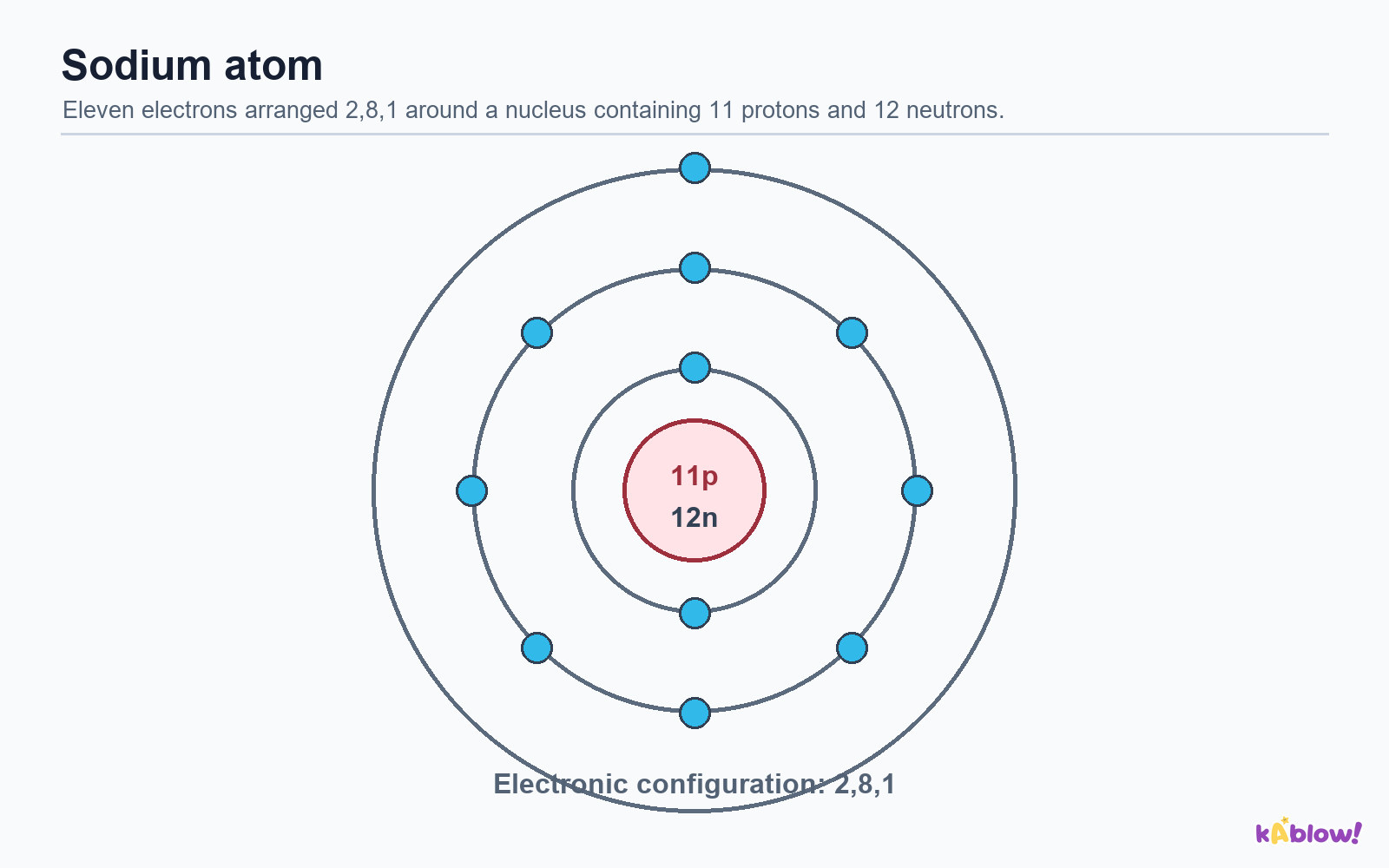
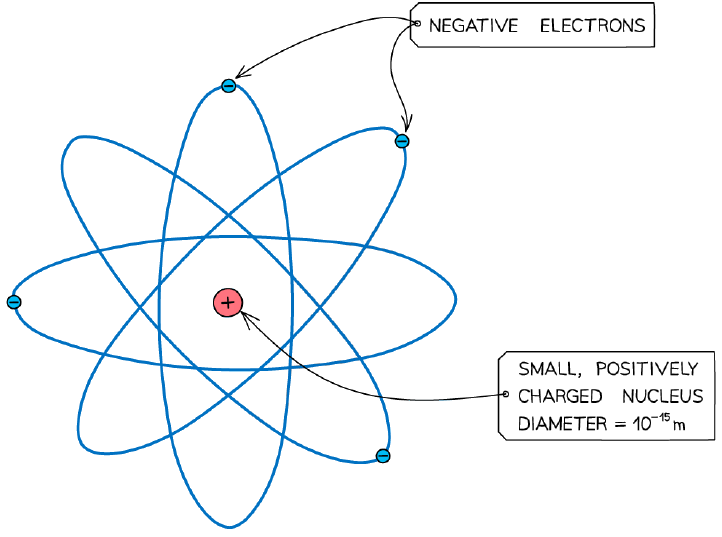
- Atoms consist of a small, dense, positively charged nucleus surrounded by negatively charged electrons in orbit.
- Atom radius ≈ 1 × 10⁻¹⁰ m; nucleus radius is over 10,000 times smaller but contains almost all the mass.
- A neutral atom has equal numbers of protons and electrons.
- Ions are formed when an atom loses or gains electrons: losing electrons → positive ion; gaining electrons → negative ion.
Diagram of an atom with a positively charged nucleus and negatively charged electrons orbiting it.
Rutherford's Alpha Scattering Experiment (Extended Tier)
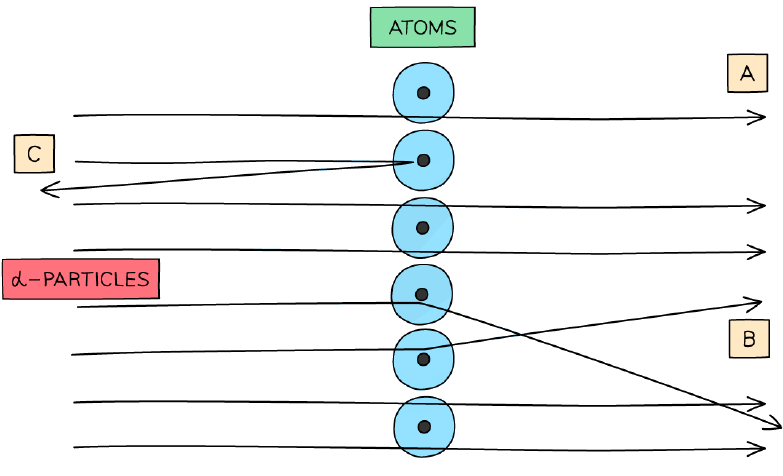
- In 1909, Rutherford, Geiger and Marsden fired α-particles at thin gold foil.
- Most α-particles passed straight through → atom is mostly empty space.
- Some were deflected → repelled by a small, positively charged nucleus.
- A very few bounced back → nucleus is tiny and contains most of the mass.
- This disproved the Plum Pudding model and provided evidence for the nuclear model.
Rutherford's Alpha Scattering Experiment
The Nucleus
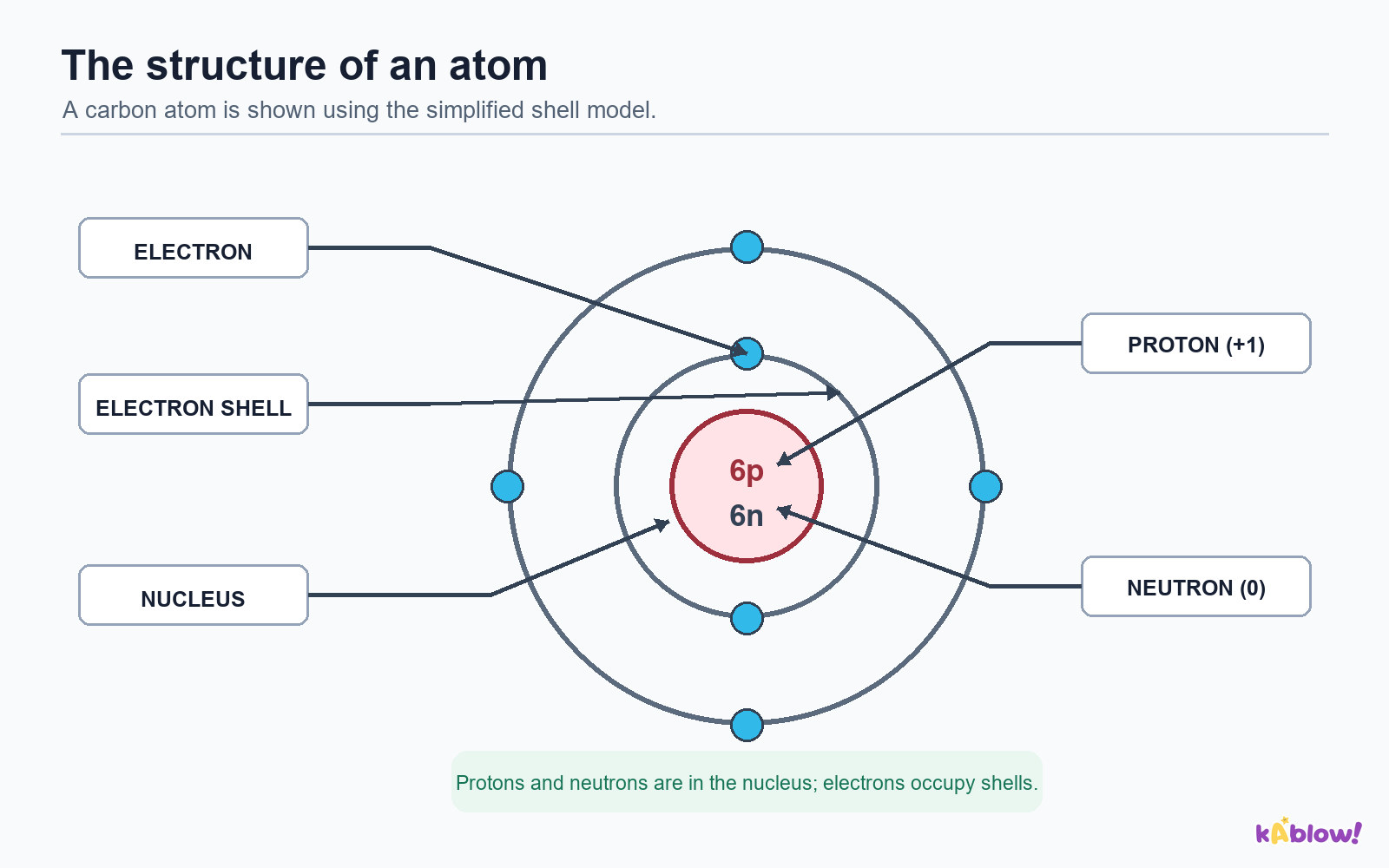
- The nucleus contains protons (positive charge) and neutrons (no charge); overall positive charge.
- Proton number (Z) = number of protons = atomic number; determines the element.
- Nucleon number (A) = total number of protons and neutrons (mass number).
- Number of neutrons = nucleon number − proton number.
Structure of the atom
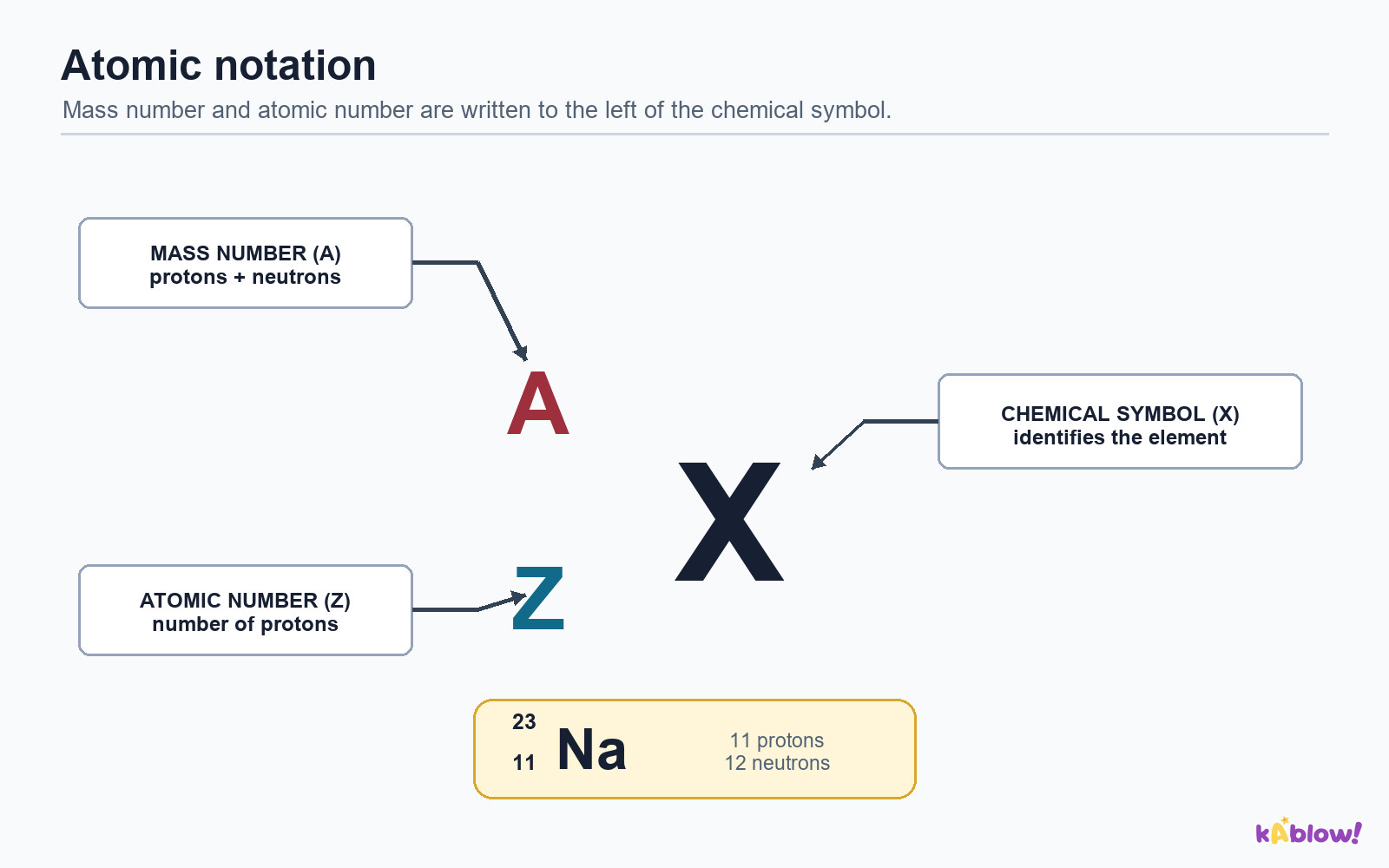
Nuclide Notation
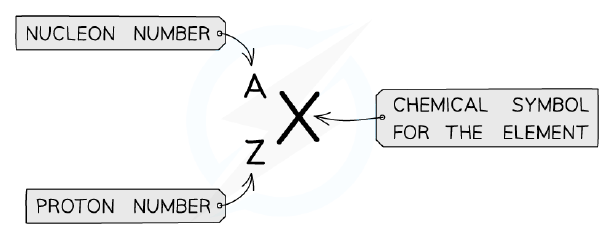
- Nuclide notation: \ce{AZX} where X = element symbol, A = nucleon number, Z = proton number.
- Example: \ce{19779Au} has 79 protons, 118 neutrons (197−79), and 79 electrons.
- A nuclide is a group of atoms with the same number of protons and neutrons.
Nuclide notation
Isotopes
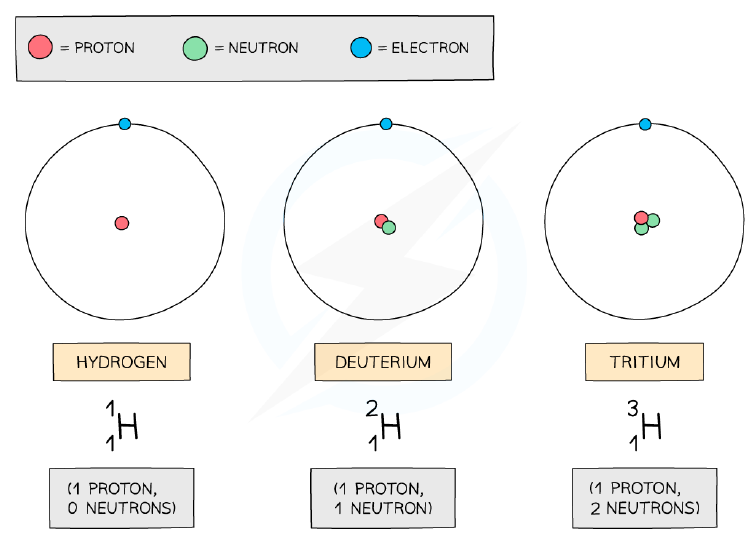
- Isotopes are atoms of the same element with the same number of protons but different numbers of neutrons.
- They have the same Z but different A.
- Example: \ce{23592U} and \ce{23892U} are isotopes of uranium.
- Isotopes tend to be more unstable due to imbalance of protons and neutrons.
Isotopes of hydrogen
Protons, Neutrons & Electrons
- Relative charges: proton = +1, neutron = 0, electron = −1.
- Relative masses: proton = 1, neutron = 1, electron = negligible (≈1/2000).
- Nuclear charge = number of protons × (+1).
- Relative mass of atom ≈ nucleon number (mass of electrons negligible).
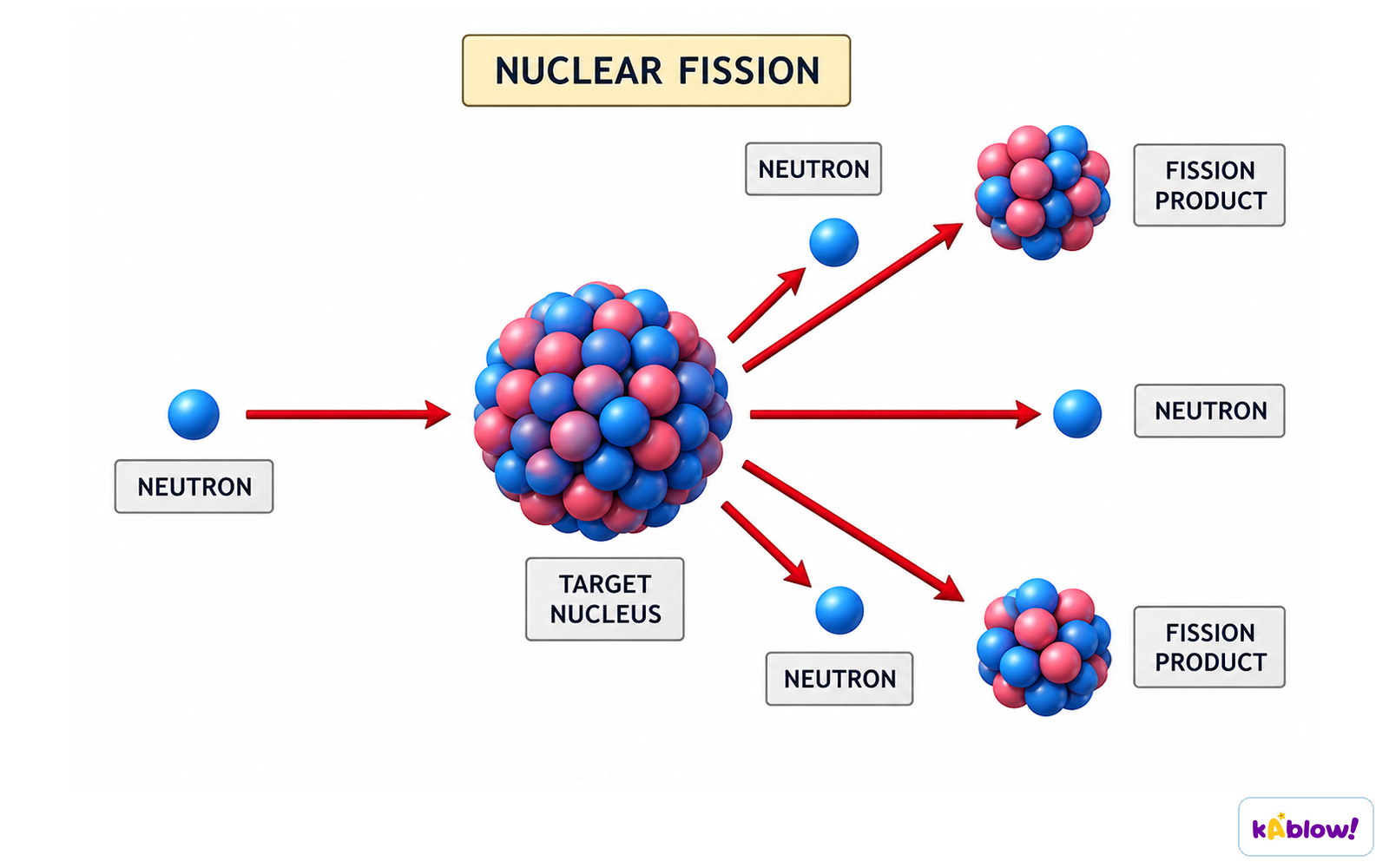
Nuclear Fission (Extended Tier)
- Nuclear fission is the splitting of a large, unstable nucleus into two smaller nuclei.
- A neutron collides with the nucleus, which splits into daughter nuclei and 2–3 neutrons, releasing energy and gamma rays.
- Example: \ce{23592U + 10n → 9236Kr + 14156Ba + 310n + energy}.
- The total nucleon and proton numbers are conserved; mass decreases slightly as mass is converted to energy.
- Used in nuclear power stations with fuels like uranium-235 and plutonium.
Diagram illustrating nuclear fission where a neutron collides with a target nucleus, splitting it into fission products and releasing more neutrons.
Nuclear Fusion (Extended Tier)
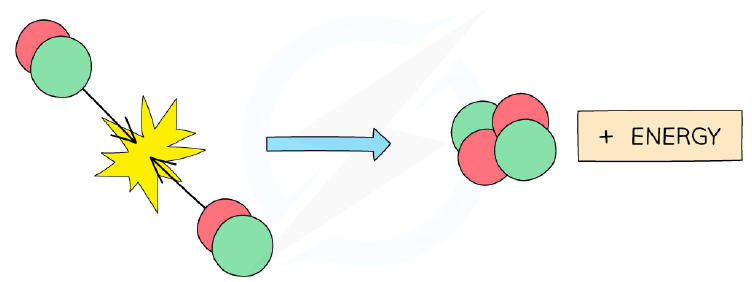
- Nuclear fusion is the joining of two light nuclei to form a heavier nucleus.
- Occurs in stars (e.g., hydrogen fusing to helium) and requires extremely high temperature and pressure.
- Example: \ce{21H + 11H → 32He + energy}.
- Mass of product is slightly less than reactants; mass converted to energy releases huge amounts (1 kg hydrogen ≈ 10 million kg coal).
Nuclear fusion of hydrogen
슬라이드
연습 문제
무료 미리 보기 — 50개 중 8개 문제. 가입하면 전부 볼 수 있어요.
1.Which statement about the three isotopes of hydrogen is correct?
Easy- AThey must have different numbers of electrons orbiting their nucleus.
- BThey must all have one proton in their nuclei.
- CThey must all have one neutron in their nuclei.
- DThey must all have the same number of nucleons in their nucleus.
2.An atom consists of electrons orbiting a nucleus. The nucleus contains protons and neutrons. For the atom to be neutral, which statement must be correct?
Easy- AThe number of electrons is equal to the number of protons.
- BThe number of protons is equal to the number of neutrons.
- CThe number of electrons, protons and neutrons are all different.
- DThe number of electrons is equal to the number of neutrons.
3.The charge on an electron is -e. Which answer correctly describes the charge of a proton and the charge on a neutron?
Easy- AProton: 0, Neutron: +e
- BProton: +e, Neutron: -e
- CProton: +e, Neutron: 0
- DProton: -e, Neutron: +e
4.An isotope of uranium is represented by the symbol 92235U. Which of the answers below could be a different isotope of uranium?
Medium- A91235U
- B92238U
- C23592U
- D90235U
5.Atom X loses an electron to form an ion. Atom Y gains an electron to form an ion. Which row in the table is correct?
Easy- Acharge on ion of X: positive, charge on ion of Y: positive
- Bcharge on ion of X: positive, charge on ion of Y: negative
- Ccharge on ion of X: negative, charge on ion of Y: positive
- Dcharge on ion of X: negative, charge on ion of Y: negative
6.Where is the positive charge in an atom?
Easy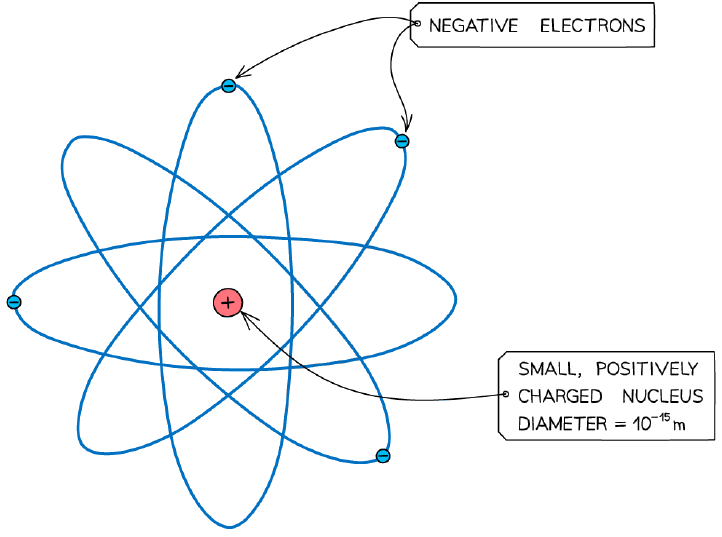
- Aon the orbiting particles
- Bin the nucleus
- Cin the space between the nucleus and the orbiting particles
- Dspread throughout the atom
7.Which row correctly identifies the relative charges of the three types of particle in an atom?
Easy- Aproton: +1, neutron: -1, electron: 0
- Bproton: +1, neutron: 0, electron: -1
- Cproton: -1, neutron: +1, electron: 0
- Dproton: -1, neutron: 0, electron: +1
8.How many neutrons are in a nucleus of aluminium? The chemical symbol is 1327Al.
Easy- A13
- B27
- C14
- D40