Food energy requirements
플레이하며 배우기
이 문제들을 풀어 에너지를 얻은 뒤 낚시하고 탐험하세요. 계정이 필요 없어요.
교육자를 위해: Food energy requirements(KS3 Science, Biology)을(를) 위한 바로 쓸 수 있는 수업 슬라이드, 복습 노트 — 수업에 사용하거나, 학습자들이 실시간 게임으로 즐기는 인터랙티브 클래스 활동으로 진행하세요.
수업 노트
Energy in Food
- Food is a store of chemical energy that is transferred to us when we eat.
- The unit of energy for food is the kilojoule (kJ); 1 calorie = 4.2 J.
- A balanced diet provides the right amount of energy and nutrients.
Consequences of Imbalance
- Eating too little leads to weight loss, starvation, and eventually death.
- Eating too much leads to weight gain, obesity, heart disease, and diabetes.
- Malnutrition results from an unbalanced diet.
Metabolic Rate
- Basal metabolic rate (BMR) is the energy needed to survive when inactive.
- Physical activity level adds to BMR to give the overall metabolic rate.
- Factors affecting metabolic rate: age, gender, body mass, exercise, pregnancy.
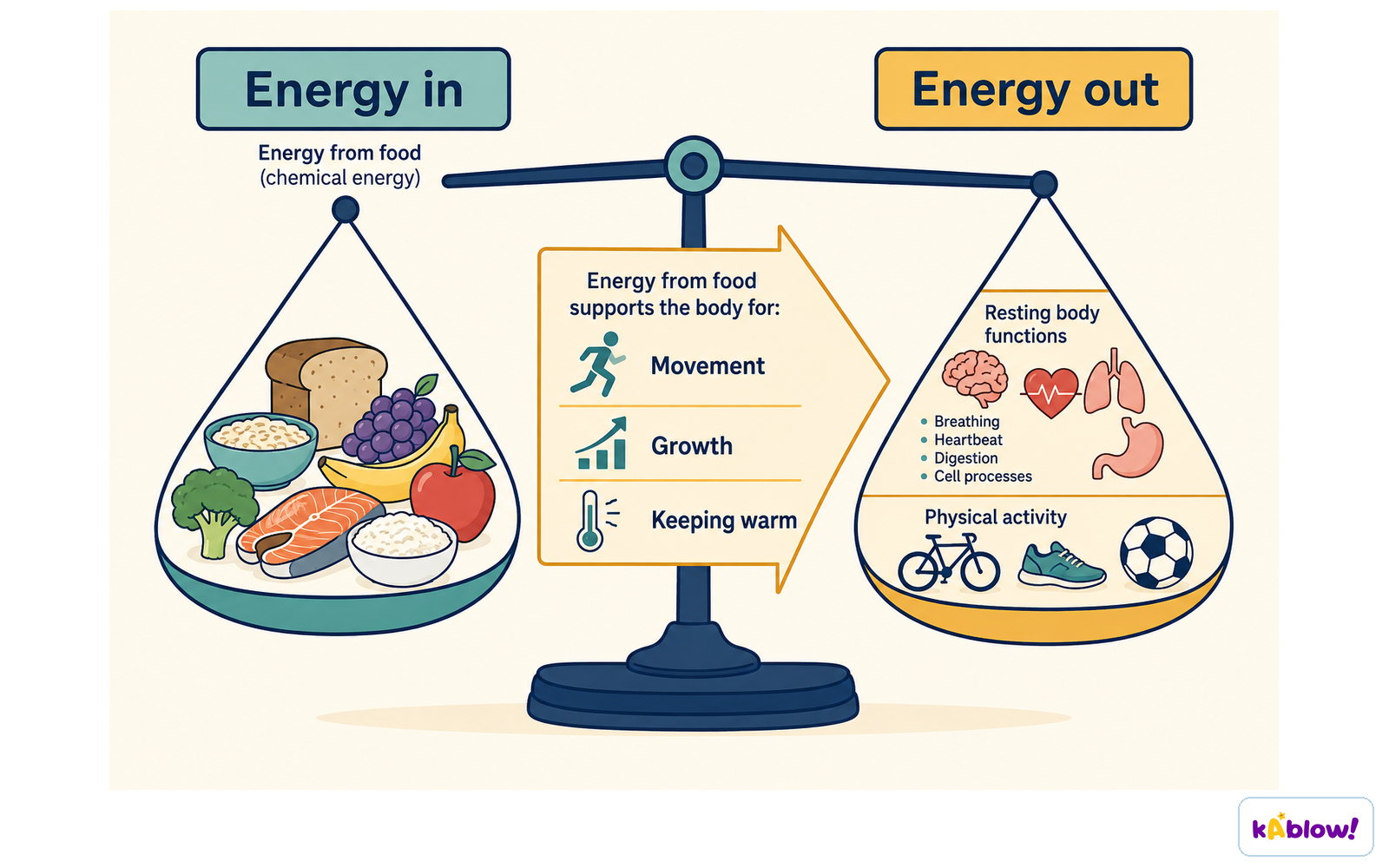
Energy from food supports resting body functions, movement, growth and keeping warm.
Daily Energy Requirements
- Average man needs 10 500 kJ per day; average woman needs 8400 kJ per day.
- Active people need more energy than inactive ones.
Food Labels
- Food labels show energy content and amounts of food groups (carbohydrates, fat, fibre, protein).
- Labels help consumers choose a balanced diet.
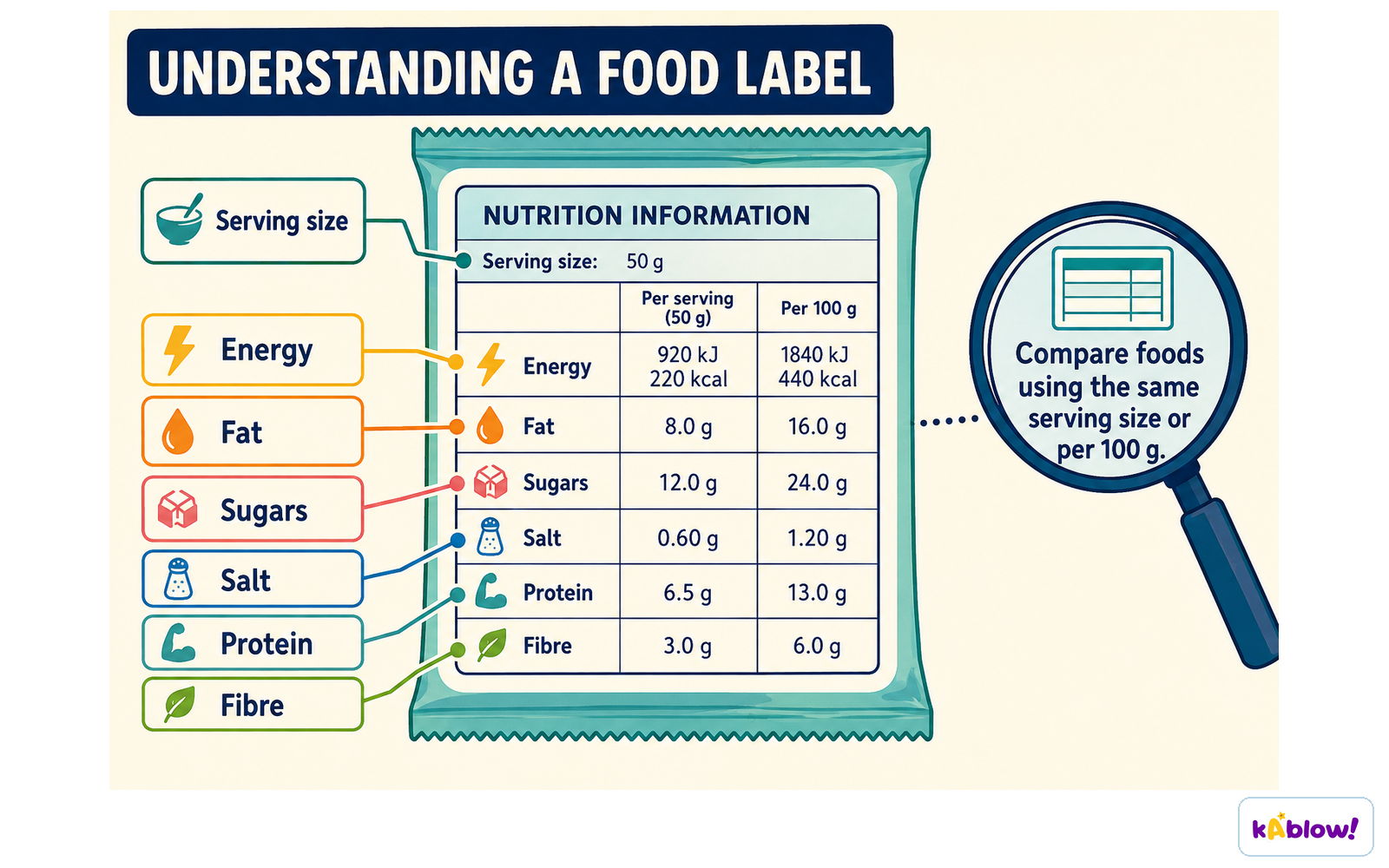
Compare food labels using the same serving size or values per 100 g. This example shows energy and nutrient amounts for both.
슬라이드
연습 문제
무료 미리 보기 — 57개 중 8개 문제. 가입하면 전부 볼 수 있어요.
1.Which unit is used when referring to the energy content of food?
Easy- AKilojoule (kJ)
- BJoule (J)
- CCalorie
- DKilocalorie
2.What is the term for having too much body fat?
Easy- AMalnourishment
- BObesity
- CStarvation
- DDiabetes
3.Which two components make up a person's overall metabolic rate?
Easy- ABasal metabolic rate and physical activity level
- BAge and gender
- CBody mass and exercise levels
- DEnergy intake and energy expenditure
4.According to the source, which of the following is a risk of obesity?
Easy- AHeart disease
- BStarvation
- CMalnourishment
- DWeight loss
5.A man requires 10 500 kJ per day and a woman requires 8 400 kJ per day. What is the ratio of the man's requirement to the woman's requirement?
Easy- A5:4
- B4:5
- C5:3
- D3:5
6.Why is it important that food labels show the amount of each food group?
Easy- ATo help people choose a balanced diet
- BTo increase the price of food
- CTo make food look more attractive
- DTo reduce the energy content
7.What is the basal metabolic rate a measure of?
Easy- AEnergy needed when inactive
- BEnergy needed for exercise
- CTotal energy used per day
- DEnergy stored in food
8.Which factor does NOT affect overall metabolic rate according to the source?
Easy- AHeight
- BAge
- CGender
- DPregnancy
기출 문제
이 주제의 기출 문제 연습이 곧 나와요.
곧 출시