Light microscopes
플레이하며 배우기
이 문제들을 풀어 에너지를 얻은 뒤 낚시하고 탐험하세요. 계정이 필요 없어요.
교육자를 위해: Light microscopes(KS3 Science, Biology)을(를) 위한 바로 쓸 수 있는 수업 슬라이드, 복습 노트 — 수업에 사용하거나, 학습자들이 실시간 게임으로 즐기는 인터랙티브 클래스 활동으로 진행하세요.
수업 노트
What is a light microscope?
- A light microscope uses visible light and lenses to magnify tiny objects.
- It allows us to see details of cells and other small structures.
- It is a key tool in biology for studying specimens too small for the naked eye.
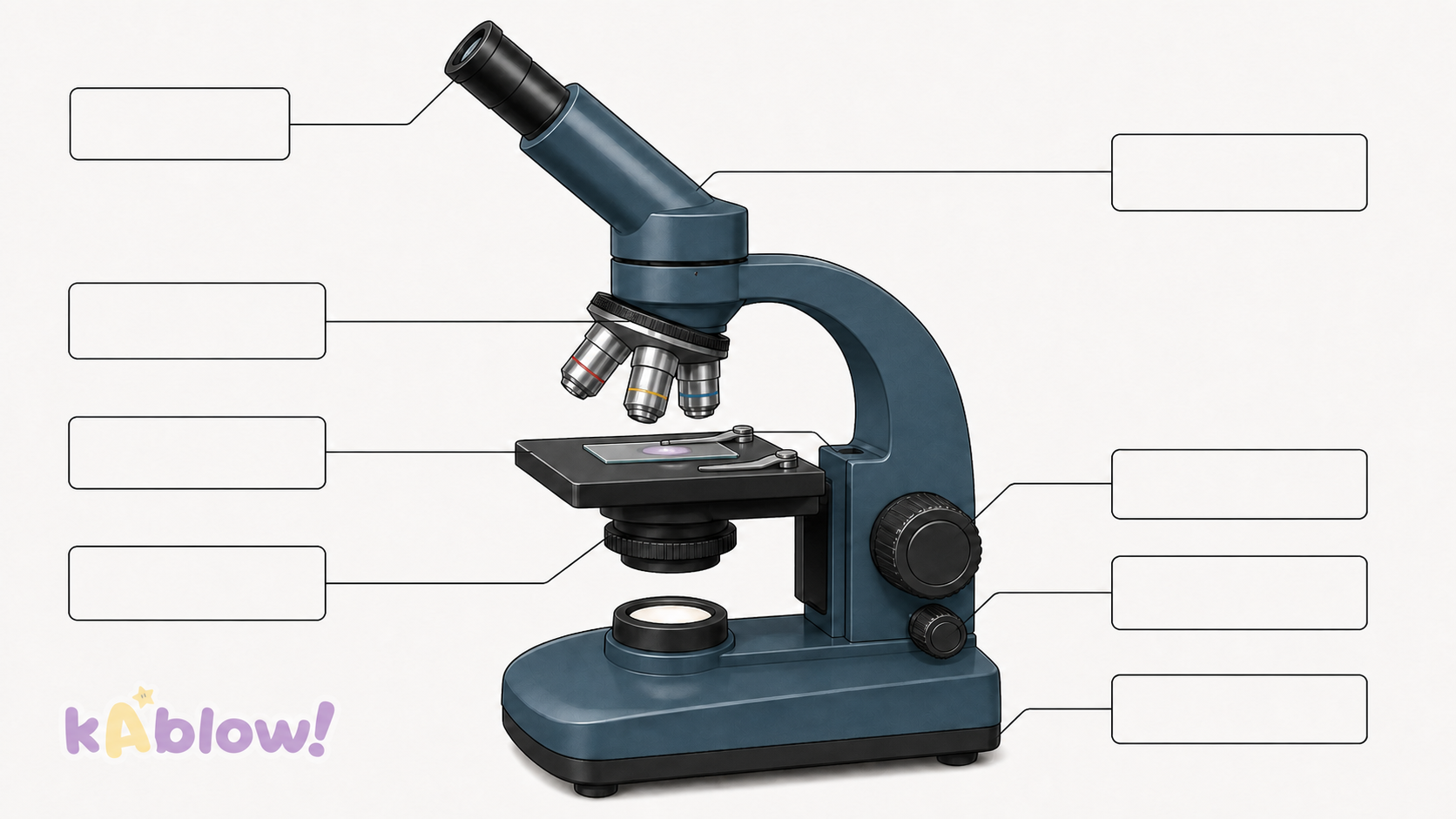
Main parts of a light microscope
- Eyepiece lens – the lens you look through at the top.
- Objective lenses – magnify the object; usually several on a rotating nosepiece.
- Stage – flat platform where the slide is placed; has clips to hold it.
- Focus adjuster – moves the stage up/down; has coarse and fine adjustments.
- Mirror or light source – shines light through the object to improve visibility.
Parts of a light microscope
How to focus the microscope
- Start with the lowest-power objective lens.
- Use the coarse adjustment to bring the object roughly into focus.
- Then use the fine adjustment to sharpen the image for clear detail.
- Always handle adjustments gently to avoid damaging the slide or lens.
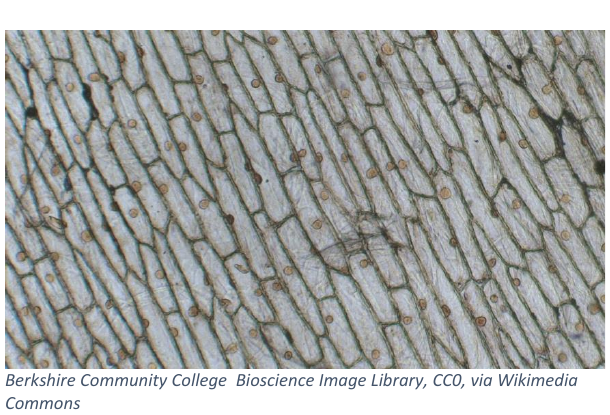
Preparing a slide (onion cells)
- Cut an onion and peel off a thin layer of epidermis.
- Place the thin layer onto a clean glass slide.
- Add a drop of iodine to stain the cells and make them visible.
- Gently place a coverslip over the specimen to protect it.
- Secure the slide on the stage using the stage clips.
Onion epidermis cells under a light microscope
Total magnification
- Total magnification = eyepiece magnification x objective lens magnification.
- Example: a 10x eyepiece with a 40x objective gives a total magnification of 400x.
- Switching to a higher-power objective increases magnification but shows a smaller area (a smaller field of view).
Key facts
- Light microscopes magnify objects so we can see cells and their structures.
- The objective lens is not the one you look through – that is the eyepiece.
- The mirror reflects light upward through the specimen to illuminate it.
- Always use clips to hold the slide firmly on the stage.
슬라이드
연습 문제
무료 미리 보기 — 26개 중 8개 문제. 가입하면 전부 볼 수 있어요.
1.What is the primary use of a light microscope?
Easy- ATo magnify objects too small to be seen with the naked eye
- BTo measure the temperature of objects
- CTo weigh small objects
- DTo separate mixtures
2.What is the function of the stage on a light microscope?
Easy- ATo hold the slide in place
- BTo magnify the object
- CTo adjust the focus
- DTo provide light
3.What is the function of the mirror or light source in a light microscope?
Easy- ATo shine light through the object being viewed
- BTo magnify the image
- CTo hold the slide
- DTo adjust the focus
4.Describe the purpose of the mirror on a light microscope.
Medium5.Match each microscope part to its function.
Medium- Eyepiece lens
- Objective lens
- Stage
- Mirror or light source
- Magnifies the object
- Lens you look through
- Holds the slide
- Shines light through the specimen
6.Which part of a light microscope is the lens that you look through?
Easy- AEyepiece lens
- BObjective lens
- CFocus adjuster
- DMirror
7.Which of the following is NOT a part of a light microscope?
Easy- AElectron gun
- BEyepiece lens
- CStage
- DObjective lens
8.Fill in the blank.
EasyThe flat platform where you place the slides is called the ____. It has ____ to hold the slides in place.
기출 문제
이 주제의 기출 문제 연습이 곧 나와요.
곧 출시