Specialised cells
플레이하며 배우기
이 문제들을 풀어 에너지를 얻은 뒤 낚시하고 탐험하세요. 계정이 필요 없어요.
수업 노트
What are specialised cells?
- Many cells look similar, but some have special features that help them perform unique jobs.
- These are called specialised cells.
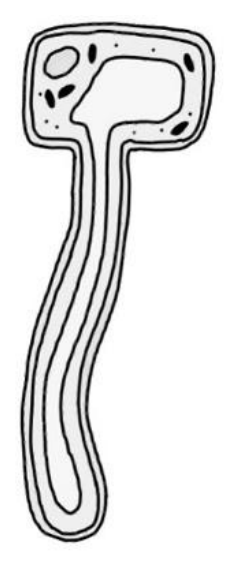
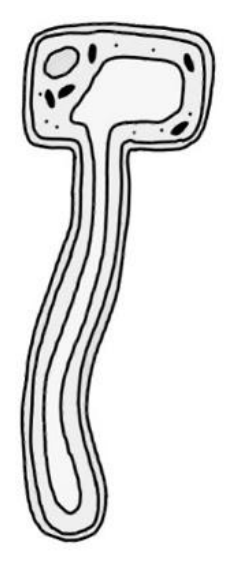
Root hair cells
- Function: Absorb water and nutrients from the soil to help a plant grow.
- Adaptation: Long, hair-like projections increase surface area for efficient absorption.
Root hair cell
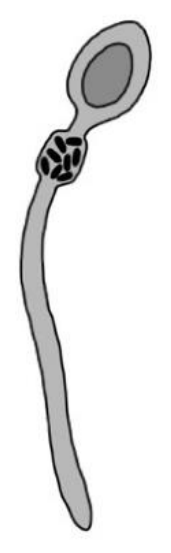
Sperm cells
- Function: Fertilise an egg cell (ovum) for reproduction.
- Adaptation: Long tail (flagellum) helps them swim toward the egg.
- Adaptation: Streamlined shape and head containing enzymes to penetrate the egg.
- Adaptation: Head contains the cell's genetic material.
Sperm cell
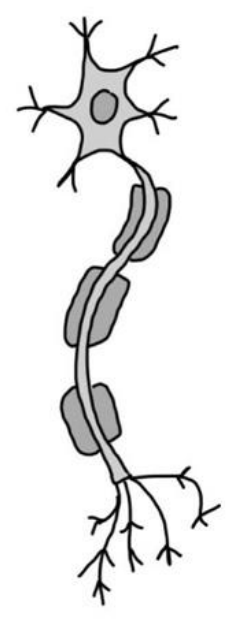
Nerve cells (neurons)
- Function: Transmit electrical signals throughout the body to control body functions, send messages from the brain, and respond to stimuli.
- Adaptation: Long extensions called axons and dendrites connect with other nerve cells to transmit signals quickly over long distances.
Nerve cell (neuron)
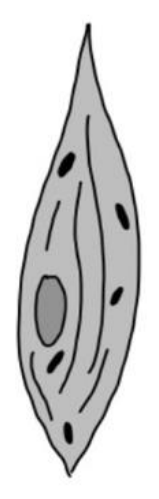
Muscle cells
- Function: Produce movement by contracting and relaxing in response to signals from the nervous system.
- Adaptation: Long and can change shape by contracting.
- Adaptation: Contain many mitochondria to provide energy for contraction.
Muscle cell
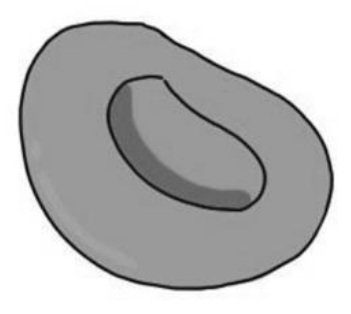
Red blood cells
- Function: Carry oxygen in the blood to the rest of the body.
- Adaptation: Biconcave shape increases surface area for absorbing oxygen.
- Adaptation: Small and flexible to fit through tiny blood vessels.
Red blood cell
슬라이드
연습 문제
무료 미리 보기 — 26개 중 8개 문제. 가입하면 전부 볼 수 있어요.
1.Which of the following is true about specialised cells?
Easy- AThey have special features to perform unique jobs
- BThey all have the same shape and size
- CThey cannot perform any specific function
- DThey are only found in animals
2.Root hair cells are adapted to absorb water and nutrients by having:
Easy- ALong, hair-like projections that increase surface area
- BA long tail for swimming
- CMany mitochondria for energy
- DA biconcave shape
3.Why do muscle cells contain many mitochondria?
Medium- ATo provide energy for contraction
- BTo increase surface area for oxygen absorption
- CTo help them swim
- DTo transmit electrical signals
4.A student says: 'All specialised cells have the same basic structure but differ in function.' Is this statement correct?
Medium- ANo, specialised cells have different structures adapted to their functions
- BYes, all cells are identical in structure
- CYes, but only in plants
- DNo, specialised cells have no specific function
5.The diagram below shows a specialised cell. Which cell is it?
Easy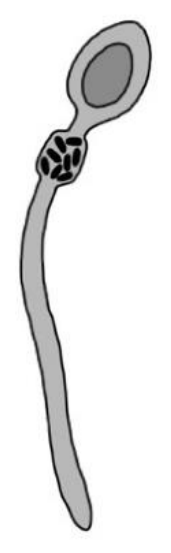
- ASperm cell
- BRed blood cell
- CNerve cell
- DMuscle cell
6.The diagram below shows a specialised cell. What is its main function?
Medium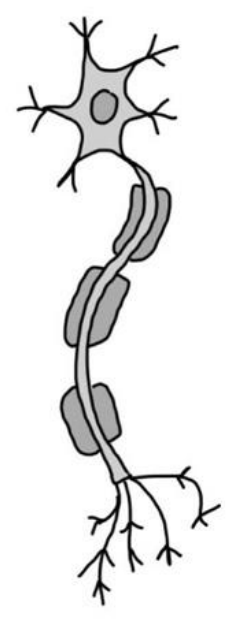
- ATo carry oxygen
- BTo absorb water and nutrients
- CTo transmit electrical signals
- DTo contract and produce movement
7.A student is studying a specialised cell that is long, has many mitochondria, and can change shape. Which type of cell is the student most likely observing?
Medium- AMuscle cell
- BNerve cell
- CSperm cell
- DRed blood cell
8.A scientist measures the surface area of a root hair cell and a typical plant cell. The root hair cell has a surface area of 0.5 mm², while the typical cell has 0.1 mm². How many times greater is the surface area of the root hair cell?
Medium- A5 times
- B0.2 times
- C0.5 times
- D50 times