The muscular system
플레이하며 배우기
이 문제들을 풀어 에너지를 얻은 뒤 낚시하고 탐험하세요. 계정이 필요 없어요.
교육자를 위해: The muscular system(KS3 Science, Biology)을(를) 위한 바로 쓸 수 있는 수업 슬라이드, 복습 노트 — 수업에 사용하거나, 학습자들이 실시간 게임으로 즐기는 인터랙티브 클래스 활동으로 진행하세요.
수업 노트
Overview of the Muscular System
- The muscular system consists of over 600 muscles that work together to enable movement, maintain posture, and perform vital functions like breathing and digestion.
- Muscles are attached to bones by tough, fibrous tissues called tendons.
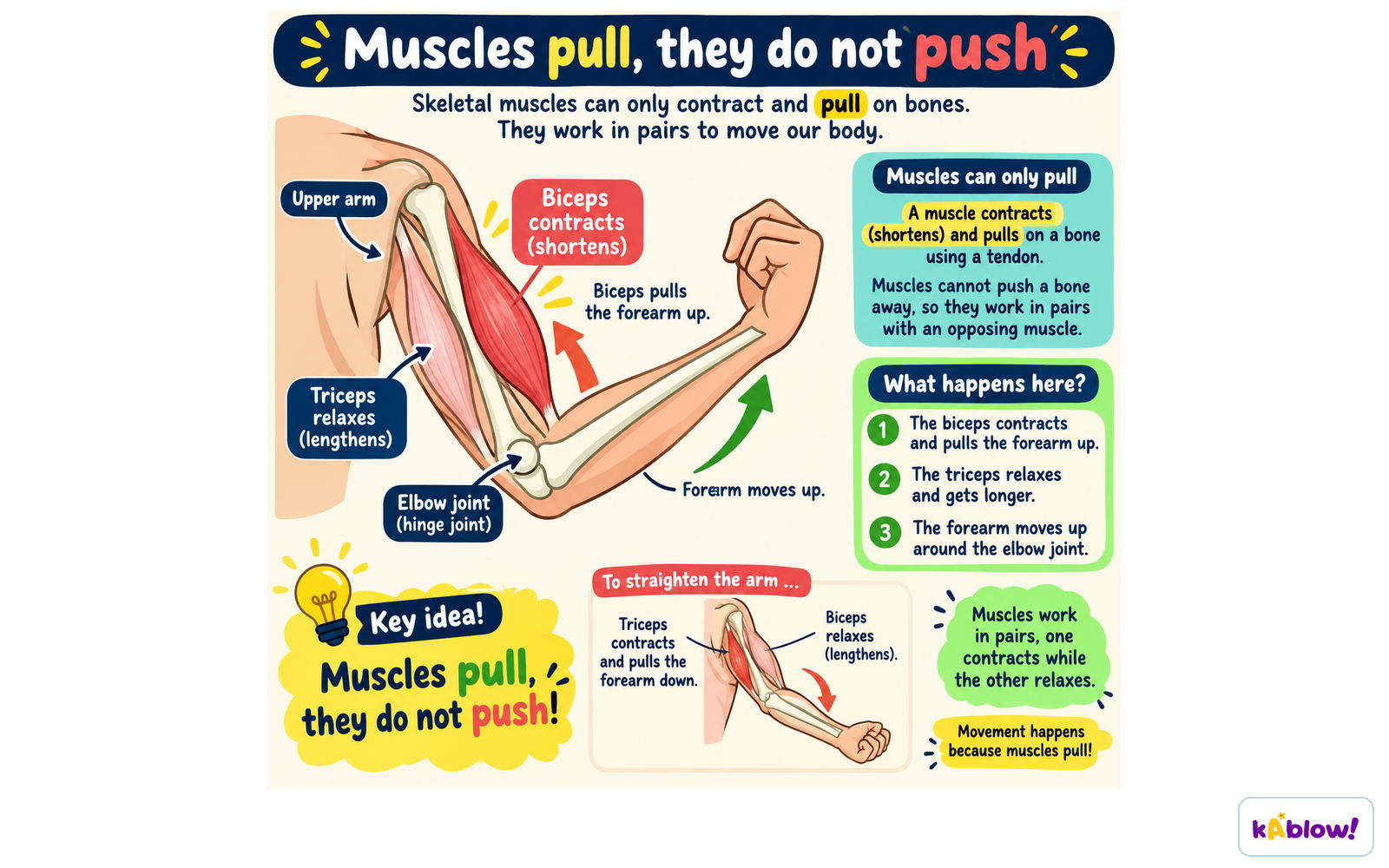
- When muscles contract, they pull on bones, creating movement at joints (where two or more bones meet).
- Muscles can only pull; they cannot push.
Muscles create movement by contracting and pulling on bones. Opposing muscles work together because muscles cannot push.
Antagonistic Muscle Pairs
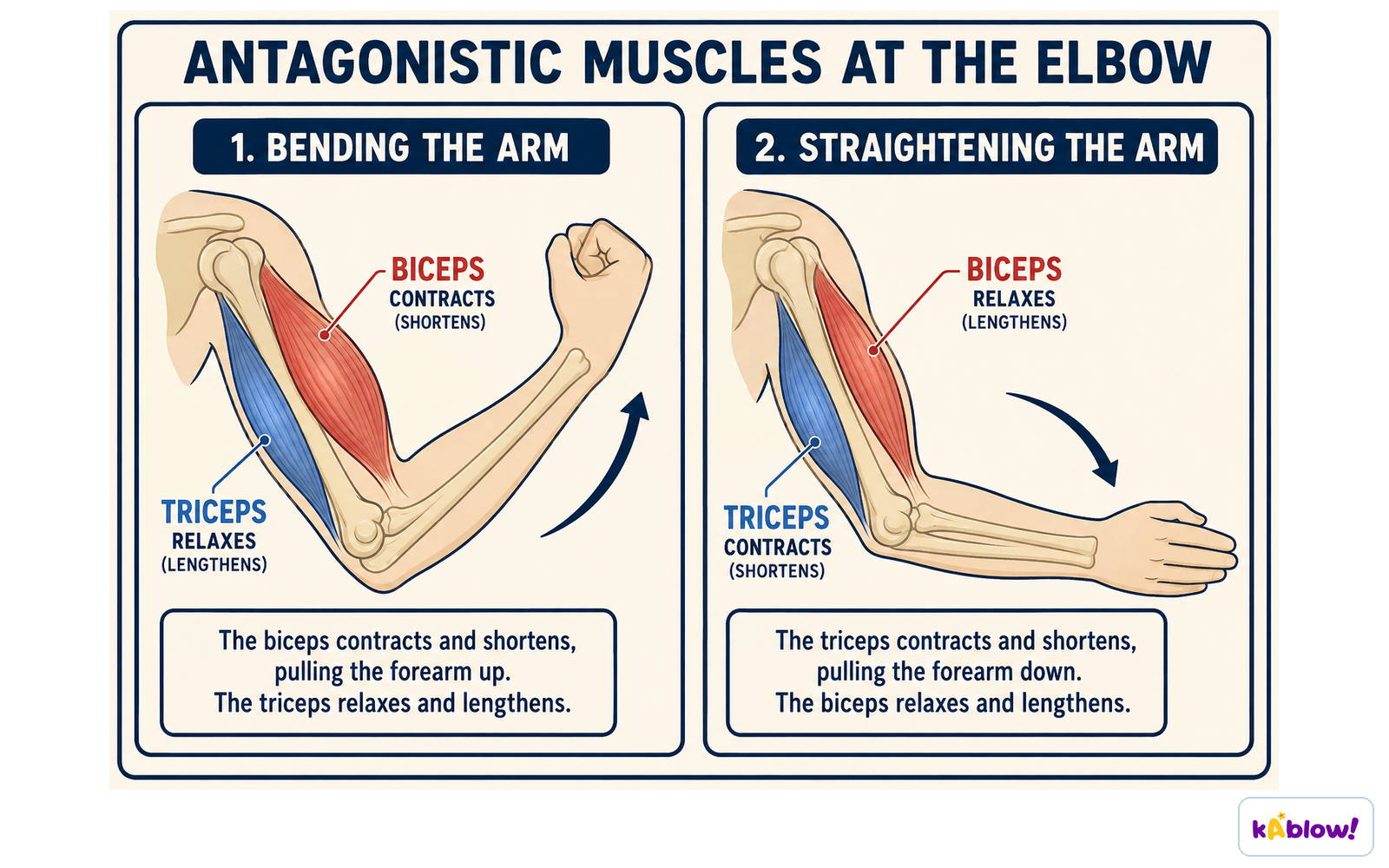
- Muscles work in antagonistic pairs: one muscle contracts (shortens) while the other relaxes (lengthens).
- This coordinated action allows for smooth, controlled movement.
Arm Movement: Biceps and Triceps
- To straighten the arm, the triceps contract and the biceps relax.
- To bend the arm, the biceps contract and the triceps relax.
Bending the elbow contracts the biceps and relaxes the triceps. Straightening reverses the action.
Leg Movement: Hamstring and Quadriceps
- To bend the leg, the hamstring contracts and the quadriceps relax.
- To straighten the leg, the quadriceps contract and the hamstring relax.
Cardiac Muscle
- The heart is made of cardiac muscle, a special type of muscle that works involuntarily.
- Cardiac muscle contracts rhythmically and continuously to pump blood throughout the body.
The Diaphragm and Breathing
- The diaphragm is a muscle located below the lungs that plays a key role in breathing.
- When you inhale, the diaphragm contracts and flattens, allowing the lungs to expand and fill with air.
슬라이드
연습 문제
무료 미리 보기 — 49개 중 8개 문제. 가입하면 전부 볼 수 있어요.
1.How many muscles are there in the human body?
Easy- AOver 600
- BApproximately 300
- CExactly 1000
- DOver 200
2.What type of muscle is the heart made of?
Easy- ACardiac muscle
- BSkeletal muscle
- CSmooth muscle
- DVoluntary muscle
3.Tendons attach muscles to which part of the body?
Easy- ABones
- BOther muscles
- CSkin
- DJoints
4.When the arm is straightened, which muscles contract and relax?
Easy- ATriceps contract, biceps relax
- BBiceps contract, triceps relax
- CBoth contract
- DBoth relax
5.What is the role of the diaphragm during inhalation?
Easy- AIt contracts and flattens
- BIt relaxes and domes upward
- CIt contracts and domes upward
- DIt relaxes and flattens
6.Which of the following statements about antagonistic muscles is true?
Medium- AThey work in pairs to produce movement
- BThey both contract at the same time
- CThey can both push and pull
- DThey are found only in the arms
7.Which muscles are antagonistic in the leg?
Easy- AHamstring and quadriceps
- BBiceps and triceps
- CCardiac and smooth
- DDiaphragm and intercostals
8.The statement 'When a muscle contracts, it pushes on the bone it is attached to' is:
Medium- AFalse, because muscles can only pull
- BTrue, because muscles push bones
- CFalse, because muscles do not contract
- DTrue, because contraction creates push
기출 문제
이 주제의 기출 문제 연습이 곧 나와요.
곧 출시